
IICRC Water Damage Restoration in San Diego: A Homeowner’s Guide
IICRC certification means the technicians drying your San Diego home follow a specific set of published standards, not a company’s own guesswork. The two that matter most are S500 for water damage and S520 for mold. If the company can’t name the standard they’re working to, you’ve learned something important before they’ve touched a wall. If you’d rather skip the research and talk to someone who does this every day, call Floodline Restoration Co. of California home at (888) 737-2439.
Most restoration companies in San Diego list “IICRC Certified” on their website. Fewer than half can tell you what Category 2 water contamination means for your drywall removal decision. That gap is where hidden mold starts.
What IICRC Certification Actually Requires (And What It Doesn’t)
The Institute of Inspection, Cleaning and Restoration Certification doesn’t hand out a wall plaque and call it done. Certification means a technician has passed exams on the S500 Standard and Reference Guide for Professional Water Damage Restoration, a document that runs hundreds of pages and gets revised as drying science improves. Here’s what a certified tech is required to do on-site that an uncertified crew often skips:
- Classify the water before touching it. S500 requires identifying the water source and category (clean, gray, or black) before extraction begins. Skipping this step means a washing machine overflow gets treated the same as a sewer backup, which is how contamination spreads.
- Measure and map moisture daily. A compliant job includes initial moisture readings with a meter and thermal imaging, recorded room by room, plus daily readings logged until the dry standard is met. “Dry standard” isn’t a feeling. It’s a number, typically 8-12% moisture content for wood and under 0.5% for concrete, depending on the material.
- Document everything in writing. S500 requires a moisture log that shows starting readings, daily progress, equipment placement, and final verification. If a company refuses to hand you that log, they aren’t following the standard.
In San Diego, we regularly see homes where a previous company dried visible carpet but never checked the drywall behind the baseboards. That’s not a minor oversight. That’s a Category 2 misclassification waiting to become a mold claim six months later. Certification matters because the standard requires the technician to check what you can’t see.
We train our technicians to IICRC, RIA, and IFA standards. That’s a specific commitment, not marketing language. The same person who reads the moisture map on day one handles daily readings and hands you the log when the job closes.
San Diego’s Coastal Humidity Changes the Drying Math
National drying guides assume ambient relative humidity around 40-50%. San Diego’s coastal zones, from Point Loma to La Jolla and up through Del Mar, routinely sit at 70-80% RH for months at a time. That changes two things:
First, drying takes longer. A wall cavity that hits dry standard in three days in Phoenix might take six or seven in Mission Beach because the air you’re using to dry it already carries that much moisture. Second, equipment selection matters more. A box fan and a household dehumidifier won’t move enough air or pull enough water to overcome ambient humidity. Professional-grade LGR (low-grain refrigerant) dehumidifiers, like the Dri-Eaz and Phoenix units we run, are engineered specifically for high-humidity environments.
We track daily readings against the drying standard, not against a calendar. A two-day job quote in San Diego is often a sales pitch, not a drying plan. In our experience across Clairemont, Pacific Beach, and Coronado, a Category 1 water loss in a coastal home typically takes four to seven days to hit the dry standard when the job is done right. Category 2 adds time because sanitation and selective demolition enter the picture.
If you’re in a coastal San Diego neighborhood and a company promises “dry in 48 hours, guaranteed,” ask them what their grain depression target is. If they don’t know what that means, call someone else.
The Three Water Categories and Why Misclassification Causes Mold
S500 divides water into three categories. Understanding them is the single fastest way for a San Diego homeowner to know whether a restoration company is cutting corners.
- Category 1: Clean water. Water from a broken supply line, an overflowing sink with no contaminants, or rain that enters through a window. This water can be extracted and dried without removing most materials, assuming they’re structurally sound.
- Category 2: Gray water. Water with significant contamination: washing machine discharge, dishwasher overflow, toilet overflow with urine but no feces, or water that sat for more than 48 hours. S500 requires sanitation steps and selective removal of porous materials like carpet pad and lower drywall.
- Category 3: Black water. Sewage, floodwater, or any water containing pathogens. This requires full containment, aggressive sanitation, and removal of most porous materials.
Here’s where San Diego homes get hurt. A dishwasher overflow in a University City kitchen is Category 2 at minimum. It carries food particles, soap residue, and bacteria. If the company treats it as Category 1 because the water “looks clean,” they skip the sanitation step. The drywall dries on the outside. Inside the wall cavity, the contamination stays damp in San Diego’s humid air and feeds mold growth for months.
By the time the homeowner smells it, the remediation bill is three times what the original water damage would have cost. We see a version of this every month. The classification decision happens in the first hour, and it’s the decision that matters most.
What a Compliant Moisture Log Must Contain
Ask for the moisture log before the job closes. A company following IICRC S500 standards will hand it over without hesitation because the log is the proof the job was done right. Here’s what it should include:
- Initial readings. Moisture content for every affected wall, floor, and ceiling, measured with a penetrating moisture meter, recorded in writing before extraction begins.
- Daily updates. The same readings taken each day, showing the trend line moving toward the dry standard. If the numbers aren’t moving, the drying plan isn’t working and equipment or strategy needs to change.
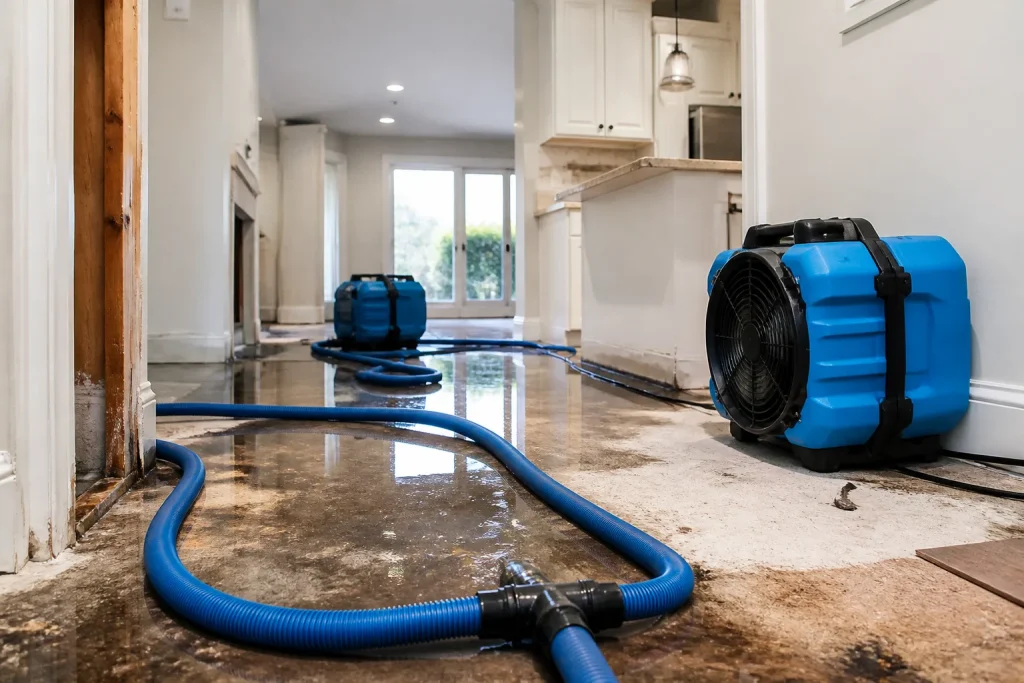
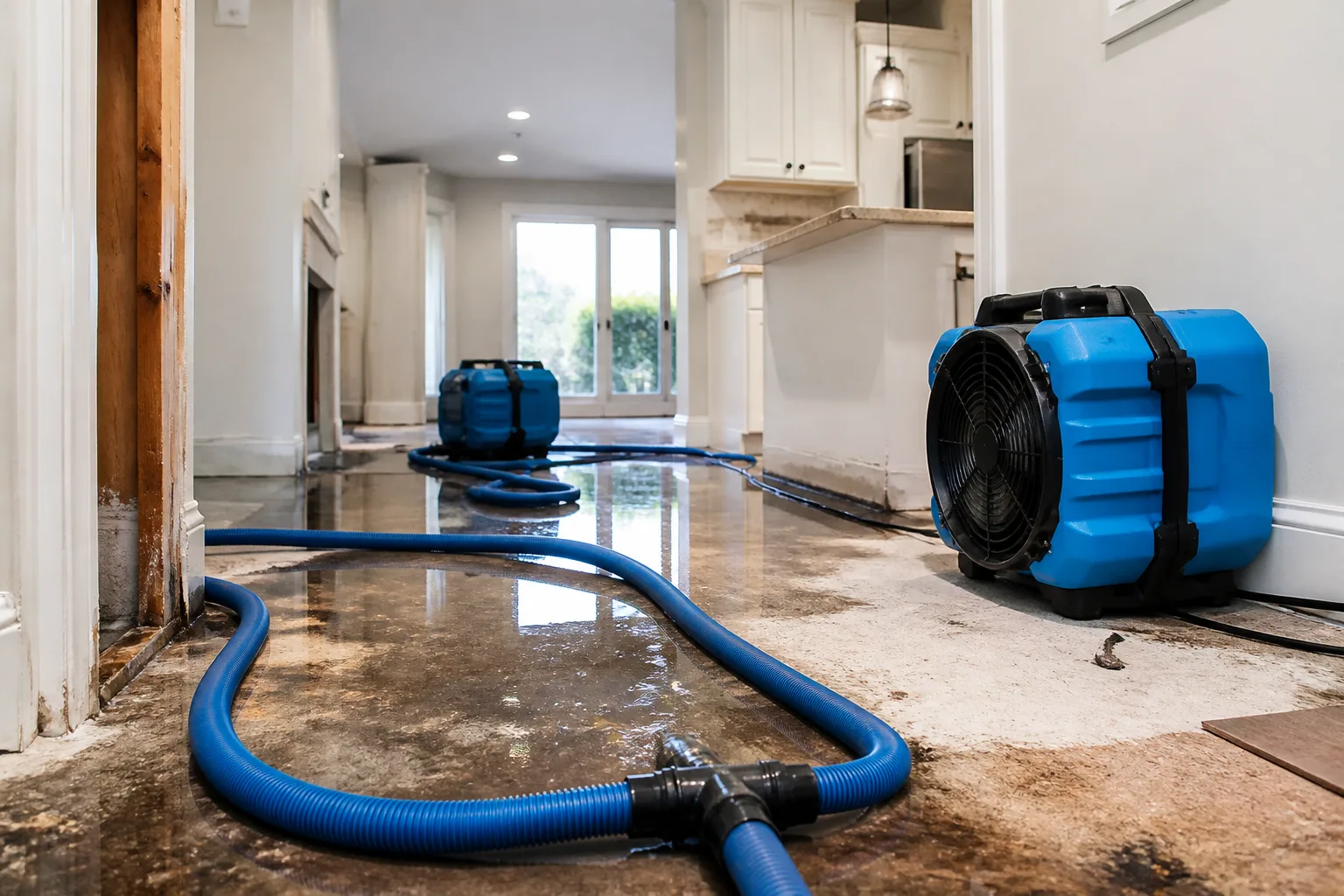
- Equipment placement. What dehumidifiers and air movers are placed where, and when they’re moved as drying progresses.
- Final verification. A written confirmation that all affected materials hit the dry standard before equipment is pulled.
- The dry standard itself. The target numbers for your home’s specific materials. A log that says “felt dry” isn’t a moisture log. Numbers are.
In San Diego, this documentation matters beyond drying. Your insurance carrier wants it. A future buyer wants it if you sell. And if mold appears six months later, the log tells you whether the original company did their job. We hand our clients the moisture log at close-out because we stand behind what’s in it. That’s the Keystone Standard: done right, and backed in writing.
Checking the IICRC Registry Takes Two Minutes
IICRC certification belongs to individual technicians, not companies. A business can say “we’re IICRC certified” because the owner holds a certification, but the technician walking into your San Diego home might have no training at all. That’s a meaningful distinction.
Here’s the two-minute check. Go to the IICRC global locator at iicrc.org, search the company name, and view the list of certified technicians tied to that firm. Then ask the company directly: “Who will be on my job, and are they the people listed on the IICRC registry?”
If the answer is vague, or the certified person is in another state and “supervises” but never appears on-site, you have your answer. A legitimate operation runs certified technicians on every job, not just on the website. Our crews are background-checked, uniformed, and certified to IICRC, RIA, and IFA standards. The person who shows up at your door is the person whose training you’re paying for.
We pulled a dryer line out of a laundry room in Rancho Bernardo last spring where the homeowner had called a company that billed itself as IICRC certified. The crew that showed up didn’t know how to read a moisture meter. They dried the visible floor, wrote an invoice, and left. Three months later, mold was running up the wall behind the baseboards because nobody had checked the drywall cavity. The certification was the owner’s. The crew had never opened the S500 manual. That’s the difference in two minutes of checking.
When to Call a Pro
Some water damage is genuinely manageable for a San Diego homeowner: a small clean-water leak caught in the first hour, dried thoroughly with fans and a dehumidifier, with no drywall or flooring affected. That’s a cleanup, not a restoration job.
Call a professional when the water has touched drywall, insulation, or flooring; when the source is anything other than clean supply-line water; when the water sat for more than 24 hours; or when you can smell anything musty even after things feel dry to the touch. By the time drywall feels damp, the moisture has usually been inside the wall cavity for days. That’s not a weekend project. That’s a Category 2 or 3 situation that needs classification, sanitation, and monitored drying.
Related services in San Diego: Water Damage Restoration in San Diego, Mold Remediation in San Diego, and Fire & Smoke Damage Restoration in San Diego. All handled by the same certified crew, start to finish.
The Bottom Line
IICRC certification matters because it’s the only published, enforceable standard for how water damage should be dried. It tells a technician what to measure, how to classify the water, what to sanitize, and how to document the job. San Diego homeowners who understand the basics of S500 can catch corner-cutting before mold gets a foothold. Ask for the moisture log. Check the registry. And remember that coastal humidity means drying takes longer here, which makes proper equipment and daily readings more important, not less.
If you’re in San Diego and dealing with water damage, Floodline Restoration Co. of California offers free estimates. We answer the phone with a live person at 2 a.m., not a recording. A certified crew reaches the job and extraction is running the same visit. Call (888) 737-2439.
Frequently Asked Questions
IICRC stands for the Institute of Inspection, Cleaning and Restoration Certification. It’s the nonprofit body that publishes the S500 water damage restoration standard and certifies individual technicians who pass its exams. Certification belongs to people, not companies.
In San Diego’s coastal humidity, a Category 1 water loss typically takes four to seven days to reach the dry standard. Category 2 and 3 losses take longer because sanitation and selective demolition are required. Any company promising a fixed “48-hour” guarantee isn’t measuring against the IICRC dry standard. Call (888) 737-2439 for an honest assessment of your specific situation.
Most homeowner policies cover sudden and accidental water damage, including the cost of certified restoration work. IICRC documentation actually helps your claim because it proves the drying was done to a published standard. Floodline bills your carrier directly, so you never play messenger between us and the adjuster.
Not always. If the water is classified correctly as Category 1 and dried to the dry standard within 24 to 48 hours, mold growth is unlikely. If the water sat longer, or if the source was Category 2 or 3, mold prevention requires sanitation and possibly selective demolition during the drying process. The moisture log tells you whether mold risk was addressed. Call (888) 737-2439 and we’ll walk you through what your situation requires.
Written by Curt Bowman, Owner at Floodline Restoration Co. of California, serving San Diego since 2010.
Need Damage Restoration Help?
Call Floodline Restoration Co. of California - licensed & insured, available 24/7 in San Diego.
(888) 737-2439