
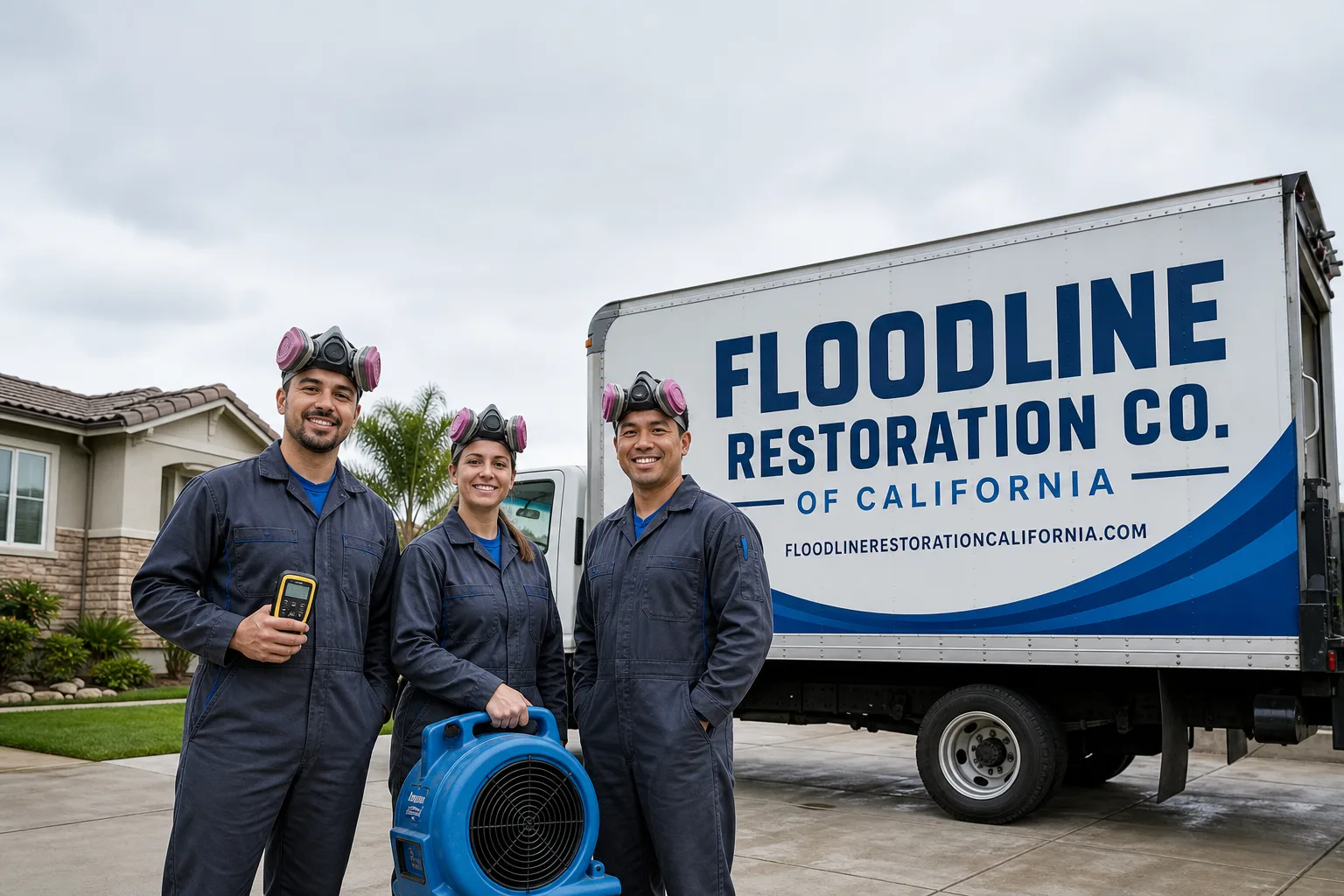
Fast, Reliable Water Damage Restoration Across Stanford
Water damage in Stanford moves fast, and so do we. Most emergency water extraction jobs on campus and in faculty housing start with a live dispatcher at (888) 737-2439, then a background-checked crew reaches your door within the hour. Stanford’s position against the Santa Cruz Mountain foothills and its unincorporated status inside Santa Clara County create restoration requirements that don’t exist ten minutes away in Palo Alto. We know both tracks: the county’s and the university’s. That knowledge keeps your repair moving instead of stalled.
Our Water Damage Restoration team has worked inside Stanford’s dual-approval system enough times to anticipate the paperwork before the water finishes spreading.
Why Floodline Restoration Co. of California Is Stanford’s Preferred Water Damage Restoration Company
Floodline Restoration Co. has held a steady reputation across the Peninsula since Curt Bowman founded the company in 2010. Stanford homeowners and university facilities staff call us because we answer the phone with a person at 2 a.m., not a voicemail tree. A live dispatcher takes your call. A uniformed, IICRC-trained technician arrives the same visit, starts extraction, and begins moisture mapping with Dri-Eaz equipment before the standing water has a chance to wick into original oak flooring or 1950s lath-and-plaster walls.
Stanford is a small community. Word travels. We’ve earned repeat calls from faculty families on Raimundo Way, Alvarado Row, and Mayfield Avenue because we treat a mid-century ground-lease home with the same care we’d give a sandstone-and-red-tile historic structure on the core campus. The work is different. The standard is not.
Response time to Stanford from Bay Area dispatch averages under 90 minutes for emergency extraction calls. We know the campus gate protocol, the parking constraints near faculty housing, and the access rules for university-owned buildings. None of that slows us down because we’ve done it before.
Every job here is backed by the 90-Day Done Right Promise. That’s the Keystone Standard: in writing, no arguing, no paperwork battles. If it isn’t done right, we make it right. Stanford is a place that values a square deal, and that’s exactly what we put in your hands.
Our Water Damage Restoration Services in Stanford
Emergency Water Extraction
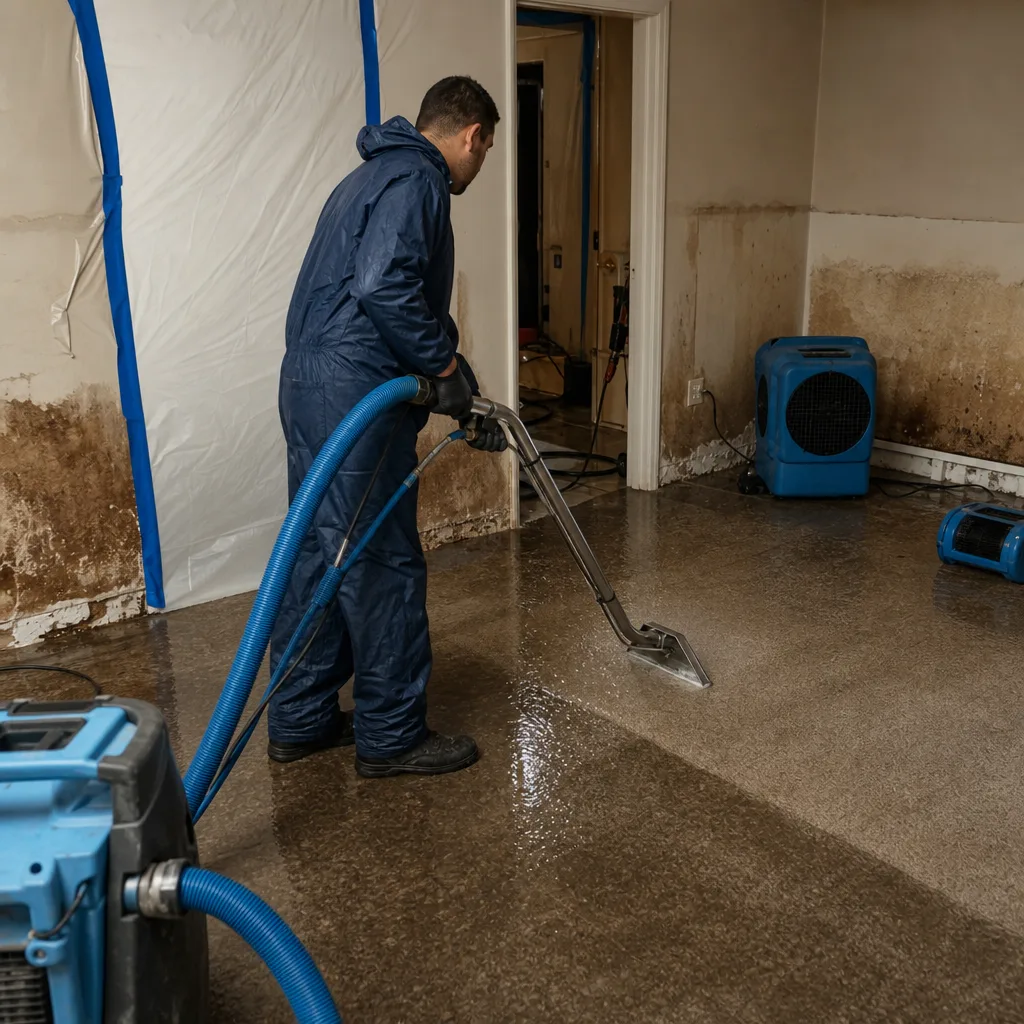
When a supply line lets go in a 1940s faculty cottage near Lake Lagunita, every minute of standing water means more damage to original fir subflooring and more moisture wicking up into plaster. Our emergency extraction crews arrive with truck-mounted and portable Dri-Eaz extraction units, get the water out the same visit, and document everything for the claim. In Stanford, we also know exactly when to pause and confirm that Stanford Real Estate & Facilities Management has given written pre-approval, because starting before that approval can halt the whole job.
Structural Drying & Dehumidification
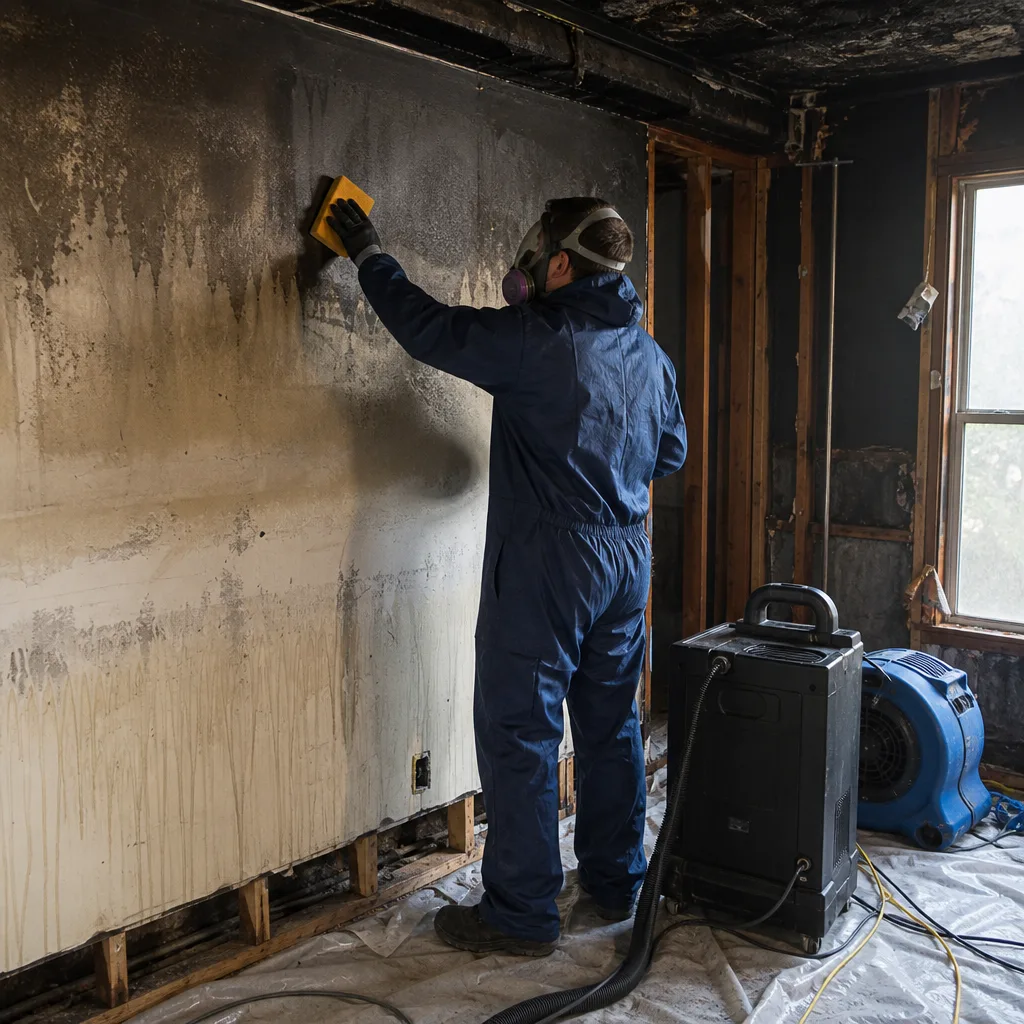
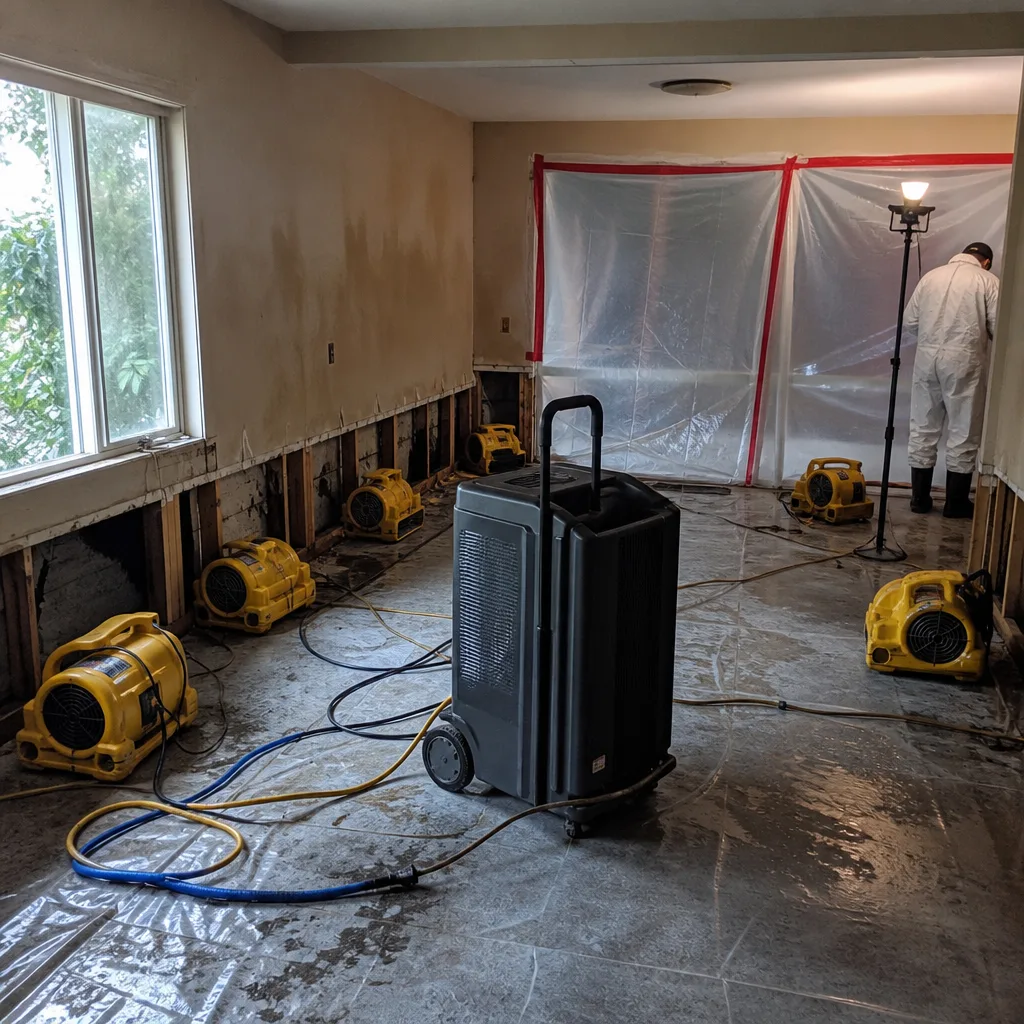
Stanford’s mid-century housing stock was built with solid lumber and, in many cases, original hardwood floors that cannot simply be torn out and replaced under the university’s ground-lease terms. We dry in place where it makes sense. Phoenix and Dri-Eaz dehumidifiers paired with XPOWER air movers bring cavities and floor assemblies down to the target moisture content. Daily readings are logged, handed to you and your carrier, and matched to what Santa Clara County and Stanford Capital Planning expect before the permit closes. When a burst pipe flooded a 1950s faculty home on Raimundo Way, we deployed Dri-Eaz dehumidifiers and XPOWER air movers after coordinating pre-approval through Stanford Real Estate & Facilities Management. Our techs dried the original oak flooring in place using Injectidry mats, preventing cupping and meeting the university’s required moisture content before county inspection.
Flood Cleanup
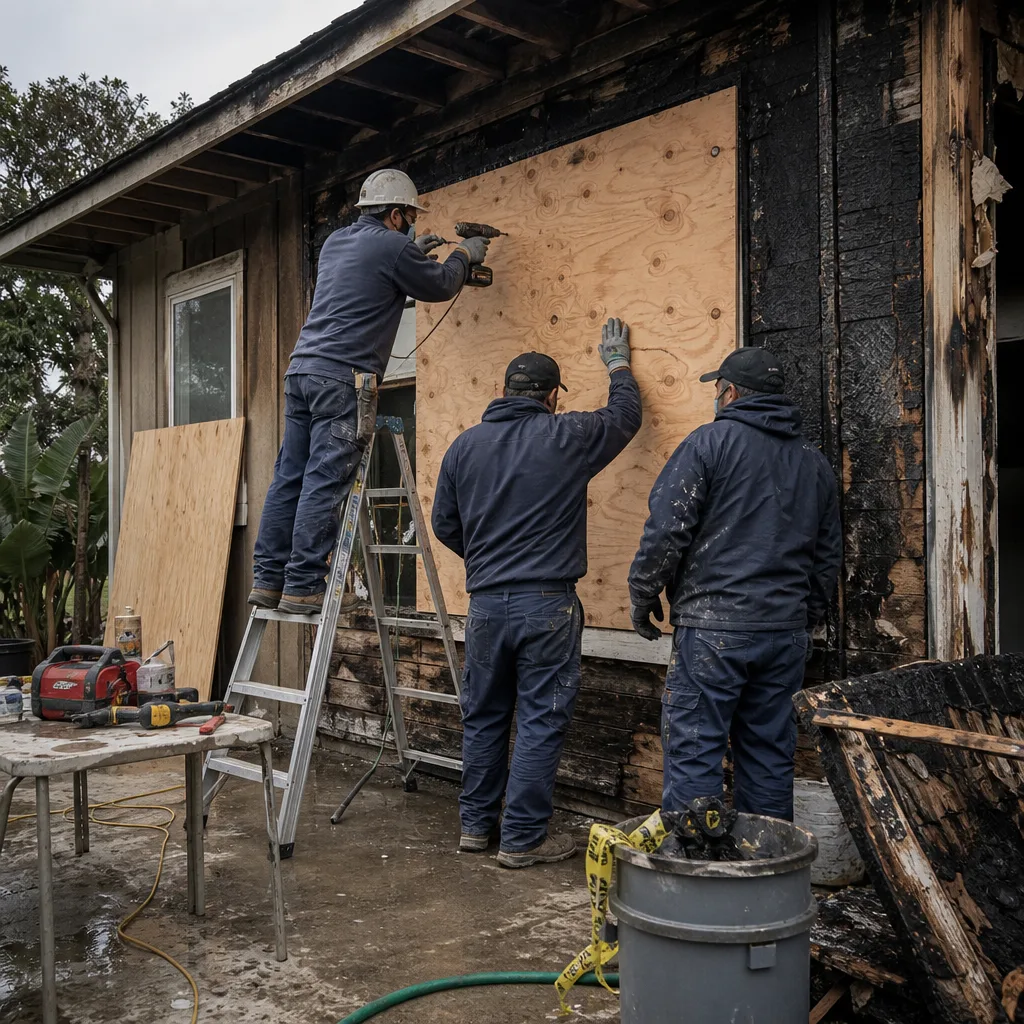
Flooding near Stanford can come from a winter atmospheric river or from a drain backup in a below-grade lab or housing unit. The cleanup process here is rarely just “suck up the water and set a fan.” Floodwater carries silt, bacteria, and whatever moved through the ground near the Dish or Jasper Ridge. Our crews extract, clean, sanitize, and dry to the IICRC standard, then compile the moisture log the county and the university both want to see. Where contamination is present, we coordinate the line between flood cleanup and sewage or biohazard protocols so nothing gets missed.
Burst Pipe Restoration
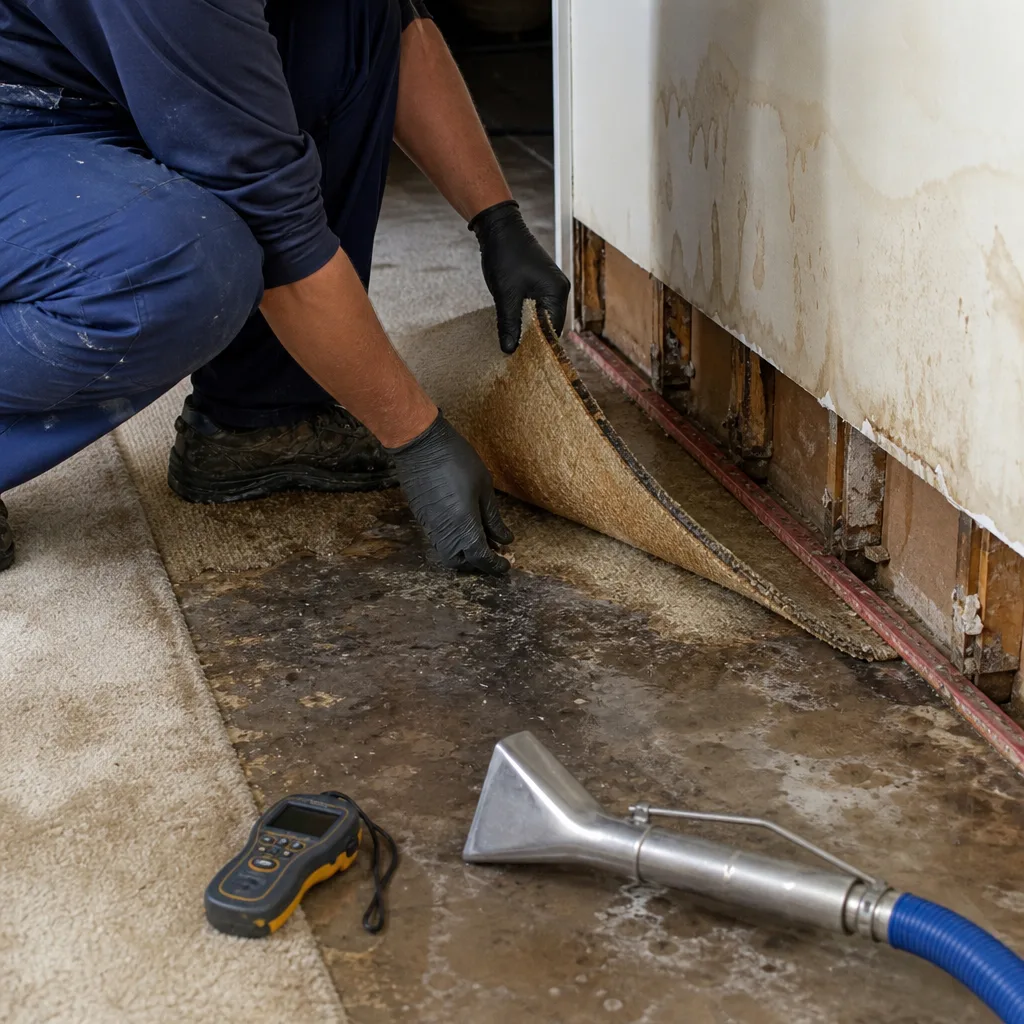
Stanford’s older faculty housing often has galvanized supply lines that have been in service since the Eisenhower administration. When one fails at 3 a.m., the burst can be dramatic. Extraction comes first. Then we map the affected cavities, remove material that cannot be saved, and dry what can. Reconstruction on university-owned housing frequently requires a scope agreement with Stanford’s Capital Planning office before rebuild begins. We prepare that scope in writing, with photo documentation and a line-item plan, so the approval moves forward without back-and-forth.
Ceiling & Roof Leak Water Damage
Diablo wind events push rain sideways into roof penetrations along the wooded western fringe of campus near Jasper Ridge. A slow roof leak can saturate attic insulation and the top plate of lath-and-plaster walls before a single drip shows on the ceiling. When we get a leak call in Stanford, we don’t just dry the stain. We trace the water path, remove wet insulation, treat the framing, and identify the entry point so the repair actually solves the problem. In wildland-urban interface areas, hidden roof leak damage after a wind event is one of the most common calls we handle.
What happens when you call
- 1
A real person answersNo phone trees - you reach a local pro.
- 2
You get an upfront price rangeHonest numbers before anyone is dispatched.
- 3
A background-checked tech heads outLicensed & insured, dispatched right away.
- 4
You approve before work beginsNothing starts until you say go.
Trusted Brands We Service in Stanford
We stock and service Dri-Eaz, Phoenix, XPOWER, B-Air, and Injectidry equipment because that’s what we run in the field ourselves. Stanford homeowners and university maintenance teams expect professional-grade machinery, and we keep common parts and replacement units staged for Peninsula dispatch so a failed dehumidifier doesn’t slow the dry-down on a faculty home. Our technicians train to IICRC, RIA, and IFA standards. The gear is only as good as the people running it, and we hold both lines.
Common Water Damage Restoration Problems We See in Stanford Homes
- Mid-century supply line failures. Faculty housing built between the 1940s and 1970s often still has original galvanized piping. We see pinhole leaks and full bursts in homes along Raimundo Way and Alvarado Row more than in newer Palo Alto construction.
- Hidden roof leak damage after Diablo wind events. Wind-driven rain penetrates roof penetrations near Jasper Ridge and the western tree line. The ceiling stain shows up days later, long after insulation and framing have been soaked.
- Oak and fir floor cupping from delayed drying. Original wood floors on ground-leased properties cannot simply be replaced without university review. Fast, in-place drying with Injectidry mats is the only option that preserves the floor and the lease terms.
- Dual-approval delays causing secondary damage. Contractors who start mitigation before Stanford Real Estate & Facilities Management approves the scope get stopped mid-job. The water stays longer, mold risk rises, and the homeowner is left explaining the mess to the county and the university.
Pricing for Water Damage Restoration in Stanford, CA
A typical emergency water extraction in Stanford runs $450 to $1,200 depending on the affected square footage and the equipment needed. Structural drying and dehumidification in a mid-century faculty home generally adds $800 to $2,500, with original wood floor drying using Injectidry mats falling in the $1,200 to $3,000 range. Burst pipe restoration that includes drywall removal, cavity drying, and rebuild scope runs $2,500 to $8,000. Ceiling and roof leak repairs start around $600 for a contained stain and climb based on the insulation and framing replacement required. These are Stanford’s prices, shaped by 94305 housing stock and the university’s documentation requirements. Every estimate we give is free and in writing. Call (888) 737-2439 for exact numbers on your job.
We Also Serve Cities Near Stanford
Floodline Restoration Co. handles water damage calls across the mid-Peninsula. Our Water Damage Restoration in Stanford coverage extends to neighboring Palo Alto, Atherton, East Palo Alto, and Los Altos Hills when Stanford-based crews are available or when a job near the campus boundary needs county-level permitting familiarity.
Serving Stanford, CA - Our Local Coverage Area
We’re based in the Stanford area and know this community well. Use the map below to see our service coverage - if you’re nearby, we can almost certainly help.
FAQs - Water Damage Restoration in Stanford
Yes. Virtually all residential property in Stanford’s 94305 ZIP sits on university-owned ground, and restoration work requires written pre-approval from Stanford Real Estate & Facilities Management before mitigation begins. Skipping that approval can halt the job mid-extraction and leave standing water longer. We handle the approval request as part of our initial scope, so you aren’t left playing messenger. Call (888) 737-2439 and we’ll start the process immediately.
Stanford is unincorporated Santa Clara County, so structural permits run through the county building department, but the university’s Capital Planning office applies a parallel review whenever campus-owned structures are involved. A contractor who only pulls a county permit can complete repairs the university later voids. We prepare both submittals in one scope, with moisture logs and photo documentation formatted to satisfy both reviewers.
Yes, and it’s specific to where your home sits. Faculty housing along the western edge near Jasper Ridge and the Dish is exposed to Diablo wind-driven rain that pushes water into roof penetrations, ridge vents, and chimney flashing that see almost no moisture during a normal winter storm. We inspect the attic and substrate, not just the ceiling stain, because the wind-driven path is different and the hidden damage is consistently worse. If you’re near the western tree line, even a small stain deserves a full attic check.
No. A box-store dehumidifier pulls a fraction of the pints per day that professional Dri-Eaz or Phoenix units move, and it cannot drive dry air through hardwood floor assemblies the way an Injectidry mat system does. In Stanford’s mid-century homes with original oak flooring still bonded to the subfloor, slow drying means cupping, permanent staining, and a floor that cannot be replaced without university approval. Professional-grade drying is the difference between saving the floor and losing it.
The job gets stopped, and the homeowner pays for the delay. Palo Alto is an incorporated city with its own building rules. Stanford is not. Contractors who pull only a Santa Clara County permit and skip Stanford Capital Planning’s parallel review end up with completed repairs that the university can require to be redone, at the homeowner’s expense. We map both tracks on day one. That’s why Stanford is a market where local process knowledge is worth more than a faster arrival time.
Call Floodline Restoration Co. of California for Water Damage in Stanford
If water is moving through your Stanford home right now, call (888) 737-2439. A live dispatcher answers at any hour. We’ll get a crew to 94305 the same visit, start emergency extraction, and manage the Stanford-specific approvals so the job doesn’t stall. Estimates are free, the scope is in writing before rebuild begins, and every job is covered by the 90-Day Done Right Promise. We’ll be there when we say.
Written by Curt Bowman, Owner at Floodline Restoration Co. of California, serving Stanford and the Bay Area since 2010.