
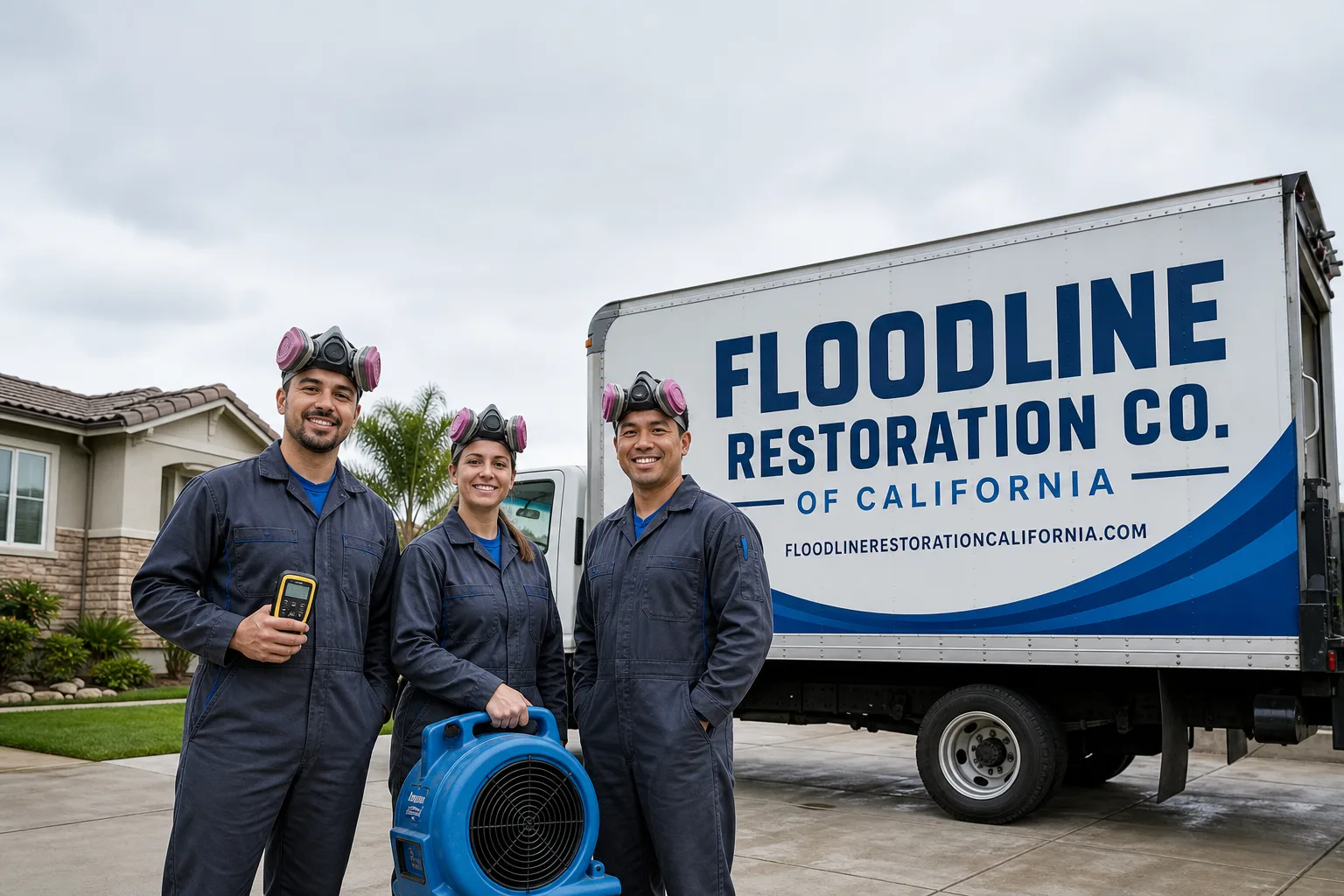
Fast, Reliable Water Damage Restoration Across Selma
Water damage in Selma rarely announces itself politely. A cast-iron drain line lets go under a mid-century slab home near the packing sheds. An irrigation canal rises after a heavy release and groundwater pushes up through a foundation with no vapor barrier. January tule fog parks over the 93662 ZIP for two weeks straight and the drywall that should have dried in three days is still weeping on day seven.
Floodline Restoration Co. of California handles all of it. We answer the phone with a live person at any hour, and our certified crews reach Selma fast enough to start extraction the same visit. Call (888) 737-2439 now, and the water goes out, the drying starts, and the damage stops spreading while you’re still on the line with dispatch.
Key takeaways for Selma homeowners:
- Emergency water extraction in Selma typically runs $1,200-$3,800 depending on the square footage and the water source.
- Structural drying during tule fog season takes five to ten days, not the three or four a summer job needs.
- Canal-adjacent basements flood on a yearly cycle. We diagnose the difference between plumbing failure and groundwater intrusion before you pay for a repair that won’t hold.
- Every job comes with the 90-Day Done Right Promise in writing. If it’s not done right, we make it right.
Why Floodline Restoration Co. of California Is Selma’s Preferred Water Damage Restoration Company
We’ve been answering phones with a person, not a recording, since Curt Bowman founded the company in 2010. Selma homeowners don’t want to navigate a phone tree while water soaks through their baseboards at 2 a.m. They want a dispatcher who says, “A crew is on the way,” and means it. That’s the company we built, a dispatch board with live people on it, 24 hours a day, every day.
Our technicians are background-checked, uniformed, and trained to IICRC, RIA, and IFA standards. When they arrive at a Selma home, they carry professional-grade Dri-Eaz extraction units and Injectidry drying mats, not rented box fans from a hardware store. They read the moisture map on day one and keep reading it daily until the dry standard is met. The homeowner gets the log. The insurance carrier gets the log. Nobody guesses.
Selma presents specific challenges that a crew working mostly in Clovis or north Fresno might miss. Slab-on-grade construction with no vapor barrier changes how moisture moves. Tule fog changes how fast things dry. Irrigation-canal groundwater changes the entire diagnosis. We know these because we’ve worked them, repeatedly, in the 93662 ZIP.
We also never leave a Selma homeowner playing messenger with their insurance company. We bill the carrier directly, document everything with photos, and coordinate with adjusters so you don’t have to. When the job is finished, you get the Water Damage Restoration scope in writing, the moisture log in hand, and the 90-Day Done Right Promise behind every line of it.
Our Water Damage Restoration Services in Selma
Emergency Water Extraction
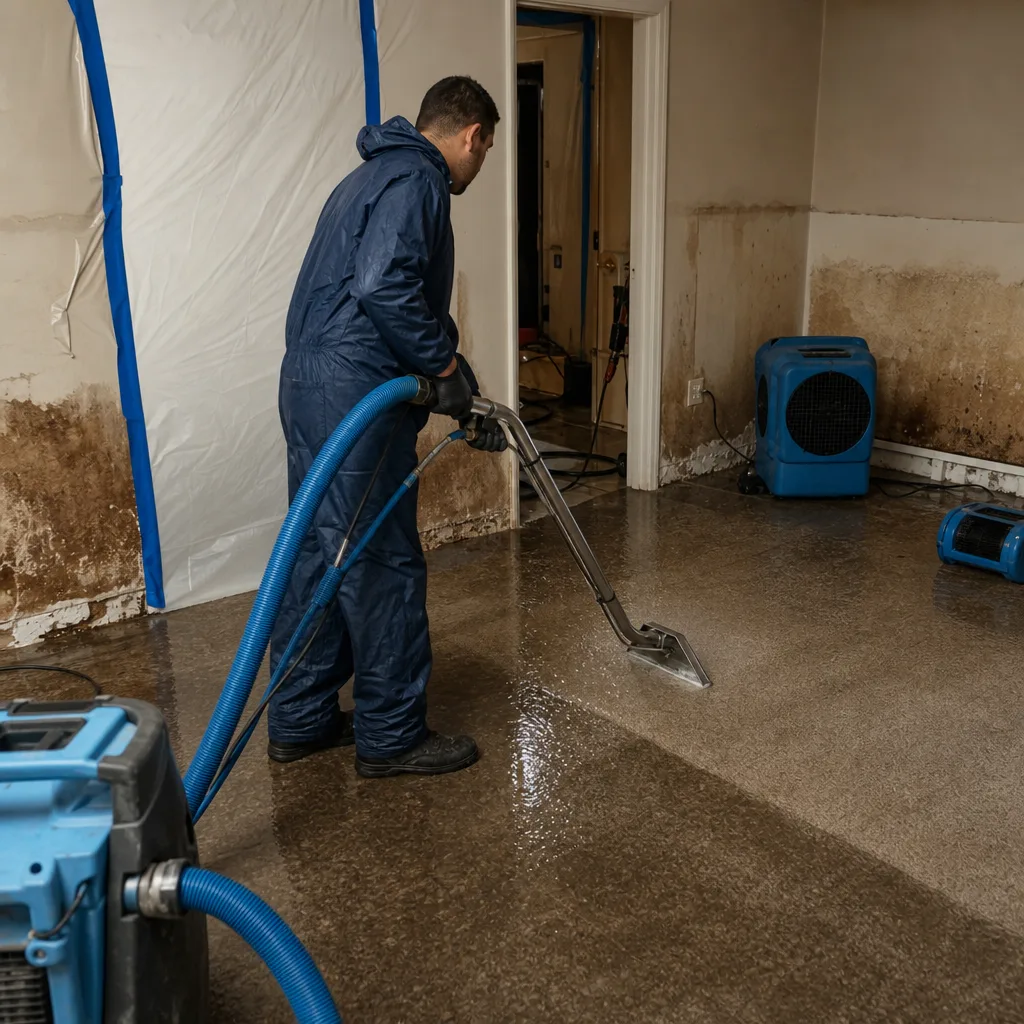
Water from a burst supply line or a failed water heater spreads through a Selma slab home in minutes, and the first hour is the one that matters most. Our extraction teams arrive fast, pull the standing water with truck-mounted and compact Dri-Eaz units, and map the moisture so we know exactly what needs to come out next. In a downtown Selma home with tight alley access, we deploy smaller extraction equipment that fits through a 30-inch doorway without scraping a wall. Call (888) 737-2439 and the water goes out the same visit.
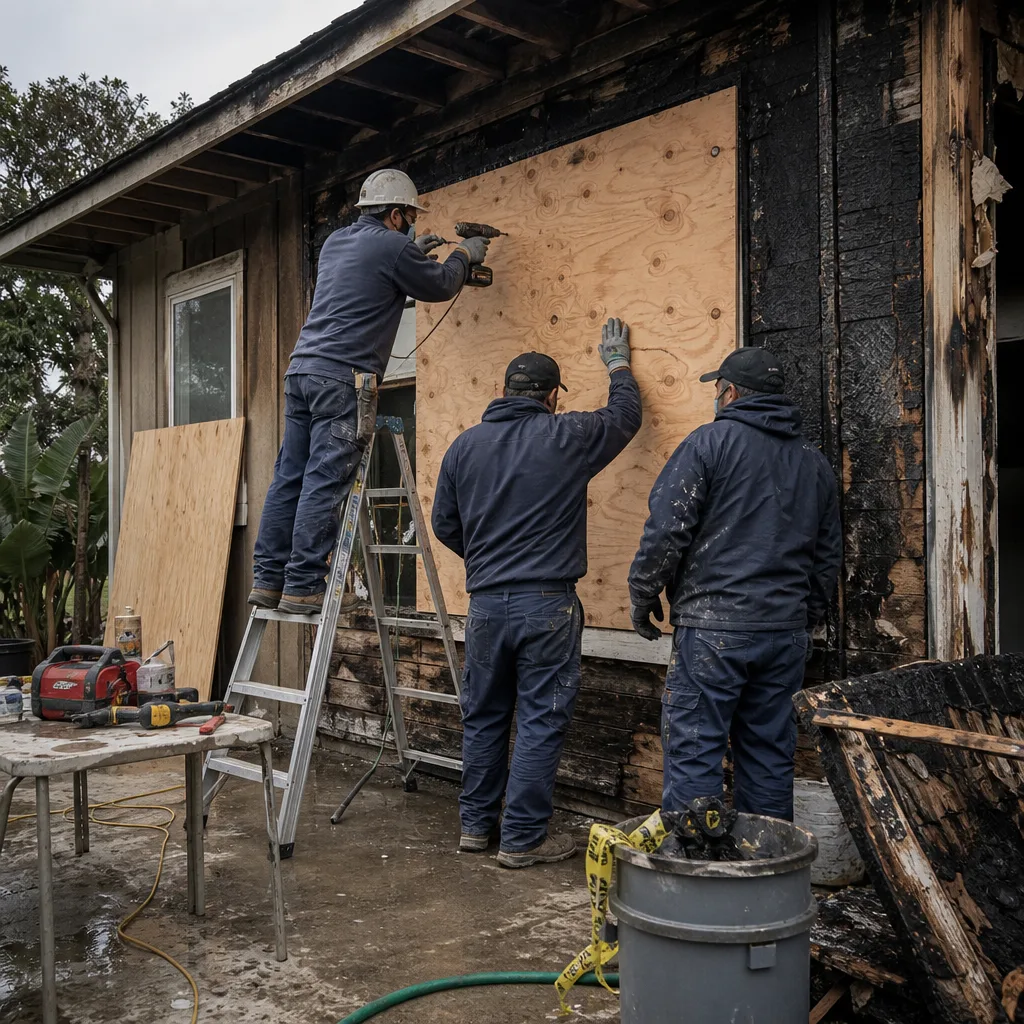
Structural Drying & Dehumidification
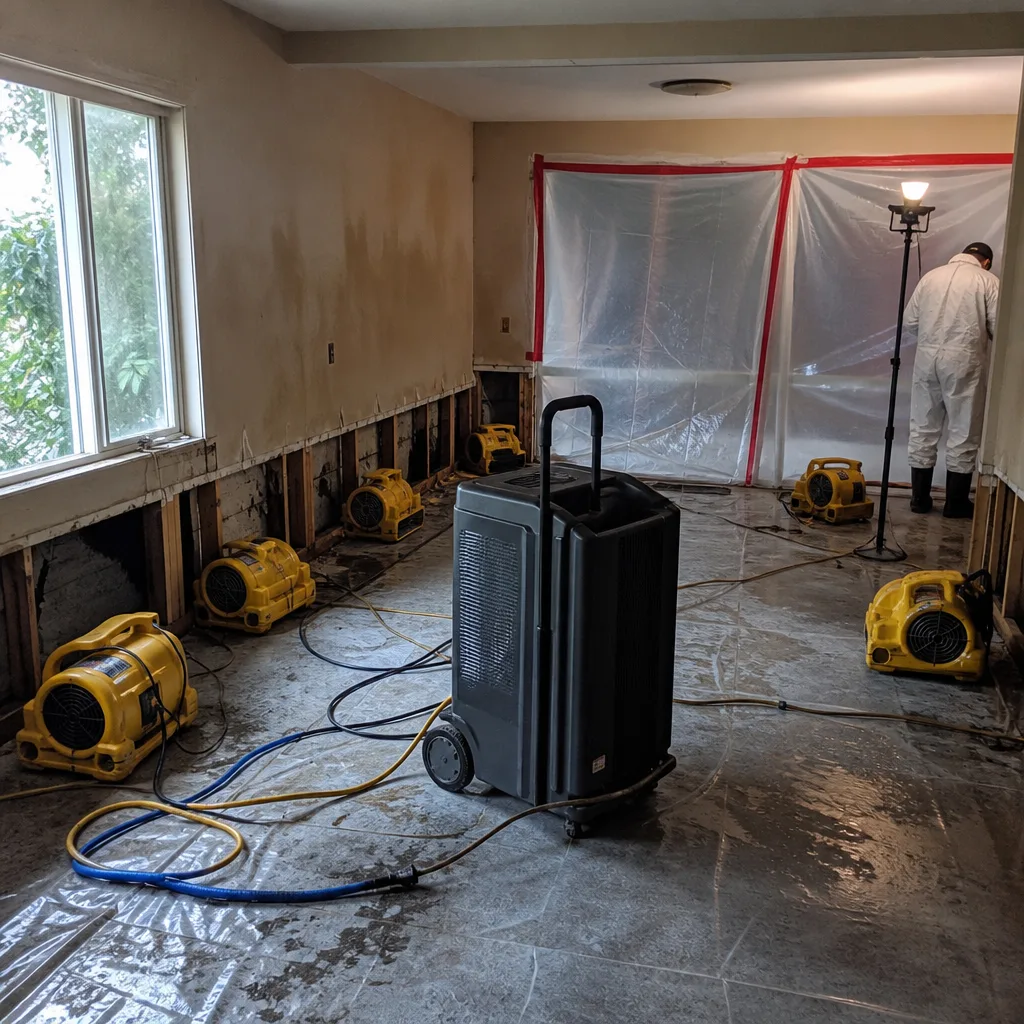
Drying a Selma home in January is not the same job as drying one in July. Tule fog holds outdoor humidity near saturation for days at a stretch, which means drywall, plaster, and framing release moisture far more slowly than they would in summer heat. Our crews leave equipment in place longer during fog season, log daily readings, and don’t pull a dehumidifier until the numbers prove the structure is dry, not until the calendar says so. That’s the difference between a job that stays dry and a job that grows mold in a wall cavity eight months later.
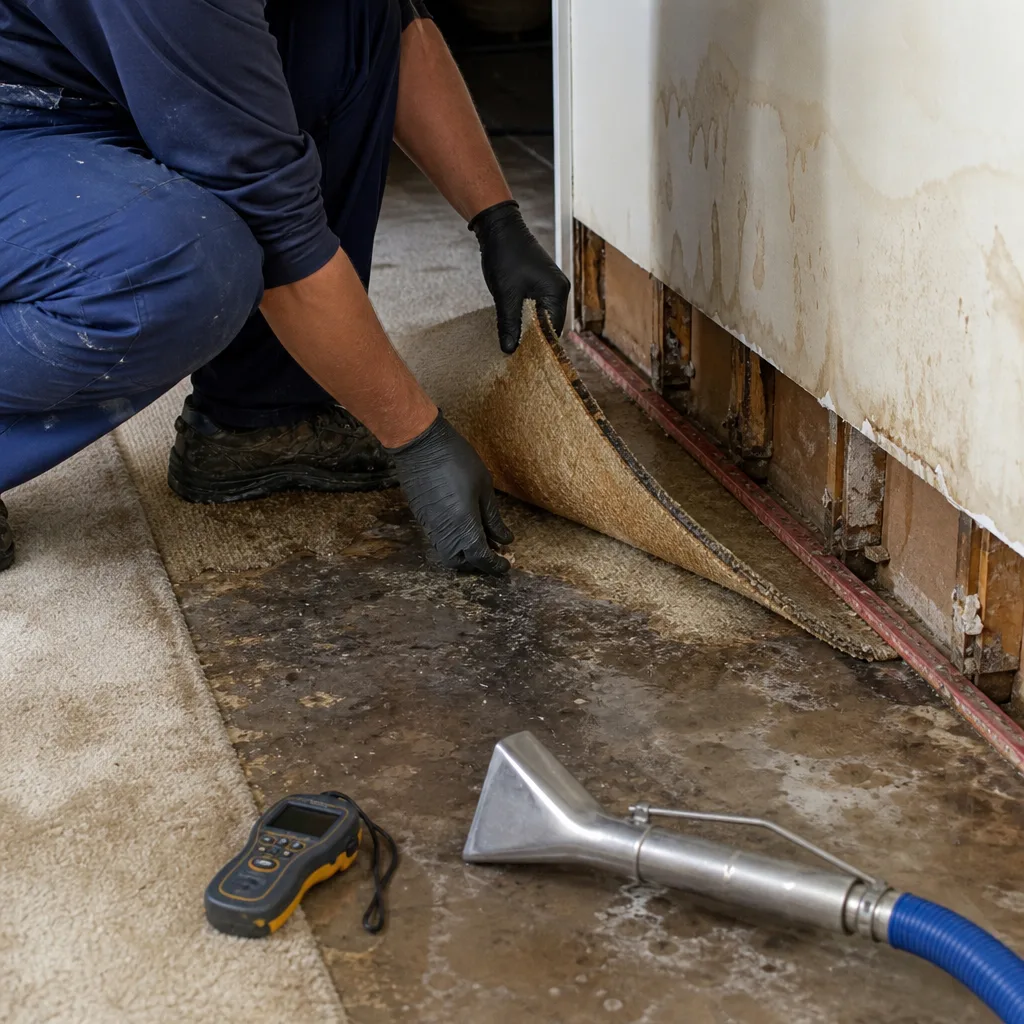
Flood Cleanup
Floodwater in Selma often brings silt, agricultural runoff, and bacteria, and it doesn’t belong in contact with your flooring or drywall any longer than necessary. We extract the water, cut and remove saturated material, sanitize what’s salvageable, and set up drying on what’s left. If the flood came from a canal or storm overflow rather than a clean interior line, we treat the water as contaminated from the first drop and scope the job accordingly. You get a written scope before we cut anything, and the insurance carrier sees the same numbers we quote you.
Burst Pipe Restoration
A burst pipe in a Selma home built in the 1950s or 1960s often means more than just water on the floor. The pipe itself may be galvanized or cast iron, original to the house, and the leak may have been weeping behind a wall long before it let go entirely. We trace the water, extract what’s visible, open walls where the moisture map tells us to, and dry the cavities properly. Then we hand you a written repair scope for the plumbing side so the next step is clear and priced before anyone starts swinging a hammer.
What happens when you call
- 1
A real person answersNo phone trees - you reach a local pro.
- 2
You get an upfront price rangeHonest numbers before anyone is dispatched.
- 3
A background-checked tech heads outLicensed & insured, dispatched right away.
- 4
You approve before work beginsNothing starts until you say go.
Trusted Brands We Service in Selma
We work on water damage restoration in homes of every age and construction type across Selma, including the mid-century slab-on-grade houses that dominate neighborhoods near the downtown grid and the older agricultural housing stock west of Highway 99. Our IICRC-certified technicians are trained to handle the specific failure modes those homes present: original cast-iron drain lines, minimal vapor barriers, jalousie windows that leak during wind-driven rain, and flat or low-slope roofs that split open in summer heat and feed slow water damage for months before a stain appears on the ceiling.
Common Water Damage Restoration Problems We See in Selma Homes
- Recurring groundwater in canal-adjacent basements. Properties near the agricultural irrigation laterals and drainage canals in the 93662 ZIP often flood seasonally, not from a plumbing failure but from groundwater rising through a foundation with no drainage plan. If a contractor patches a pipe and leaves, the water comes back next irrigation season. We diagnose the actual source before doing work that won’t last.
- Slow drying during tule fog season. From November through February, fog keeps outdoor humidity near saturation for days or weeks. Crews that pull drying equipment after a standard three-day cycle leave hidden moisture in wall cavities, and that moisture feeds mold in Selma’s older slab homes. We extend drying times and log daily readings until the dry standard is met.
- Valley fever exposure in crawl spaces. Fresno County has one of the nation’s highest rates of Coccidioides infection, and restoration work that disturbs soil or deteriorated materials in a crawl space or flood excavation carries a documented occupational health risk. Our crews take specific precautions when working where soil is exposed. That’s not standard practice for coastal restoration companies, but it’s essential here.
- Flat-roof thermal splits feeding hidden leaks. Selma summers routinely exceed 105°F, and that heat cycles flat and low-slope roofing on older homes and commercial buildings until the membrane splits. Water enters the structure slowly, runs through the roof cavity, and can damage drywall and framing for months before anyone sees a stain. By the time it’s visible, the repair scope is often bigger than a simple patch.
Pricing for Water Damage Restoration in Selma, CA
Here’s what Selma homeowners can expect to pay, based on the jobs we’ve scoped in the 93662 ZIP:
- Emergency water extraction: $1,200-$3,800, depending on the affected square footage and the water source.
- Structural drying and dehumidification: $800-$2,500, with fog-season jobs running toward the higher end because equipment stays in place longer.
- Flood cleanup with contaminated water: $3,000-$8,000, including removal of saturated material, sanitization, and full drying.
- Burst pipe restoration (water side only): $1,500-$4,500 before plumbing repairs, which are scoped separately.
What moves the number: the size of the affected area, the category of water (clean versus contaminated), how long the water sat before we arrived, and whether the drying happens during fog season or summer. We give you a written scope before work starts, bill your carrier directly, and honor the 90-Day Done Right Promise without arguing. Estimates are free. Call (888) 737-2439 for an exact number.
We Also Serve Cities Near Selma
Our crews run regular routes from Selma to the surrounding communities of Fowler, Parlier, Kingsburg, and Reedley. If you’re just outside the city limits and need Water Damage Restoration in Selma or anywhere nearby, call (888) 737-2439 and we’ll confirm coverage and response time while you’re on the phone.
Serving Selma, CA - Our Local Coverage Area
We’re based in the Selma area and know this community well. Use the map below to see our service coverage - if you’re nearby, we can almost certainly help.
FAQs - Water Damage Restoration in Selma
Selma sits under San Joaquin Valley tule fog from November through February, and that fog keeps outdoor relative humidity near saturation for days or weeks at a time. Drywall, plaster, and framing release moisture into the air far more slowly when the air outside is already full of water. A structural drying job that takes three days in a 105°F Fresno County summer can take seven to ten days in January fog. Any restoration company that pulls equipment on a fixed three-day schedule during fog season is leaving moisture behind.
We extend equipment run times, log daily moisture readings, and don’t remove a dehumidifier until the dry standard is actually met, not just scheduled. Call (888) 737-2439 and we’ll explain what the drying timeline looks like for your specific home.
The clearest sign is timing. If water appears during or shortly after heavy irrigation releases, or if it returns every year around the same season without any corresponding plumbing event, you’re likely looking at groundwater intrusion from a nearby canal or lateral. Plumbing failures are generally consistent, a toilet that runs water onto the floor every time it flushes or a supply line that leaks regardless of the calendar. Groundwater follows the irrigation schedule.
In the 93662 ZIP, we see this pattern on canal-adjacent lots regularly. The fix is foundation drainage work, not a pipe patch. If you’re unsure, call (888) 737-2439 and we’ll trace the source before anyone picks up a saw.
Yes. Fresno County has one of the highest documented rates of Coccidioides infection in the country, and the spores live in soil. Restoration work that disturbs soil or deteriorated materials, including crawl-space dryouts and flood excavations, carries a real occupational exposure risk. Our crews follow specific soil-disturbance precautions when working in those conditions. That standard of care is not universal, but it should be, especially here.
You should expect it to take longer than a comparable job in a newer home with modern moisture protection. Slab-on-grade construction without a vapor barrier allows ground moisture to wick up through the concrete, which keeps the air inside the home more humid and slows the drying of walls and flooring after a water-loss event. In fog season, that problem compounds. Our crews account for slab moisture migration in the drying plan and run equipment until the moisture map shows the slab and wall cavities are actually dry, not just the surface.
Yes, and it does routinely. Selma summers exceed 105°F, and that thermal cycling expands and contracts flat and low-slope roofing until the membrane splits. Water enters through the split, travels through the roof cavity, and soaks into framing and drywall slowly over weeks or months. You typically see the first sign as a ceiling stain or a musty smell long after the leak started, and by then the repair scope includes interior framing and insulation, not just a roof patch. If you suspect a slow roof leak, call (888) 737-2439 and we’ll trace the moisture before the next heat wave opens it wider.
Written by Curt Bowman, Owner at Floodline Restoration Co. of California, serving Selma and the Central Valley.