
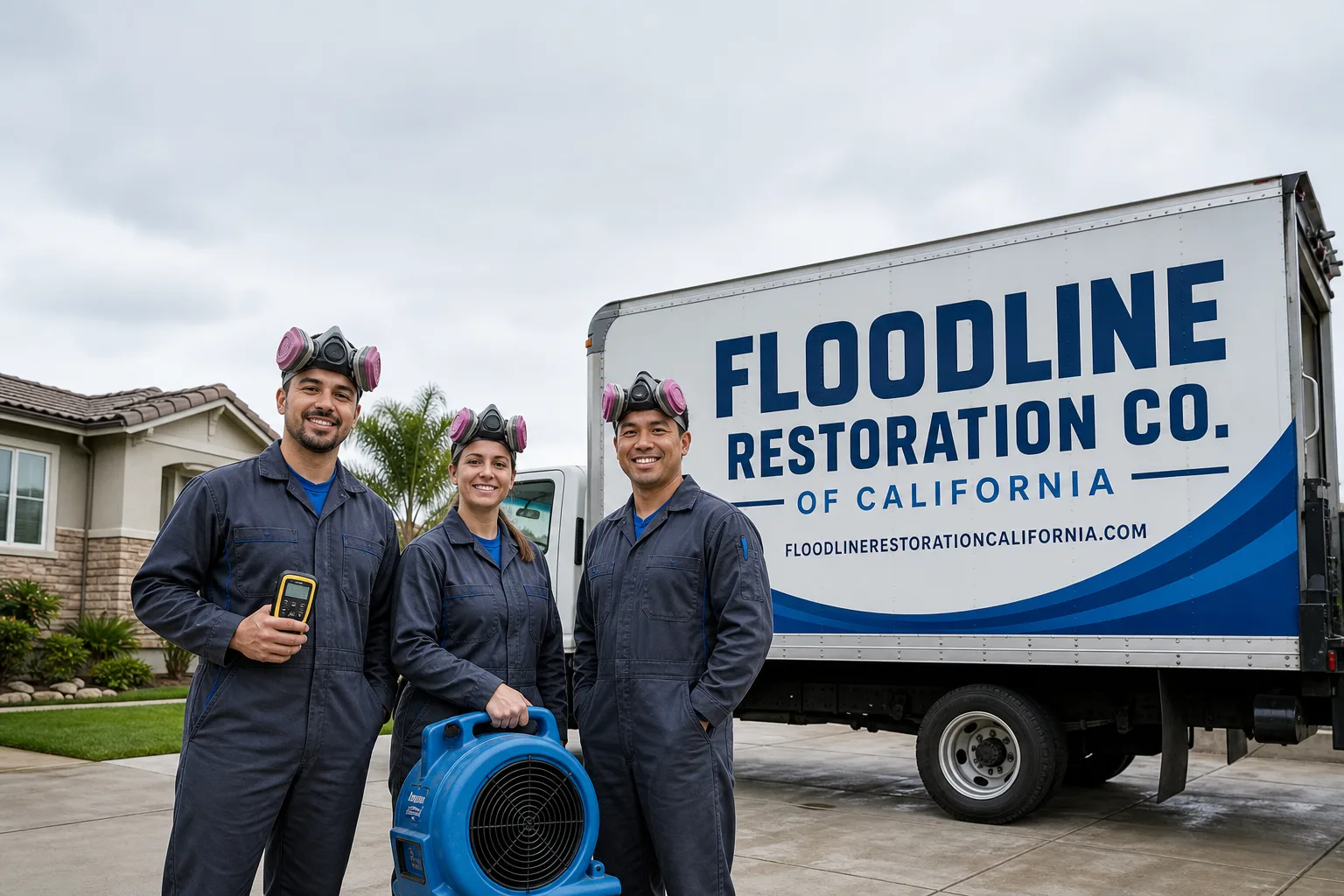
Fast, Reliable Water Damage Restoration Across Santa Paula
Water damage in Santa Paula doesn’t wait, and neither do we. Most water extraction calls in the 93060 and 93061 zip codes get a live dispatcher on the line within three rings, and a certified crew is typically on-site within 60 to 90 minutes. That speed matters here more than in most Ventura County towns because Santa Paula’s older homes hide water differently. Water staining on drywall is obvious. Water moving through lath-and-plaster walls in a 1920s craftsman near Harvard Boulevard isn’t, and by the time you see it, the damage has usually been spreading for days or weeks. Call (888) 737-2439 and we’ll start extraction the same visit.
We’re the Water Damage Restoration team that starts at the floodline and stays through the rebuild. Bookmark this page as a reference or, better yet, save the phone number.
Why Floodline Restoration Co. of California Is Santa Paula’s Preferred Water Damage Restoration Company
Santa Paula homeowners call us because we answer the phone. Not a recording, not a callback queue. A live dispatcher picks up at 2 a.m., and the person who takes your call knows exactly which crew is closest to your neighborhood. That’s been the standard here since Curt Bowman founded Floodline Restoration Co., and it’s not changing.
Our technicians are background-checked, uniformed, and trained to IICRC, RIA, and IFA standards. They carry Dri-Eaz, Phoenix, XPOWER, B-Air, and Injectidry equipment sized for the unique wall and floor assemblies in Santa Paula’s housing stock. When we dry a 1908 craftsman on Santa Paula Street or a mid-century rental off Ojai Road, we’re drying assemblies that don’t behave like modern construction. We know the difference, and we plan for it.
We’re not the largest restoration company in Ventura County, and we don’t want to be. We’re the one that answers the phone, stands behind the 90-Day Done Right Promise in writing, and doesn’t hand your job off to strangers halfway through. If it’s not done right, we make it right. No paperwork battles, no arguing. That’s the Keystone Standard, and it’s given to every Santa Paula customer before we start.
More importantly, Santa Paula is a town we know, not a market we’re testing. We understand that a ceiling stain on the second floor of a Victorian near the downtown means something different than the same stain in a tract home in Fillmore. That local fluency changes the first hour of the job, and the first hour changes the ultimate bill.
Our Water Damage Restoration Services in Santa Paula
Emergency Water Extraction
When a supply line ruptures in a Santa Paula home, the first thirty minutes decide whether you’re drying floors or replacing them. Our crews arrive with truck-mounted and portable extraction units, pull standing water, and position air movers to start evaporation before we’ve finished the walkthrough. In a lath-and-plaster home, that early decision matters doubly; we don’t simply extract what’s visible. We probe for water that’s traveled into cavities and behind baseboards, because in a pre-1940 house, what you can see is rarely what you’re dealing with.
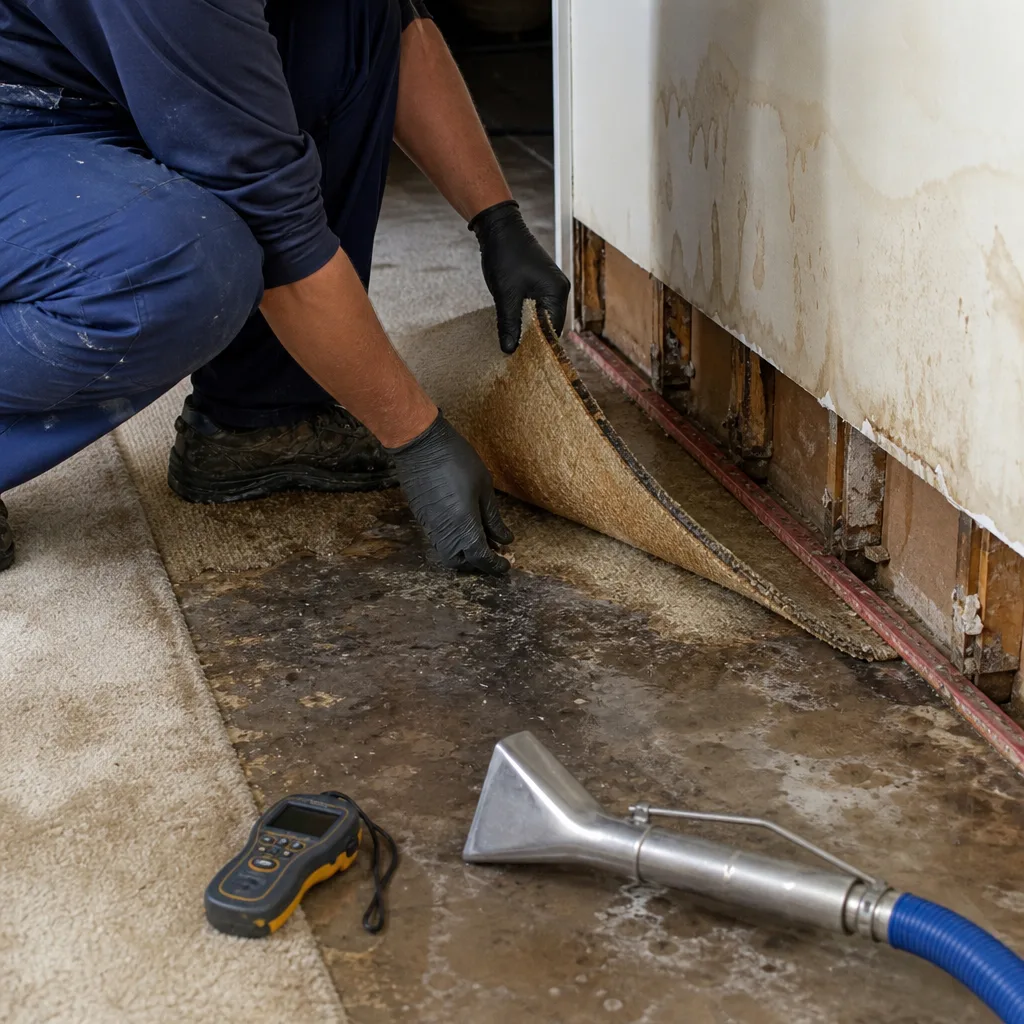
Structural Drying & Dehumidification
Santa Paula’s older core near Harvard Boulevard and the historic downtown is dense with craftsman bungalows and Victorians built with lath-and-plaster walls and old-growth framing. Water wicks horizontally inside the plaster keys, so a leak at the front of the house can end up pooling above a rear room without ever showing on the ceiling between. We map that migration with Dri-Eaz thermal hygrometers and Phoenix desiccant dehumidifiers, create containment chambers, and log daily moisture readings until the dry standard is met. That log goes to you and your carrier. It’s the record that proves the job was done right, not just done fast.
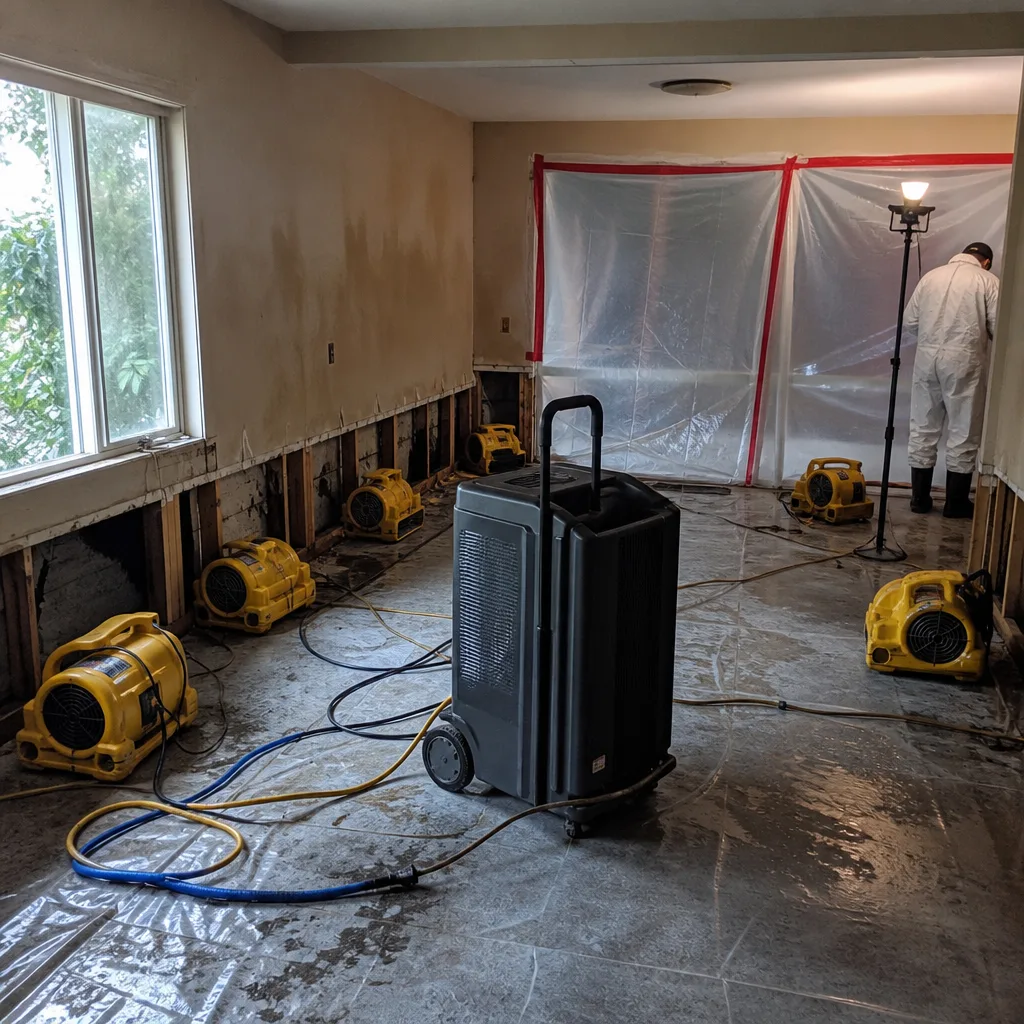
Flood Cleanup
Santa Paula sits directly beneath the Topatopa Mountain foothills. That changes what “flood” means here. After the Thomas Fire stripped the chaparral above town, the burn-scar soils became hydrophobic; water sheets off them instead of soaking in. A half-inch rain that would be a non-event in Camarillo can send muddy debris flows down onto valley-floor properties along the Santa Clara River corridor. When that happens, the water isn’t just wet. It’s laden with ash, sediment, and contaminants that demand flood-cut protocols, antimicrobial treatment, and careful cavity inspection before any structural drying begins. In lower-lying sections of the 93060 zip code with FEMA Special Flood Hazard Area designations, we often find layered damage histories, prior flood events compounded by deferred maintenance. We don’t dry over that. We document it, treat it, and rebuild it to a standard your carrier can actually verify.
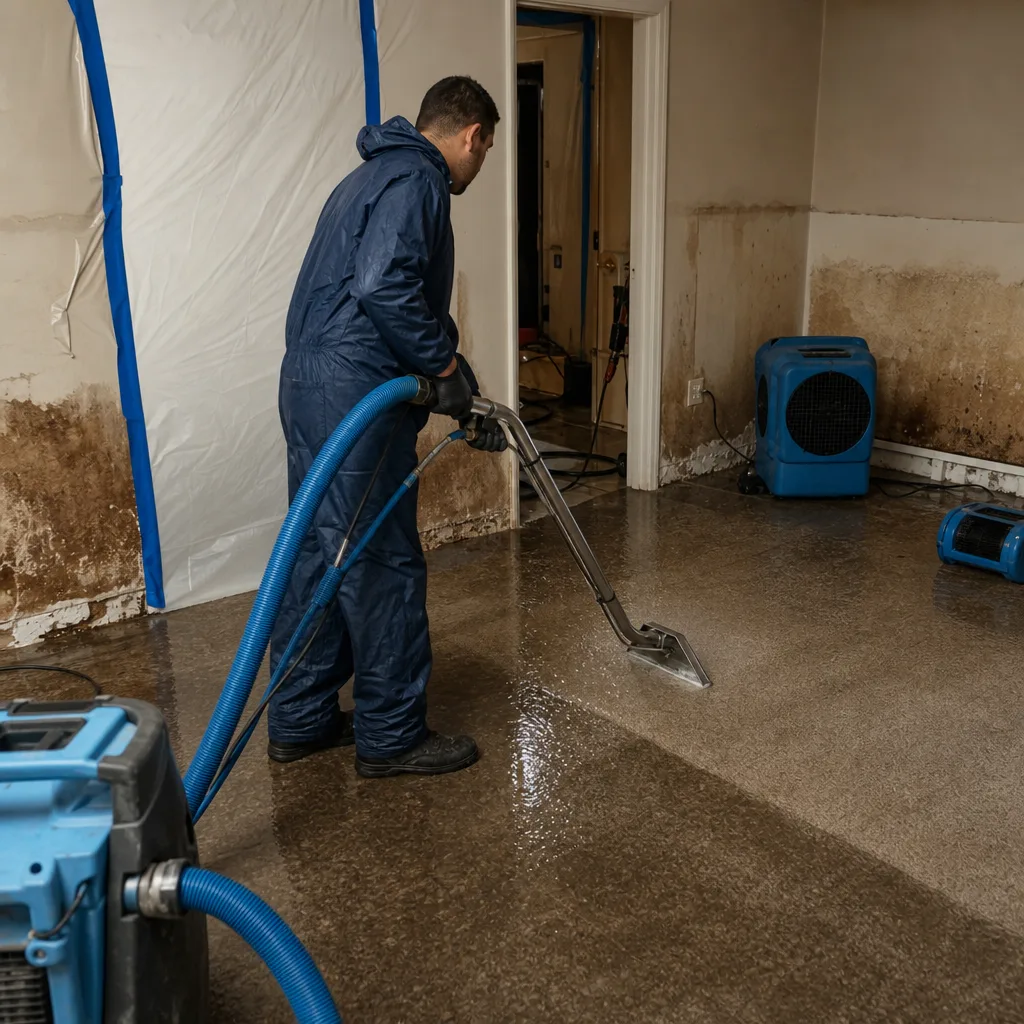
Burst Pipe Restoration
Freeze-thaw cycles are less the issue in Santa Paula than the age of the pipe itself. Homes built between 1900 and the 1940s often still carry segments of original galvanized supply line, and when a fitting fails, it can dump water inside a wall for hours before anyone notices. Because so many local rentals and older homes have original spring-tension windows and unsealed weight pockets, a ‘dry’ room re-wets when Santa Ana winds push humid air through the old envelope. We treat burst pipes in Santa Paula as a cavity-drying project, not just an extraction. That’s the difference between a claim that settles once and a claim that becomes a dispute.
What happens when you call
- 1
A real person answersNo phone trees - you reach a local pro.
- 2
You get an upfront price rangeHonest numbers before anyone is dispatched.
- 3
A background-checked tech heads outLicensed & insured, dispatched right away.
- 4
You approve before work beginsNothing starts until you say go.
Trusted Brands We Service in Santa Paula
We work on every system and material we find in Santa Paula homes: original lath-and-plaster walls, early drywall, knob-and-tube electrical, old-growth redwood framing, asbestos-containing flooring and insulation, lead paint. Those last two matter. Any restoration job in a pre-1978 Santa Paula home needs proper abatement protocols, and we handle that in-house rather than telling you to find a specialist. Our service vehicles carry Dri-Eaz and Phoenix drying equipment sized for old Santa Paula boards and plaster, plus an inventory of common fittings and materials for the plumbing and sash weight assemblies we see most often here. That means fewer return trips, fewer surprise delays, and a bill that matches the written scope.
Common Water Damage Restoration Problems We See in Santa Paula Homes
- Hidden cavity migration in lath-and-plaster walls. Water moves horizontally inside the plaster keys and along old-growth framing, so a stain near the front of a craftsman can conceal a soaked cavity twenty feet away. Without a thermal hygrometer and inspection ports, the damage stays hidden until the plaster keys fail and the ceiling drops.
- Sundowner wind re-wetting. Santa Ana and Sundowner winds don’t just dry things out; they push humid air through old floor-jamb-and-sill construction and unsealed window weight pockets. A room that reads dry on a Tuesday can re-wet on a windy Thursday if the original envelope wasn’t addressed during drying.
- Burn-scar debris flows after ordinary rain. A crew that treats a winter storm surge in Santa Paula like a standard Ventura leak misses the post-fire soil cycle. Saturated hydrophobic soils above town turn a modest rain into a blackwater surge through lower-lying floors, demanding flood-cut drying and antimicrobial treatment, not just extraction.
- Asbestos and lead in older homes. Homes built before 1978, and especially pre-1940, often contain asbestos flooring, asbestos insulation, and lead paint. Cutting into those materials without proper containment creates a second problem worse than the first. On any restoration job here, we factor that in from the first moisture map.
Pricing for Water Damage Restoration in Santa Paula, CA
Here’s what Santa Paula homeowners can expect as of 2026. Emergency water extraction runs $850 to $1,400 for a single room, including setup, extraction, and initial drying equipment placement. Structural drying and dehumidification for a lath-and-plaster cavity typically lands between $1,600 and $3,200, with the higher end reflecting multi-room containment and Dri-Eaz/Phoenix equipment run time. Flood cleanup after a debris-flow event runs $3,500 to $7,500 for a lower-floor flood-cut, antimicrobial treatment, and drying verification; blackwater events on the higher end are priced after inspection, always with a written scope before work starts. Burst pipe restoration in a 1920s-1940s home averages $2,200 to $5,000, depending on whether cavity drying alone is sufficient or if abatement and rebuild are required. Ceiling and roof leak water damage in older Santa Paula homes runs $1,200 to $3,800, with the higher end reflecting plaster repair and trim restoration.
Every estimate is written, free, and includes the 90-Day Done Right Promise. We bill your carrier directly and don’t make you play messenger. Call (888) 737-2439 for a number specific to your house, not a range.
We Also Serve Cities Near Santa Paula
Our crews regularly run water damage restoration jobs in Fillmore, Camarillo, El Rio, and Moorpark. If you’re in Santa Paula and your rental property is in Fillmore, or your adult child’s home in Moorpark just took on water, one call covers the whole map. We dispatch locally, not from a call center three time zones away.
Serving Santa Paula, CA - Our Local Coverage Area
We’re based in the Santa Paula area and know this community well. Use the map below to see our service coverage - if you’re nearby, we can almost certainly help.
FAQs - Water Damage Restoration in Santa Paula
Lath-and-plaster walls and ceilings don’t fail the way drywall does. Water wicks horizontally through the plaster keys and along old-growth framing, so the visible stain is the last stop, not the first. In a 1920s craftsman, a stain near the front of the house often traces to a leak that’s been in the wall for weeks. That’s why we don’t simply dry the stain; we probe the cavity, map the moisture, and open a small inspection port only when the map shows the water went somewhere we can’t see from the surface. If you’ve got a stain on a plaster ceiling, call (888) 737-2439 for a free assessment before it gets worse.
Yes. The burn scar above town changes the soil behavior. When the chaparral is gone, the soil becomes hydrophobic, meaning water runs off instead of soaking in. A rain that wouldn’t flood a Camarillo street can send muddy, ash-laden debris flows into Santa Paula’s lower elevations and the Santa Clara River corridor. That water carries contaminants that demand flood-cut drying and antimicrobial treatment, not just extraction. We treat post-fire flood events as potential blackwater from minute one, even if the water looks relatively clear. Call (888) 737-2439 and we’ll start the right protocol immediately.
Usually, yes. Our approach is to create a containment chamber around the wet area, run Phoenix desiccant dehumidifiers and XPOWER air movers inside that chamber, and log daily moisture readings until the dry standard is met. We cut small inspection ports only where the thermal hygrometer shows water trapped in a cavity we can’t dry from the surface. In most 1900-1940 lath-and-plaster assemblies, that approach saves the original plaster and trim. The exception is when water has saturated the plaster keys themselves to the point of failure; in that case, a partial cut-and-patch is safer than keeping compromised plaster overhead. We’ll tell you which path you’re on before we start, in writing.
We trace it. In those bungalows, a failed spring-tension sash window or an old opener can leak into the wall cavity, run above the plate line, and collect in a ceiling on the other side of the room. On a 1920s craftsman near Harvard Boulevard, our crew found exactly that: a soaked lath-and-plaster ceiling cavity fed by a window leak twenty feet away. We cut a small inspection port, mapped the moisture with a Dri-Eaz thermal hygrometer, set a containment chamber with XPOWER air movers and a Phoenix desiccant dehumidifier, and dried the cavity without tearing out the plaster. We sealed the window weight pockets and added a capillary break, then restored the original trim. The homeowner kept their original ceiling. Call (888) 737-2439 for a realistic take on your bungalow, not a generic script.
FEMA-designated flood zones along the Santa Clara River corridor mean we’re often dealing with layered damage histories, not a single event. A home that flooded in 2005 and again in 2023 often has deferred maintenance, prior moisture in the sill plates, and construction materials that were already compromised before the new water arrived. We don’t dry over that. We moisture-map the entire envelope, inspect cavities below the flood line, and document everything for your carrier. When the dry standard is met, we hand you and your adjuster a complete log, not just a receipt. Call (888) 737-2439 and we’ll start the mapping the same day.
Written by Curt Bowman, Owner at Floodline Restoration Co. of California, serving Santa Paula and Ventura County since 2010.