
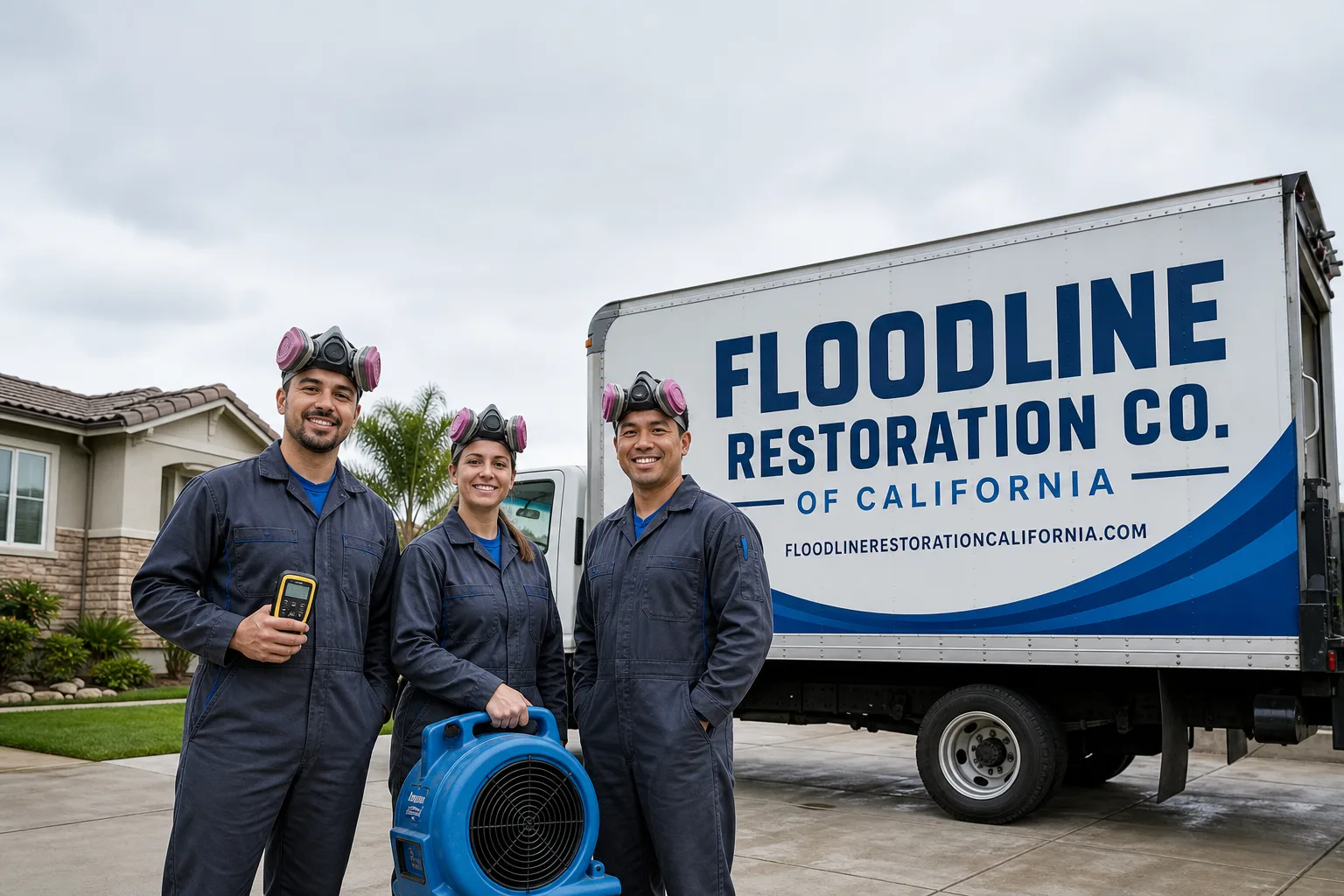
Fast, Reliable Water Damage Restoration Across Poway
Water damage restoration in Poway typically costs between $1,200 and $4,800 depending on the extent of hidden moisture behind stucco walls and slab foundations. Most emergency extraction calls in the 92064 and 92074 ZIP codes get a certified crew on site within 60 to 90 minutes because we dispatch locally, not from across the county. If you’re standing in water right now, call (888) 737-2439 and a live dispatcher will pick up, day or night.
Poway’s inland valley heat and Santa Ana-driven dry spells change how water behaves inside a house. What looks like a small plumbing leak on a Tuesday can hide behind a 1970s stucco cavity by Friday, feeding mold in places you’ll never see until the baseboards start to darken. Our crews know this. We’ve pulled saturated drywall along Twin Peaks Road, dried slab channels under homes near Poway Road, and read moisture maps in tract homes throughout the Green Valley and Garden Road corridors. This isn’t coastal San Diego drying conditions. It’s Poway, and it dries differently.
Why Floodline Restoration Co. of California Is Poway’s Preferred Water Damage Restoration Company
Floodline Restoration Co. has served San Diego County for over 42 years, and the phone is answered by a live person at 2 a.m., not a recording. That matters in Poway, where a slab leak discovered after a hard freeze or a sudden atmospheric-river downpour doesn’t wait for business hours. Our dispatch board is built around getting a background-checked, uniformed technician to your door the same visit, extraction running before the water spreads further into the slab.
Homeowners in Poway consistently tell us the same thing: they feared being oversold the moment a crew walked in. The 90-Day Done Right Promise, our written Keystone Standard, exists for exactly that reason. If the drying isn’t done right, we make it right. No paperwork battles, no arguing. Just standing behind the work. It’s backed by our K.E.Y.S. values code: Krafted right, Every time, Your home first, Standing behind it.
We’re not a franchise that parachutes in and hands the job to a subcontractor at the rebuild phase. The same certified crew that reads the moisture map on day one handles daily readings, hands you the moisture log in writing, and rebuilds what needs rebuilding. Trained to IICRC standards with Dri-Eaz and Phoenix equipment, our technicians treat your Poway home like they’ll be back in thirty years. Because they will be.
Our Water Damage Restoration Services in Poway
Emergency Water Extraction
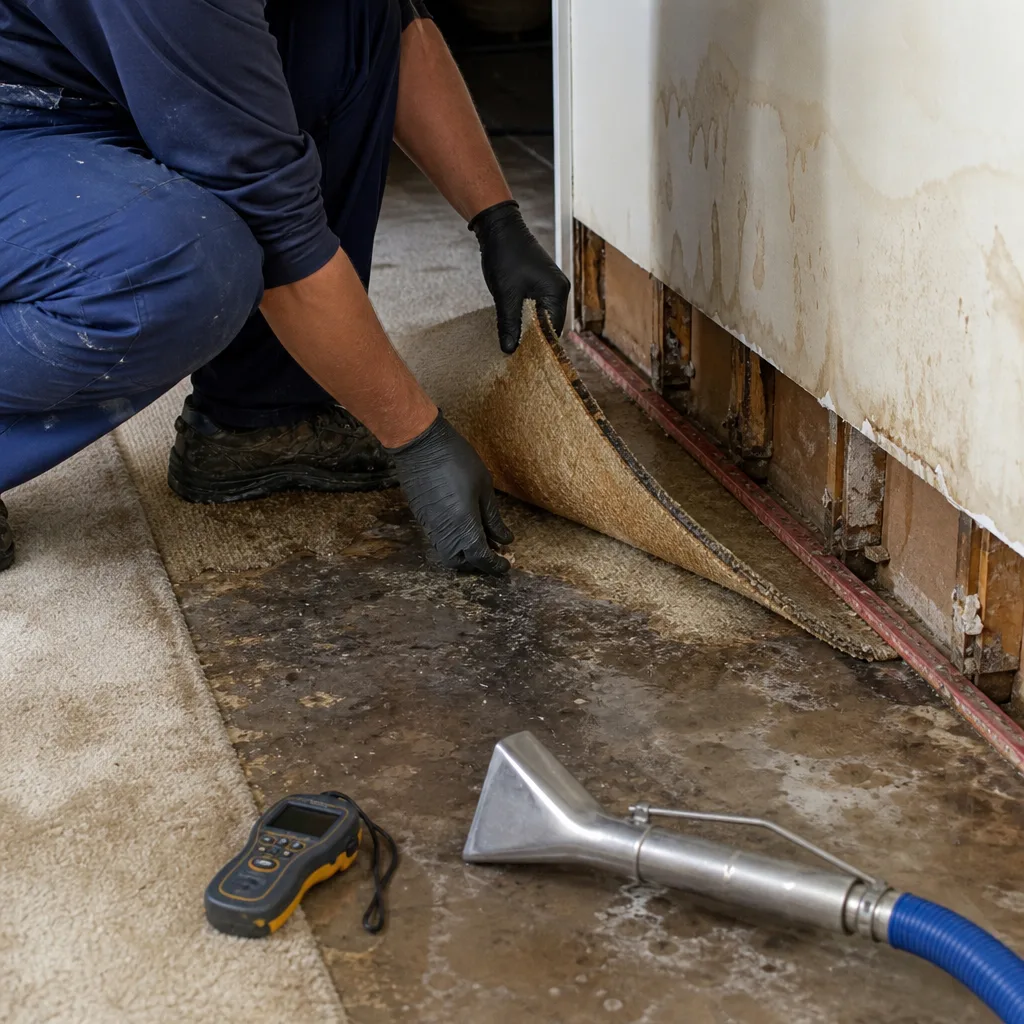
Standing water in a Poway slab home doesn’t just damage flooring. It channels into floor registers, under baseboards, and through the same slab penetrations where pre-1990 copper and galvanized supply lines already run. We get extraction running fast, using truck-mounted and portable units sized for ranch layouts and split-level floor plans common throughout 92064. A live dispatcher coordinates the call, and our crew arrives the same visit.
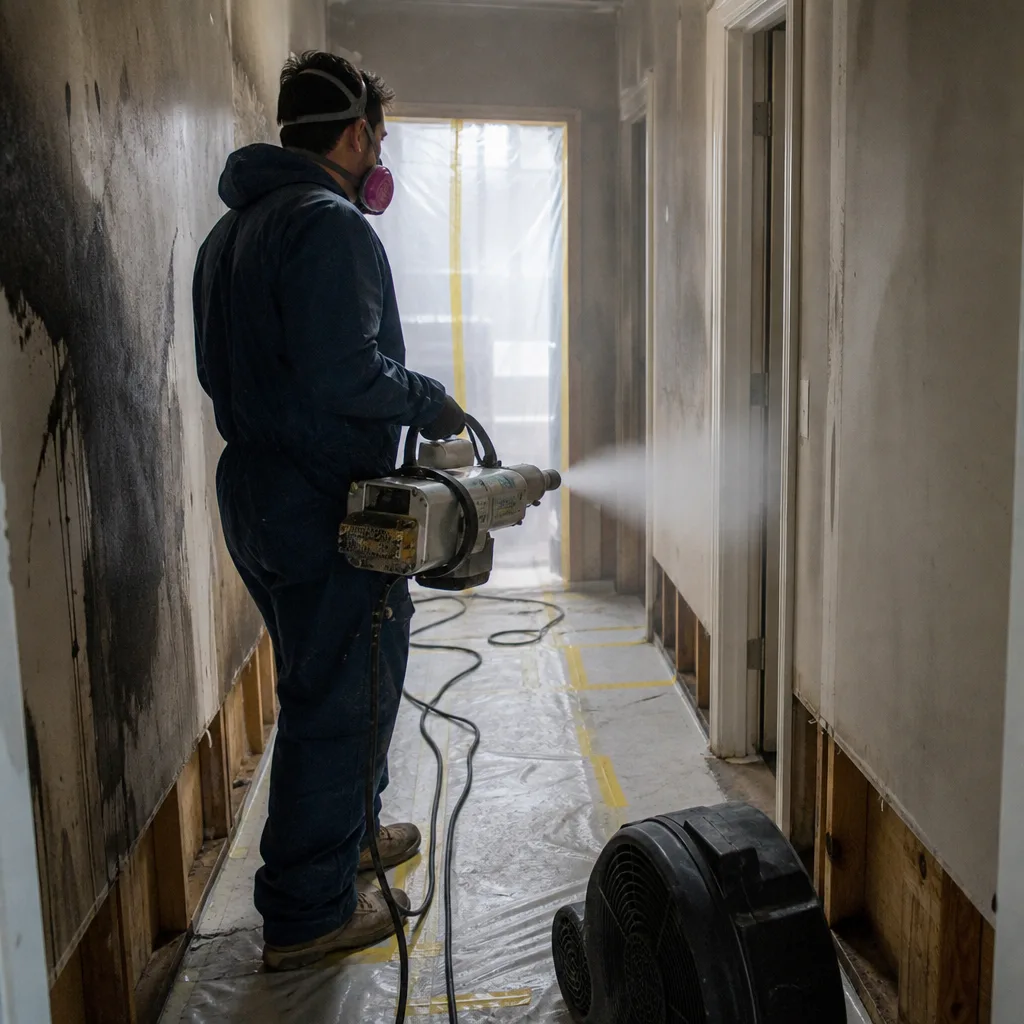
Structural Drying & Dehumidification
Poway’s summer highs routinely run 10 to 15 degrees above coastal San Diego, but the real drying challenge here is the Santa Ana season. Inland humidity drops to single digits, and homeowners assume their walls are drying fine on their own. They aren’t. Uneven drying behind stucco cavities masks moisture that keeps feeding mold. We use professional-grade Dri-Eaz dehumidifiers and Phoenix axial air movers to dry wall plates and studs to below 12 percent moisture content, logging every reading until the dry standard is met.
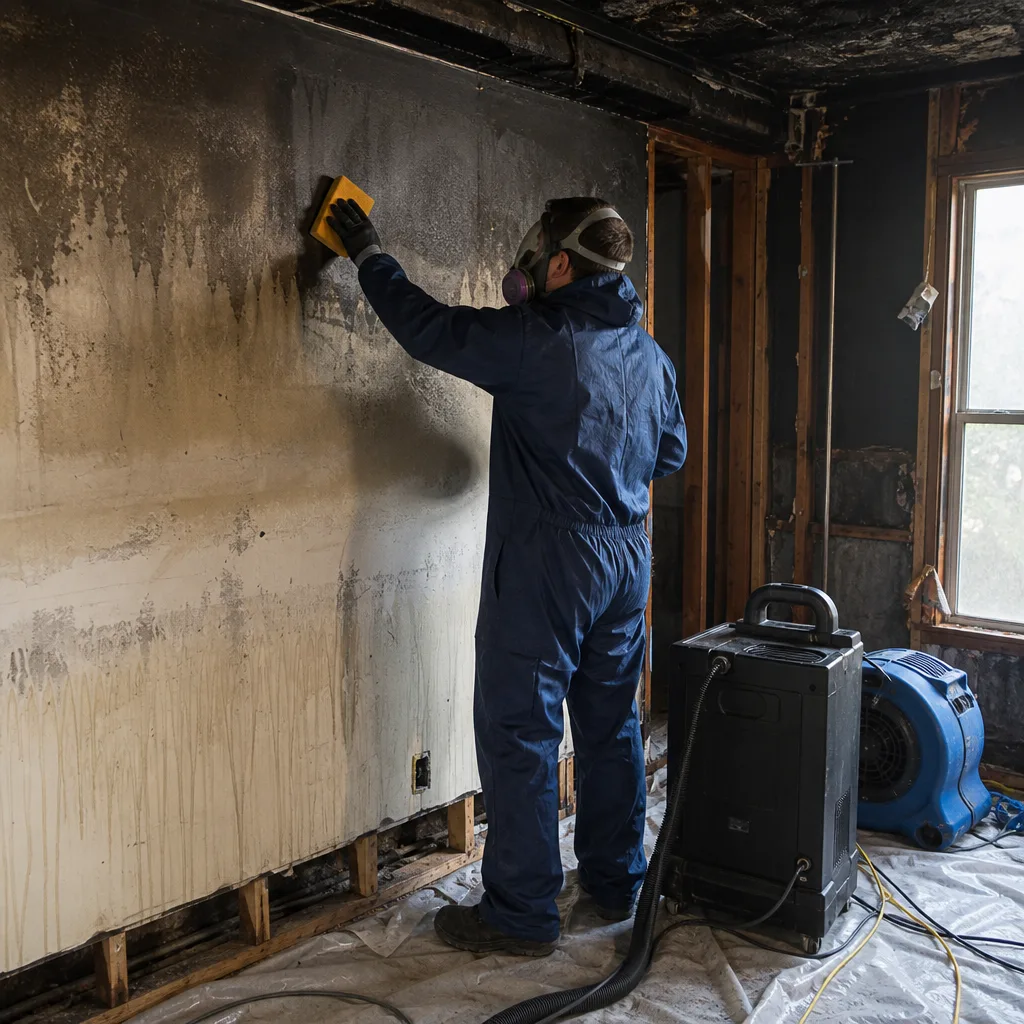
Flood Cleanup
After intense atmospheric-river rain, fire-scarred chaparral slopes above Poway shed water instead of absorbing it. Runoff pours into the Poway Creek drainage corridor, and Category 3 water backs up into slab-foundation homes along the 92064 flatlands. This is contaminated water requiring full extraction, sanitizing, and structural drying performed by trained technicians who understand Category 3 protocols. We bill your insurance carrier directly and provide photo documentation of every phase.
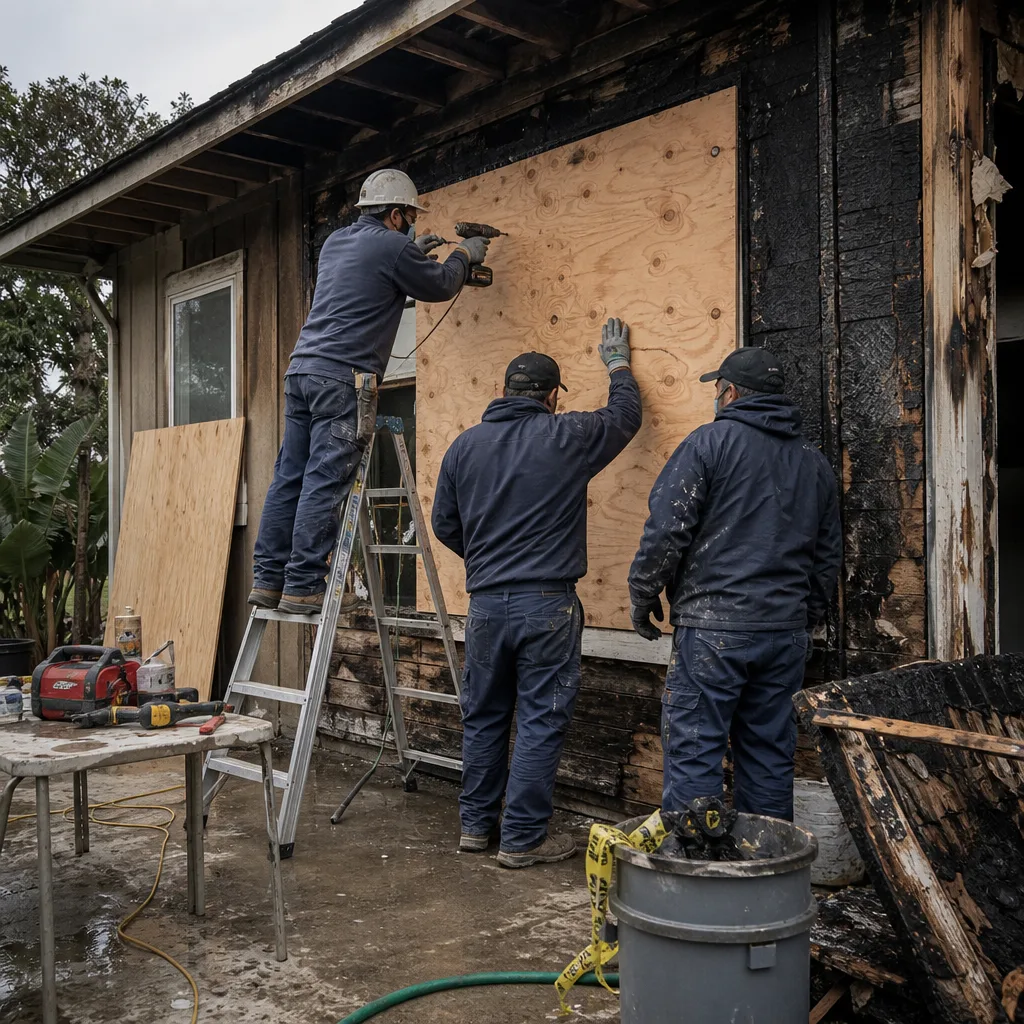
Burst Pipe Restoration
San Diego County’s hard imported water corrodes older plumbing faster than most homeowners realize. Pre-1990 Poway homes with original galvanized supply lines are especially vulnerable to slab leaks and in-wall bursts. The result is often hidden: water wicking up through floor channels until tiles tent or baseboards warp. We locate the source, stop the water, and dry the affected structure without stripping more than what moisture mapping shows is saturated.
What happens when you call
- 1
A real person answersNo phone trees - you reach a local pro.
- 2
You get an upfront price rangeHonest numbers before anyone is dispatched.
- 3
A background-checked tech heads outLicensed & insured, dispatched right away.
- 4
You approve before work beginsNothing starts until you say go.
Trusted Brands We Service in Poway
Our crews work on every type of water damage restoration job across Poway’s housing stock, from 1970s stucco ranches along Twin Peaks Road to newer construction in the 92074 corridor. We stock common local parts and materials for fast turnaround on burst pipe repairs and structural drying setups. Our technicians train to IICRC and RIA standards, and our equipment trailer carries Dri-Eaz and Phoenix units calibrated for Poway’s inland drying conditions. When you call us at (888) 737-2439, you’re not waiting on a parts order from across the county.
Common Water Damage Restoration Problems We See in Poway Homes
- Hidden moisture behind stucco cavities: Poway’s 1970s-1990s stucco-clad homes trap water between cladding and framing. A Santa Ana spell drops interior humidity so low that the surface feels dry while the cavity behind it stays wet for weeks.
- Slab leaks in pre-1990 construction: Original copper and galvanized supply lines buried in slab foundations corrode under San Diego County’s hard water. Bursts send water up through floor channels where you can’t see it until tile tents or carpet delaminates.
- Flash-flood Category 3 water from fire-scarred slopes: The 2003 Cedar Fire scorched hillsides directly adjacent to Poway neighborhoods. After atmospheric-river rain, hydrophobic soils shed water downhill into the Poway Creek corridor, flooding slab homes faster than standard drainage assumptions predict.
- Uneven drying after firefighting suppression: Post-Cedar Fire building codes required Class A fire-rated assemblies and concrete tile roofs on many Poway homes, but that water-shedding design works against you after a fire suppression event. Water hitting a tile roof at speed finds wall penetrations and saturates wall cavities unevenly.
Pricing for Water Damage Restoration in Poway, CA
A typical emergency water extraction in Poway runs $800 to $1,600, depending on square footage and how many rooms are affected. Structural drying and dehumidification typically adds $1,400 to $3,200, with daily monitoring included in our written scope. Flood cleanup involving Category 3 water from the Poway Creek corridor usually runs $3,500 to $8,000 because of the sanitizing and containment required. Burst pipe restoration, including drywall and baseboard replacement, falls between $1,800 and $4,800 depending on how far the water traveled through slab channels.
Every job gets a written scope agreed before work starts. No surprises on the bill. We bill your carrier directly and provide photo documentation for adjusters. Call (888) 737-2439 for a free, no-obligation estimate. Senior and veteran homeowners receive a 5 percent discount, always.
We Also Serve Cities Near Poway
Our crews regularly handle water damage restoration in Rancho Penasquitos, Mira Mesa, Santee, and Eucalyptus Hills. We understand the different drying conditions between Poway’s inland valley and the surrounding communities. If you’re searching for Water Damage Restoration anywhere in San Diego County’s inland corridor, call us. We’ll be there when we say.
Serving Poway, CA - Our Local Coverage Area
We’re based in the Poway area and know this community well. Use the map below to see our service coverage - if you’re nearby, we can almost certainly help.
FAQs - Water Damage Restoration in Poway
Professional drying should begin within 24 to 48 hours, and sooner is always better in Poway’s specific climate. Santa Ana winds drop interior humidity to single digits, making wall surfaces feel dry while the cavity behind stucco stays saturated. Once mold begins growing inside that cavity, which can happen in as little as 48 to 72 hours in warm inland air, you’re looking at a much larger remediation job. Call (888) 737-2439 and we’ll have a certified crew on site the same visit.
It means floodwater in 92064 slab homes is typically Category 3 contaminated water, not clean rainwater. After fire scarred the chaparral slopes above Poway in the 2003 Cedar Fire, soils became hydrophobic and shed water fast. That runoff picks up ash, soil bacteria, and debris as it channels down into the Poway Creek drainage corridor, then backs up into slab foundations. Cleanup requires full extraction, professional sanitizing, and structural drying by a certified Water Damage Restoration in Poway team, not a shop vac and fans.
Yes, and the reason is San Diego County’s hard imported water. Pre-1990 Poway homes were commonly built with copper or galvanized supply lines run through slab foundations. Decades of mineral-heavy water corrode those lines from the inside out until they burst. Because the break is under the slab, water travels up through floor channels and appears as tented tile or warped baseboards long after the leak started. If you suspect a slab leak in 92064 or 92074, call us before the damage spreads further.
Yes, and it’s a factor many restoration companies miss. Poway sits in one of San Diego County’s highest Very High Fire Hazard Severity Zones, ringed by chaparral-covered hills. When firefighting suppression water enters a stucco cavity, it carries ash, soot, and fire retardant chemicals that contaminate the drying process. Standard water extraction isn’t enough. We use containment and professional-grade drying equipment to handle the particulate load while bringing the structure to dry standard. This is why our IICRC-trained technicians handle fire suppression water differently than a standard plumbing leak.
Poway’s housing stock is mostly slab-on-grade construction without basements. The 1970s-1990s stucco ranches and tract homes that dominate 92064 and 92074 were built on concrete slabs, meaning water doesn’t pool in a basement. Instead, it channels through slab penetrations and wicks up through flooring and wall plates. That’s why our Poway work focuses on emergency extraction, structural drying, and slab leak detection rather than basement pump-outs. If you’ve got standing water in a Poway slab home, call (888) 737-2439 now.
Written by Curt Bowman, Owner at Floodline Restoration Co. of California, serving Poway and San Diego County since 2010.