
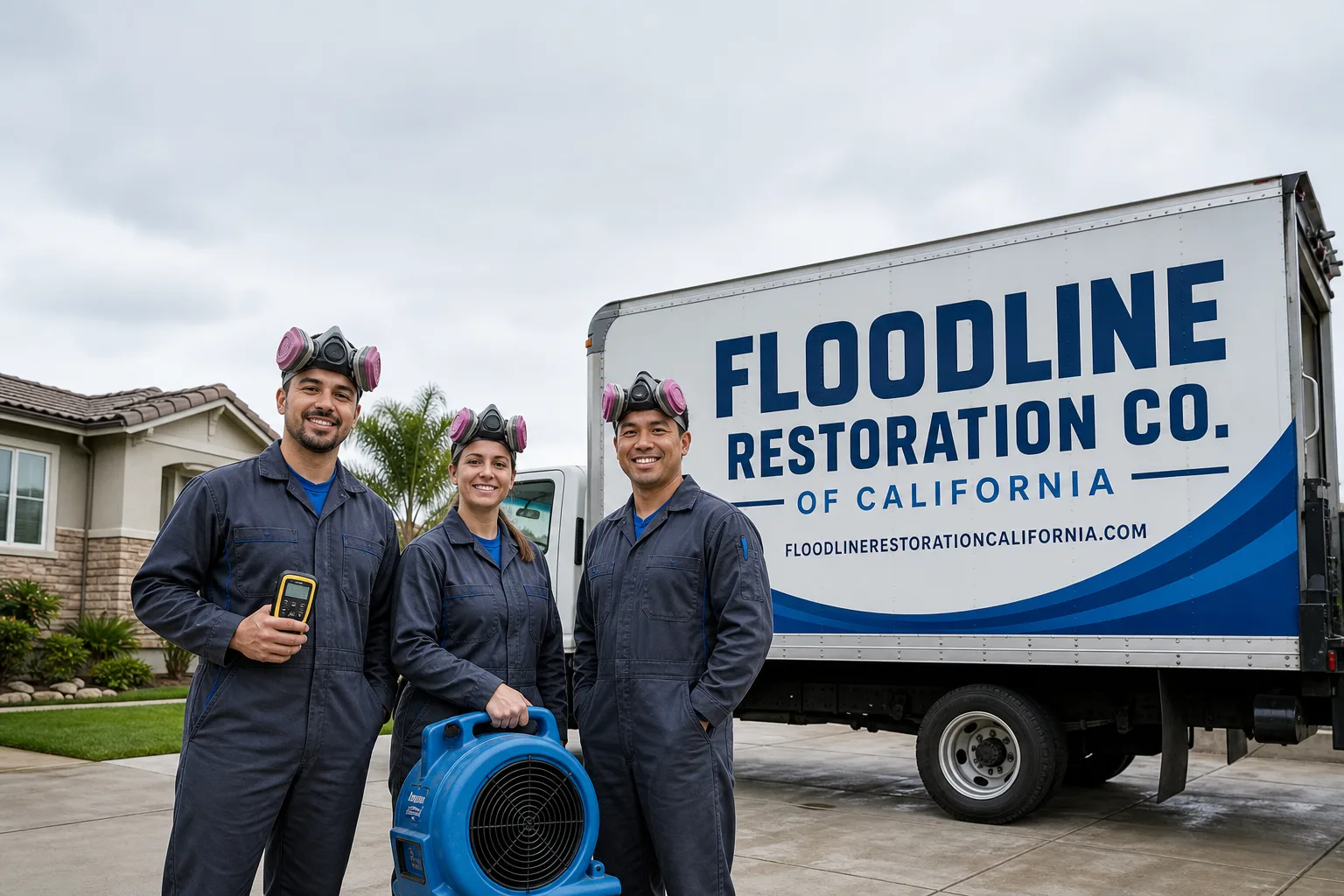
Fast, Reliable Water Damage Restoration Across Newark
Water damage restoration in Newark typically costs $1,850-$4,200 for a full extraction, drying, and rebuild scope, and the first crew can usually reach most 94560 homes within 60-90 minutes of your call. That response time matters in Newark more than in nearby cities because so much of the residential land here sits on reclaimed Bay marshland where groundwater and tidal water behave differently than they do on stable soil. We’ve spent years working Newark’s flat western tracts, the 1950s-1970s tract homes near Mowry Slough, and the neighborhoods where a cracked slab isn’t an anomaly but an expected condition. If you have standing water, a soaked wall, or a musty smell that won’t quit, call (888) 737-2439 and a live dispatcher answers, day or night.
Key Takeaways
- Newark’s reclaimed marshland means double-source flooding: tidal backflow through storm drains plus groundwater wicking through cracked slabs, often at the same time.
- Drying takes longer here: flat terrain and near-zero drainage gradient keep water in crawlspaces and garages 3-5 days longer than hillside cities like Fremont.
- We bring the right equipment on day one: Dri-Eaz air movers, Phoenix dehumidifiers, and Injectidry systems sized for low-lying Bay-side homes.
- Every job is backed by the 90-Day Done Right Promise: written, no arguing, and honored by the same crew that started the work.
Why Floodline Restoration Co. of California Is Newark’s Preferred Water Damage Restoration Company
We answer the phone with a live person, not a recording. That’s been true for 42 years of combined local service across the Bay Area, and it’s the first thing Newark homeowners notice when they call us at 2 a.m. with water rising in a garage off Thornton Avenue. The dispatcher knows Newark’s geography, the low-lying streets west of the railroad tracks, and the tract-home layouts of the 1960s neighborhoods. That knowledge cuts 30 minutes off the average dispatch time because we already know which roads flood first and how to route around them.
Our Newark customers tend to be people who’ve lived in their homes for two decades and plan to stay another two. They don’t want a sales pitch. They want background-checked, uniformed technicians who show up when promised and don’t hand the job off mid-way. That’s how we operate. The crew that reads the moisture map on day one is the crew that takes daily readings, documents everything for the insurance carrier, and handles the rebuild when drying is done. No mid-job handoff, no new faces showing up with a different truck and no idea what happened before they arrived.
We’re proud to hold IICRC, RIA, and IFA certifications, but what matters more to Newark homeowners is that we show up in a marked truck, shake your hand, and start extraction the same visit. The equipment we bring is professional-grade: Dri-Eaz, Phoenix, XPOWER, B-Air, and Injectidry units that move thousands of cubic feet of dry air per minute. That’s the difference between a home that dries in four days and one that molds in two weeks. We serve Water Damage Restoration in Newark with the same crews and standards we’ve built the whole company on.
Our Water Damage Restoration Services in Newark
Newark’s water damage rarely follows the single-source pattern you’ll find in Union City or Fremont. Here, the unique combination of reclaimed Bay marshland, aging slab foundations, and tidal influence changes how we approach every phase of the work. Our Water Damage Restoration team runs four core services that handle what Newark actually throws at a house.
Emergency Water Extraction
Standing water in a Newark garage or finished basement needs to be out within hours, not days. We run truck-mounted and portable extraction units sized for the wide, low-slung footprints of 1950s-1970s tract homes. The flat grade on Newark’s western parcels means water doesn’t run off naturally; it sits and wicks upward through drywall and insulation. We extract first, then set drying equipment the same visit. Emergency extraction in Newark typically runs $650-$1,400 depending on the square footage of affected flooring and how long the water has been standing.
Structural Drying & Dehumidification
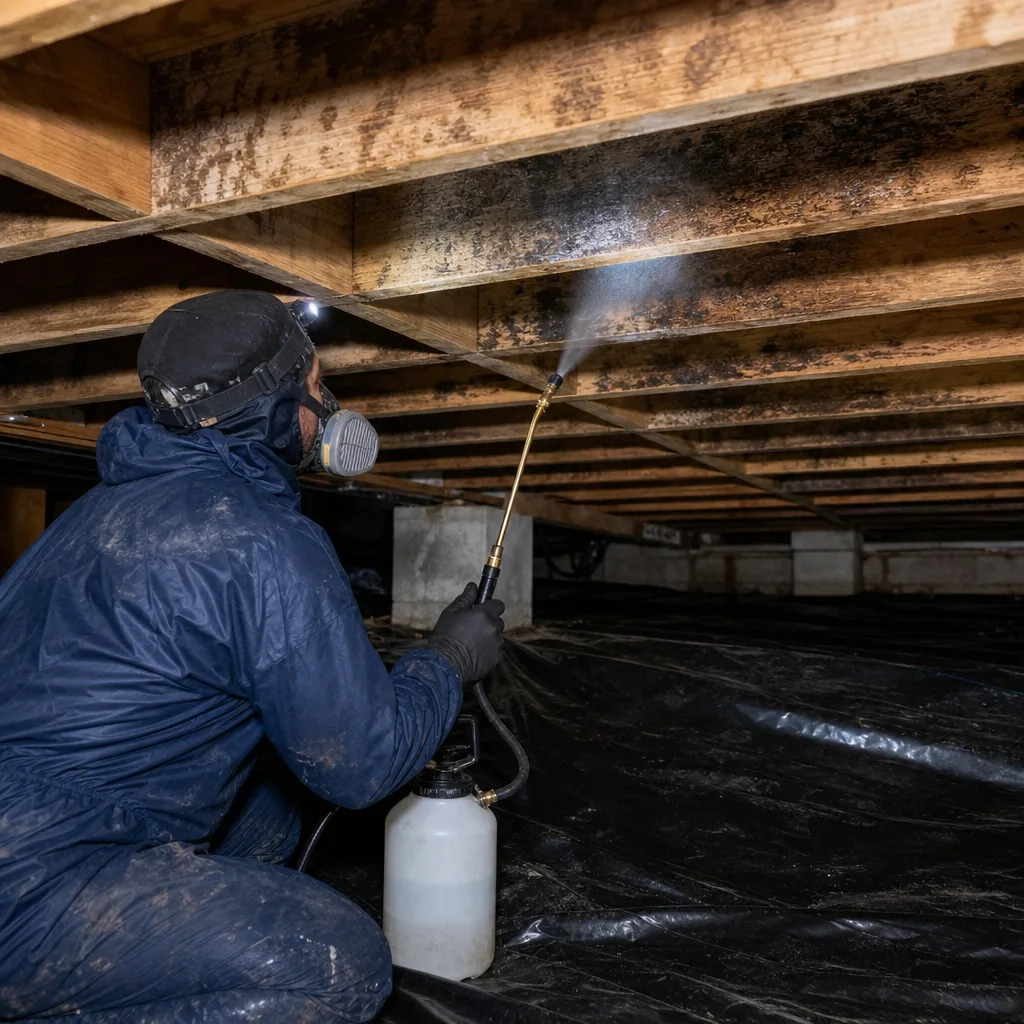
This is where Newark throws technicians a curve. In a hillside city, you set dehumidifiers, monitor moisture, and wrap up in 3-4 days. In Newark, the groundwater table under the slab keeps feeding moisture upward even after the visible water is gone. We use Phoenix dehumidifiers and Dri-Eaz air movers configured specifically for crawlspace and slab-on-grade homes, and we run daily moisture readings until the materials hit the dry standard. Structural drying in Newark runs $1,100-$2,800 for a typical single-level home, with larger homes or those over active groundwater pushing higher.
Flood Cleanup
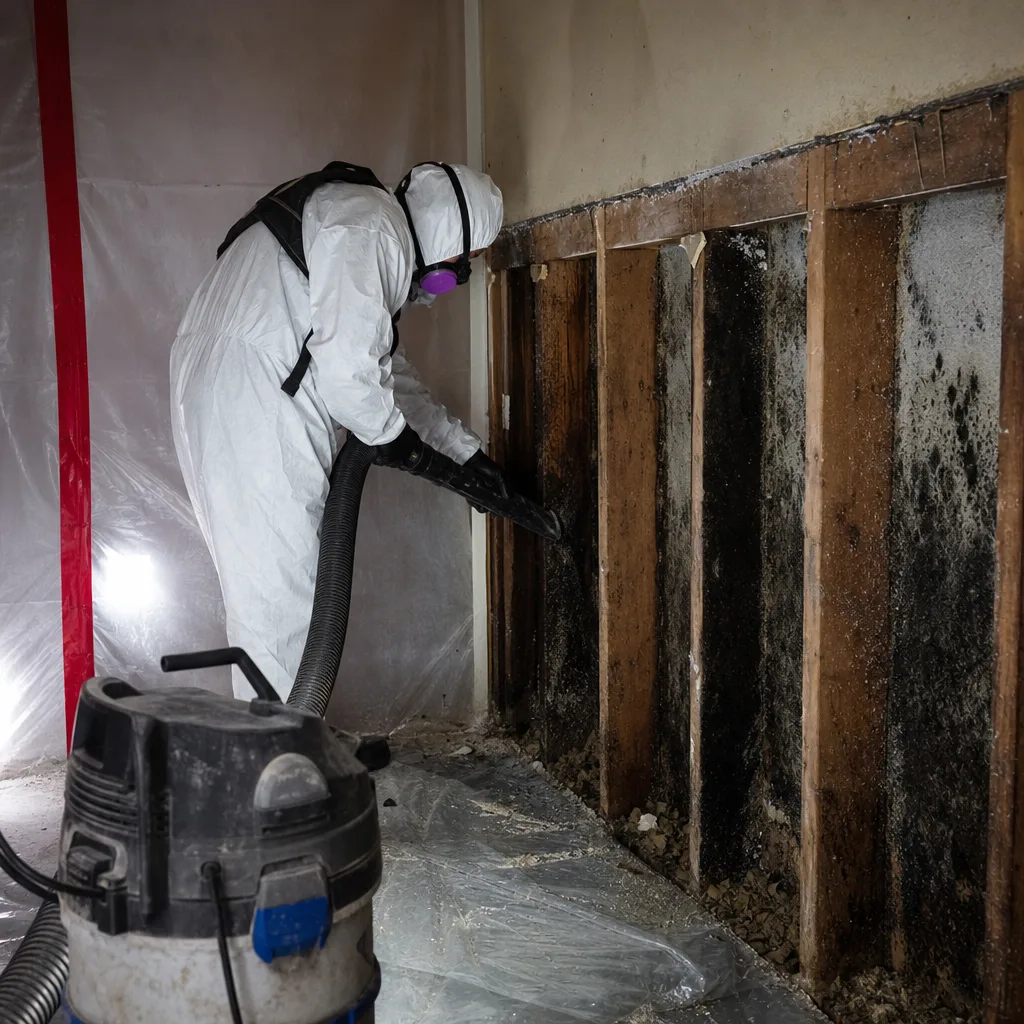
Newark’s flood events are rarely just stormwater. West of the railroad tracks and near Mowry Slough, king tides and atmospheric-river surges backflow through undersized municipal storm drains and inundate garages and ground-floor slabs even without a drop of local rain. We treat those jobs as dual-source: exterior source control on the drain line plus interior extraction and drying. Flood cleanup in Newark runs $900-$3,500 depending on how much structure got saturated and whether groundwater is involved. The real cost driver is whether the slab itself is the source, which we determine with a moisture map the first day.
Burst Pipe Restoration
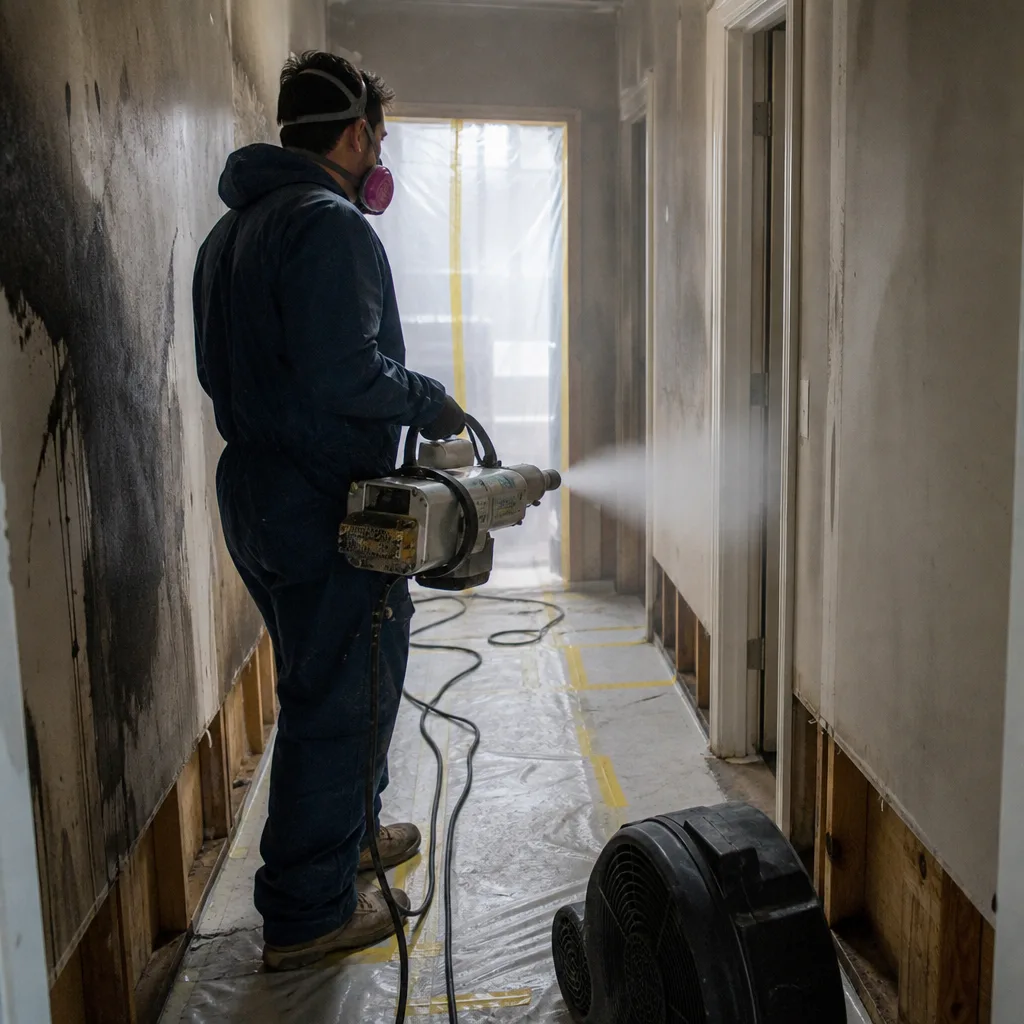
Original galvanized plumbing in Newark’s 1950s-1970s homes corrodes at the joints under persistent high-water-table exposure. When a pipe lets go, the water often travels along the slab and surfaces in a room far from the leak. We trace the wet path, cut drywall where needed, dry the structure, and coordinate the pipe repair so the same visit ends with the home drying, not still dripping. Burst pipe restoration in Newark runs $800-$2,200 for extraction and drying; the plumbing repair itself is billed separately through your plumber or ours, and we’ll document everything for your insurance carrier.
What happens when you call
- 1
A real person answersNo phone trees - you reach a local pro.
- 2
You get an upfront price rangeHonest numbers before anyone is dispatched.
- 3
A background-checked tech heads outLicensed & insured, dispatched right away.
- 4
You approve before work beginsNothing starts until you say go.
Trusted Brands We Service in Newark
When water sits in a Newark home, it attacks the materials and systems differently than it does on stable ground. We work with and around whatever you’ve got in the house: original wood framing, newer engineered flooring, drywall, plaster, and the mechanical systems underneath. Our crews are trained to RIA and IFA standards, which means we know how to dry a 1960s tract home without tearing out more drywall than necessary. The equipment we trust for that work includes Dri-Eaz air movers and Phoenix dehumidifiers, both of which handle the high-humidity, low-airflow conditions common in Newark’s slab-on-grade homes. We keep the consumables and replacement materials we need stocked on our trucks, so a job near Mowry Slough doesn’t wait on a parts run across town.
Common Water Damage Restoration Problems We See in Newark Homes
- Dual-source flooding near the Bay side. Water shows up in the garage after a king tide, but the real source is tidal backflow through the storm drain while groundwater simultaneously seeps up through a cracked slab. Treating only the visible water leaves the slab active, and mold blooms inside the wall weeks later.
- Extended drying times on flat western parcels. Newark’s near-zero drainage gradient means standing water in garages and crawlspaces lingers 3-5 days longer than the same volume would in Fremont or Union City. Standard drying protocols fail here without adjusted equipment loads and longer monitoring windows.
- Hidden corrosion in original galvanized plumbing. Homes built from the 1950s through the 1970s often still have original galvanized supply lines. High groundwater exposure accelerates joint corrosion, producing slow, hidden leaks that saturate drywall and framing long before anyone sees a drip.
- Slab cracks that never stop wicking. Decades of differential settling on Bay mud have left widespread slab and foundation cracking in Newark’s tract-home stock. Those cracks become persistent water pathways during every rain event and often need epoxy injection or vapor-barrier installation before drying can truly finish.
How Newark’s Reclaimed Marshland Changes the Way We Work
Water damage in Newark’s 94560 is rarely from a single source. Homes here were built on reclaimed Bay marshland and tidal fill over Bay mud, and that substrate never stops moving. The result is a dual-source condition: groundwater wicking upward through cracked slabs while tidal backflow pushes storm-drain water back into the same low-lying neighborhoods. In neighboring Fremont or Union City, a flooding event is almost always one source. In Newark, it’s often two, and a technician who treats only the visible floodwater misses half the job. That’s why our crews are trained to look for the signature of both: moisture readings that climb even after extraction, a damp slab with no visible surface water, and musty odors that return days after drying equipment comes out.
Our crew was called to a 1960s tract home near Mowry Slough after a king tide flooded the garage. We found the sump pump overwhelmed not by rainfall but by tidal backflow through the municipal storm drain, while groundwater was simultaneously seeping up through a cracked slab in the adjacent laundry room. We deployed a Phoenix dehumidifier and Dri-Eaz air movers after source-control on the drain line, but the real fix required injecting the slab cracks and installing a new vapor barrier, work that took three days because the original 1960s slab had no barrier at all. Had Fire & Smoke Damage Restoration in Newark been needed alongside the water mitigation, our crews could have coordinated both scopes without mid-job handoffs.
That job is a pretty typical Newark call, especially the older the home and the flatter the lot. If you live west of Thornton Avenue, within a mile of the slough, or in any of the 94560 tracts where the street floods before the rain stops, your water damage is probably going to behave like this. The good news is we’ve seen it enough times that we know exactly what to do the first day.
Pricing for Water Damage Restoration in Newark, CA
Here’s what homeowners in Newark can expect to pay, based on our recent work across the city:
| Service | Typical Newark Range |
|---|---|
| Emergency water extraction | $650 - $1,400 |
| Structural drying & dehumidification | $1,100 - $2,800 |
| Flood cleanup (single room) | $900 - $1,800 |
| Flood cleanup (multiple rooms / garage) | $1,600 - $3,500 |
| Burst pipe extraction & drying | $800 - $2,200 |
| Slab crack injection & vapor barrier | $1,500 - $4,000 |
The biggest cost driver in Newark is whether the slab itself is part of the problem. When groundwater is actively wicking through foundation cracks, drying takes longer and the repair scope grows beyond what a standard extraction-and-dry job requires. We give every Newark homeowner a written scope before work begins, not after. You’ll know exactly what we found, what we’re going to do, and what it costs before a single piece of equipment comes off the truck. Estimates are free. Call (888) 737-2439 and we’ll walk through it with you.
We Also Serve Cities Near Newark
Our crews work throughout the southern East Bay, so if you’re in Newark or just across the city line, we can reach you quickly. We regularly serve Union City, Fremont, East Palo Alto, and Fairview with the same equipment, certifications, and 90-Day Done Right Promise we bring to every Newark job.
Serving Newark, CA - Our Local Coverage Area
We’re based in the Newark area and know this community well. Use the map below to see our service coverage - if you’re nearby, we can almost certainly help.
FAQs - Water Damage Restoration in Newark
Newark’s high groundwater table and flat terrain keep materials wet longer, and extended moisture exposure is what produces the musty smell you’re noticing. The reclaimed marshland under much of 94560 holds water close to the slab, and homes without vapor barriers stay damp at the bottom of walls even after the visible water is gone. Drying protocols that work in Fremont don’t always finish the job here because the moisture keeps coming from below. We run longer drying windows and take daily moisture readings until the dry standard is actually met, not just until the equipment count says it should be done. If the smell persists, call (888) 737-2439 and we’ll investigate free.
Yes. Newark’s western neighborhoods sit barely above mean sea level, and a king tide pushes water backward through undersized municipal storm drains into low-lying streets and garages. You won’t see a drop of rain and your garage floor will still end up under six inches of water. The same condition affects any home within roughly a mile of the Bay shoreline, especially west of Thornton Avenue. If it happens to you, call us at (888) 737-2439 and we’ll start extraction the same visit.
It extends drying significantly, usually by 3-5 days compared to homes on stable soil. The reclaimed marshland under Newark keeps the water table high, and that water wicks upward through cracked slabs and foundation walls long after the visible floodwater is extracted. There’s also almost no natural drainage gradient, so water that enters a crawlspace or garage tends to stay put. Our crews size drying equipment for this reality from day one, and we don’t pull the dehumidifiers until the moisture log says the structure is actually dry.
Because Newark’s homes sit on Bay mud that has settled differentially for six or seven decades, producing slab cracks that reach all the way to the water table. In Union City, a foundation crack may open during a rainstorm and close when things dry out. In Newark, the crack is always there and always near groundwater, so any moisture event pushes water up through it. That means water damage in Newark homes often starts from below, not from a burst pipe or a storm. Our team checks the slab with moisture probes on every Newark job, because skipping that step is how mold blooms six weeks later. Call (888) 737-2439 for a free assessment.
Usually yes, for two reasons. First, original galvanized plumbing in 1950s-1970s Newark homes corrodes at the joints under constant high-water-table exposure, which means slow hidden leaks that saturate drywall before you ever see a drip. Second, those homes rarely have vapor barriers under the slab, so groundwater wicks upward into framing and flooring continuously. A standard drying protocol that works on a 1990s home in Union City won’t address either of these Newark-specific conditions. We adjust our equipment placement, run longer monitoring, and often recommend vapor-barrier installation or slab-crack injection as part of the drying scope. Call (888) 737-2439 and we’ll tell you exactly what your house needs.
Call Floodline Restoration Co. of California for Water Damage Restoration in Newark
If you see water where it shouldn’t be, or smell something that wasn’t there last week, call (888) 737-2439. A live dispatcher picks up, asks a few questions, and sends a certified crew with Dri-Eaz and Phoenix equipment that gets extraction running the same visit. You’ll get a written scope before work starts, photo documentation for your insurance carrier, and the 90-Day Done Right Promise in writing when the job is finished. Done right, and backed in writing. That’s the Keystone Standard we’ve built 42 years of local reputation on.
Written by Curt Bowman, Owner at Floodline Restoration Co. of California, serving Newark and the surrounding Bay Area with the 90-Day Done Right Promise and the K.E.Y.S. values code: Krafted right, Every time, Your home first, Standing behind it.