
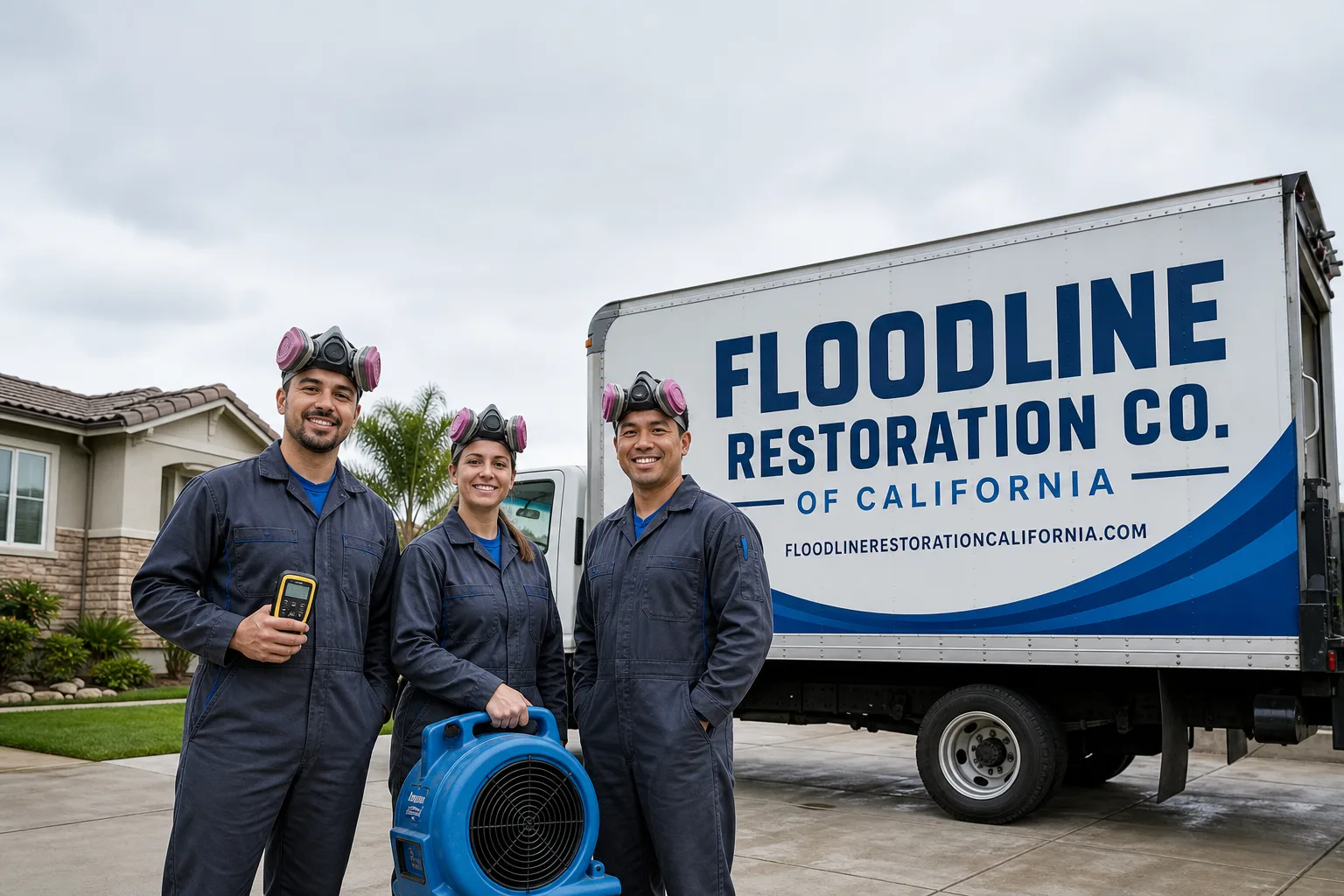
Fast, Reliable Water Damage Restoration Across Kingsburg
Water damage restoration in Kingsburg typically runs $1,800-$4,600 for a standard single-room incident and $6,000-$18,000 when flood water reaches multiple rooms or a crawl space. Most Kingsburg jobs we handle are on emergency footing, and our crews reach homes in the 93631 zip code the same day you call, usually within 60 to 90 minutes. When the Kings River rises or an irrigation lateral backs up into your yard, waiting isn’t an option. Call (888) 737-2439 and a live dispatcher answers, day or night. Our Water Damage Restoration crews know exactly what Kingsburg’s older homes do when water gets in, because we’ve been fixing it here for years.
Why Floodline Restoration Co. of California Is Kingsburg’s Preferred Water Damage Restoration Company
Kingsburg homeowners don’t call us because they saw a billboard. They call because their neighbor’s son-in-law told them about the crew that showed up at 2 a.m. when the canal overflowed off Kamm Avenue, or the one that didn’t leave a 1950s house on Sierra Street until the moisture log showed dry standard in every wall cavity. That reputation matters in a town this size. We answer the phone with a person, not a recording, at all hours. The dispatcher knows the difference between Selma and Kingsburg, knows the river, knows the canal layout, and sends a background-checked, uniformed technician certified to IICRC, RIA, and IFA standards. Curt Bowman founded this company in 2010 around a dispatch board, not a sales desk, and the crews still run on that principle. Every job is backed by the 90-Day Done Right Promise in writing. If it’s not done right, we make it right, no arguing.
Most Kingsburg water damage jobs are completed in a single visit for the extraction and drying setup. The same crew that reads the moisture map on day one handles the daily readings, logs every number, and hands that log to you and your insurance carrier. You never play messenger between us and the carrier. We bill them directly. That’s the square deal, and it’s why Kingsburg homeowners keep our number.
Our Water Damage Restoration Services in Kingsburg
Emergency Water Extraction
In Kingsburg, emergency water extraction means getting standing water out of a house before the real trouble starts. The city’s post-war homes, many built from the 1940s through the 1970s with original plaster-and-lath walls, wick moisture upward far faster than homeowners expect. Our Kingsburg crews arrive with truck-mounted extractors and submersible pumps rated for the kind of volume a Kings River overbank event or a broken supply line can deliver. Extraction is running during the first visit. We don’t schedule a follow-up to start the job.
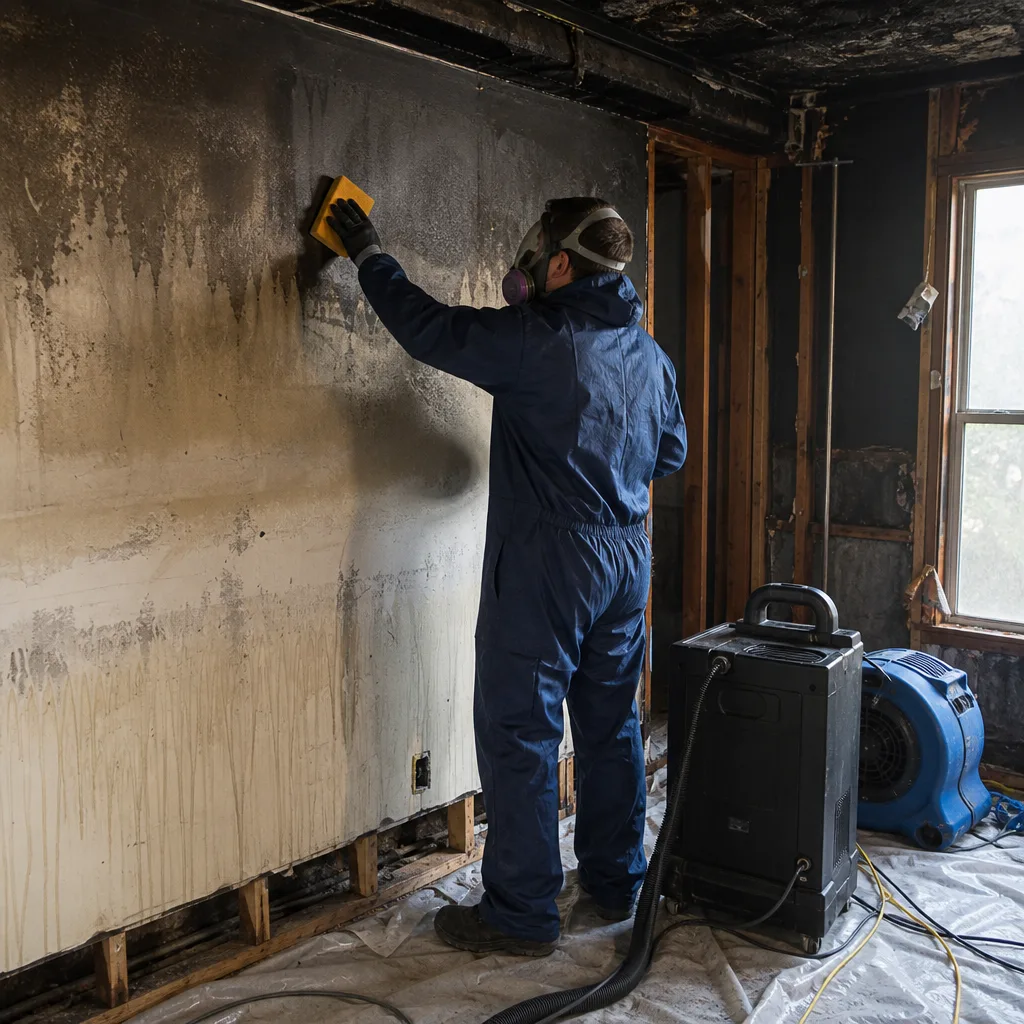
Structural Drying & Dehumidification
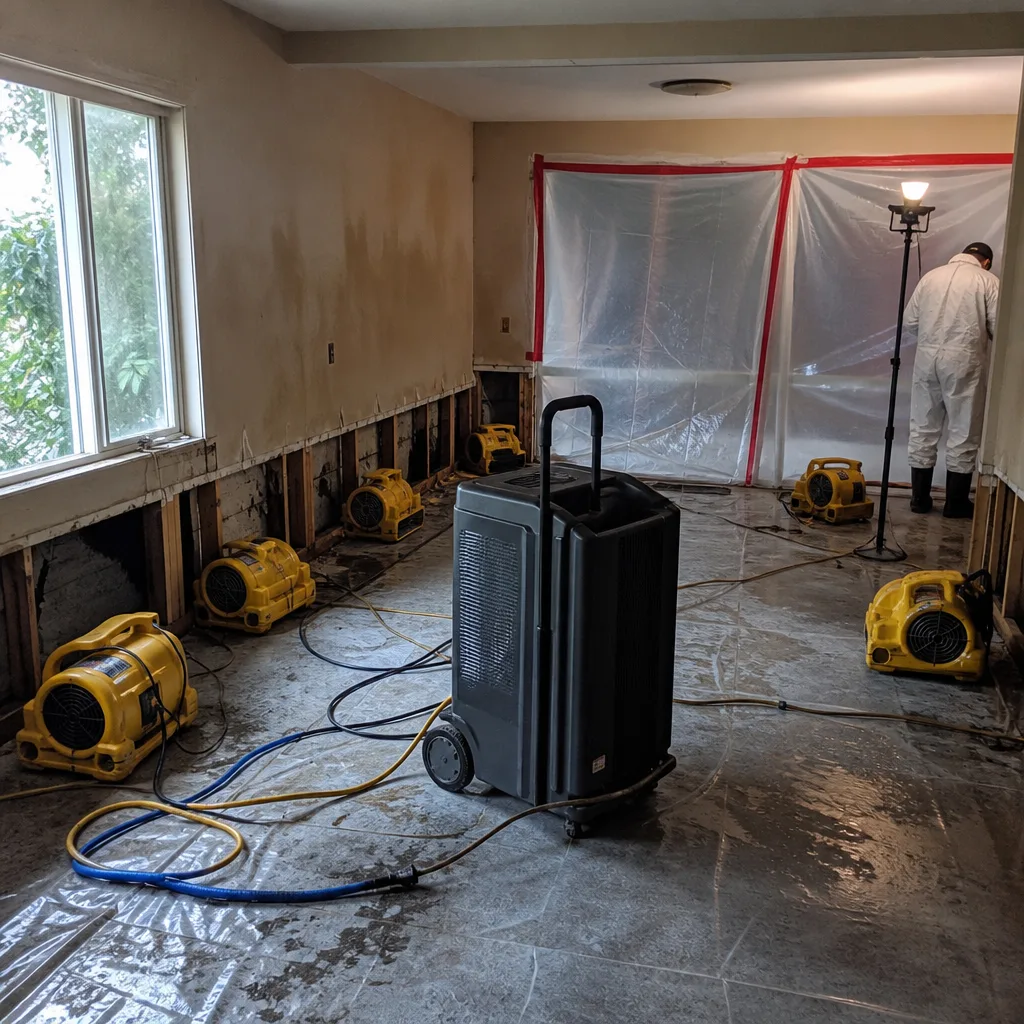
Drying a Kingsburg home properly means fighting two things at once: the water inside the structure and the humidity outside it. The dense tule fog that sits over the San Joaquin Valley from November through March keeps ambient humidity high enough that air drying alone won’t reach dry standard. We use Dri-Eaz and Phoenix dehumidifiers plus Injectidry floor mats to pull moisture from plaster, subfloor, and framing. Every day we’re on site, we take readings and add them to a written moisture log. You get that log. Your insurance company gets that log. When the numbers say dry, we stop. Not before.
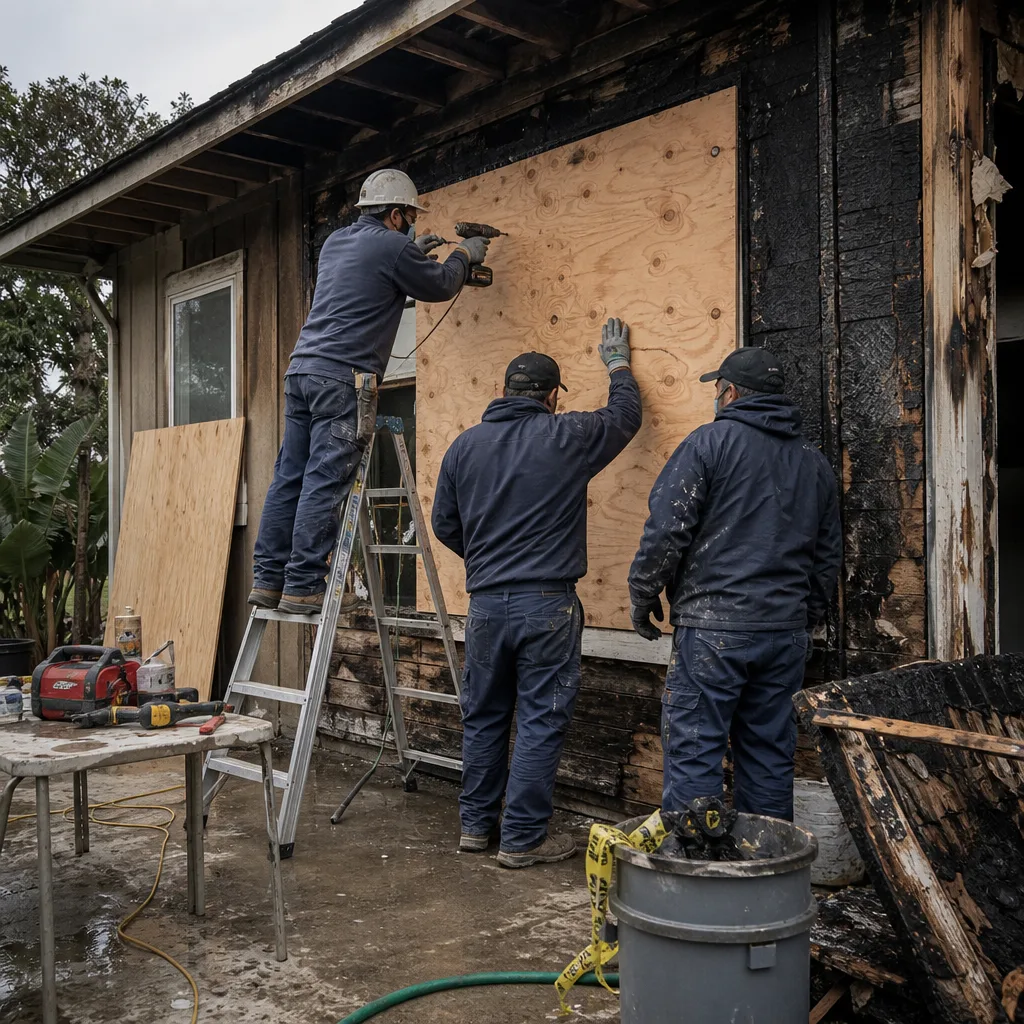
Flood Cleanup
Flood cleanup in Kingsburg often isn’t just river water. The agricultural irrigation laterals and drainage canals that border the town’s residential edges back up during heavy rain years and push field water into yards and crawl spaces. That water carries silt, fertilizer residue, and bacteria. Cleanup means more than mopping. We pump the contaminated water, remove saturated insulation and drywall where necessary, sanitize the affected surfaces, and set up drying equipment matched to the size of the intrusion. Crews from out of town sometimes label this a plumbing failure. We know the canal layout, and we treat the source correctly.
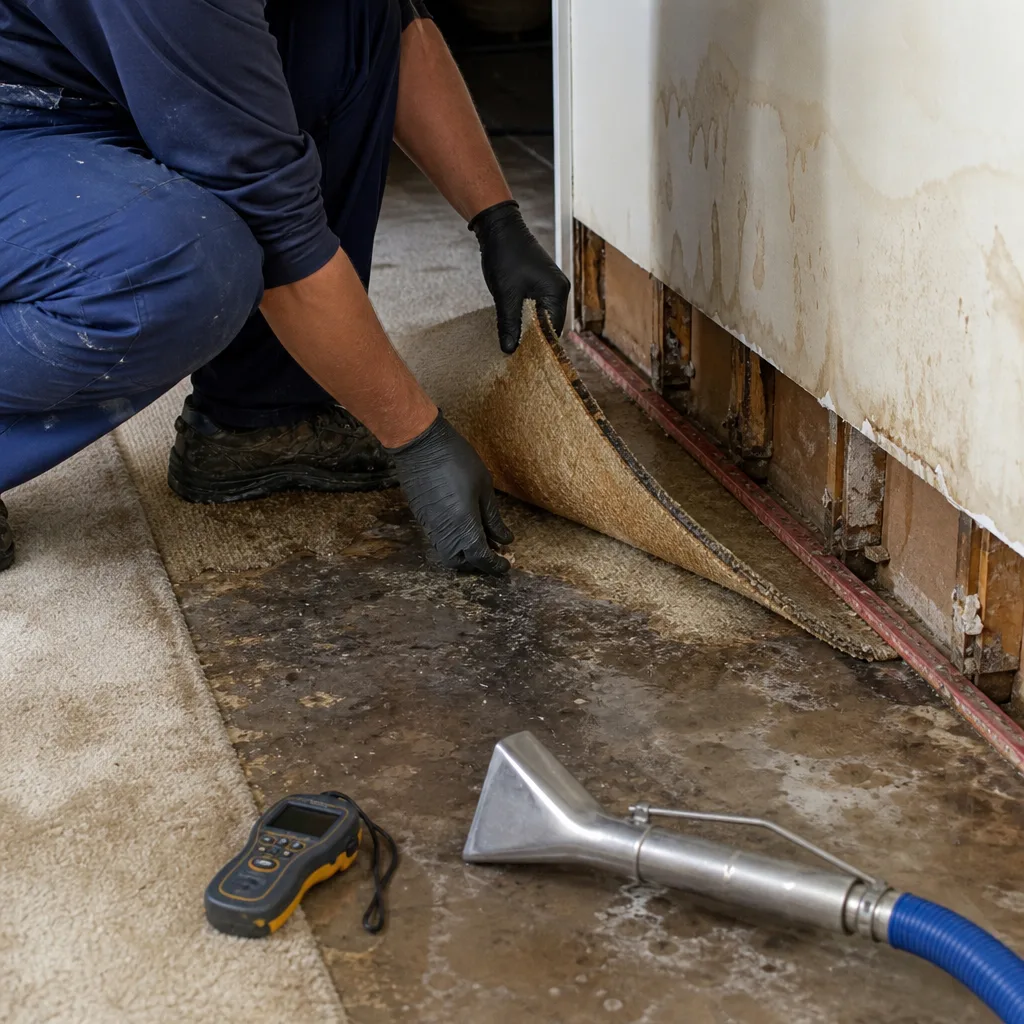
Burst Pipe Restoration
A burst pipe in a Kingsburg pier-and-beam home releases water into the crawl space first, where it goes unnoticed until floors warp or mold odor rises through the registers. We handle the full sequence: shut off the water, repair or cap the failed section, extract from the crawl space, dry the subfloor from below, and repair the damage above. Kingsburg winters deliver hard freezes often enough to crack older galvanized and copper supply lines, especially in uninsulated exterior walls. If your home still has original 1950s plumbing, this is one of the most common calls we answer between December and February.
What happens when you call
- 1
A real person answersNo phone trees - you reach a local pro.
- 2
You get an upfront price rangeHonest numbers before anyone is dispatched.
- 3
A background-checked tech heads outLicensed & insured, dispatched right away.
- 4
You approve before work beginsNothing starts until you say go.
Trusted Brands We Service in Kingsburg
Our technicians are certified to IICRC, RIA, and IFA standards, and the equipment we run on Kingsburg jobs is the same professional-grade gear we’d use on a commercial loss: Dri-Eaz, Phoenix, and Injectidry are the core of our drying lineup. We stock the consumables and replacement parts for these systems locally, which means we’re not waiting on a Fresno warehouse to send a desiccant wheel or a floor mat when your Kingsburg home is mid-dry. If you’ve had a competitor quote a job with rental-grade fans from a big-box store, know that our equipment moves more air at lower heat, and it’s monitored daily. The tool matters, but the person reading the moisture meter matters more.
Common Water Damage Restoration Problems We See in Kingsburg Homes
- Legacy plaster-and-lath walls holding invisible moisture. Kingsburg’s housing stock is dominated by modest single-family homes built between the 1940s and the 1970s. Paint looks dry on the surface, but the plaster behind it stays saturated for weeks and blooms into mold inside the wall cavity. Surface meters alone miss it. We use penetrating and pin-type meters to find what the paint is hiding.
- Expansive clay soil cracking slabs and foundations. The San Joaquin Valley clay under Kingsburg takes on water during wet winters and swells, then shrinks in the summer heat. That movement cracks slab foundations and reopens drying seams. You can extract every drop of visible water and still have moisture vapor coming up through hairline cracks six weeks later. We check for this on every slab home we dry.
- Irrigation canal backups around the residential edge. The laterals and drainage canals that border Kingsburg’s neighborhoods back up during heavy rain years and push field water into yards and crawl spaces. If the crew doesn’t know the local canal layout, they’ll misdiagnose it as a plumbing leak or municipal drainage problem, and the real cause stays uncorrected. We know the difference.
- Older rooflines and unreinforced masonry in the Swedish Village. The historic downtown core contains early 20th-century commercial and residential buildings with older rooflines and masonry that water enters fast during wind-driven rain. These buildings dry differently than a 1970s rancher, and they need more careful humidity management to prevent secondary damage to original materials.
Pricing for Water Damage Restoration in Kingsburg, CA
No-hassle upfront pricing means you see a written scope and a real number before equipment runs, not after the invoice lands. Here’s what Kingsburg homeowners should expect:
- Emergency water extraction (single room): $600-$1,400 depending on water depth and access.
- Structural drying and dehumidification (per room, 3-5 days): $800-$2,200 per affected room, including equipment and daily monitoring.
- Flood cleanup with crawl space contamination: $2,800-$8,500 when irrigation or river water carries silt and bacteria into a pier-and-beam foundation.
- Burst pipe restoration (extraction, drying, and direct repair): $2,200-$6,400 depending on the age of the pipe and finish repairs needed.
Wet-season Kingsburg jobs with expansive soil movement and deep plaster saturation run toward the higher end. It takes longer to dry a 1950s plaster-and-lath home than a modern drywall build, and the equipment has to work harder. We never cut corners on drying time to hit a lower number. Call (888) 737-2439 for a free estimate. There’s no charge for the phone call, and no pressure to sign anything on the first visit.
We Also Serve Cities Near Kingsburg
We serve Kingsburg and the surrounding communities, including Water Damage Restoration in Kingsburg neighbors in Selma, Parlier, Dinuba, and Reedley. Same live dispatch, same 90-Day Done Right Promise, same crew standards. If you’re just outside the 93631 boundary, call us and we’ll confirm coverage.
Serving Kingsburg, CA - Our Local Coverage Area
We’re based in the Kingsburg area and know this community well. Use the map below to see our service coverage - if you’re nearby, we can almost certainly help.
FAQs - Water Damage Restoration in Kingsburg
At flood stage, the Kings River pushes groundwater up through the valley floor, and Kingsburg’s expansive clay soils take on that water and swell. Homes on slab foundations may see hairline cracks open along the perimeter, letting vapor into the structure even without direct surface flooding. Homes on pier-and-beam foundations see water rise into crawl spaces. The river also accelerates the failure of aging irrigation laterals along the town’s edge, which back up and send field water toward residential lots. In practical terms, river flood stage in the 93631 means homes get wet from the bottom up as much as from the top down. If your home is within a quarter mile of the river or a canal, check your crawl space during any flood watch. Call (888) 737-2439 and we’ll send someone to take a look, even if you’re not sure you have a problem.
The crack is not the original problem; the soil under the slab is. Kingsburg sits on San Joaquin Valley clay that expands when saturated and contracts during the hot, dry summer. If a restoration crew extracts the water and patches the crack without addressing the moisture still trapped in the clay below, the soil keeps moving and the patch fails. We treat this by drying the sub-slab zone where it’s possible and by sealing the crack with a flexible material designed to move with the slab. We also document the condition in writing so your insurance carrier understands the cause. A repair that doesn’t account for the clay is a repair you’ll pay for twice.
Call us immediately at (888) 737-2439, and do not go into the crawl space yourself. Irrigation water carries fertilizer residue, silt, and bacteria, and it can saturate the soil under your piers enough to shift the foundation. Shut off your HVAC system if the return draws from the crawl space, keep children and pets out of the affected yard, and document the water level with photos from a safe distance if you can. We’ll extract the water, remove contaminated insulation, sanitize the space, and set up drying equipment. We’ll also check whether the backup came from a broken lateral, a clogged canal, or a failed drainage swale, because the fix is different for each. Our crews know Kingsburg’s canal layout well enough to identify the real source.
Most Kingsburg homes we dry reach the dry standard in three to five days during the winter fog season, which is longer than summer drying times. The dense tule fog that sits over the Valley from November through March keeps outside humidity at 80% or higher, so our dehumidifiers have to work against that ambient moisture load. A 1950s plaster-and-lath wall holds more water than modern drywall and releases it more slowly. We tell you upfront if your home’s construction type and the season mean a five-to-seven-day dry instead of the typical three. You’ll see the moisture log daily, and we won’t pull equipment early. Pulling fans before the structure is dry is how Kingsburg homes end up with mold inside walls by Memorial Day.
Yes, and anyone who tells you otherwise is guessing. Plaster-and-lath walls in Kingsburg’s post-war homes hold water behind the painted surface where it doesn’t show. Moisture that sits in the lath and the wall cavity for more than a few days leads to mold growth and paint delamination months after the water is gone. We use penetrating moisture meters to map the actual wet boundary inside the wall, not just the surface. We drill small drying ports behind the baseboard line and run Injectidry floor mats and low-grain dehumidifiers until the core of the wall reads dry. Then we patch and repaint so the wall looks like the rest. In a Swedish Village building with original plaster and masonry, the drying plan is even more careful because the materials can’t be replaced like modern drywall. Leave it to a crew that’s dried these homes before. Call (888) 737-2439 for a free assessment.
Written by Curt Bowman, Owner at Floodline Restoration Co. of California, serving Kingsburg from the Fresno, Central Valley office.