
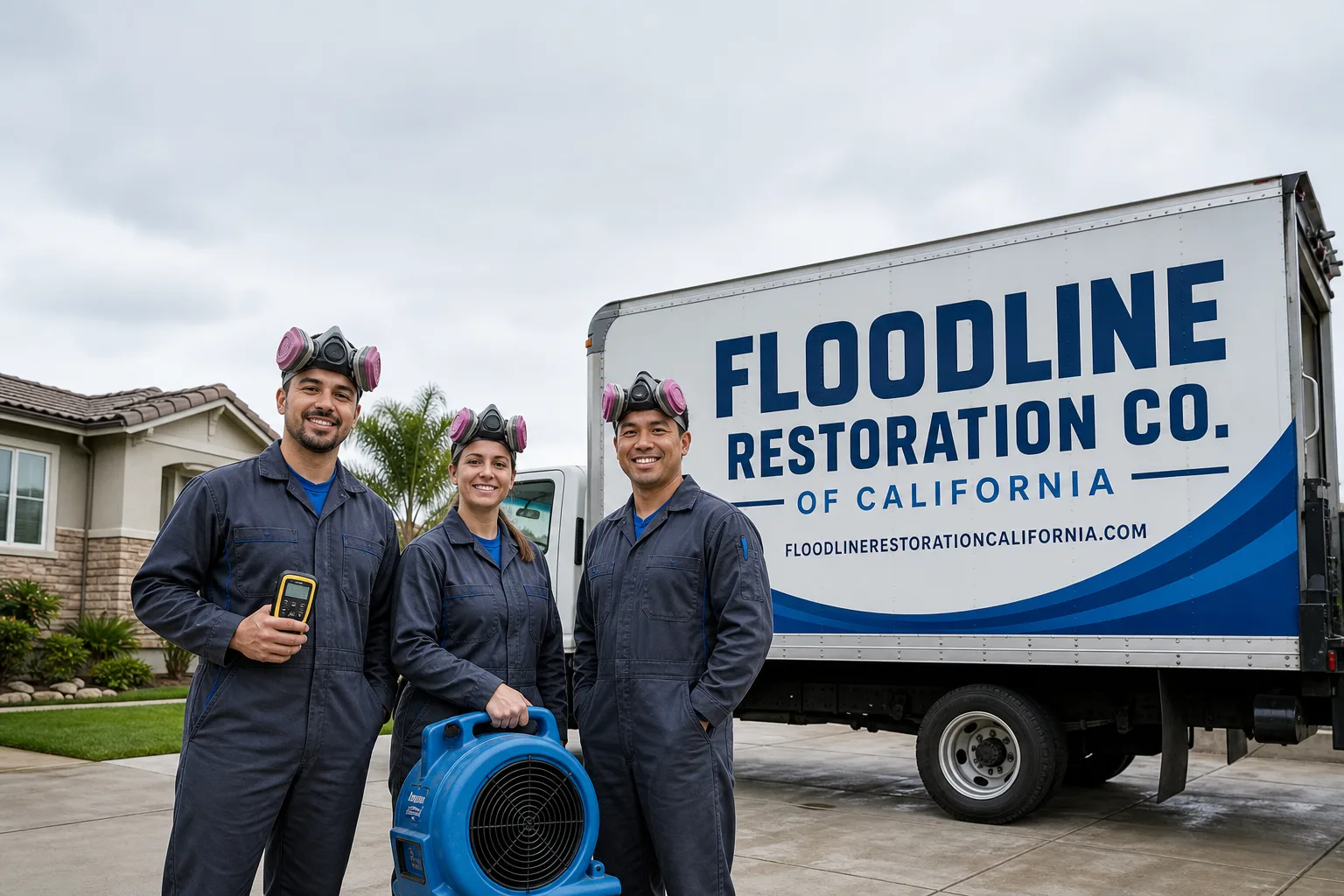
Fast, Reliable Water Damage Restoration Across Camarillo
Water damage in Camarillo doesn’t wait for business hours, and neither do we. A burst supply line in a Mission Oaks tract home or a roof leak off Las Posas Road sends water through drywall, insulation, and framing within minutes. Floodline Restoration Co. of California answers live at (888) 737-2439 at two in the morning, and our certified crews reach Camarillo homes fast, with extraction equipment running on the first visit. We know Camarillo’s neighborhoods, its housing stock, and the marine layer that makes drying here different from anywhere else in Ventura County. The line the water left is where we start.
Why Floodline Restoration Co. of California Is Camarillo’s Preferred Water Damage Restoration Company
Since 2010, Curt Bowman has built this company around a dispatch board, not a sales desk. Homeowners in Camarillo’s 93010, 93011, and 93012 zip codes call us because a live person picks up at any hour, and a background-checked, uniformed technician shows up when we say. Our Water Damage Restoration team has worked hundreds of stucco-clad tract homes, 1970s ranch builds, and newer master-planned communities across the valley. We know that one-coat stucco traps moisture behind exterior walls, that springer roof flashing on older Las Posas corridor homes fails early from decades of fog cycling, and that marine-layer humidity changes the drying plan on nearly every Category 2 job.
Every Camarillo job gets a written scope before work starts, photo documentation for your insurer, and the 90-Day Done Right Promise in writing at the end. That means if anything isn’t done right, we make it right, no paperwork battles. We bill carriers directly, so you never play messenger between us and the adjuster. The crews you see on day one are the same people who log daily moisture readings, hand you the dry-standard documentation, and rebuild what needs rebuilding.
Our Water Damage Restoration Services in Camarillo
Emergency Water Extraction
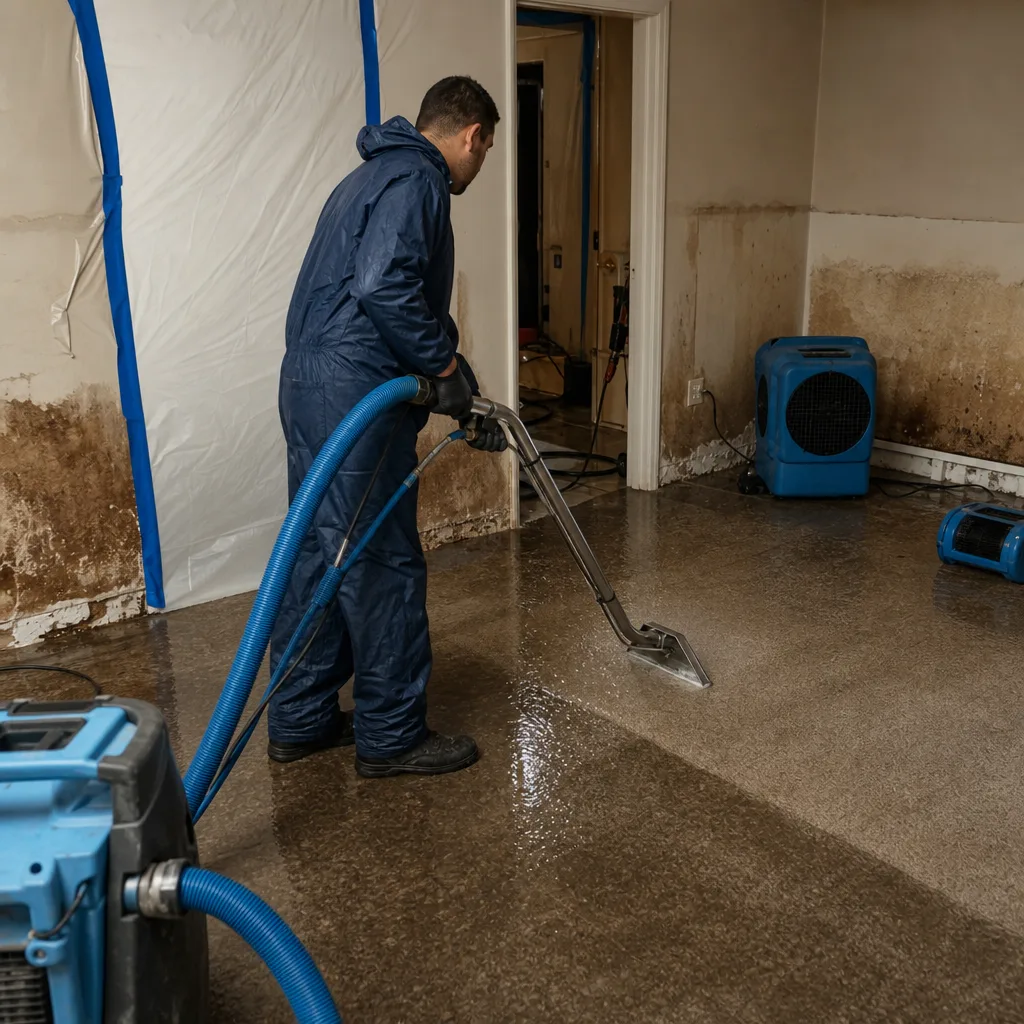
When a water heater fails in a central Camarillo garage or a supply line bursts behind a kitchen wall in Sterling Hills, extraction has to start within hours, not days. We arrive with truck-mounted and portable extraction units, pull standing water from carpet, pad, and hard surfaces, and begin mapping moisture in the affected structure before we set a single drying unit. In Camarillo’s marine layer, standing water that sits overnight in a closed house can push relative humidity past 80% indoors and soak into stucco-adjacent framing faster than inland homes.
Structural Drying & Dehumidification
This is where Camarillo jobs differ most from the rest of Ventura County. Our crews regularly stage extra LGR dehumidifiers on water-loss jobs here because the marine layer keeps outdoor humidity above 70% until midday. That extends structural drying times 20-30% compared to inland Oxnard or Thousand Oaks. We use Dri-Eaz and Phoenix equipment, run daily moisture readings with penetrating and non-penetrating meters, and keep drying until the substrate hits dry standard, not just until the surface feels dry. You receive the moisture log, and so does your carrier.
Flood Cleanup
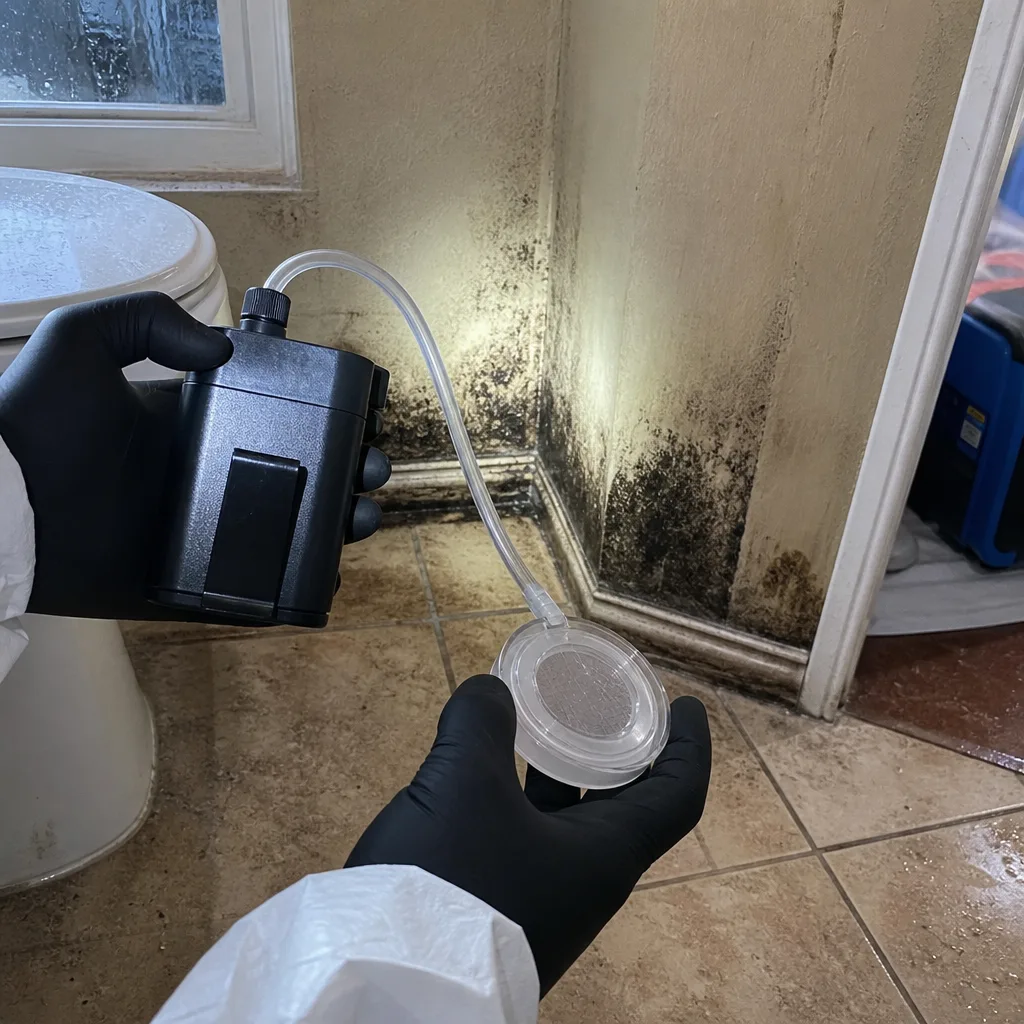
Heavy winter rains hitting Camarillo’s chaparral hillsides push runoff into low-lying streets and occasionally into garages, patios, and entry-level rooms in neighborhoods off Mission Oaks Boulevard. Floodwater in a Camarillo garage often carries silt, ash residue from the nearby burn zones, and whatever the storm picked up along the way. That’s a Category 3 situation, and we treat it as contaminated, not just wet. We remove the water, cut and dispose of unsalvageable materials, disinfect affected surfaces, and dry the structure to IICRC S500 standards.
Burst Pipe Restoration
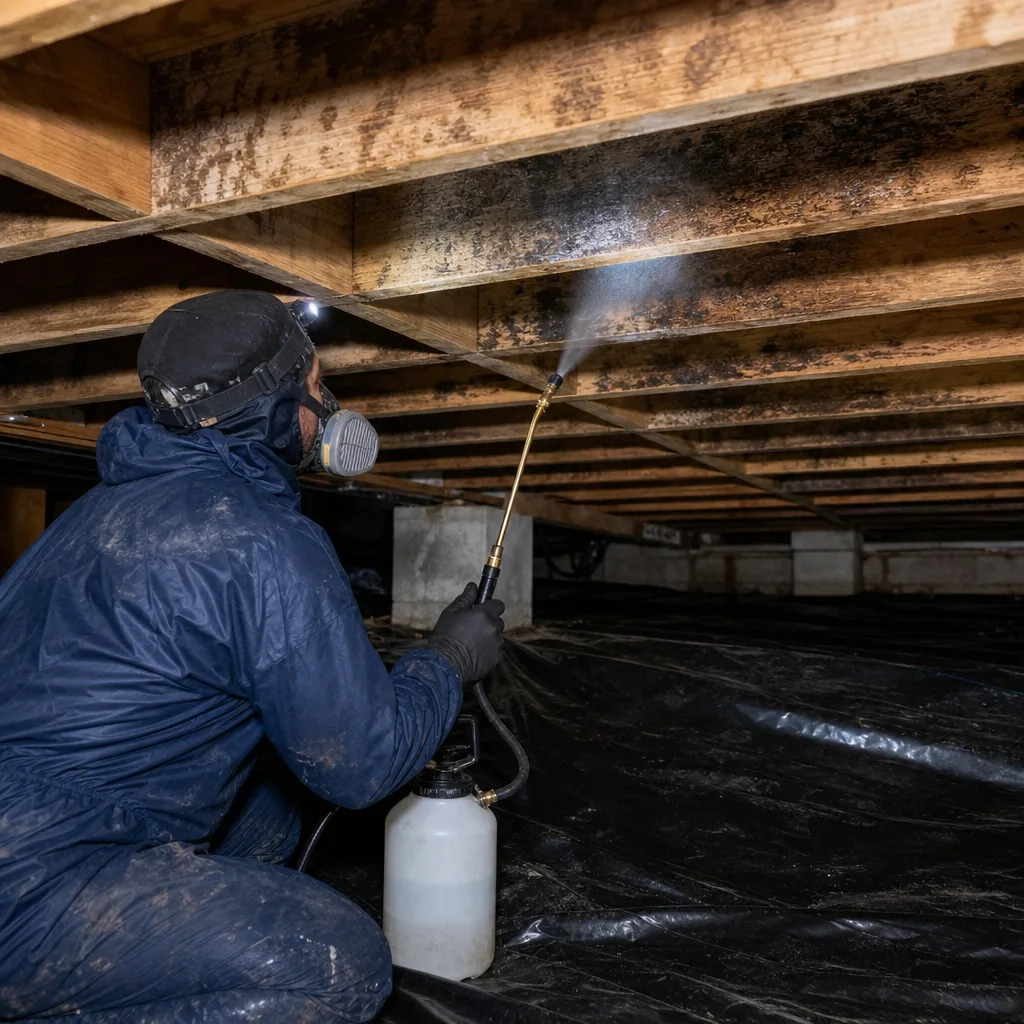
Older Camarillo tract homes built in the 1960s and 1970s often have original galvanized supply lines. Those pipes corrode from the inside after decades, and a pinhole leak behind a kitchen cabinet in Mission Oaks can saturate drywall and base cabinets for weeks before anyone notices a visible stain. Burst pipe restoration here means finding the full extent of hidden water migration, not just drying the visible area. We open walls carefully, inspect adjacent cavities, and document everything with photos before and after.
What happens when you call
- 1
A real person answersNo phone trees - you reach a local pro.
- 2
You get an upfront price rangeHonest numbers before anyone is dispatched.
- 3
A background-checked tech heads outLicensed & insured, dispatched right away.
- 4
You approve before work beginsNothing starts until you say go.
Common Water Damage Restoration Problems We See in Camarillo Homes
- Marine-layer extended drying times. Relative humidity staying elevated into the afternoon means Category 2 and 3 water losses routinely need 20-30% more drying days than inland jobs. We stage additional LGR dehumidifiers and schedule two drying assessments on most of these.
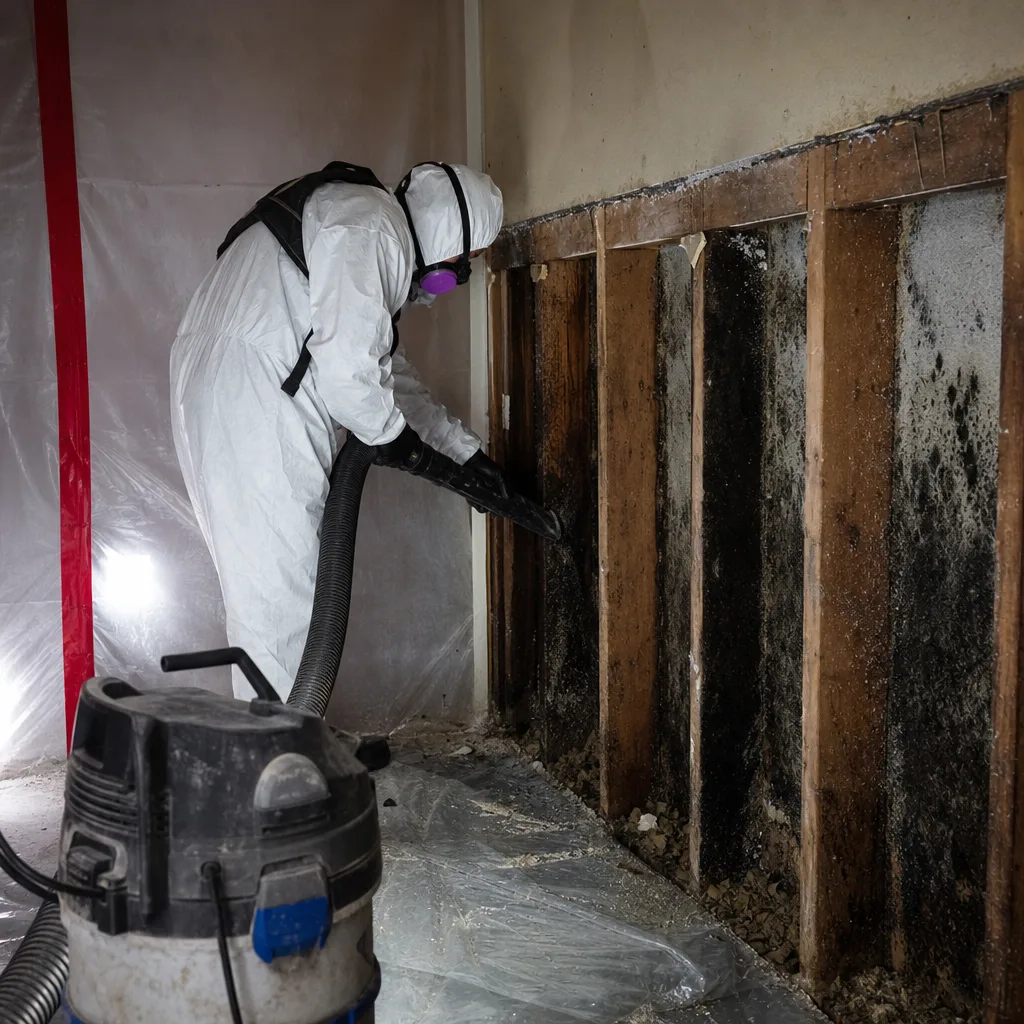
- One-coat stucco moisture entrapment. Homes built between the late 1960s and the 1990s across Mission Oaks and central Camarillo used one-coat stucco, which is particularly prone to holding moisture behind the exterior wall. A small window or roof leak can hide a full mold remediation scope behind the stucco.
- Salt-laden fog accelerating corrosion. The same marine layer that keeps Camarillo cool also carries salt air that eats garage-door fasteners, opener chains, and torsion springs years before they’d fail inland. Unexpected garage door failures during a water loss can complicate access and let standing water sit longer.
- Fire-to-mold pipeline from the wildland-urban edge. Camarillo sits at the edge of fire-prone chaparral hillsides. The November 2018 Hill Fire burned just east of town, and smoke and ash infiltration into wall cavities and HVAC systems is a recurring damage type. When smoke-coated structures get re-saturated by the marine layer every morning, mold colonization inside those walls accelerates dramatically. Homes that weren’t fully remediated after a fire event face compounding damage after a subsequent water loss.
Pricing for Water Damage Restoration in Camarillo, CA
What you’ll pay depends on water category, affected square footage, and how long the water sat. For Camarillo homes, typical emergency water extraction runs $500-$1,800 for a single room or garage. Structural drying with LGR dehumidifiers and air movers across a standard two-room water loss usually lands between $1,800 and $4,800, and the extra equipment staging our marine-layer protocol requires adds about 15-25% compared to inland rates. Ceiling and roof leak water damage repair with drywall replacement typically runs $900-$3,200 depending on how much framing dried properly. Flood cleanup from Category 3 water starts around $3,000 for a single affected area and scales with contamination. Call (888) 737-2439 for a written estimate. We give a price before work starts, and a square deal means no surprises on the bill.
Trusted Brands We Service in Camarillo
Our techs train to IICRC, RIA, and IFA standards and run Dri-Eaz and Phoenix drying equipment daily. We keep Dri-Eaz LGR 2800i and 7000i dehumidifiers, Phoenix axial air movers, and XPOWER fans staged for rapid deployment to Camarillo jobs. That means faster equipment arrival on your street, not a parts or equipment run from another county. We also stock a range of replacement materials and hardware for stucco-clad builds, so reconstruction on 93010 and 93011 homes isn’t delayed waiting on specialty suppliers.
We Also Serve Cities Near Camarillo
Floodline Restoration Co. of California handles water damage calls throughout the surrounding area, including El Rio, Moorpark, Santa Paula, and Oxnard. If you’re just outside Camarillo proper, we still respond with the same live dispatch and written guarantee. See our Water Damage Restoration in Camarillo page for the full scope of our local coverage.
Serving Camarillo, CA - Our Local Coverage Area
We’re based in the Camarillo area and know this community well. Use the map below to see our service coverage - if you’re nearby, we can almost certainly help.
FAQs - Water Damage Restoration in Camarillo
Camarillo’s marine layer keeps outdoor relative humidity above 70% until midday on most days, and that slows evaporation for structural drying. Plan on 20-30% more drying time here compared to Oxnard, where higher afternoon temps and lower humidity let LGRs hit dry standard sooner. We stage extra dehumidifiers on Camarillo jobs to offset the climate delay. Call (888) 737-2439 and we’ll give you an honest drying timeline for your specific loss.
Fog cycling keeps building materials damp longer, which gives mold spores exactly what they need to colonize behind drywall and inside wall cavities. In Mission Oaks, where one-coat stucco traps moisture against framing, the window for microbial growth shrinks dramatically after a leak starts. That’s why we always check hidden cavities and follow IICRC S500 for contaminated water, not just the visible wet spots.
Smoke and ash from events like the 2018 Hill Fire leave fine particulate residue inside wall cavities and HVAC ductwork. When Camarillo’s marine layer re-saturates those residues every morning, mold colonization inside smoke-coated structures accelerates sharply. Homes that weren’t fully remediated after a fire event are far more vulnerable to mold growth after a subsequent water leak, and standard drying alone won’t solve it. We treat fire-affected cavities differently from clean water losses.
Those original low-slope roofs and flashings have been through 50 years of daily fog cycling, salt air, and thermal movement. When a flashing fails, moisture wicks into the garage ceiling and behind one-coat stucco for months before a stain appears. By the time we’re called, the wood is often well past surface-wet, and we routinely escalate to Category 2 drying with mold assessment. Newer builds seal better and have fewer decades of cumulative moisture intrusion.
Yes, in most cases we can extract and dry a flooded basement or lower-level room without puncturing exterior stucco. We use interior access points, drill small openings in drywall where needed, and run drying equipment through the interior envelope. If we suspect moisture migrated behind the stucco from an exterior window well or below-grade leak, we’ll tell you and include that in the written scope before cutting anything.
Written by Curt Bowman, Owner at Floodline Restoration Co. of California, serving Camarillo since our founding in 2010.