
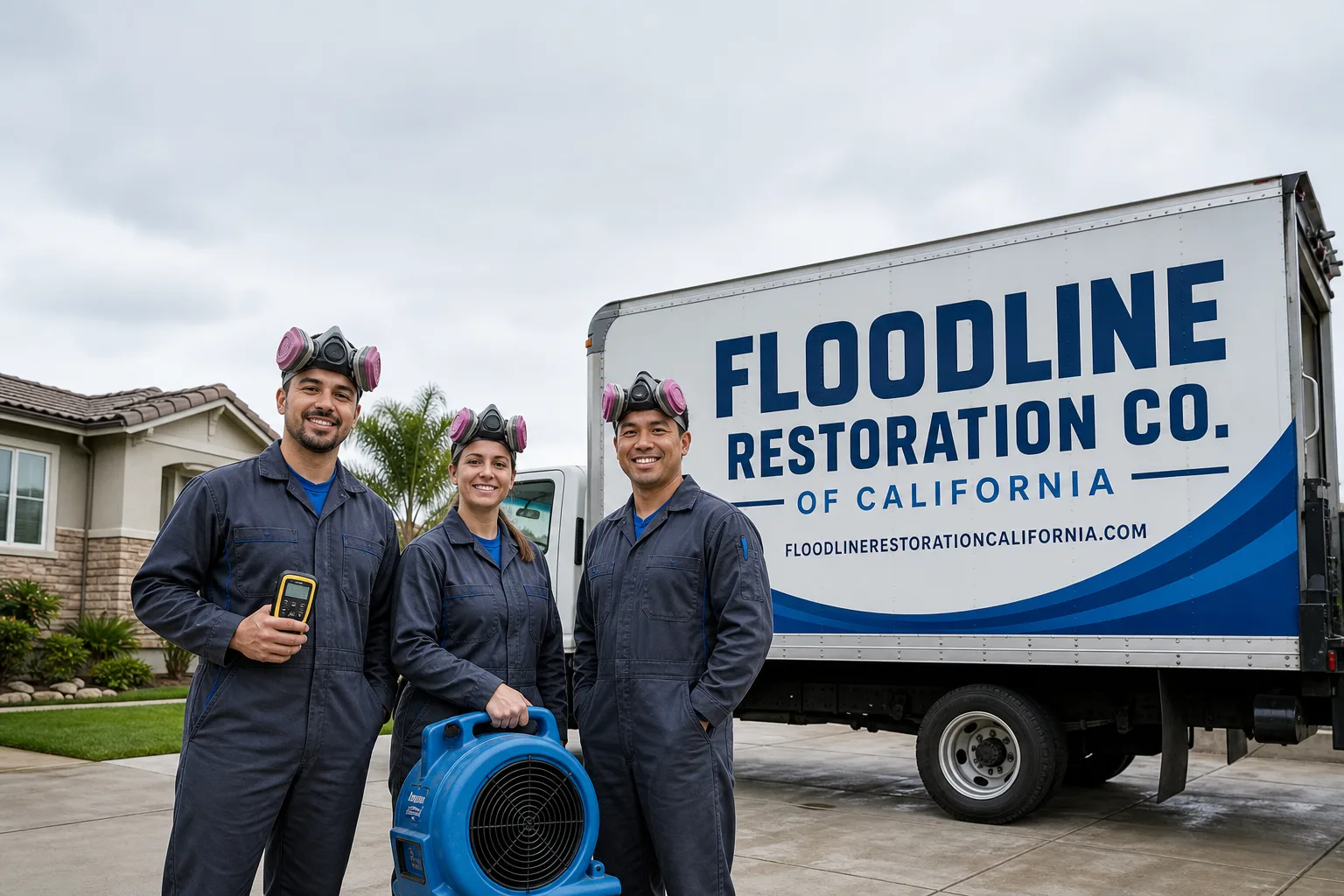
Fast, Reliable Water Damage Restoration Across Bellflower
When a supply line lets go in a 1958 ranch house in Bellflower, the water doesn’t stay on the surface. It moves through the flooring and into the concrete slab, where it can sit undetected for days. We’ve extracted, dried, and rebuilt enough slab-on-grade homes in Bellflower to know exactly where water hides and how fast it must be removed. Our response time to Bellflower is typically under 60 minutes, and a live dispatcher answers at (888) 737-2439 around the clock. We’ll be there when we say.
Why Floodline Restoration Co. of California Is Bellflower’s Preferred Water Damage Restoration Company
Bellflower homeowners don’t call the cheapest outfit. They call the one that knows a 1950s slab home is not a simple dry-out. Our technicians have worked on hundreds of properties here, from the single-story tract homes off Clark Avenue to the rental duplexes near Alondra Boulevard. We know that almost every pre-1965 structure in Bellflower has original galvanized supply lines and clay sewer laterals. We know the clay-heavy soil ponds water against foundations during El Niño years. And we know that a water claim in 90706 or 90707 means paperwork with an insurance carrier that has to be done right the first time.
Every technician who arrives in Bellflower is background-checked, uniformed, and trained to IICRC, RIA, and IFA standards. We don’t send a salesperson out first and a different crew later. The certified team that reads the moisture map on day one handles daily readings, hands the log to the homeowner and the carrier, and rebuilds what needs rebuilding. That’s the full cycle, and it’s backed by our 90-Day Done Right Promise in writing.
We’re part of the Water Damage Restoration team at Floodline Restoration Co. of California, and we’ve served Bellflower with the same crew from first extraction to final paint for years. Dispatch is coordinated from our Los Angeles office, but the crews who show up in Bellflower know this city’s housing stock by heart.
Our Water Damage Restoration Services in Bellflower
Emergency Water Extraction in Bellflower
A burst pipe or failed water heater in a Bellflower slab home doesn’t wait. We arrive with truck-mounted extraction units and get standing water off tile, hardwood, and carpet before it saturates further into the slab. In a 1950s ranch with original wood floors, the first 30 minutes determine whether those boards can be saved. Most emergency extraction calls in Bellflower are completed in a single visit, with drying equipment placed and running the same day.
Structural Drying & Dehumidification in Bellflower
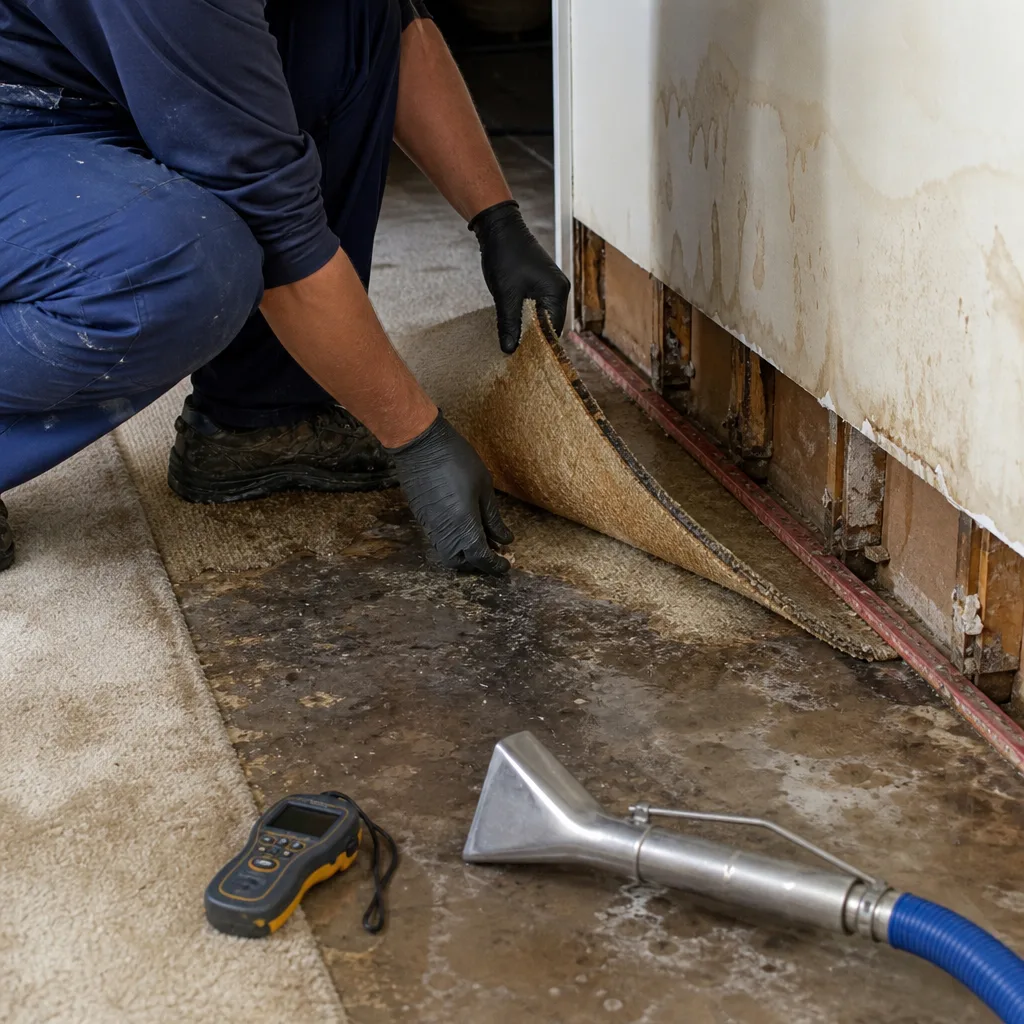
Bellflower sits on the flat Los Angeles Basin plain, and the coastal marine layer keeps relative humidity stubbornly high. That means wall cavities in 1950s stucco construction dry slower than a homeowner expects. We use Dri-Eaz and Phoenix dehumidifiers with XPOWER air movers, and we drill moisture-sensor access points into slabs where needed. The readings are logged daily until the dry standard is met, and that log goes to you and your carrier. No guessing. A square deal: no surprises on the bill.
Flood Cleanup in Bellflower
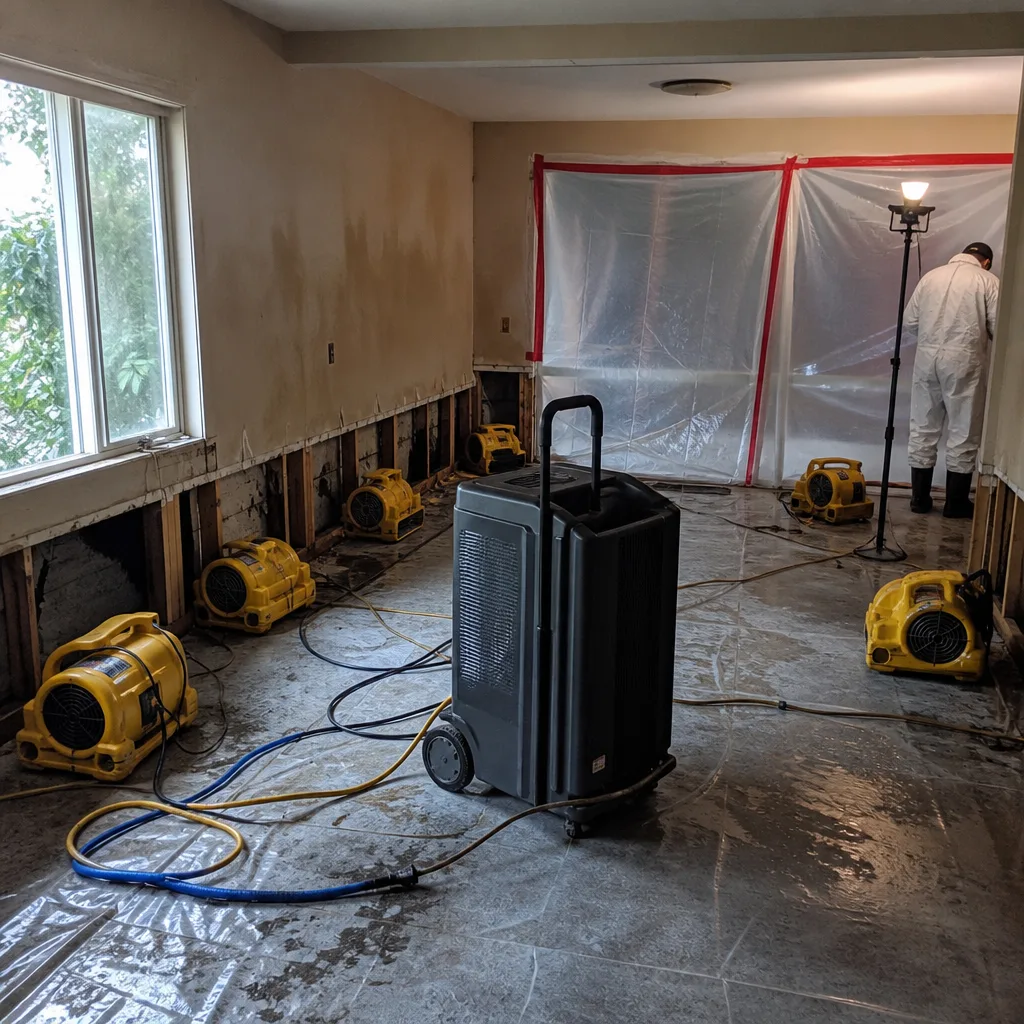
During heavy El Niño rain years, stormwater ponds against foundations across Bellflower. Flat lots and clay-heavy soil mean water finds the path of least resistance, which is often under a sill plate or through a cracked stem wall. We extract, sanitize, and dry, but in Bellflower we also check what the water carried in. Flood water from the street is not clean water. We treat it accordingly, with full containment where needed and documentation your adjuster can act on without a fight.
Burst Pipe Restoration in Bellflower
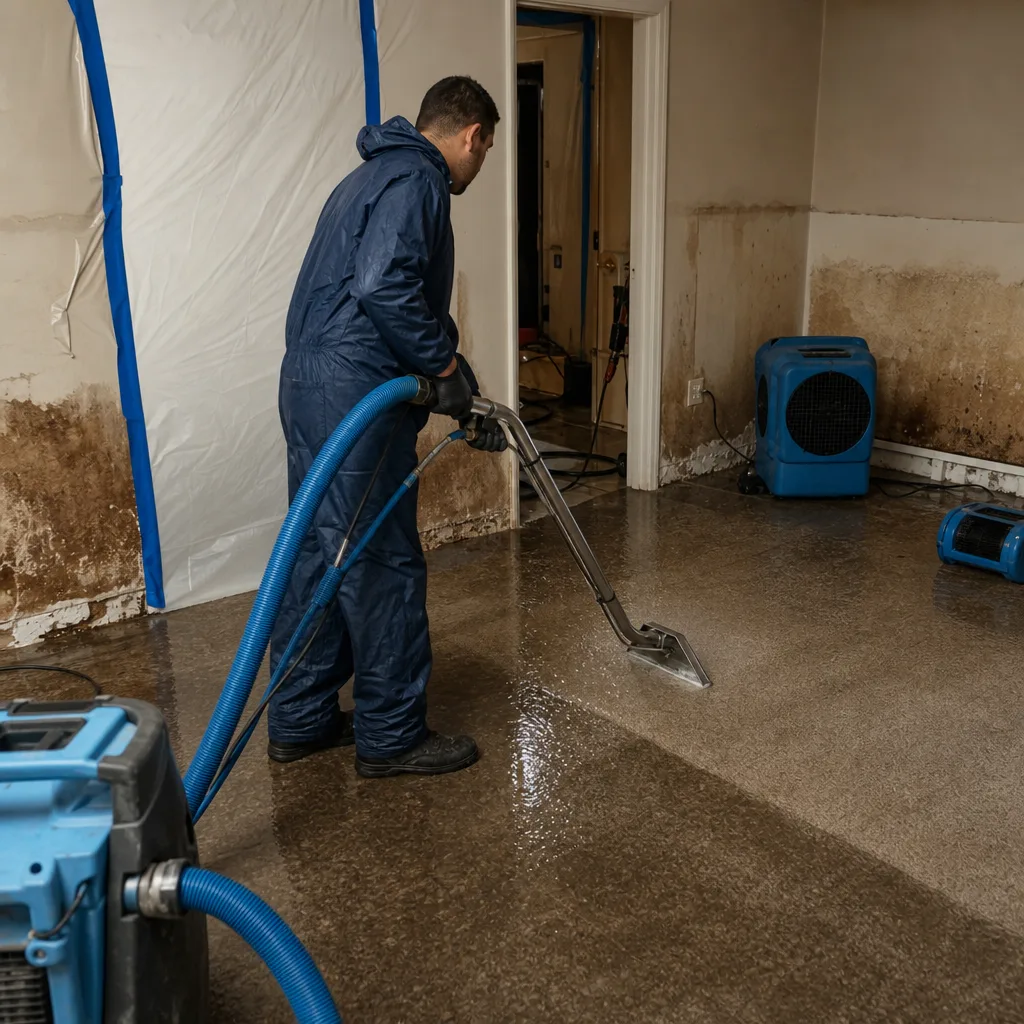
Original galvanized steel supply lines in Bellflower homes are past their service life. When one lets go, it often does so inside a wall or under a slab, which means the water has been moving before anyone noticed. We trace the leak, stop the source, remove the damaged sections, and dry the affected area completely. Where the line is buried in concrete, we cut access points, replace the failed section, and coordinate repair with your plumber if needed. The line the water left is where we start.
What happens when you call
- 1
A real person answersNo phone trees - you reach a local pro.
- 2
You get an upfront price rangeHonest numbers before anyone is dispatched.
- 3
A background-checked tech heads outLicensed & insured, dispatched right away.
- 4
You approve before work beginsNothing starts until you say go.
Trusted Brands We Service in Bellflower
Bellflower’s older homes have older equipment, and that’s exactly what we work with every day. We service water heaters, supply lines, and fixtures across every major brand found in 1950s and 1960s construction. More importantly, we keep Injectidry drying mats on our trucks because they’re the standard tool for pulling moisture out of concrete slabs. Our technicians are IICRC-certified, which means the equipment and the reading of the moisture data both meet the industry’s accepted standard. If your water heater is a brand we see weekly in Bellflower, we already know its failure patterns. That saves time when a 40-gallon tank dumps its contents onto a concrete floor at midnight.
Common Water Damage Restoration Problems We See in Bellflower Homes
- Under-slab saturation that gets missed entirely. In Bellflower’s slab-on-grade homes, a slow supply-line leak can saturate 300 to 400 square feet of concrete before any visible damage appears on the surface. Moisture mapping with slab sensors is standard procedure on every water loss call here.
- Asbestos and lead-paint abatement triggering mid-job delays. Most Bellflower homes were built between 1945 and 1965. Demolition after water damage requires a lead and asbestos survey first. Skipping this step is unsafe and illegal.
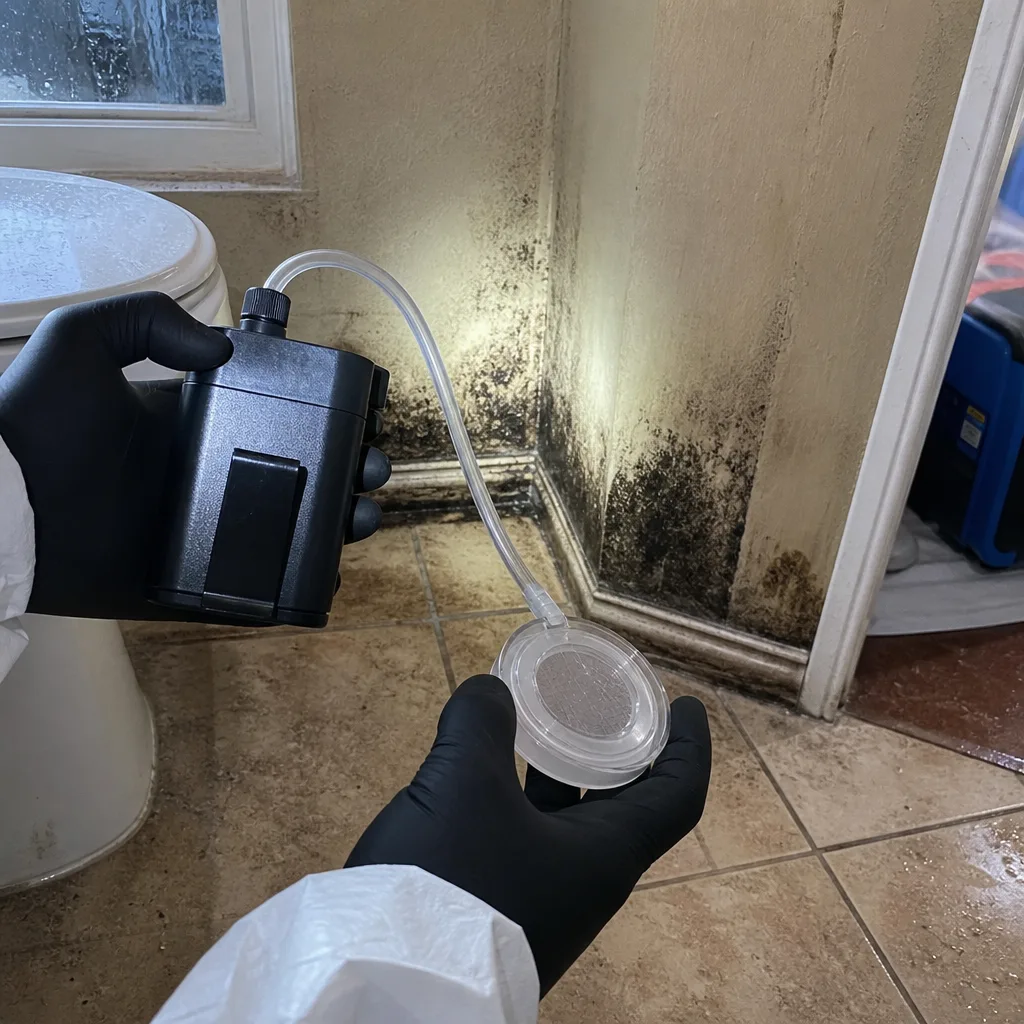
- Persistent humidity slowing structural drying. Bellflower’s coastal marine layer keeps air moisture high enough that improperly dried wall cavities develop mold within weeks. A dehumidifier that works fine in a dry climate is not sufficient here.
- Deferred maintenance in 1960s rental duplexes. Water damage in Bellflower’s small multi-family units often originates from a unit above or behind, meaning by the time anyone sees it, it has migrated through wall cavities and under flooring in multiple units.
Pricing for Water Damage Restoration in Bellflower, CA
A typical emergency water extraction in Bellflower runs $350 to $800, depending on square footage and the number of affected rooms. Structural drying with slab access typically runs $1,200 to $3,400, and the slab penetration and moisture-mapping piece adds $400 to $1,100 on its own. A full burst-pipe restoration including drywall removal, drying, and basic reconstruction in a Bellflower slab home often lands between $4,000 and $12,000. These are honest ranges based on the work we’ve done in this city. What moves the number is mostly what the water found: slab access, abatement triggers, and how far the damage traveled through original construction. Call (888) 737-2439 for a free, written estimate. Current offers apply: $50 off any repair over $250, and a Senior & Veteran 5% discount is always available.
We Also Serve Cities Near Bellflower
We serve Bellflower and the surrounding communities, including Paramount, Norwalk, Artesia, and Cerritos. If you’re in one of these nearby areas, you’ll get the same live dispatch, certified crew, and 90-Day Done Right Promise that every Bellflower customer gets. Just call (888) 737-2439 and a live person will pick up.
Serving Bellflower, CA - Our Local Coverage Area
We’re based in the Bellflower area and know this community well. Use the map below to see our service coverage - if you’re nearby, we can almost certainly help.
FAQs - Water Damage Restoration in Bellflower
You cut into the slab when moisture mapping shows water has penetrated below the surface, which in Bellflower’s 1950s and 1960s homes is far more common than homeowners expect. A slow supply-line leak or a weeping water heater can saturate 300 to 400 square feet of under-slab concrete before any surface damage is visible. If the slab is holding moisture, surface drying alone will not reach it. We drill sensor holes, confirm the extent of the saturation, and then cut strategic access points for drying mats. Call (888) 737-2439 for an assessment if you suspect a slab leak.
In most Bellflower homes built before 1965, any demolition after water damage triggers mandatory asbestos and lead-paint abatement protocols. That means before we remove water-damaged drywall, flooring, or plaster, a certified survey must identify hazardous materials, and a licensed abatement contractor must handle their removal. This adds one to three days to the overall timeline in most cases. We coordinate the survey and the abatement with certified partners so you never have to manage the sequence yourself. Your adjuster receives the documentation directly from us.
Because the concrete slab absorbs the water and holds it. In Bellflower’s slab-on-grade construction, there is no crawl space underneath to allow drainage or air circulation. The concrete acts like a sponge. Moisture trapped in the slab will keep wicking back to the surface long after the source is stopped, and it will keep the surrounding air humid enough to damage baseboards, drywall, and flooring. Slab drying requires access points and Injectidry drying mats, not just fans in the room. Call (888) 737-2439 for a slab moisture reading. Estimates are free.
If the failure was in an original galvanized line, the rest of that system is on borrowed time. Most Bellflower ranches still have original galvanized supply lines that are now 60 to 80 years old. When one section fails, the adjacent sections are typically just as corroded internally. We recommend replacing the entire reachable run while the walls or slab are already open for drying. The marginal cost is far lower than reopening everything a year later for the next failure. We’ll advise you straight and let you decide. The 90-Day Done Right Promise covers our work, in writing.
The coastal marine layer keeps Bellflower’s relative humidity high enough that poorly-ventilated wall cavities stay damp for weeks after the visible water is gone. Stucco construction from the 1950s has minimal vapor barriers and often no insulation in exterior walls, which means condensation and trapped moisture sit right against wood framing. Mold colonization can begin within days. That’s why our drying protocol in Bellflower includes daily moisture readings and dehumidification until the dry standard is met, not a visual inspection. If mold has already established, our remediation team handles containment and removal under the same roof. Call (888) 737-2439 if you smell must or see discoloration after a water event.
Yes. We cover all of Bellflower, including the residential streets east and west of Bellflower Boulevard, the neighborhoods north of Artesia Boulevard, and the duplex-heavy blocks off Alondra Boulevard in 90706 and 90707. Our Los Angeles-based dispatch coordinates crews so a Bellflower job gets a crew that is already familiar with the area. A live person answers, day or night.
If water is moving through your Bellflower home right now, call (888) 737-2439. A live dispatcher picks up. We’ll get a certified crew on the road, talk you through what to do in the next fifteen minutes, and have extraction running the same visit. Done right – and backed in writing.
Written by Curt Bowman, Owner at Floodline Restoration Co. of California, serving Bellflower with certified crews and a live dispatch board since the company began.