
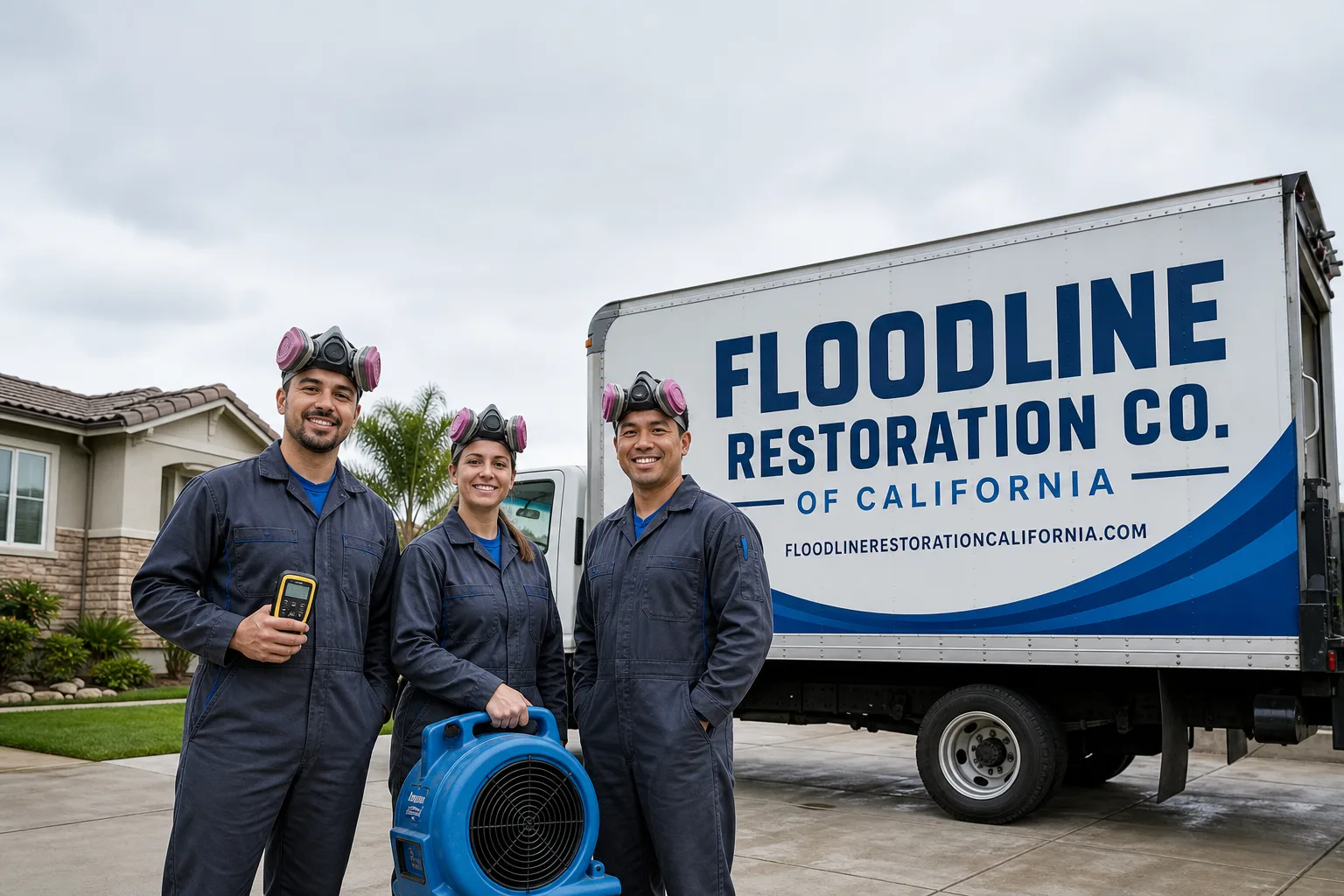
Fast, Reliable Storm & Disaster Restoration Across Visitacion Valley
When a storm tears through Visitacion Valley and water is moving through your crawl space or dripping from your ceiling, the first hour matters more than the next week. Storm & Disaster Restoration in Visitacion Valley comes down to speed, the right drying equipment, and a crew that knows what the valley’s bowl topography does to 1940s and 1950s homes after heavy rain. We have certified technicians ready to respond to any part of the 94134 ZIP code, from the flats near Visitacion Avenue up to the streets hugging McLaren Park’s southern edge. Call (888) 737-2439 any hour, day or night, and a live dispatcher picks up. Not a recording. A person who starts a crew moving toward Visitacion Valley on that same call.
Key Takeaways for Visitacion Valley Homeowners:
- Storm response to Visitacion Valley is typically within 60 to 90 minutes, day or night.
- We handle extraction, drying, and rebuild with the same certified crew, no mid-job handoff.
- Direct insurance billing, photo documentation, and a written scope before work starts.
- Every job is backed by the 90-Day Done Right Promise, in writing, no arguing.
Why Floodline Restoration Co. of California Is Visitacion Valley’s Preferred Storm & Disaster Restoration Company
Visitacion Valley homeowners call us because we answer the phone at 2 a.m. with a live dispatcher who knows the streets, the housing stock, and the stormwater patterns. When a winter storm hits, the clock is running on your framing, your flooring, and your drywall. We have been responding to emergencies throughout the valley long enough to know that a home off Sunnydale Avenue floods differently than one on the hillside below McLaren Park, and we dispatch crews already staged for the neighborhood’s specific conditions.
This is Floodline Restoration Co. of California, led by Curt Bowman, and we built the company around a dispatch board, not a sales desk. That distinction matters when you are standing in an inch of water at midnight. Our technicians arrive background-checked and uniformed, trained to IICRC, RIA, and IFA standards. They carry professional-grade Dri-Eaz and Phoenix equipment and they follow a moisture map from day one, logging daily readings until the structure meets dry standard. You get that moisture log. So does your insurance carrier. No mystery. No overselling. Just a crew that knows what needs doing and gets it done right, plus a written 90-Day Done Right Promise in your hand before we finish.
Dispatch and scheduling for Visitacion Valley are coordinated from our San Francisco Bay Area office. The crews who serve 94134 know the valley’s stucco homes, shallow crawl spaces, and parapet walls, and they plan for the conditions those features create.
Our Storm & Disaster Restoration Services in Visitacion Valley
Visitacion Valley storms create a specific pattern of damage: water moving downhill from McLaren Park into the bowl, groundwater pressure against slab foundations from roughly November through April, and wind-driven rain finding every failed flashing joint on an aging stucco home. Our Storm & Disaster Restoration team covers all of it. Here is how we handle the most common storm calls in the valley.
Storm Damage Cleanup
After a storm passes through Visitacion Valley, the visible damage is only part of the picture. Saturated drywall, soaked insulation, and standing water in a crawl space keep working against your home for weeks if they are not dried properly. Our storm damage cleanup starts with a full moisture assessment, not just a mop and a fan. We map the affected areas, document everything with photos for your carrier, and start extraction and structural drying the same visit. For a 1,000-square-foot home in 94134, storm damage cleanup typically runs $1,800 to $4,200, depending on how far the water traveled through wall cavities and flooring.
Flood Damage Restoration
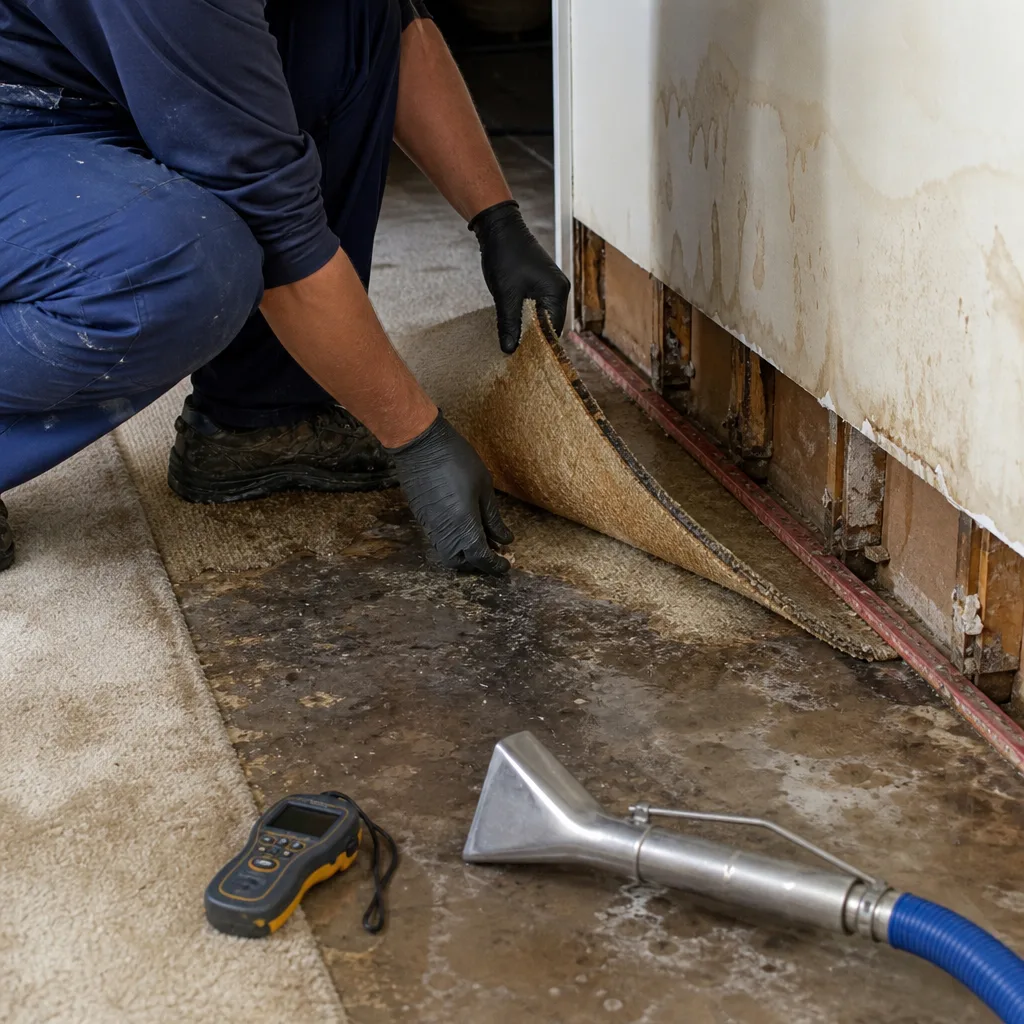
Flood damage restoration in Visitacion Valley is different from the work we do in the Sunset or Ingleside. The valley floor collects runoff, and when groundwater rises under a slab or saturates a shallow crawl space, you are dealing with a slow, hidden enemy. We run professional-grade Dri-Eaz LGR dehumidifiers and Phoenix axial air movers until the dry standard is met, not just until the surface feels dry to the touch. Flood damage restoration in Visitacion Valley typically costs $2,500 to $7,500 for a standard single-family stucco home, and we complete most jobs in a single visit with the same crew that read the moisture map on day one.
Emergency Board-Up
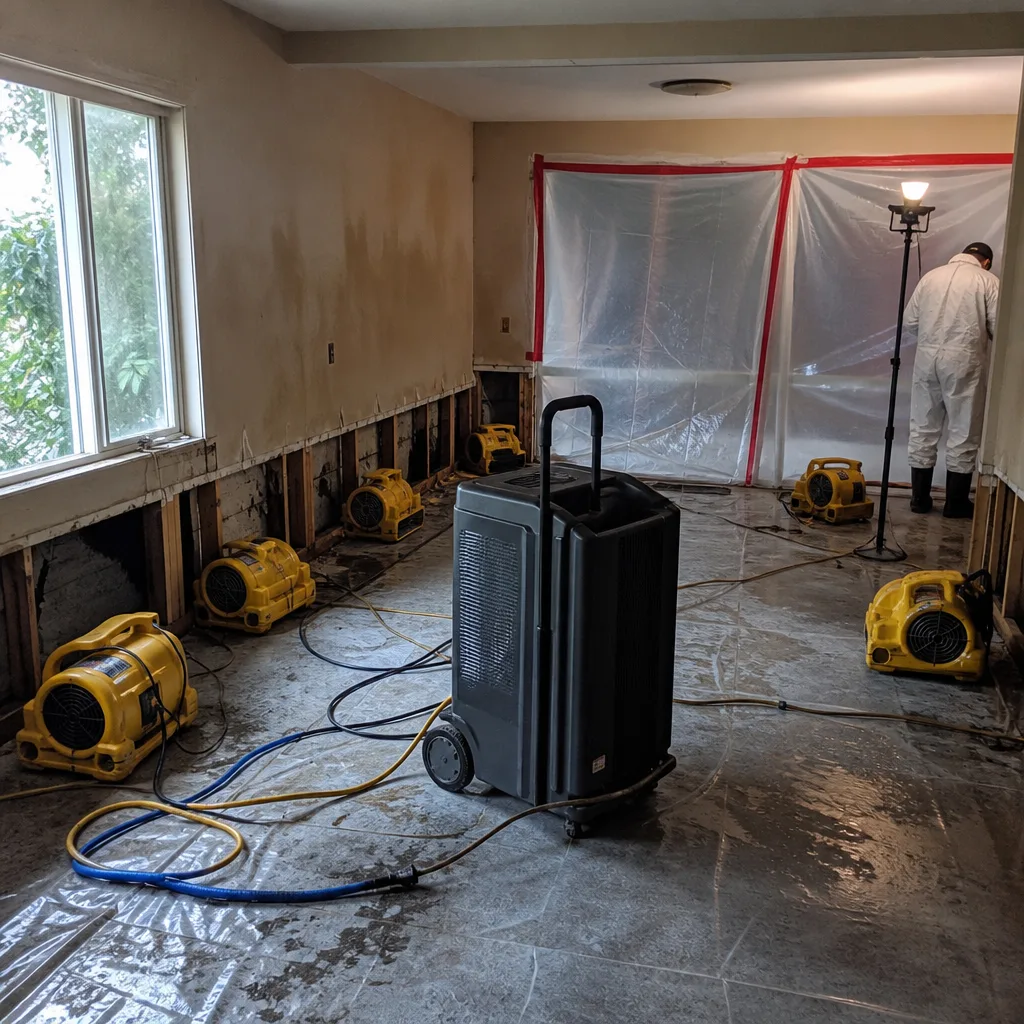
A broken window or a storm-loosened entry door is an invitation to more damage and an open path for animals, rain, and the wrong kind of visitor. We provide emergency board-up throughout Visitacion Valley, securing openings with plywood and fasteners that hold against wind and weather. Emergency board-up in 94134 generally runs $350 to $900 depending on how many openings need securing, and we get there the same call so the damage stops spreading while you work through your insurance claim.
Roof Tarping
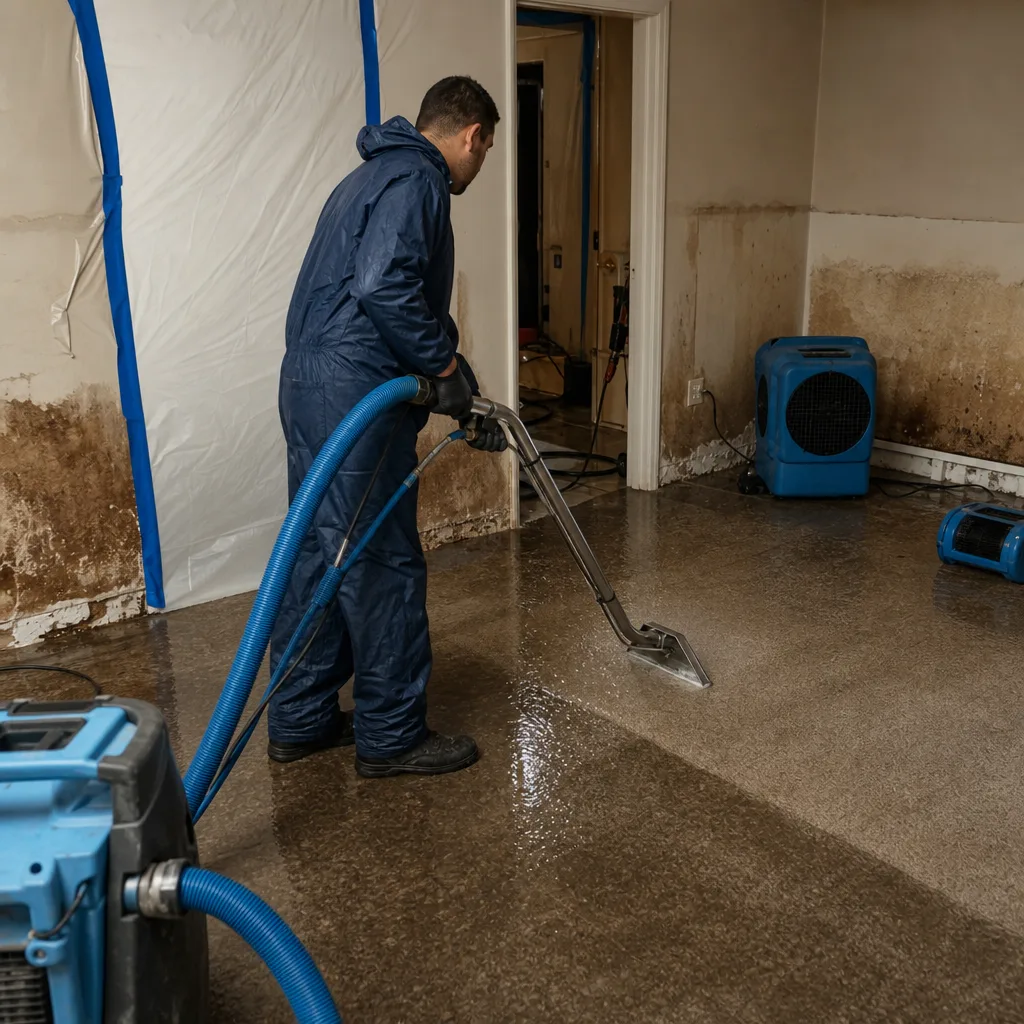
Wind-driven rain finds the weak points on a Visitacion Valley roof fast. Aging composition shingles and the deteriorated step flashing at stucco parapet walls are the usual entry points. Roof tarping buys you time to file a claim and schedule a proper repair without further water intrusion into the attic and wall cavities. Roof tarping in Visitacion Valley typically runs $400 to $1,100 depending on roof pitch, size, and accessibility, and our crews are comfortable working the characteristic parapet-wall roofs found throughout the valley’s 1940s and 1960s housing stock.
What happens when you call
- 1
A real person answersNo phone trees - you reach a local pro.
- 2
You get an upfront price rangeHonest numbers before anyone is dispatched.
- 3
A background-checked tech heads outLicensed & insured, dispatched right away.
- 4
You approve before work beginsNothing starts until you say go.
Trusted Brands We Service in Visitacion Valley
Visitacion Valley homes were built in an era when craftsmanship was the standard, and many of those original materials are still worth saving. We service homes with the original finishes and structural components common to the valley’s 1940s to 1960s stock, and when equipment or components need replacing, we bring in parts that fit. Our techs arrive with Dri-Eaz and Phoenix equipment staged for the valley’s older construction, and we keep common fittings and replacement materials on our trucks so we are not running back and forth to a supply house while your floors stay wet. The goal is simple: get the job done in one visit, with parts that fit your home, not a generic retrofit.
Common Storm & Disaster Restoration Problems We See in Visitacion Valley Homes
- Hidden slab seepage from groundwater pressure. Visitacion Valley sits in a bowl, and stormwater from McLaren Park and the surrounding hills drains into this low-lying area. From roughly November through April, subsurface groundwater pushes against slab foundations in ways that the higher-elevation Excelsior or Portola districts do not experience.
- Corroding galvanized supply lines failing from within. The 1940s through 1960s stucco homes that dominate the valley were plumbed with galvanized pipe, and San Francisco’s moderately hard water has spent decades corroding those lines from the inside out. A storm raises groundwater pressure, and suddenly a pinhole leak becomes a slab leak. That compound situation, slab seepage from below and failing pipe from within, is a Visitacion Valley signature.
- Wind-driven rain through parapet-wall flashing. The valley’s stucco homes often have flat or low-slope sections where the roof meets a stucco parapet wall. The step flashing there catches decades of wind-driven rain, and once it deteriorates, water finds its way into wall cavities and attic insulation long before you see a ceiling stain.
- Shallow crawl-space flooding with no vapor barrier. Many valley homes have crawl spaces with minimal or no vapor barrier, and when stormwater runoff from the hills moves through the soil, moisture seeps upward into floor framing. That warps original hardwood and feeds mold behind baseboards, sometimes for months before a homeowner catches it.
Pricing for Storm & Disaster Restoration in Visitacion Valley, CA
Here is what you can expect to pay in Visitacion Valley for common storm work, based on what we see in 94134’s older stucco housing stock. A typical emergency board-up runs $350 to $900. Roof tarping runs $400 to $1,100 depending on roof pitch and access. Storm damage cleanup for a standard stucco home runs $1,800 to $4,200. Full flood damage restoration with structural drying runs $2,500 to $7,500. The bigger variables are how far water traveled through wall cavities, whether crawl-space saturation is involved, and whether galvanized plumbing failed during the storm. We give you a written scope before work starts, with photo documentation for your carrier, so there are no surprises on the bill. Call (888) 737-2439 for a free estimate, and ask about our standing offers: $50 off any repair over $250, the $89 seasonal tune-up, and a 5% senior and veteran discount, always available.
We Also Serve Cities Near Visitacion Valley
While this page is written specifically for homeowners in Visitacion Valley, our crews also respond across nearby San Francisco neighborhoods and south into the peninsula. We handle storm and flood restoration in the Mission District, Noe Valley, Daly City, and San Francisco proper, and we bring the same local knowledge and written guarantee to every job. If your property sits near the valley’s edge or just over the border, call us and we will route the right crew to you.
Serving Visitacion Valley, CA - Our Local Coverage Area
We’re based in the Visitacion Valley area and know this community well. Use the map below to see our service coverage - if you’re nearby, we can almost certainly help.
FAQs - Storm & Disaster Restoration in Visitacion Valley
Visitacion Valley sits in a low-lying bowl, and stormwater from McLaren Park and the surrounding elevated streets drains down into the valley floor and saturates the soil. That groundwater builds pressure against slab foundations and seeps into shallow crawl spaces, so homes can flood or stay damp for days after the rain stops. Homes in the Excelsior or Portola, just a few blocks up the hill, typically do not experience this pattern. If you are seeing dampness in a crawl space during dry weather, call (888) 737-2439 and let us check for subsurface water movement before framing damage takes hold.
Rust-colored water, low water pressure, and visible corrosion at pipe joints are the early warnings that galvanized supply lines are failing from the inside out. If you notice damp slab areas or unexplained water on the floor after rain, that can signal a pinhole leak opening up as groundwater pressure rises. In Visitacion Valley’s older stucco homes, a storm often turns a slow galvanized-pipe failure into a fast one. We recommend a moisture inspection before the rainy season if your home still has original plumbing, and we can coordinate pipe remediation alongside storm damage work.
Roof tarping is a temporary measure that stops active water intrusion and buys you time to assess the damage and file a claim. If the step flashing at the parapet wall has deteriorated and wind-driven rain has been soaking into the wall cavity for months, tarping alone will not address the hidden water. In those cases, we document the intrusion with moisture readings and photos, and we provide a written scope for the proper repair or replacement. Get the tarp up first, then get an honest assessment. Call (888) 737-2439 and we will walk you through it.
Yes, in specific ways. The large-scale redevelopment on the valley’s eastern edge means legacy public housing units adjacent to active construction often have compromised shared drainage and stormwater infrastructure. Runoff patterns shift when grading, trenching, and new foundation work redirect water across property lines. If you live near the construction zone, pay attention to water pooling after rain and have your crawl space checked if you notice new dampness or musty smells. We know this part of the valley well and can identify whether stormwater is moving toward your foundation.
Many of Visitacion Valley’s 1940s through 1960s homes, and especially legacy public housing stock, contain asbestos in drywall compound, flooring, and insulation. Before we open a wall or pull flooring after storm damage, our crew follows standard asbestos awareness protocols: we test suspect materials, contain the work area, and follow safe handling procedures. If you are in an older home near the Sunnydale-Velasco Hope SF redevelopment edge, we assume asbestos may be present until testing says otherwise. The right protocol protects your family and our crews. Call (888) 737-2439 for a free estimate, and we will explain exactly what your home needs before a single wall comes open.
Written by Curt Bowman, Owner at Floodline Restoration Co. of California, serving Visitacion Valley with storm and disaster restoration you can count on, anytime of day or night.