
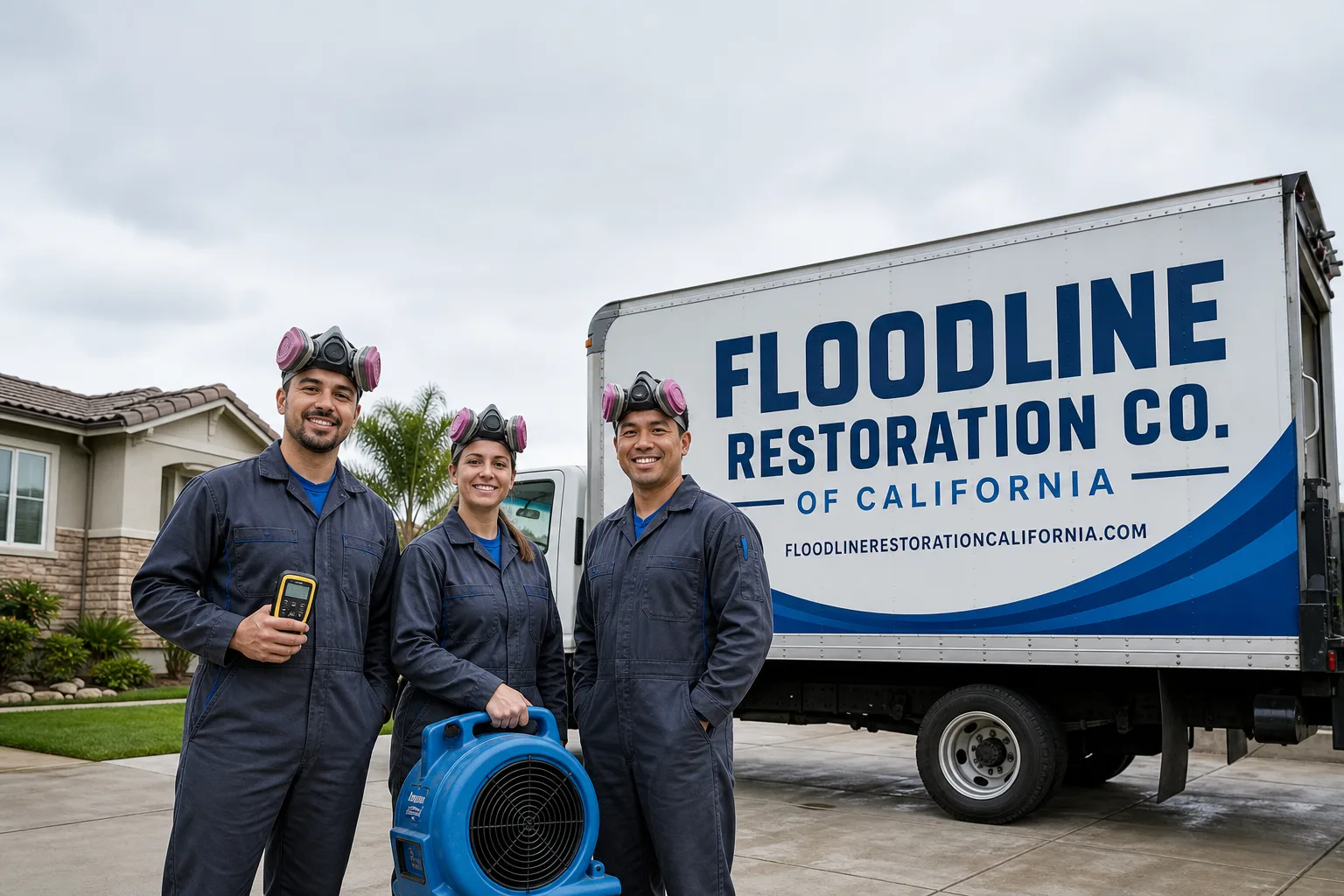
Fast, Reliable Storm & Disaster Restoration Across Valley Glen
Storm damage in Valley Glen doesn’t wait for normal business hours, and neither do we. When a storm tears through the San Fernando Valley, homeowners on Hatteras Street, Ethel Avenue, and Vanowen Street need a crew that knows the difference between fresh damage and problems that predate the storm. Storm & Disaster Restoration is what we do every day, and our Valley Glen response time runs two hours or less on emergency calls. If water is coming in or a window just blew out, call (888) 737-2439. A live dispatcher answers. Always.
Valley Glen is our backyard. We know the 1950s and 1960s ranch homes, the flat-roofed additions, and the way this part of the 91404 ZIP reacts when an atmospheric river stalls over the Valley. We arrive with the right equipment already on the truck, not a clipboard and a promise to come back. You’ll know who you’re dealing with before we unload the first fan.
Why Floodline Restoration Co. of California Is Valley Glen’s Preferred Storm & Disaster Restoration Company
We’ve been doing this work since 2010, and the company runs on a dispatch board, not a sales desk. That means when you call at 2 a.m. as wind-driven rain pushes through a cracked window frame on Hatteras, you reach a person who can actually move a crew. Not an answering service. Not a callback list. A dispatcher who knows which tech is closest to Valley Glen and what’s already loaded on the truck.
Our Storm & Disaster Restoration in Valley Glen work is done by background-checked, uniformed technicians certified to IICRC, RIA, and IFA standards. They carry Dri-Eaz and Phoenix moisture-mapping equipment because hidden water is the real enemy in this housing stock. Valley Glen’s wood-frame stucco ranchers hide moisture in wall cavities and slab subfloors long after the surface looks dry. Our techs know to look where the 1994 earthquake left micro-cracks that channel water deeper than a quick visual inspection suggests.
Every finished job leaves with the 90-Day Done Right Promise in your hands. That’s the Keystone Standard, and it’s in writing. If we missed something, we come back and make it right. No paperwork battles. No arguing. Our reputation in Valley Glen gets rebuilt with every all-clear we hand to a homeowner who’s been through a bad storm.
Our Storm & Disaster Restoration Services in Valley Glen
Storm Damage Cleanup
When a Valley Glen storm drops a eucalyptus limb through a carport roof or sends a sheet of water under a sliding glass door, you need more than a mop and a fan. Our storm damage cleanup starts with a full moisture map of the affected area. We don’t just extract what’s visible. We trace where the water went, especially in this ZIP’s 1950s-era construction where water follows framing channels and stucco cracks from old seismic movement. Typical storm damage cleanup in Valley Glen runs $1,200 to $4,800 depending on the square footage and the extent of hidden intrusion.
Flood Damage Restoration
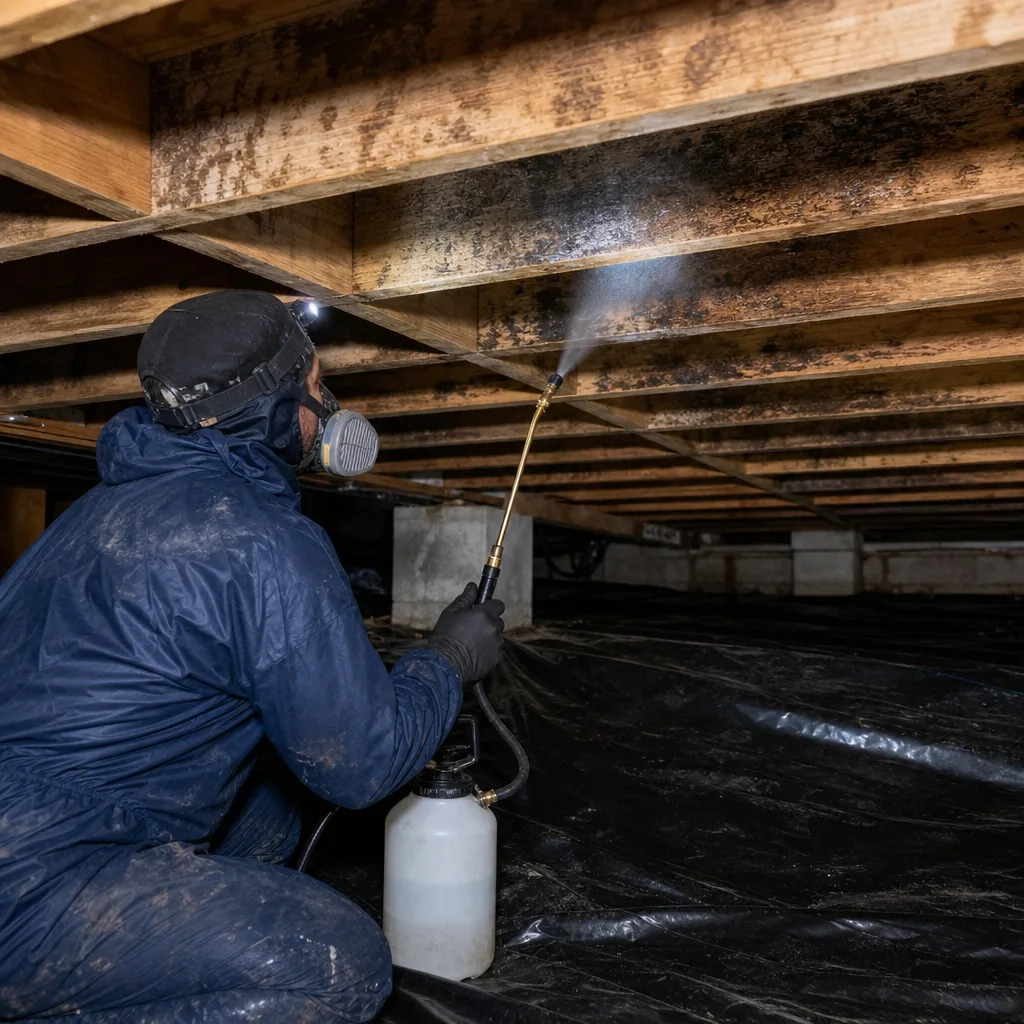
Valley Glen sits in a flat basin, and when heavy rain overwhelms the street drainage along Vanowen, water comes up fast. Our flood restoration crews handle everything from extracting standing water on a slab floor to opening walls, setting Dri-Eaz dehumidifiers and Phoenix air movers, and drying the structure to the actual dry standard, not a guess. The Valley’s low ambient humidity can fool you. Surface materials dry deceptively fast while moisture remains trapped in subfloor and wall assemblies. Our daily moisture readings documented in a log catch what a fan-and-pray approach misses.
Emergency Board-Up
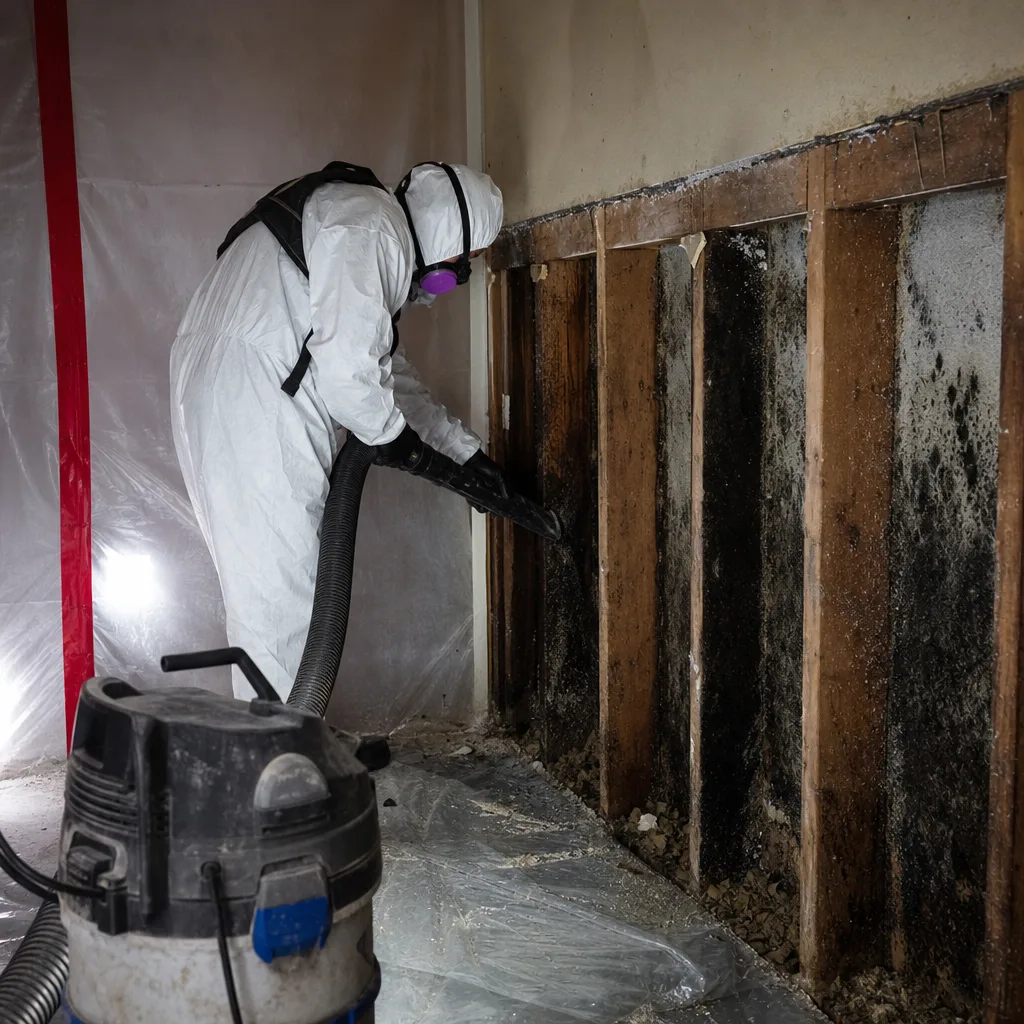
A broken window or a door blown off its hinges after a Valley Glen storm leaves your house open to weather, animals, and everything else. Our emergency board-up crews are out within hours of your call. We measure, cut, and secure plywood over the opening, and we photograph every step for your insurance file. You should not have to choose between sleeping in a papered-over door frame and paying triple for after-hours work. Our board-up pricing is honest and stated upfront before we start. Expect $350 to $900 for a standard window or door board-up, with the $50 Off Any Repair Over $250 offer applied where it fits.
Roof Tarping
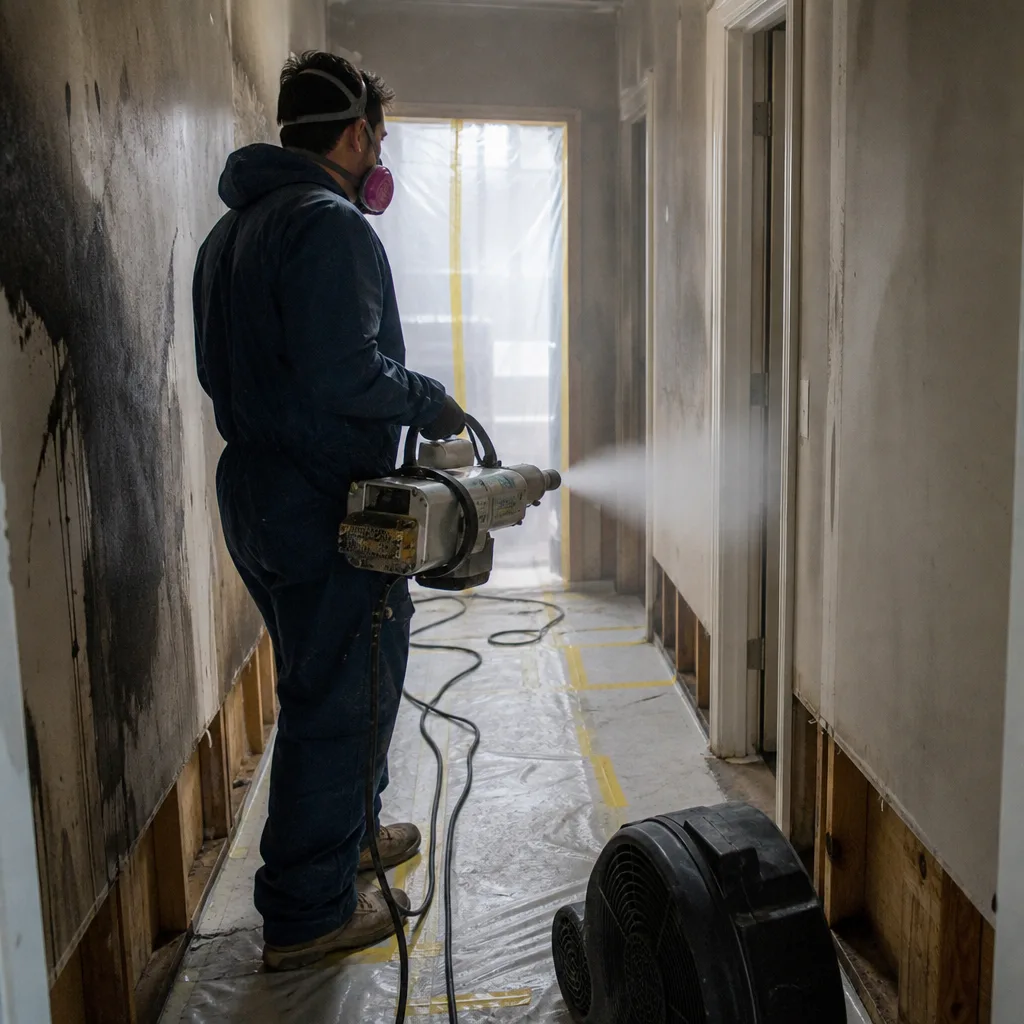
Roof tarping on a Valley Glen ranch home is not the same as tarping a Spanish-tile hillside house with a 45-degree pitch. Our crews work on flat and low-pitch built-up roofing all the time, and we know exactly how to secure a tarp so a Santa Ana wind gust doesn’t turn it into a sail. When we set foot on a 1958 rancher with a built-up roof, we check the old swamp-cooler penetration first. More on that below. Emergency roof tarping in Valley Glen typically runs $500 to $1,200 depending on the damage footprint and roof access. We’ll give you the number before the ladder goes up.
What happens when you call
- 1
A real person answersNo phone trees - you reach a local pro.
- 2
You get an upfront price rangeHonest numbers before anyone is dispatched.
- 3
A background-checked tech heads outLicensed & insured, dispatched right away.
- 4
You approve before work beginsNothing starts until you say go.
Trusted Brands We Service in Valley Glen
When a Valley Glen storm wrecks a section of roof or floods a subfloor, the equipment that saves the structure matters. We run Dri-Eaz dehumidifiers and Phoenix air movers for a reason. These are the machines that get water out of dense framing and old-growth lumber that sat under a stucco ceiling for a generation. Our field teams carry Injectidry mats for slab-drying and XPOWER for particle control, and we stock repair parts locally so we’re not waiting on a shipping label when your roof deck is exposed. Direct insurance billing is part of every quote, which means the carrier pays us directly and you’re not out-of-pocket chasing a reimbursement check.
Common Storm & Disaster Restoration Problems We See in Valley Glen Homes
- Northridge legacy in the walls. Valley Glen sits roughly 3 to 4 miles from the 1994 Northridge earthquake epicenter. Many of these post-WWII ranch homes carry shifted slabs and hairline stucco fractures that were cosmetically patched years ago but never structurally addressed. When we open a wall for flood work, we routinely find water that traveled along those old seismic micro-cracks. We document everything before the rebuild starts because your adjuster needs to see what was pre-existing displacement and what the storm actually did. This makes scope-of-work assessments here uniquely complex compared to Van Nuys or Encino, where post-quake repairs were more uniform.
- Swamp-cooler roof patches that never got sealed right. A local restoration tech quickly learns to inspect the roof penetrations around former evaporative-cooler pads on Valley Glen’s flat-roofed ranchers. Many homes switched to central AC years ago but left degraded built-up-membrane patches at the old cooler footprint. Those patches are almost always the first failure point when a storm hits, quietly channeling water into attic framing long before a ceiling stain appears. By the time you see the stain, the framing has been wet for days.
- Trapped moisture from the Valley’s dry-air illusion. The San Fernando Valley basin regularly runs 20 to 30 degrees hotter than coastal LA on the same afternoon. That heat, and the Valley’s low ambient humidity, makes surface materials dry deceptively fast after a water loss. A wall feels dry in a day, so a homeowner cancels the drying plan. But the water in the cavity behind that dry drywall is still there, and mold colonizes in 48 to 72 hours. Thorough moisture mapping with Dri-Eaz meters is the only way to know when the structure is actually dry, not just when it looks dry.
- Flat-roof water ponding and hidden rot. Valley Glen’s 1950s and 1960s ranches were built with flat or low-pitch built-up roofing designed for the arid San Fernando climate. But when a strong atmospheric river stalls east of the Sepulveda Basin for two or three days, standing water on those roofs finds every seam, every old repair, every crack in the flood coat. The plywood deck underneath stays wet for weeks, and by the time a storm reveals the rot through a sagging corner or a musty attic smell, the repair is no longer a simple tarp job. It’s a structural conversation.
Pricing for Storm & Disaster Restoration in Valley Glen, CA
Here’s what you’ll actually pay for common storm and disaster restoration work in Valley Glen, based on jobs we’ve done throughout 91404.
- Emergency roof tarping: $500 to $1,200. Depends on roof pitch, damage footprint, and access. Flat and low-pitch roofs on Valley Glen ranchers usually land between $600 and $900.
- Emergency board-up (window or standard door): $350 to $900 per opening, including materials and labor. The $50 Off Any Repair Over $250 applies.
- Storm damage cleanup (single room, water intrusion): $1,200 to $3,500. Includes extraction, demolition of wet materials, and the first day of drying equipment.
- Full flood damage restoration (multiple rooms, slab-on-grade): $4,000 to $12,000 depending on square footage and whether cabinetry or flooring must come out. This is the range where most Valley Glen atmospheric-river losses land.
- Northridge-related pre-existing condition documentation: No charge on our storm jobs. We document it as part of the scope because the adjuster needs an honest picture. The alternative is a dispute two months later about what the storm caused versus what the 1994 quake left behind.
We offer a Senior & Veteran 5% Discount on all work, always. And the $89 Seasonal Tune-Up is worth booking before storm season if your roof or window flashing hasn’t been checked in more than five years. Every storm restoration estimate is free, and the quote is written. Call (888) 737-2439 for an exact number on your job.
We Also Serve Cities Near Valley Glen
Our crews work throughout the surrounding San Fernando Valley, including Van Nuys, Sherman Oaks, Encino, and North Hills. If you live near Valley Glen and a storm just moved through, call (888) 737-2439. We’ll route the nearest available tech to your street, and dispatch is coordinated from our Los Angeles office, so you’ll get a local who knows the Valley’s quirks, not someone an hour away guessing at how a flat-roofed rancher dries.
Serving Valley Glen, CA - Our Local Coverage Area
We’re based in the Valley Glen area and know this community well. Use the map below to see our service coverage - if you’re nearby, we can almost certainly help.
FAQs - Storm & Disaster Restoration in Valley Glen
Yes, and the short answer is that Valley Glen’s 1950s and 1960s wood-frame stucco ranchers hide water differently than coastal LA’s mix of older lath-and-plaster and newer concrete construction. In Valley Glen, water that enters through a roof penetration or a slab edge follows the framing channels and the hairline stucco micro-cracks left by the 1994 Northridge quake. A standard visual inspection that works fine in Santa Monica will miss water sitting inside a wall cavity behind dry stucco and dry drywall. Our crews here always moisture-map with Dri-Eaz and Phoenix meters before declaring a space dry. Call (888) 737-2439 for a storm damage assessment that reads the whole house, not just the visible stain.
Absolutely, and if it’s not documented properly, it can cause a dispute between you and the carrier about what’s storm damage versus pre-existing condition. Valley Glen sits roughly 3 to 4 miles from the 1994 Northridge earthquake epicenter, and thousands of homes here carry shifted slabs, hairline stucco fractures, and cosmetically patched framing. When we open a wall for flood or storm repair, we photograph and document any pre-existing displacement before we start rebuilding. That documentation protects you with the adjuster. It’s why our scope-of-work assessments in Valley Glen are more thorough than what some other companies do. Call (888) 737-2439 and ask about how we document the storm versus the quake on your claim.
Flat and low-pitch built-up roofs need a different tarping approach than steep shingle roofs because water ponds instead of running off. We start by clearing the damaged area, then secure a heavy-duty tarp with a slope that moves water toward the roof drains or edges, never trapping it in a low spot. On Valley Glen ranchers we also inspect the old swamp-cooler patches and any flashing that looks tired. When we can’t get a good seal because the deck is already rotting through, we tell you straight and recommend the full repair scope. Roof tarping in Valley Glen usually runs $600 to $900, and we’ll give you the number before the ladder touches the gutter. Call (888) 737-2439 for a roofing storm response.
Water that didn’t show up yet. The San Fernando Valley’s low ambient humidity dries exposed surfaces fast, so a homeowner sees a dry wall and assumes the hard part is over. But inside the wall cavity, behind the stucco and drywall, the framing and insulation are still wet, and mold starts colonizing within two to three days. We’ve found storm water that traveled from a cracked roof deck down through an old stucco micro-crack from the 1994 quake and pooled in a wall cavity on Hatteras Street, with no visible stain on the interior at all. The only way to catch that is with moisture meters and daily logged readings. Call (888) 737-2439 if you suspect a hidden post-storm leak in Valley Glen.
That’s usually the dormant micro-cracks from the 1994 Northridge earthquake opening up again. Valley Glen’s ranch homes were close to the epicenter, and many had hairline stucco fractures patched cosmetically in the years after the quake but never structurally repaired. When heavy rain saturates the soil around a slab foundation, the slab shifts a millimeter or two, the old stucco crack reopens, and water enters behind it. If you’re seeing a new crack after a Valley Glen storm, call (888) 737-2439. We’ll assess whether you need storm remediation or an honest conversation about the old quake damage, and we’ll document everything for your adjuster.
Written by Curt Bowman, Owner at Floodline Restoration Co. of California, serving Valley Glen with storm and disaster restoration since 2010.