
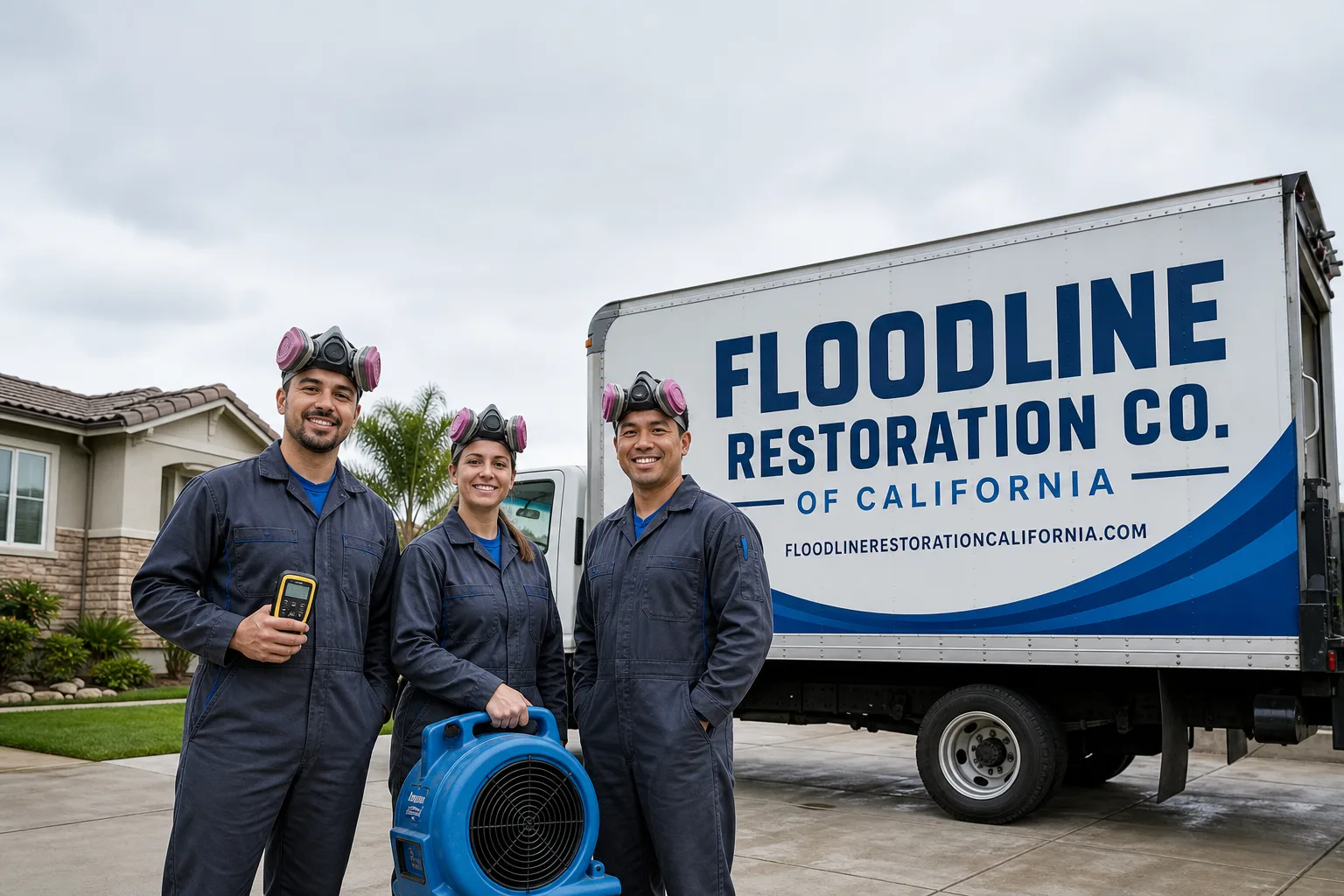
Fast, Reliable Storm & Disaster Restoration Across Santa Monica
Storm damage in Santa Monica moves faster than people expect. The coastal marine layer keeps ambient humidity high enough that water from a roof breach or window blowout reaches mold-germination conditions within 24 to 48 hours, not the 72-hour window restorers use inland. Our Storm & Disaster Restoration team handles emergency board-up, roof tarping, wind damage repair, and full structural drying for homes and apartments from Ocean Park to Sunset Park. Call (888) 737-2439 and a live dispatcher picks up, any hour, any day.
Why Floodline Restoration Co. of California Is Santa Monica’s Preferred Storm & Disaster Restoration Company
We’ve worked storm losses in Santa Monica long enough to know the difference between a house in the flats near Pico and a 1930s Spanish Colonial on a canyon rim near Santa Monica Canyon. That matters when you’re deciding whether a tarp holds through the next onshore wind event or whether a stucco wall cavity has trapped enough salt-laden moisture to require opening. Homeowners in 90401, 90402, 90403, and 90405 call us because the crew that shows up understands the local housing stock and the local climate, not just the generic playbook.
Curt Bowman founded Floodline Restoration Co. in 2010 around a dispatch board, not a sales desk. That’s why a live person answers the phone at 2 a.m. when a wind-driven limb has gone through a bedroom window on a rental property and the tenant is standing in broken glass. We’re background-checked, uniformed, and certified to IICRC, RIA, and IFA standards. And every storm job, from emergency tarping to full dry-out, carries our 90-Day Done Right Promise in writing. If it’s not done right, we make it right. No arguing.
For Santa Monica specifically, our response is measured in hours, not days. Our crews stage from the brand’s Los Angeles office and reach every Santa Monica zip code quickly, including the dense multi-family corridors east of Lincoln Boulevard and the beach-adjacent streets west of Main. That speed matters when marine-layer humidity is pressing mold into wall cavities overnight.
Our Storm & Disaster Restoration Services in Santa Monica
Storm Damage Cleanup
When a winter El Niño event drives rain sideways off Santa Monica Bay, we get calls for water that’s come through failed window flashing, compromised roof membranes, and stucco cracks that have been quietly absorbing moisture for years. Our cleanup work starts with a moisture map, not a mop. We use Dri-Eaz and Phoenix equipment to read moisture through drywall, plaster, and subfloor, then set a drying plan that accounts for Santa Monica’s stubbornly high relative humidity. We remove saturated debris, document everything for your carrier, and log daily readings until materials hit the dry standard.
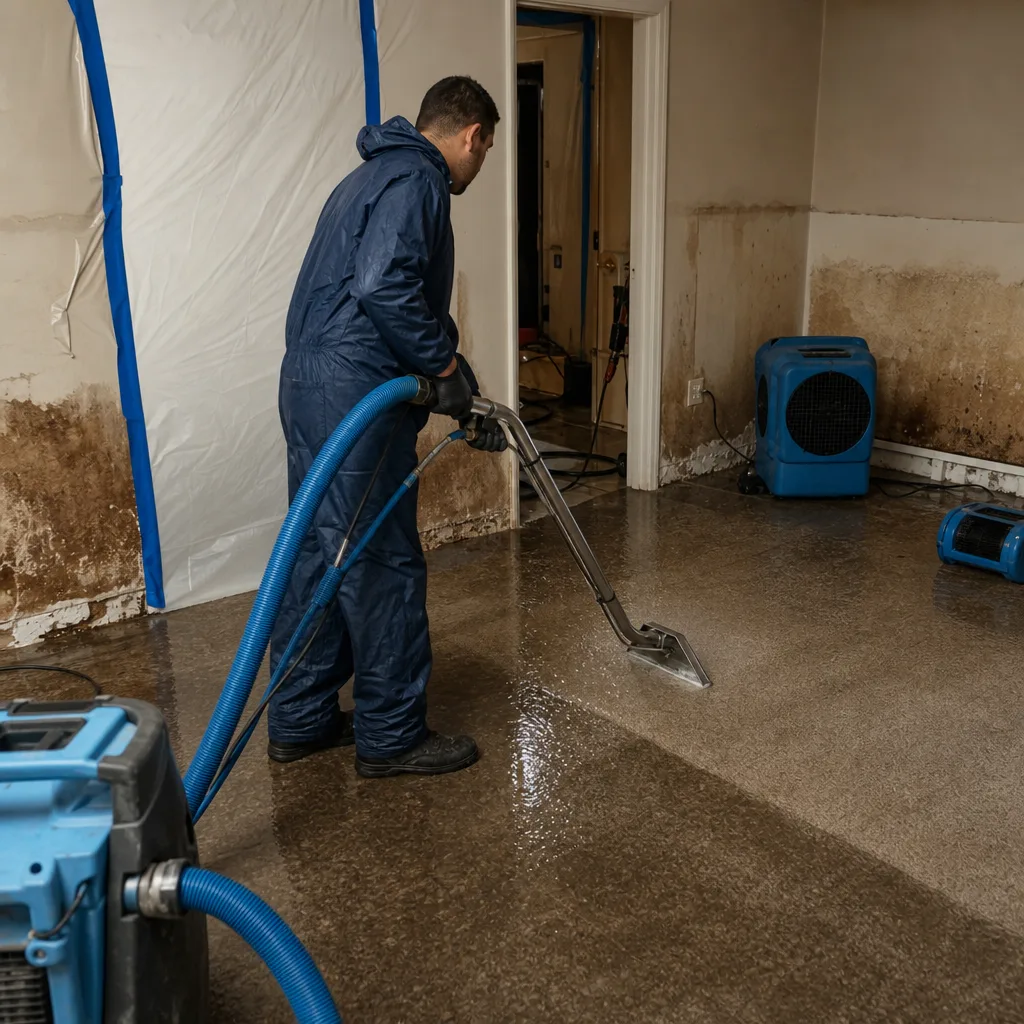
Flood Damage Restoration
Low-lying streets near the Pier and south of Pico Boulevard take the brunt of storm runoff when canyon drainages like Santa Monica Canyon overwhelm flat, beach-adjacent infrastructure. That’s not a rare event; it recurs with every strong winter storm. Flood restoration here means more than extraction. The salt content in Santa Monica floodwater accelerates corrosion of fasteners, electrical connections, and ductwork. Our crews account for that in the scope from the first day, which keeps a one-time flood loss from becoming a recurring repair bill.
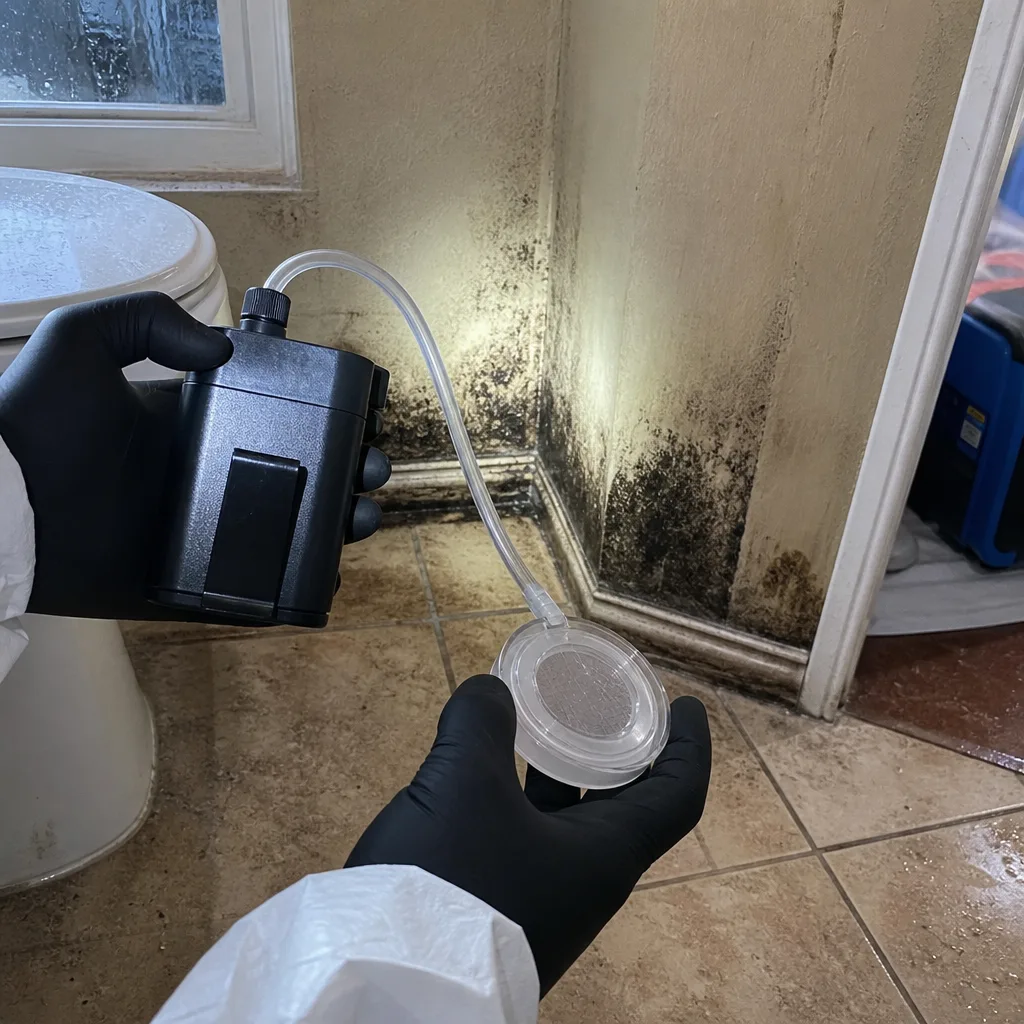
Emergency Board-Up
A storm that blows out a storefront window on Montana Avenue or knocks a tree limb through a rental unit window near Wilshire leaves a building open to weather, theft, and more water intrusion. We board up same-day using impact-rated fasteners suited to Santa Monica’s salt-air environment. Standard hardware corrodes quickly here; we don’t use it. Board-up is not a stopgap in our workflow. It’s the first structural protection layer, sized and fastened so it holds through the next wind event, not just until morning.
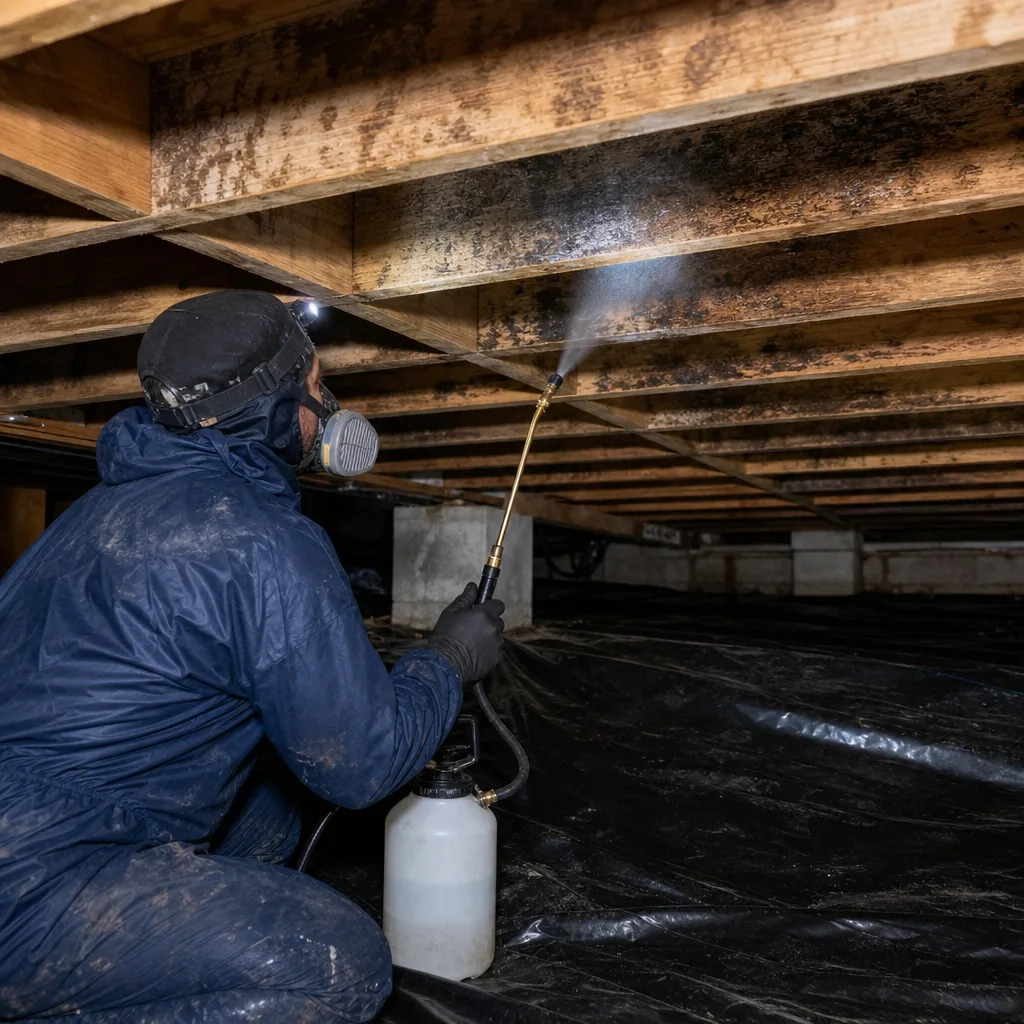
Roof Tarping
When wind tears built-up roofing or clay tile off a 1940s or 1950s building, the exposed deck starts absorbing moisture within hours. We install reinforced tarps with proper slope and tie-down before we leave, because a tarp that pools water on a flat mid-century roof in Santa Monica is barely better than no tarp at all. Our tarp crews also inspect what the wind exposed. Salt-air corrosion on galvanized vent stacks, corroded flashings, and failed sealant joints around rooftop equipment are common on older Santa Monica buildings, and catching them during tarping saves a second mobilization later.
What happens when you call
- 1
A real person answersNo phone trees - you reach a local pro.
- 2
You get an upfront price rangeHonest numbers before anyone is dispatched.
- 3
A background-checked tech heads outLicensed & insured, dispatched right away.
- 4
You approve before work beginsNothing starts until you say go.
Trusted Brands We Service in Santa Monica
We don’t sell equipment. We use it, and we know what holds up in Santa Monica’s coastal conditions. Our drying fleet includes Dri-Eaz, Phoenix, XPOWER, and B-Air units sized for the multi-story stucco buildings that dominate neighborhoods like Ocean Park and Mid-City. For hard-to-dry wall cavities and under-slab spaces, we run Injectidry systems that pull moisture from materials other machines can’t reach. Because we keep replacement parts and units local to our Los Angeles dispatch hub, we don’t wait on a warehouse in another state when a dehumidifier goes down mid-job. We swap it and keep the drying curve moving.
Common Storm & Disaster Restoration Problems We See in Santa Monica Homes
- Marine-layer mold acceleration. Ambient relative humidity above 70% means water from a small roof breach can germinate mold inside wall cavities in 24 to 48 hours. Inland, restorers get 72 hours or more. In Santa Monica, waiting even one day to start drying changes the remediation scope.
- Salt-air corrosion after board-up. Exposed fasteners, flashing, and structural metal corrode faster here than five miles inland. Standard steel hardware rusts within weeks. Storm repairs need corrosion-resistant materials from the first fastener.
- Rent-control sequencing constraints. Older apartment buildings under Santa Monica’s 1979 Rent Control Charter Amendment often can’t be fully vacated during drying. We sequence work room-by-room, drying occupied units in place, which demands more equipment and more daily monitoring.
- Aging soft-story and pre-1960 building envelopes. Many multi-family buildings from the 1930s-1960s have never been fully re-plumbed or re-roofed. Storm damage frequently exposes deferred maintenance, and the restoration scope has to absorb material replacement that inland contractors don’t budget for.
Pricing for Storm & Disaster Restoration in Santa Monica, CA
Storm damage restoration pricing in Santa Monica runs on a range that reflects local conditions. Emergency board-up typically runs $400 to $1,200 depending on opening size and window count. Roof tarp installation on a single-family home runs $600 to $1,800; multi-story apartment tarping starts around $1,400 and goes up with access difficulty and parapet work. Water extraction and structural drying after a storm breach typically runs $2,500 to $7,500 for a single unit, depending on square footage and whether wall cavities must be opened. Wind damage repair scopes average $3,000 to $12,000 when framing, stucco, and roofing are involved. Salt-air corrosion testing and material replacement add $800 to $2,500 when exposed metal needs lab verification. Every estimate is free, in writing, and we bill your insurance carrier directly. No surprises on the bill.
We Also Serve Cities Near Santa Monica
Our crews run storm response for Santa Monica and the surrounding west side. We also serve Venice, Century City, Culver City, and Beverly Hills with the same 24/7 dispatch and written guarantee. If your property sits near the city line, call (888) 737-2439 and we’ll confirm which crew reaches you fastest.
Serving Santa Monica, CA - Our Local Coverage Area
We’re based in the Santa Monica area and know this community well. Use the map below to see our service coverage - if you’re nearby, we can almost certainly help.
FAQs - Storm & Disaster Restoration in Santa Monica
You need drying started within 24 hours, and ideally the same day. Santa Monica’s marine layer keeps ambient relative humidity high enough that mold can germinate inside wall cavities within 24 to 48 hours of water intrusion, roughly half the window restorers use in drier inland markets. If a storm breach sat over a weekend before you noticed it, assume mold is already present and call us at (888) 737-2439 for a same-day moisture assessment.
Santa Monica enforces California Building Code wind-load provisions that apply to new door installations and structural repairs in exposed coastal zones, and the city has been tightening resilience requirements for multi-family buildings, including soft-story retrofit triggers. For storm restoration, the practical answer is that replacement doors and windows should meet the wind ratings specified for the structure’s location and height, and your permit documents will state the required ratings. We’ll pull the applicable code path and source doors that meet the written rating, not a generic off-the-shelf unit.
Yes, in most single-unit storm losses we sequence drying and repair room-by-room so the tenant stays in place, which matters in Santa Monica because tenant displacement triggers protections and procedures under the city’s Rent Control Board rules. We coordinate with the property owner and the tenant to keep occupied areas livable while drying walls and ceilings in the damaged rooms. This room-by-room approach uses more equipment and takes more daily monitoring, but it keeps the legal process clean and the tenant housed.
Salt-laden air off Santa Monica Bay deposits chlorides on exposed metal, and when a storm strips off roofing or siding, the newly exposed fasteners, flashing, and structural connectors start corroding within weeks. Culver City sits far enough inland that ambient chloride loading is materially lower. In Santa Monica, we routinely test exposed galvanized and steel components after storm damage and replace anything that shows early white rust or pitting, because a fastener that fails a year later turns one storm loss into two calls for the same wall.
Call (888) 737-2439 first, then if it’s safe, move valuables out from under the breach and put down buckets or tarps that drain away from the interior. Do not climb onto the roof; wind-damaged decking can fail without warning and falls are the leading cause of post-storm serious injury. We’ll tarp the opening same-day, map the moisture that already entered, and start drying. In the marine layer, every hour you wait before extraction and drying expands the remediation scope.
If you’re looking at a storm-damaged roof, a blown-out window, or water migrating through a stucco wall in Santa Monica, call (888) 737-2439. A live person answers. We’ll tell you honestly what needs to happen, what it costs, and we’ll put the guarantee in writing before we start.
Written by Curt Bowman, Owner at Floodline Restoration Co. of California, serving Santa Monica with certified storm restoration and water damage crews.