
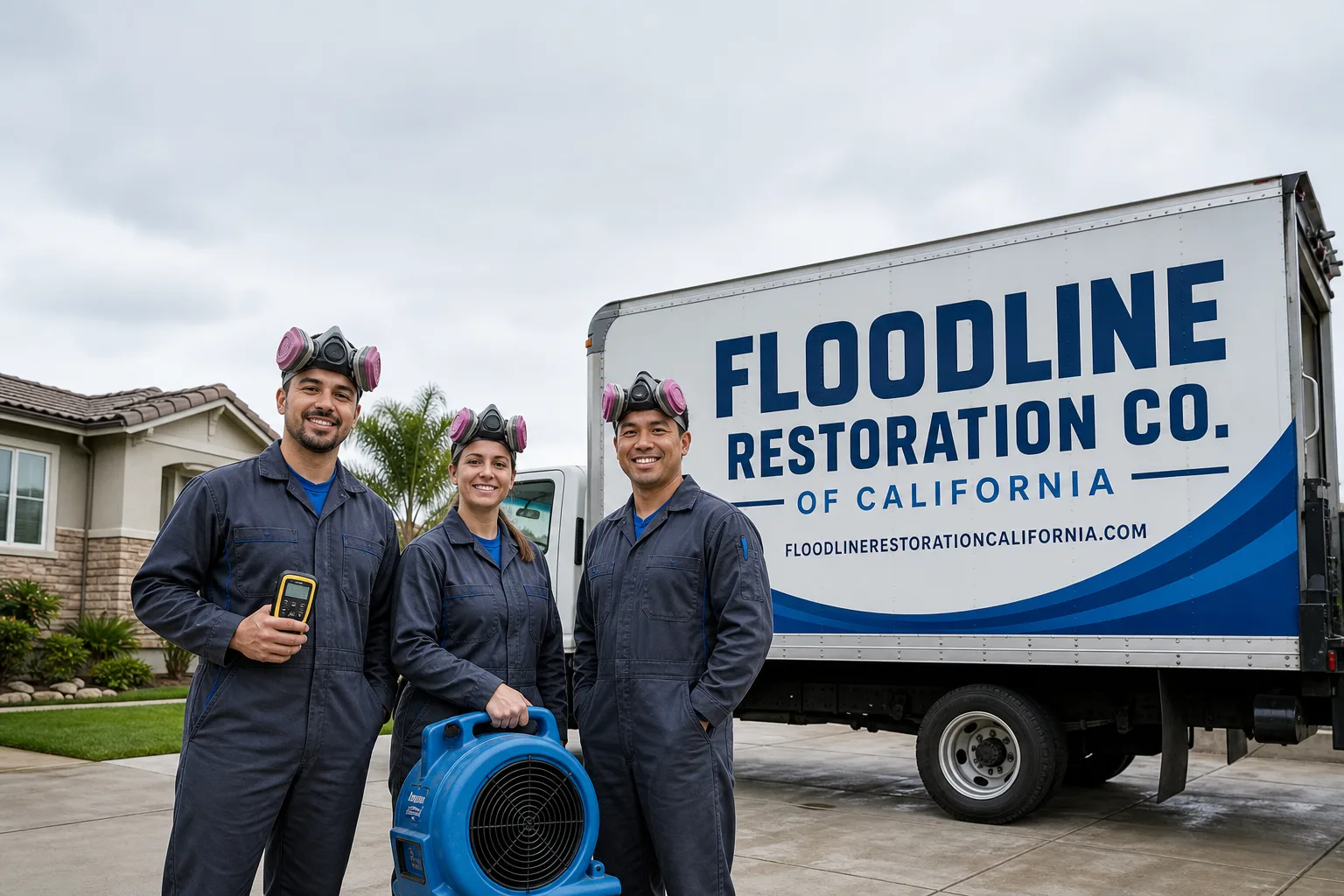
Fast, Reliable Storm & Disaster Restoration Across Santa Clarita
Storm damage in Santa Clarita doesn’t wait for business hours, and neither do we. Floodline Restoration Co. of California runs live dispatch 24 hours a day, so when a Santa Ana wind event tears off roofing or a debris flow backs water into your garage on a Sunday night, a real person answers at (888) 737-2439 and a certified crew heads your way. We know the canyon systems, the paseo corridors, and the 1980s stucco tract homes that dominate Valencia and Saugus. That local knowledge means we arrive already understanding what we’re likely to find, and we get extraction and board-up running the same visit.
Why Floodline Restoration Co. of California Is Santa Clarita’s Preferred Storm & Disaster Restoration Company
Curt Bowman founded Floodline Restoration Co. in 2010 around a dispatch board, not a sales desk. The company has spent the years since building crews that stay with jobs from first extraction through final rebuild, and Santa Clarita homeowners have come to rely on that continuity. Our technicians are background-checked, uniformed, and certified to IICRC, RIA, and IFA standards, and they work with Dri-Eaz and Phoenix equipment that gets moisture readings documented daily until the dry standard is met.
We answer the phone with a live person at two in the morning. Not a recording, not a callback queue. Santa Clarita sits in a fire and flood corridor, and when the call comes, speed matters. Our crews reach most Santa Clarita neighborhoods within the hour, whether you’re off Seco Canyon Road in Saugus, near the paseo network in Valencia, or in the older Newhall core. Every job carries the 90-Day Done Right Promise, our written Keystone Standard: if it isn’t done right, we make it right. No arguing, no paperwork battles. That’s the deal, in writing, on every single job.
Our Storm & Disaster Restoration Services in Santa Clarita
Our Storm & Disaster Restoration team handles the full sequence of damage a Santa Clarita storm actually causes: wind, rain, embers, debris, and the water that follows all of them. We don’t hand off between phases. The same crew that boards up your home also runs extraction, dries the structure, and rebuilds what needs rebuilding.
Storm Damage Cleanup
Santa Ana winds push tree limbs, roofing material, and flying debris through Santa Clarita neighborhoods at 60+ mph. After the wind dies down, the real work starts: clearing hazards, documenting damage for your carrier, and sealing the structure against the next event. Our crews photograph everything and coordinate directly with your adjuster so you’re not playing messenger. This is not a quick rake-and-bag job. We inspect the paseo behind the house, check for ember intrusion in attic vents, and map moisture before anything gets covered up.
Flood Damage Restoration
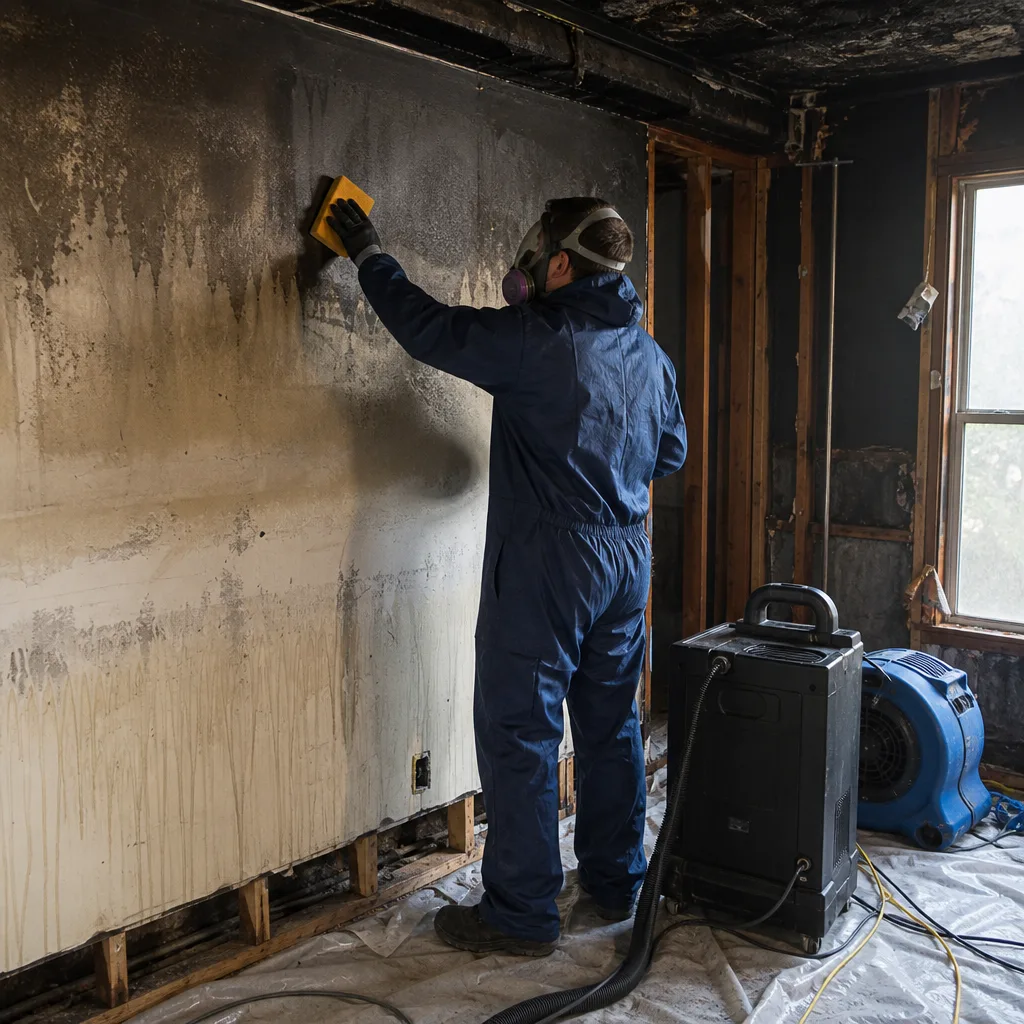
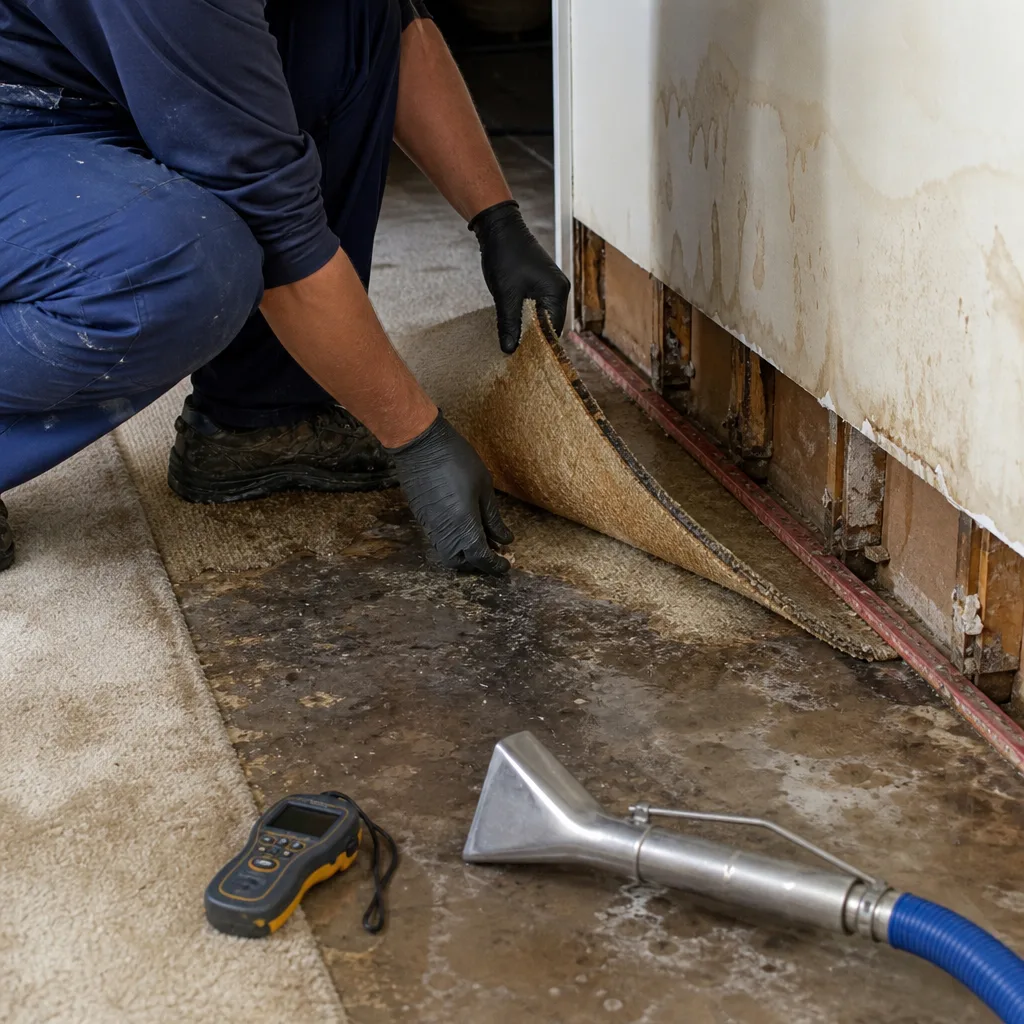
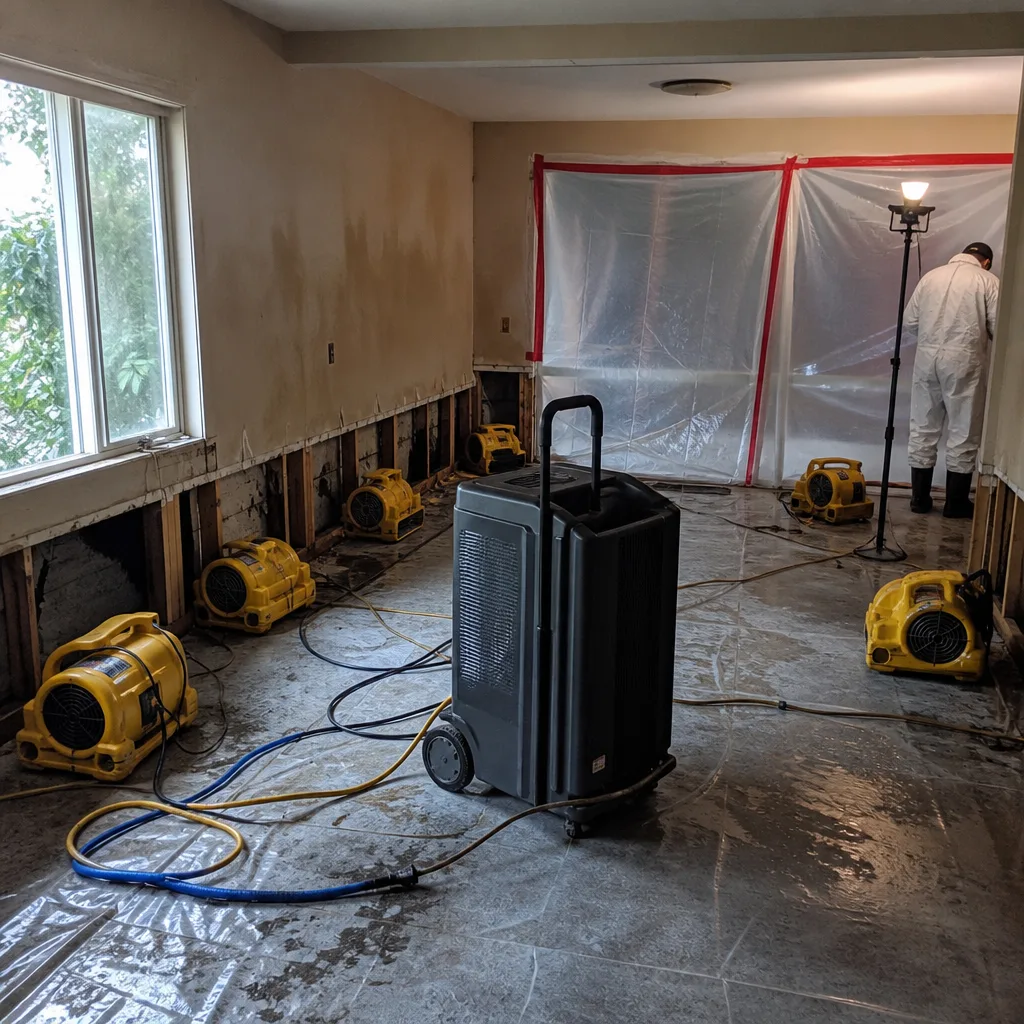
When the first substantial winter rain hits the burn scars in the Angeles National Forest above Santa Clarita, sediment-laden water moves fast. Homes below Soledad and Placerita canyons take on water through garage doors, foundation vents, and stucco penetrations that held fine for years. Our Storm & Disaster Restoration crews run professional-grade Dri-Eaz LGR dehumidifiers and Phoenix air movers after extraction, logging daily moisture readings until the structure hits the dry standard. In Santa Clarita’s 105°F summer climate, wood framing desiccates to a point where gypsum and insulation absorb water faster than you’d think, so time is the enemy.
Emergency Board-Up
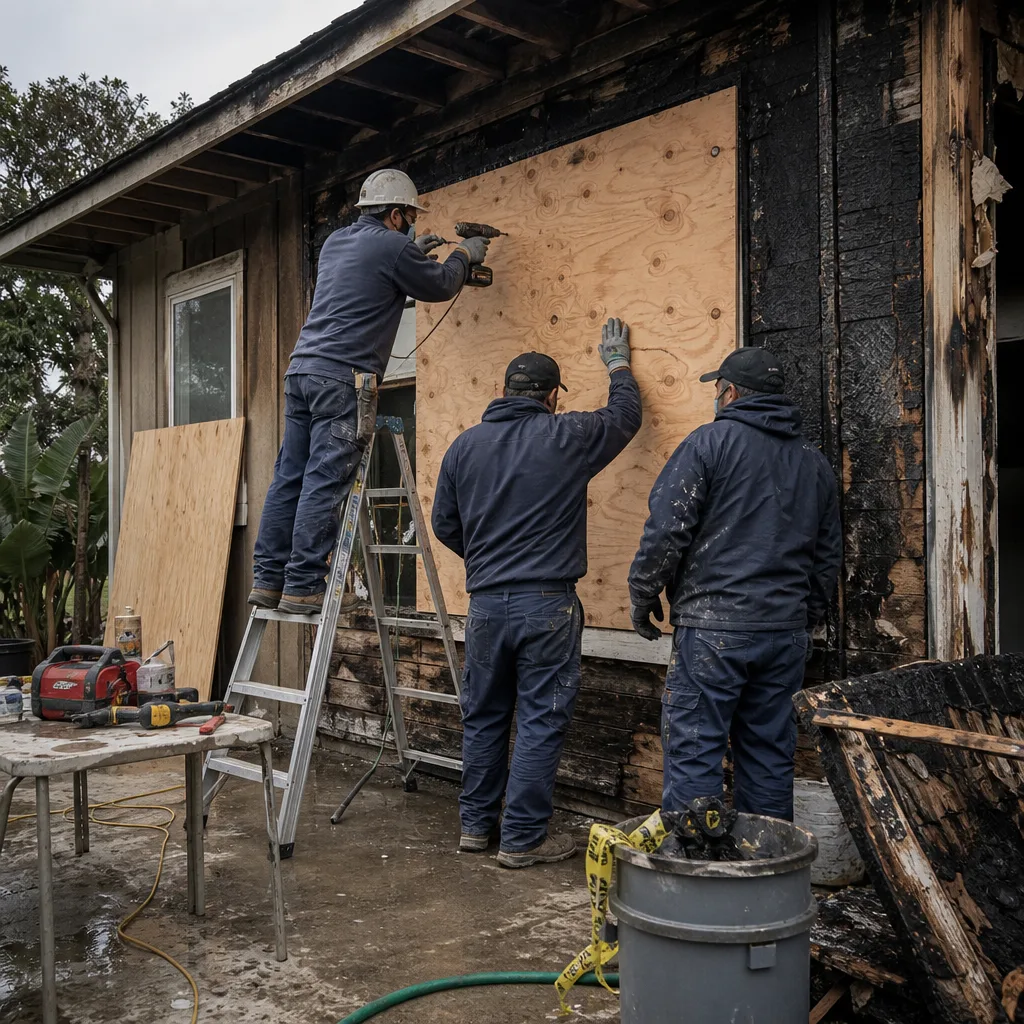
A broken window or wind-peeled exterior wall is an open invitation to weather, animals, and theft. We board up with professional-grade materials sized to your actual openings, not whatever plywood happens to be on the truck. In Santa Clarita’s alley-load garage neighborhoods, we stage equipment carefully so a 26-foot truck doesn’t block an entire paseo and delay your neighbor’s access. Board-up is always documented with photos for your carrier, and it’s done the same visit.
Roof Tarping
Wind-driven damage in Santa Clarita rarely peels a roof cleanly. It rips sections, lifts edges, and exposes decking in unpredictable patterns across the slope. We install 6-mil reinforced poly tarps secured against the next Santa Ana event, not just draped over the hole. If you’re in an HOA-managed community, we coordinate with the association on access and appearance requirements so the repair doesn’t become a second headache. The tarp buys you time to scope a proper repair without water working its way into the framing.
What happens when you call
- 1
A real person answersNo phone trees - you reach a local pro.
- 2
You get an upfront price rangeHonest numbers before anyone is dispatched.
- 3
A background-checked tech heads outLicensed & insured, dispatched right away.
- 4
You approve before work beginsNothing starts until you say go.
Trusted Brands We Service in Santa Clarita
Our technicians train to IICRC, RIA, and IFA standards, and our equipment list reflects what we actually run on Santa Clarita jobs: Dri-Eaz dehumidifiers and air movers, Phoenix axial fans, and Injectidry systems for hard-to-reach cavities. We keep parts and materials staged for the local housing stock, which means common stucco repair materials, standard roof decking thicknesses, and sealants matched to 1980s-2000s tract construction are on hand, not special-ordered from a warehouse across town. Fast turnaround on board-up and tarping isn’t a slogan here; it’s what the local building stock requires.
Common Storm & Disaster Restoration Problems We See in Santa Clarita Homes
- Compromised pre-storm repairs from the 1994 Northridge earthquake: Many Valencia and Saugus homes were patched under post-disaster pressure, and those hidden drywall seams and poorly flashed penetrations become water entry points decades later. Wind-driven rain finds them before you do.
- Desiccated framing that drinks water fast: Santa Clarita’s summer heat and single-digit humidity leave wood framing, drywall, and attic insulation extremely porous. A rain intrusion that would be minor in a coastal home wicks deep into Santa Clarita wall cavities within hours, expanding the scope and the cost.
- Alley-load garage access constraints: Shared driveways and compact garage aprons leave little swing room for equipment. Crews unfamiliar with Valencia’s paseo-backed lots misjudge clearance, block the greenbelt, and delay extraction past the 24-hour microbial growth threshold. We stage equipment differently here than anywhere else.
- Ember-driven secondary damage along paseos: The pedestrian greenbelts threading behind Santa Clarita homes act as ember highways during Santa Ana events. A fence fire two doors down can re-ignite your home through shared attic vents hours after the main fire crew leaves. We patrol the paseo corridor behind your structure as part of every wildfire-adjacent board-up.
Pricing for Storm & Disaster Restoration in Santa Clarita, CA
Storm damage restoration in Santa Clarita typically runs $2,500 to $12,000 depending on the scope. Flood extraction and drying alone generally lands between $3,000 and $8,000. Emergency board-up and roof tarping run $450 to $1,800 as a combined service, with tarping alone typically $400 to $1,200 depending on roof size and slope. Debris removal from a standard single-family lot runs $350 to $1,000. These are the ranges we quote over the phone, and we give you a written scope before any work starts. No surprises on the bill, and we bill your carrier directly when coverage applies. Estimates are free, and the 90-Day Done Right Promise is included in writing on every job.
We Also Serve Cities Near Santa Clarita
Floodline Restoration Co. serves all of Santa Clarita including Valencia, Stevenson Ranch, Castaic, and San Fernando. If you’re in the 91380, 91382, 91383, or 91390 zip codes, we’re already staging crews for your neighborhood. Call (888) 737-2439 and a live dispatcher will get a crew moving.
Serving Santa Clarita, CA - Our Local Coverage Area
We’re based in the Santa Clarita area and know this community well. Use the map below to see our service coverage - if you’re nearby, we can almost certainly help.
FAQs - Storm & Disaster Restoration in Santa Clarita
Santa Clarita’s summer heat and single-digit humidity dry out wood framing and drywall to an extreme degree, making those materials highly porous, and smoke particulates penetrate deeper into wall cavities than they would in a coastal home with higher ambient moisture. Once inside, those particulates off-gas for months. The fix is professional-grade air scrubbing and, in many cases, cavity drying with Dri-Eaz equipment to pull residual smoke from surfaces that look clean but aren’t. Call (888) 737-2439 if you can still smell smoke weeks after the fire; that’s a sign the first cleanup didn’t reach the cavities.
Santa Ana winds accelerate drying, which sounds good until you realize they also accelerate the spread of whatever is already wet: mold spores, smoke residue, and contaminated dust move through open windows and HVAC returns faster in high wind. Our crews seal affected areas before running drying equipment, so the wind works for us instead of against us. In practical terms, Santa Ana conditions can shorten drying time by a day or two on an open interior, but they extend the cleanup phase because airborne particulates spread farther into the structure.
Yes, and we find it on most Santa Clarita wildfire-adjacent homes even when windows were closed. Ash enters through attic vents, eave gaps, and the fresh-air intake on your furnace, then settles in ductwork and coil fins. A standard visual inspection misses it because the contamination sits inside the system, not on surfaces. We run professional-grade HEPA air scrubbers and inspect HVAC returns as part of any wildfire-related restoration in Santa Clarita. The Phoenix and Dri-Eaz equipment we use captures particulates that pass right through residential filters.
Santa Clarita’s canyon-convergence geography comes into play: fires strip the hillsides above Soledad, Placerita, and San Francisquito canyons, and the first heavy winter rain sends debris flows and sediment-laden water downhill fast. The water carries ash, charred organic material, and fine silt that clogs drains, backs up into garages, and drives contaminants deep into stucco and framing. LA Basin communities without this fire-then-flood cycle don’t see the same contamination load or the same structural saturation. Restoration here costs more and takes longer because the water itself is dirtier and the path it travels is faster.
Most Santa Clarita HOAs, including many in Valencia and Stevenson Ranch, allow emergency board-up and tarping without prior architectural approval, but they typically require notification within 48 to 72 hours and may have restrictions on materials or appearance. Our crews coordinate directly with your HOA on access and compliance, especially in paseo-backed communities where the greenbelt is common area and staging equipment there requires specific permission. We handle that communication so you don’t have to. If you’re unsure whether your HOA has restrictions, call (888) 737-2439 and we’ll check while the crew is en route.
Storm damage in Santa Clarita doesn’t wait for a convenient moment, and the paseo-driven ember transport, post-earthquake patchwork, and desiccated building materials here create restoration scopes that generic crews underestimate by 30 to 50 percent. We know this valley. We know its wind patterns and its housing stock. We stand behind the work in writing. Call (888) 737-2439 for a free estimate and a written scope before any work starts.
Written by Curt Bowman, Owner at Floodline Restoration Co. of California, serving Santa Clarita and the surrounding communities.