
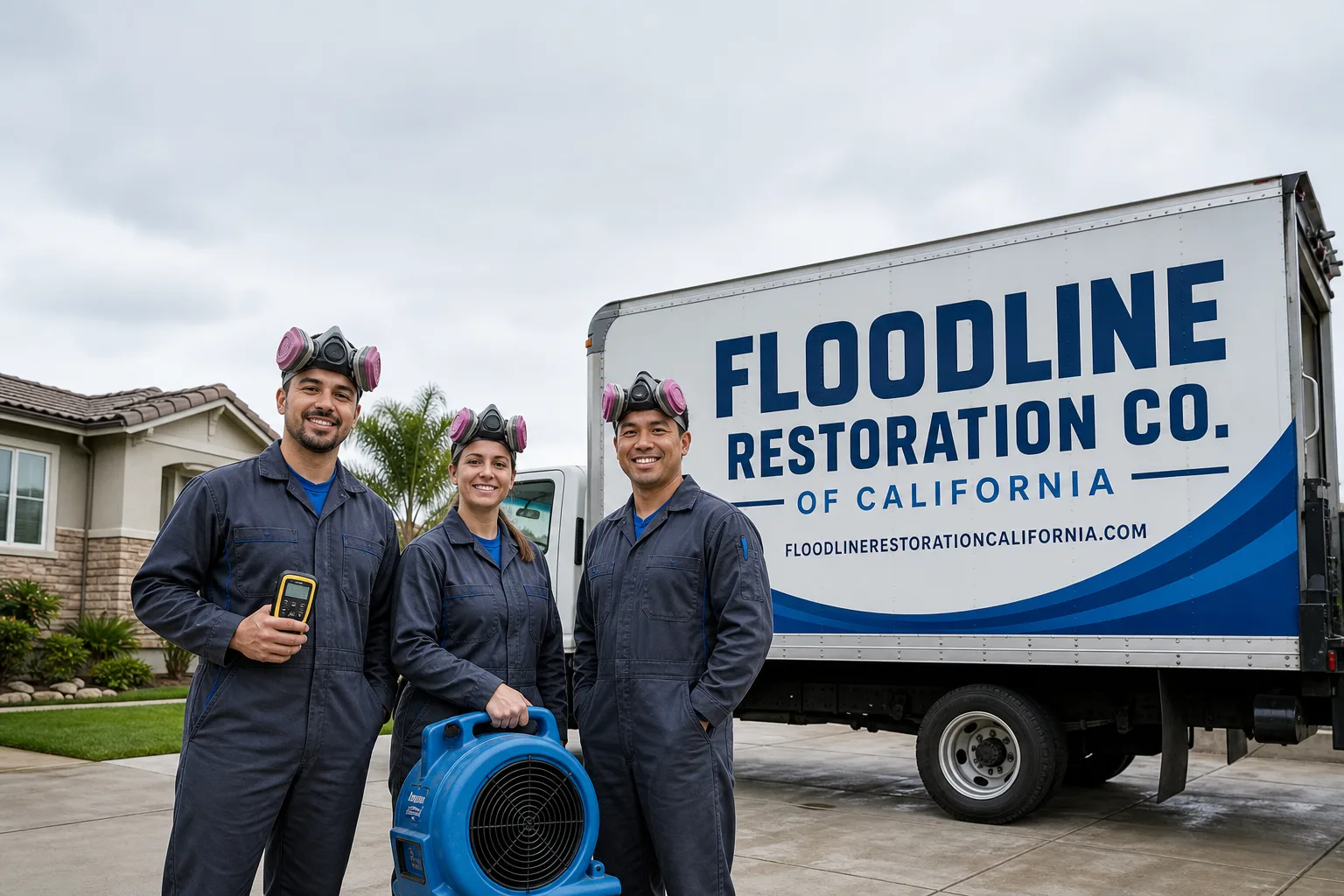
Storm & Disaster Restoration in San Anselmo, CA: Fast, Local, Done Right
Storm and disaster restoration in San Anselmo typically costs $1,200-$8,500 depending on whether you’re dealing with wind-driven roof damage, creek overflow into a crawlspace, or sewage back-surge from the town’s aging storm drains. When San Anselmo Creek jumps its banks near downtown, the water doesn’t wait, and neither do we. Our crews reach most San Anselmo addresses within 60-90 minutes of your call, and a live dispatcher answers at (888) 737-2439 around the clock. The line the water left on your baseboard is where we start.
San Anselmo isn’t like other Marin towns when it comes to storm damage. The creek that gives downtown its character is the same creek that overtopped its banks in January 1982 and again in December 2005, sending water through the business district and into the Craftsman bungalows and Victorian cottages that line the low streets. We know the flood zone, we know the housing stock, and we know that a storm call here often means more than one thing went wrong at the same time. That’s why we built our Storm & Disaster Restoration service around the full cycle: extraction, drying, and rebuild handled by the same certified crew, with a moisture log and the 90-Day Done Right Promise in writing when we finish.
Why San Anselmo Homeowners Call Floodline Restoration Co.
We’ve worked enough storm seasons in this town to understand what a December atmospheric river does to a 1920s wood-frame home near Sir Francis Drake Boulevard. Water doesn’t just pool on the floor. It climbs the plaster-over-lath walls, seeps under the old-growth Douglas fir flooring, and follows the foundation line toward whatever storage or mechanical space sits lowest. Homeowners here aren’t looking for a sales pitch. They want someone who knows the difference between a modern drywall repair and the care a 1930s plaster wall needs after water exposure.
The San Anselmo flood zone produces repeat clients for a reason. Some properties along the downtown corridor have filed multiple flood claims across different storm cycles. That changes how a restoration company should approach the work. We pull moisture maps from day one using Dri-Eaz and Phoenix equipment, log readings daily until the dry standard is met, and hand that log to you and your carrier. You get a written scope before work begins, so there are no surprises on the bill. Curt Bowman founded this company in 2010 around a dispatch board, not a sales desk, and that’s still how we run. A person answers the phone. A uniformed, background-checked technician shows up. The job gets done, then it gets documented.
Our Storm & Disaster Restoration Services in San Anselmo
Storm Damage Cleanup
When wind takes down a limb into a window or the creek leaves silt and debris across a garage floor, the cleanup has to happen in the right order. We remove standing water and debris first, then assess what’s saturated, what’s contaminated, and what can be saved. In San Anselmo, that assessment often includes materials that modern flood crews don’t see every day: original lath strips behind plaster, knob-and-tube-era wall cavities, and Douglas fir flooring that swells unevenly if it dries too fast. Storm cleanup here is a preservation job as much as it is a water job.
Flood Damage Restoration
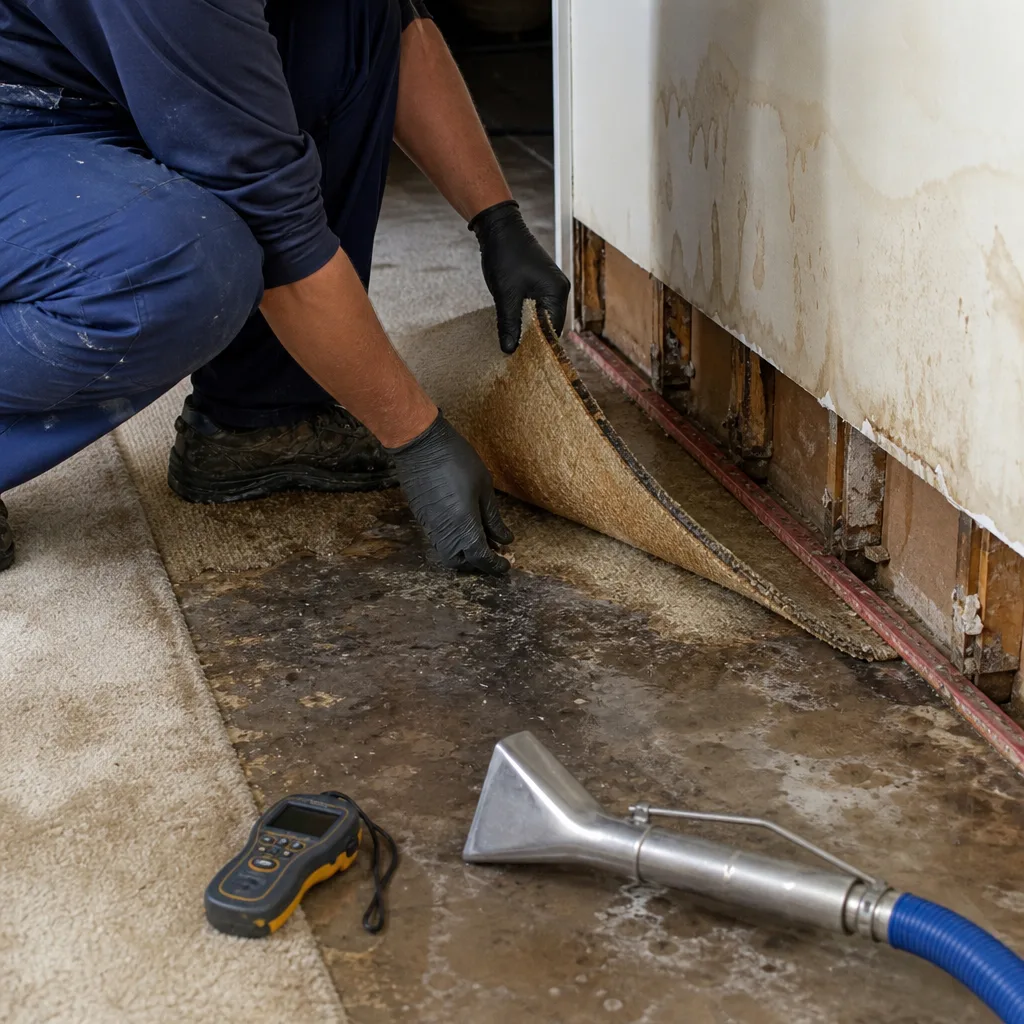
Flooding along San Anselmo Creek moves fast and carries whatever the stormwater picked up on the way downhill. December 2005 taught this town that the water doesn’t have to be deep to do lasting damage. It has to be removed properly, and the structure has to be dried to a measured standard, not just until the surface feels dry. We use Dri-Eaz LGR dehumidifiers and XPOWER air movers positioned to dry old-growth framing without warping it. In homes with plaster-over-lath walls, we place an Injectidry system inside the wall cavities to pull moisture out from behind the plaster rather than ripping everything open and replacing it with drywall that doesn’t belong in a 1920s home.
Emergency Board-Up
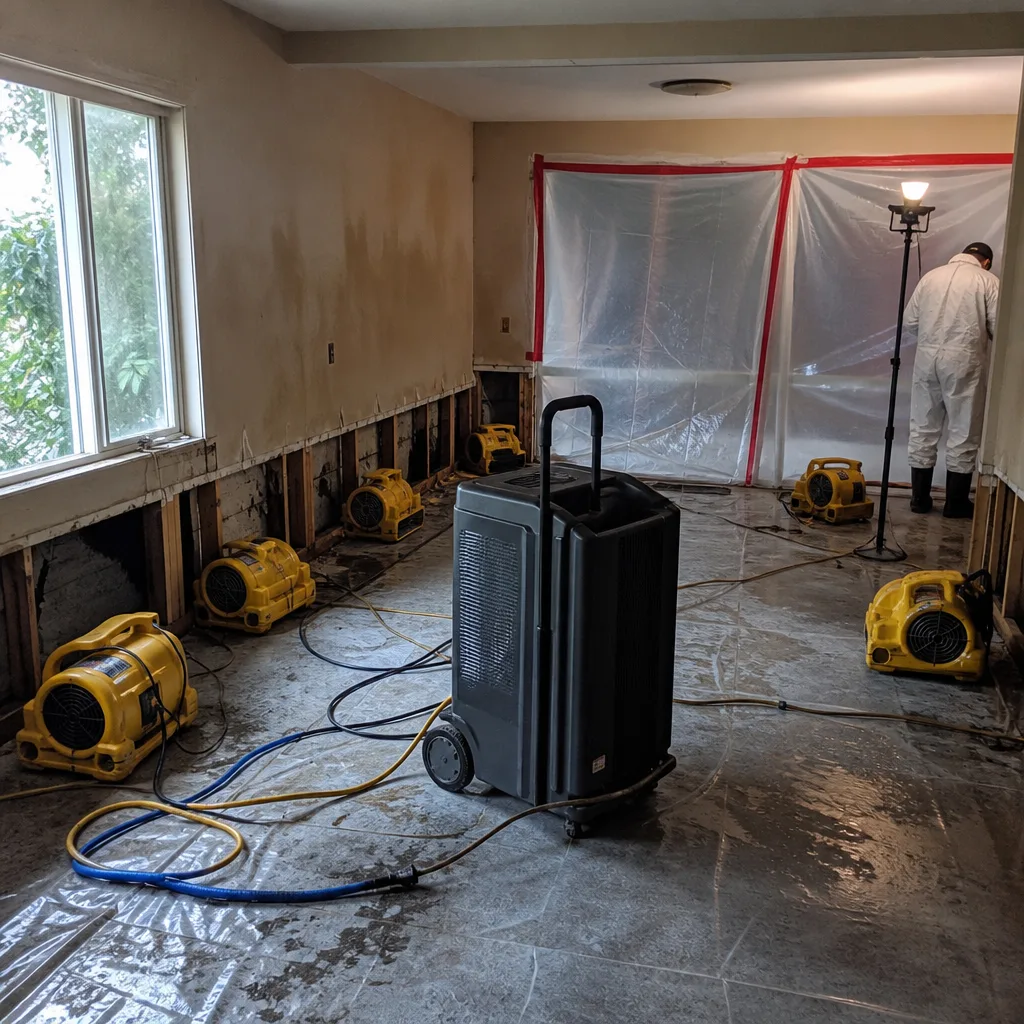
A broken window or a breached door in a storm is an open invitation for more damage. We board up quickly and properly, using materials rated to hold against the next wind gust, not just cover the opening until morning. In the Ross Valley, where a storm front can stall and dump rain for hours, that matters. Board-up is also where our direct insurance billing removes a step. You call us, we secure the property, we photograph everything, and we send the documentation straight to your adjuster. You don’t play messenger between us and the carrier.
Roof Tarping
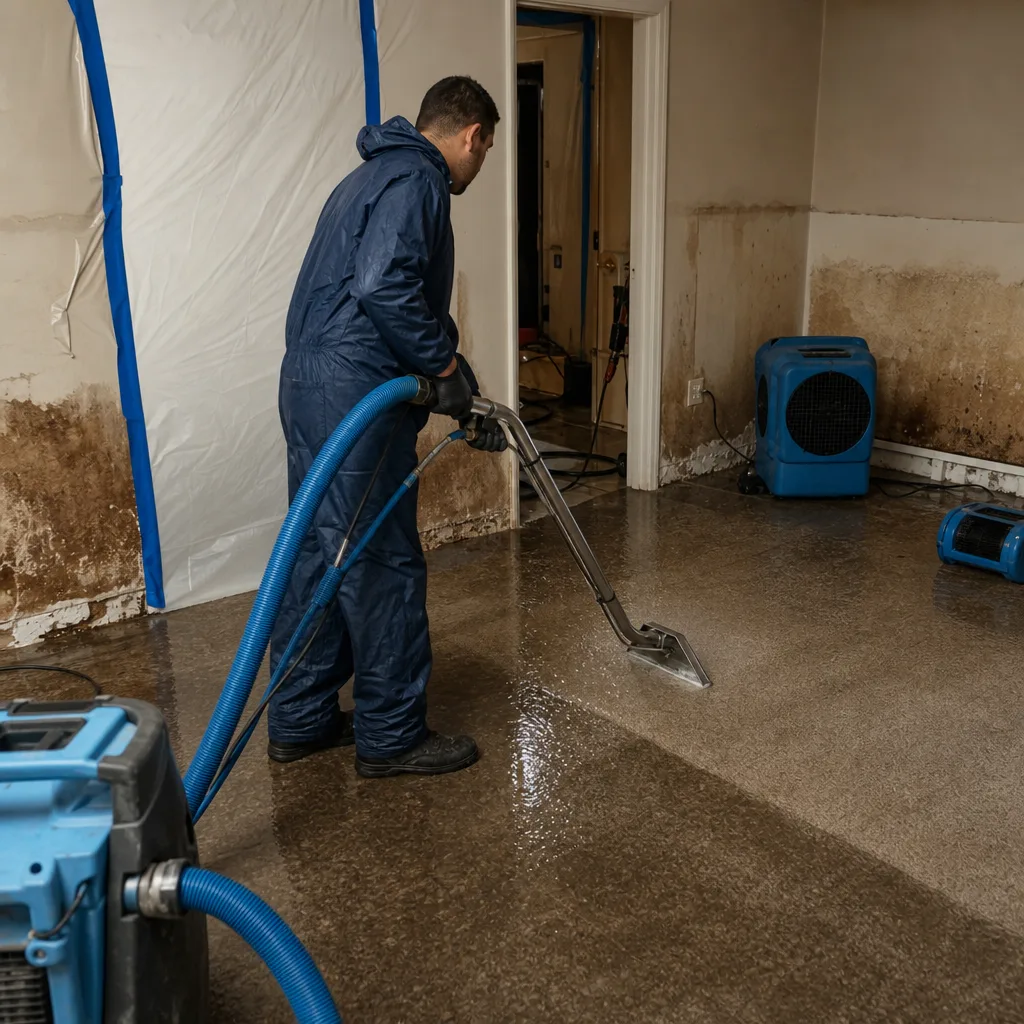
Wind-driven debris and saturated tree limbs are hard on San Anselmo roofs, especially the older composition and wood-shake roofs common on pre-war homes. We tarp damaged sections to stop active water intrusion, then document the damage for your claim. The tarp isn’t a repair; it’s a bridge that keeps more water from coming in while the scope for permanent repair gets written. The goal is always to get you from emergency response to a finished, documented repair without a second water event turning a roof patch into a full interior restoration.
What happens when you call
- 1
A real person answersNo phone trees - you reach a local pro.
- 2
You get an upfront price rangeHonest numbers before anyone is dispatched.
- 3
A background-checked tech heads outLicensed & insured, dispatched right away.
- 4
You approve before work beginsNothing starts until you say go.
Wind-Rated Doors and What a Failing One Means Before a San Anselmo Storm
Most storm damage in San Anselmo doesn’t start with the creek. It starts with wind. The same Ross Valley topography that funnels stormwater into the downtown also channels wind through the streets, and a door that’s loose in its frame, warped at the corner, or missing weatherstripping becomes the weak point the storm finds first. We see it every season: a wind-rated or impact-rated door that was never properly reinforced, or an older wood door that’s been painted over so many times the frame no longer seats square. When the wind gets behind that door, debris follows the opening, and what could have been a door repair becomes a flooded interior with water running through the same path the wind opened.
That’s why we treat pre-storm reinforcement as part of storm and disaster restoration, not a separate handyman call. Before the atmospheric rivers line up off the Pacific, check the doors that face the prevailing wind, usually the west and south exposures in San Anselmo. If the door flexes when you push against it, if you can see daylight at the strike plate, or if the threshold has started to rot, call us. We’ll inspect it, quote the reinforcement or replacement, and install it before the storm does the work for us. A square deal: no surprises on the bill.
What We’ve Seen on San Anselmo Storm Calls
During a December atmospheric river, we responded to a 1920s Craftsman bungalow near Sir Francis Drake Boulevard and San Anselmo Creek. Our technicians found water surging through the original fir flooring and plaster-over-lath walls. Our Dri-Eaz LGR dehumidifiers and XPOWER air movers were placed to dry the old-growth framing without warping it. After extraction, we lifted the wet plaster to expose the lath and ran an Injectidry system into the wall cavities, preserving the historic interior while preventing mold from setting into the porous materials. That’s not a generic storm call. That’s a San Anselmo storm call.
Here’s the Information-Gain section that could only exist on this page: San Anselmo Creek’s repeat flood cycles mean many homes in the downtown flood zone have been wet before, sometimes more than once. The framing in those homes may have dried from a prior event, but the moisture history lives in the wood. We read moisture content, not just surface dampness, and we adjust our drying plan based on what the structure tells us. A home that flooded in 2005 and again this year needs a different approach than a first-time water event. The materials remember.
San Anselmo Housing Stock and Why It Changes the Restoration Approach
San Anselmo’s residential streets are lined with Craftsman bungalows, Victorian-era cottages, and early-20th-century wood-frame homes, many built between the 1900s and 1930s. These houses have plaster-over-lath walls, original old-growth Douglas fir flooring, and cast-iron or galvanized plumbing that’s been in the ground longer than most of us have been alive. When water enters these structures, the materials absorb it deeply. Plaster wicks moisture upward. Fir flooring swells and cups. The wall cavities hold humidity long after the visible surface looks dry.
Drying these homes with the same aggressive airflow used on modern drywall-and-PVC construction is a mistake. It can warp the flooring, crack the plaster, and push moisture into places it wouldn’t otherwise go. Our technicians are trained to RIA and IFA standards, and they understand that a 1925 Craftsman near Creek Park needs slower, more deliberate drying than a 1995 tract house in Terra Linda. The equipment is the same professional-grade Dri-Eaz, Phoenix, and XPOWER gear; the settings and the placement are different. Preservation matters here. Done right, and backed in writing.
Pricing for Storm & Disaster Restoration in San Anselmo, CA
Storm restoration pricing in San Anselmo runs on real numbers, not vague promises. Here’s what homeowners in the 94960 and 94979 zip codes can expect:
- Emergency board-up or roof tarping: $350-$900, depending on the number of openings and the roof pitch.
- Storm water extraction and initial dry-out: $1,200-$4,500 for a typical single-floor flood event covering 500-1,200 square feet.
- Flood restoration with plaster-of-lath wall drying: $2,800-$8,500 when Injectidry cavity drying and historic material preservation are required.
- Wind damage repair (doors, flashing, trim): $600-$3,200 depending on whether materials can be salvaged or need replacement.
- Sewage back-surge contamination cleanup: $2,500-$7,500, including IICRC-compliant sanitation and affected material removal.
What moves the number: how long the water sat before extraction, whether sewage or creek contamination is present, and what the walls and floors are made of. Plaster and old-growth fir cost more to restore properly than drywall and engineered flooring, but they belong in these homes. We write a scope before work starts and bill your carrier directly. Call (888) 737-2439 for a free, no-commitment estimate on your specific situation. The $50 Off Any Repair Over $250 offer applies to restoration repairs, and our Senior & Veteran 5% discount is always in effect.
Common Storm Restoration Problems We See in San Anselmo Homes
- Unreinforced wind-rated doors failing at the frame: Older wood-framed doorways in pre-war homes have often shifted over the decades, and the door no longer seals. When a storm hits, wind-driven rain enters at the gap, and the damage spreads before the door itself actually fails. Reinforcing the frame before the season is cheap insurance; rebuilding the interior after a breach is not.
- Plaster-over-lath walls drying too fast: We arrive after other companies have set blowers and left. The plaster looks dry but the lath behind it is still wet, and mold forms inside the cavity. This is the single most common rework call we get in San Anselmo, and it’s why our drying plans include wall-cavity readings, not just surface checks.
- Basement back-surge from aging stormwater infrastructure: During peak storm events, San Anselmo’s storm drains can’t always keep up, and sewage backs up into low-lying basements and crawlspaces. What looks like clean floodwater is actually Category 3 contaminated water under IICRC standards, and it requires a completely different cleanup protocol. Treating it as clean water is a health risk, not a shortcut.
- Repeat-flood properties with hidden prior damage: Homes along Sir Francis Drake Boulevard and the downtown flood zone have been wet before, sometimes from events decades apart. The previous moisture may have been improperly dried, leaving framing compromised or mold behind the walls. We check moisture history as part of every assessment, because a first-time flood in a 2005 flood house is not the same job.
Sewage Back-Surge: The Ross Valley Problem Most People Don’t See Coming
Here’s the fact that surprises San Anselmo homeowners the most: when San Anselmo Creek overflows, the basement flooding is often not clean creek water. The town’s stormwater and sewer infrastructure was built for a smaller, drier town, and during peak events the system can’t separate everything it’s supposed to. The result is back-surge: sewage and stormwater mixing in the low-lying drains and coming up through floor drains and toilets in the lowest part of the house. It looks like floodwater. It moves like floodwater. It is not floodwater.
Under IICRC standards, that water is Category 3, and the cleanup protocol is different. We remove affected materials, sanitize with the proper antimicrobials, and verify the space is safe before drying begins. We also photograph and document everything for your insurance carrier, because the distinction between Category 1 and Category 3 water changes what’s covered and what needs replacement. If you’re in the 94960 flood zone and you see water coming up from below, not in from above, call (888) 737-2439 and tell us what you’re seeing. We’ll treat it like the contamination it is, not the contamination you hope it isn’t.
We Also Serve Cities Near San Anselmo
Our crews handle storm and disaster restoration throughout the Ross Valley and central Marin. We run calls in Fairfax, where the creek flows down from the hills, Kentfield, San Rafael, and Larkspur. If you’re in a neighboring town and dealing with the same atmospheric river, the same phone number gets you the same live dispatcher and the same certified crew. Call (888) 737-2439.
Serving San Anselmo, CA - Our Local Coverage Area
We’re based in the San Anselmo area and know this community well. Use the map below to see our service coverage - if you’re nearby, we can almost certainly help.
FAQs - Storm & Disaster Restoration in San Anselmo
Before a storm, we inspect the door frame, the strike plate alignment, the threshold seal, and the door’s wind-rating label. Reinforcement usually means installing longer fasteners into the framing, adding a sturdier strike plate, replacing worn weatherstripping, or installing a wind-rated door where the existing one can’t be brought up to standard. In San Anselmo, where the Ross Valley channels wind through the streets, a properly reinforced door is the difference between a weather event and a water-damage claim. Call (888) 737-2439 to have your doors checked before the next system arrives.
It means the storm has a point of entry. Wind gets behind the door, flexes it past the latch, and then carries rain and debris through the opening. Once water enters, it follows the flooring and the walls, and a door repair becomes an interior restoration. In older San Anselmo homes with fir flooring and plaster walls, the cost of that interior work is several times the cost of a pre-storm door reinforcement. That’s the math homeowners here have learned the hard way.
We can usually have a crew on site in the downtown San Anselmo flood zone within 60-90 minutes of your call. Board-up and roof tarping typically begin the same visit, because securing the structure is the first step in stopping further damage. Our live dispatcher is available 24/7 at (888) 737-2439, so you’re not leaving a message and hoping for a call back while the storm keeps working.
Yes. San Anselmo’s aging stormwater infrastructure can back-surge sewage into basements and crawlspaces during peak storm events, and that water is Category 3 contamination under IICRC standards. We handle the full sanitation protocol: removal of affected materials, antimicrobial treatment, containment, and verification. We also document everything for your insurance carrier, because the contamination classification changes the claim. If you see water coming up from below, call us before wading in.
For a 1920s Craftsman with plaster-over-lath walls and original fir flooring, full restoration typically takes 5-14 days from first response to final moisture verification. The drying phase alone takes longer than it would in a modern home, because the plaster and old-growth wood release moisture slowly. Structural drying runs 3-7 days, followed by any plaster repair, flooring work, and final documentation. We keep you informed with a daily moisture log and finish with the 90-Day Done Right Promise in writing. Call (888) 737-2439 to discuss your specific home.
Written by Curt Bowman, Owner at Floodline Restoration Co., serving San Anselmo and Marin County since 2010.