
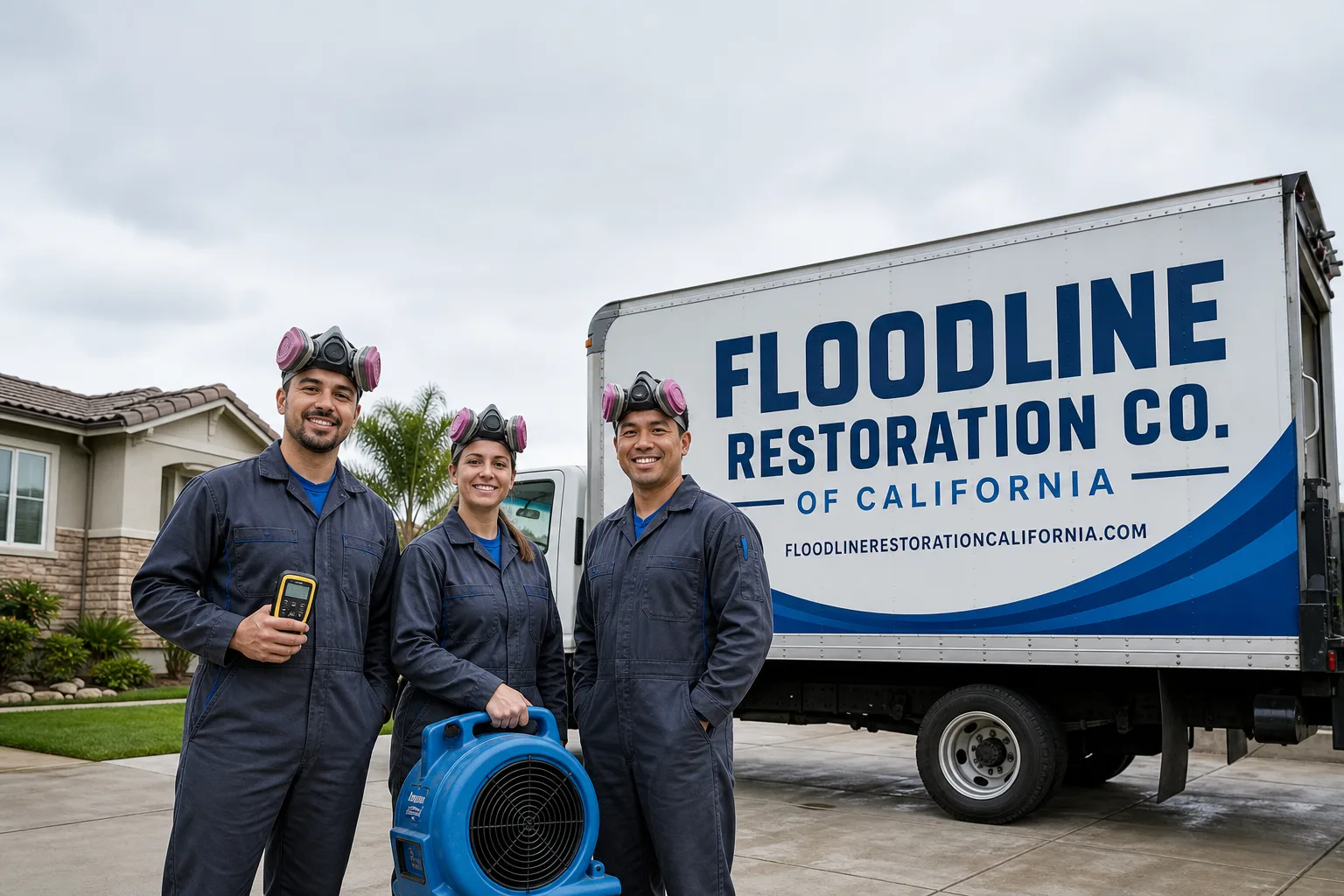
Fast, Reliable Storm & Disaster Restoration Across Rialto
When a Santa Ana wind event tears through Rialto, the damage doesn’t wait for business hours. We don’t either. Storm damage in the 92376 and 92377 zip codes typically requires emergency board-up within hours, not days, because wind-driven rain gets into walls fast and the Lytle Creek Wash can push sheet flooding into low-lying streets faster than most homeowners expect. Our Storm & Disaster Restoration crews know exactly which Rialto neighborhoods take the worst of it when winds funnel down from Cajon Pass, and we answer the phone with a live dispatcher at 2 a.m. Call (888) 737-2439 and a certified crew starts toward your street.
Why Floodline Restoration Co. of California Is Rialto’s Preferred Storm & Disaster Restoration Company
We’ve been doing this work for over 42 years, and our crews have taken enough emergency calls from Rialto homeowners to know what a Cajon Pass wind event does to a 1960s slab home. Wind that comes down that pass hits Rialto harder than Fontana or Colton. We plan for it. When a homeowner on North Lilac Avenue calls us at midnight with a sliding door that’s been blown off its track, we send a crew that has already worked that exact failure mode dozens of times. We don’t send a salesperson. We send background-checked, uniformed technicians certified to IICRC, RIA, and IFA standards, and we bring the equipment that actually fixes the problem that night.
Rialto homeowners remember being burned by contractors who overpromised and underdelivered. We run our business the opposite way. Every job gets a written scope of work before we start, and every job is backed by the 90-Day Done Right Promise. If it’s not done right, we make it right. No arguing. No paperwork battles. That’s the Keystone Standard, and it’s been our way since Curt Bowman founded Floodline Restoration Co. in 2010.
Our Storm & Disaster Restoration Services in Rialto
We handle the full cycle, from the first board-up to the finished rebuild. When a storm hits Rialto, here’s what we do most often, and why it matters here specifically.
Storm Damage Cleanup
After a big wind or rain event, Rialto yards and roofs collect everything from palm fronds to gravel scoured off the Cajon Pass foothills. We remove storm debris, check for hidden structural damage, and document what we find with photos. In Rialto’s dry climate, homeowners sometimes downplay storm cleanup because the damage isn’t visible from the curb. But wind-driven debris can crack roof tiles, tear flashing, and gouge stucco in ways that leak slowly for months. We catch that.
Flood Damage Restoration
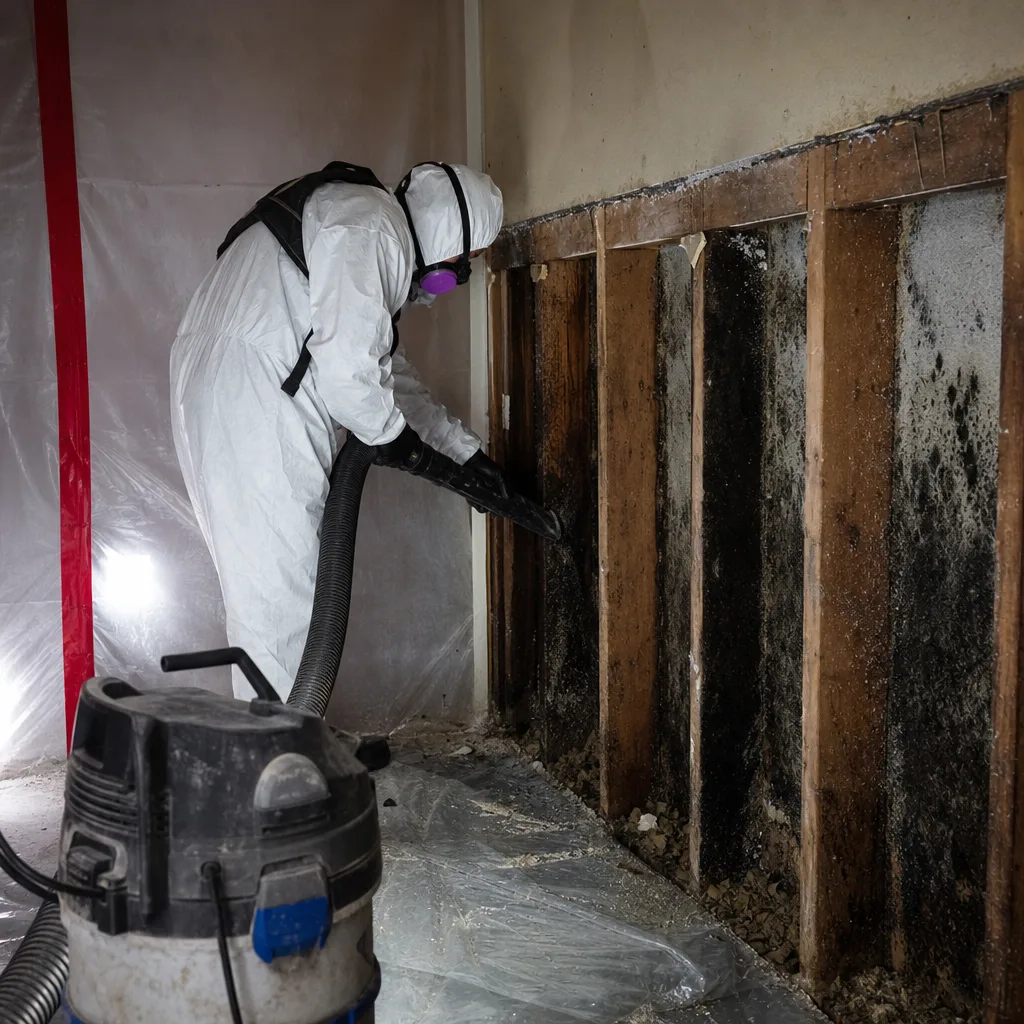
Rialto’s semi-arid climate doesn’t mean flood risk is zero. Lytle Creek Wash cuts through the northern part of the city, and when an atmospheric river stalls over the San Bernardino Valley, the basin’s impermeable soils send sheet flooding into low-lying neighborhoods in both 92376 and 92377. When that water reaches a slab home, it doesn’t just sit on the surface. It wicks laterally through the slab and into drywall, and because Rialto’s framing is often fifty and sixty years old, it absorbs water fast. We extract, dry, and moisture-map every affected room using Dri-Eaz and Phoenix equipment, with daily readings logged until the dry standard is met.
Emergency Board-Up
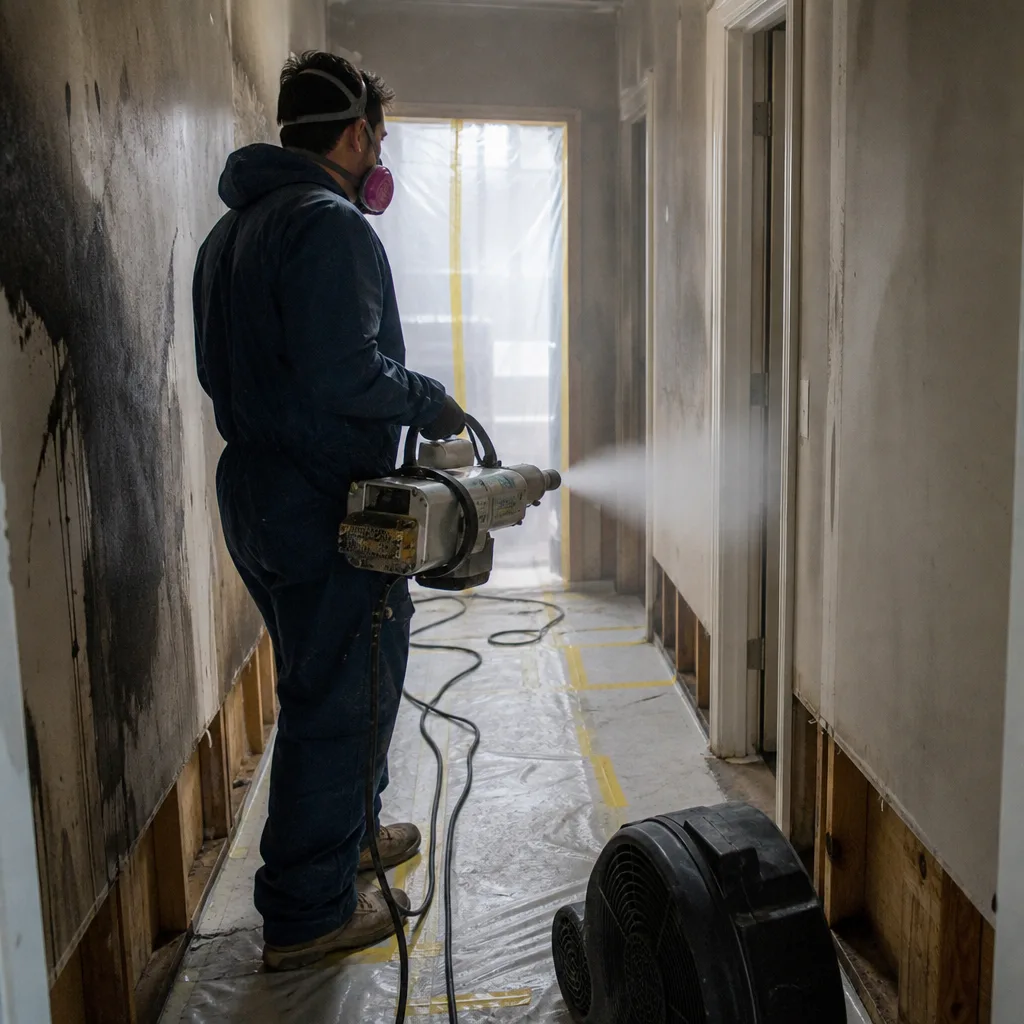
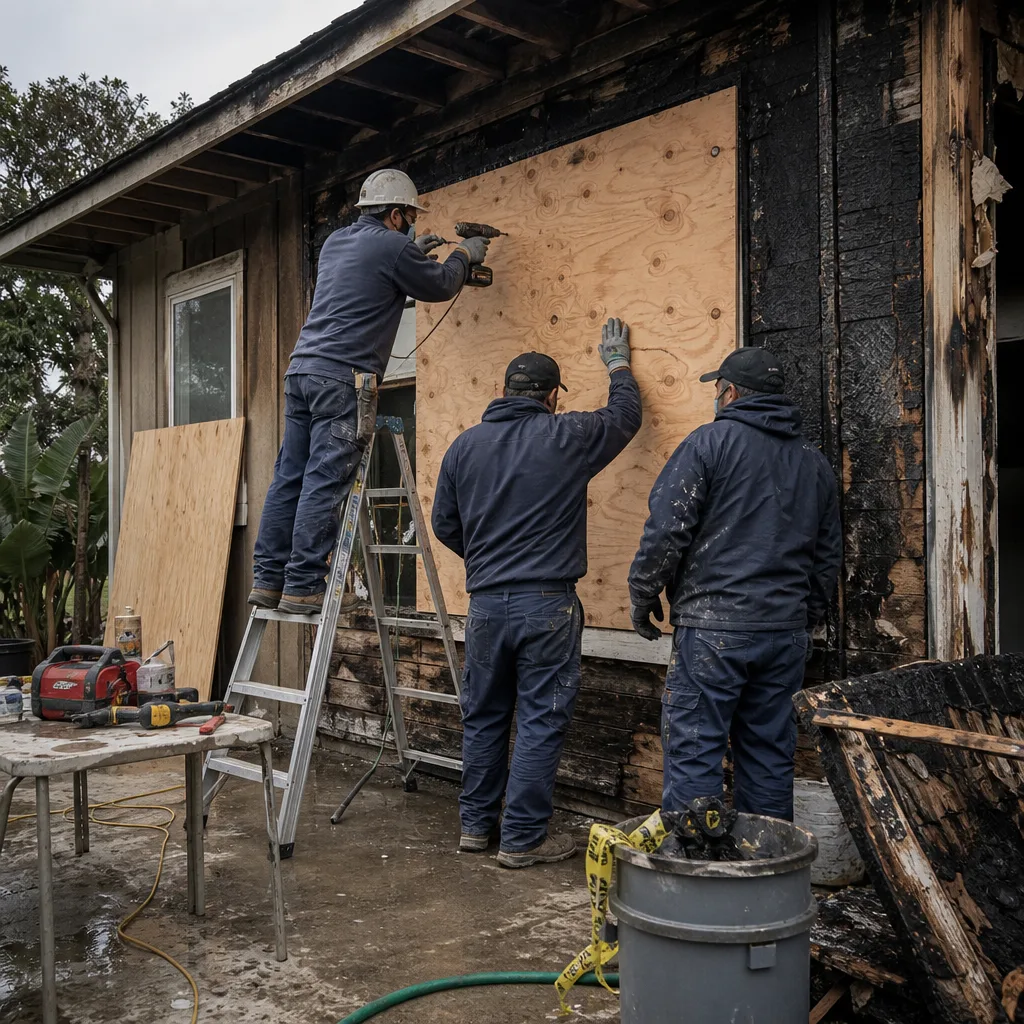
Rialto sits at the southern mouth of Cajon Pass, which acts as a natural wind tunnel. Santa Ana wind speeds here routinely exceed what neighboring Fontana experiences by 10 to 15 mph. That means wind-driven debris is a primary cause of broken windows, blown-out doors, and compromised openings after every major wind event. We board up with aluminum panels, not plywood, because plywood splinters under repeated gust cycles and lets debris breach the opening. Our emergency board-up keeps the home sealed until permanent repairs are ready.
Roof Tarping
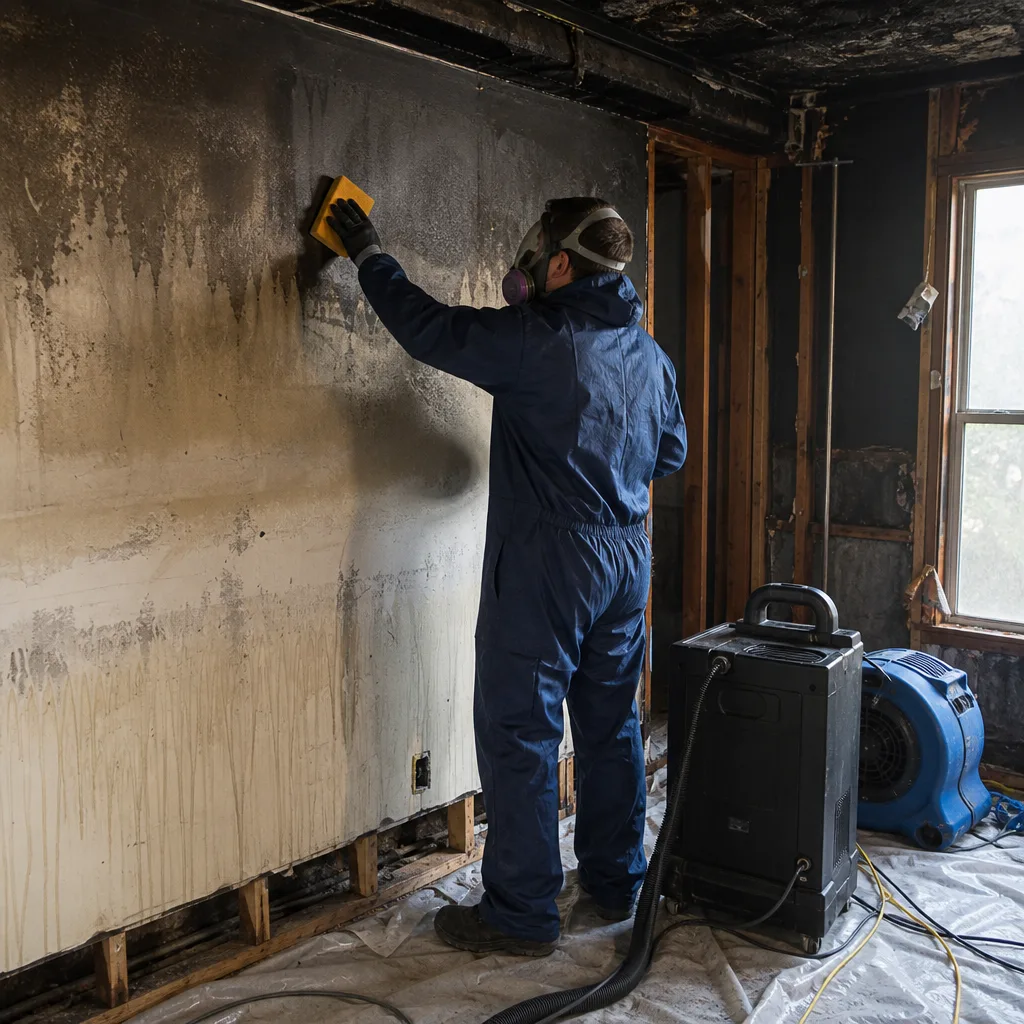
When wind peels roofing material or a tree limb punctures the deck, the fastest way to stop water intrusion is a proper tarp. We use woven polyethylene covers secured with wind-rated fasteners. On Rialto’s older homes, especially the slab-on-grade tract homes from the 1950s through early 1970s, we check the fascia and soffit carefully. Aging aluminum fascia doesn’t hold fasteners well after decades of sun and wind cycling, so we anchor into framing, not just the fascia board.
What happens when you call
- 1
A real person answersNo phone trees - you reach a local pro.
- 2
You get an upfront price rangeHonest numbers before anyone is dispatched.
- 3
A background-checked tech heads outLicensed & insured, dispatched right away.
- 4
You approve before work beginsNothing starts until you say go.
Common Storm & Disaster Restoration Problems We See in Rialto Homes
- Single-pane sliding doors failing below current code. Rialto’s 1950s through early 1970s tract homes were built with aluminum-track sliding doors that don’t meet today’s wind-load requirements. We regularly see tracks bent and panels blown out when gusts hit 60 mph. The fix is reinforcement clips or door replacement, not just re-seating the panel.
- Wind-driven rain saturating slab-adjacent framing. When a storm breaches a sliding door or window on a slab home, the water doesn’t drain into a crawl space. There isn’t one. It pools against the slab edge and wicks into bottom plates and drywall. By the time you see staining, the damage has usually spread several feet laterally.
- Post-storm slab leaks near Riverside Avenue going untreated as plain water. The Rialto-Colton groundwater plume carries documented PFAS and perchlorate contamination, and slab cracks in older structures can wick that groundwater directly into living spaces. Standard water-damage protocols don’t test for that. We do. Any storm-related groundwater contact near the industrial corridor along Riverside Avenue gets contaminant testing before drying begins.
- Brittle drywall absorbing water fast. Rialto’s long dry spells pull moisture out of drywall and framing, leaving both brittle and highly absorbent. When water does arrive, it wicks in fast and deep. That’s why we cut out and replace affected drywall rather than trying to dry it in place on most storm jobs here.
How Wind-Driven Damage on North Lilac Avenue Unfolded
On a stretch of North Lilac Avenue in 92377, our crew arrived after a Santa Ana gust peeled back eight feet of aluminum fascia and shattered two sliding-panel tracks on a 1960s slab-on-grade home. We removed the wind-loosened panels, installed B-Air metal reinforcement clips rated for 110 mph gusts, and tarped the south-facing roofline with a woven polyethylene cover. That stopped brackish sheet-flow from the Lytle Creek Wash that had already begun wicking into brittle drywall. The homeowner had called at 11 p.m. We had the opening sealed and the moisture mapped by 1:30 a.m. That’s the job. No detour through a call center, no voicemail, no waiting until Monday morning.
Pricing for Storm & Disaster Restoration in Rialto, CA
Storm and disaster restoration pricing in Rialto depends on what failed and how far the water traveled, but here are honest ranges for the most common jobs. Emergency board-up with aluminum panels typically runs $380-$780 for a standard sliding door or window opening, depending on panel count and fastening method. Roof tarping on a Rialto single-story tract home generally falls between $450-$1,100, including wind-rated fasteners and full perimeter sealing. Storm damage cleanup, including debris removal and structural inspection, runs $500-$1,400 for a typical single-family property. Flood extraction and structural drying starts around $1,200 and goes up based on square footage and how long the water sat. If groundwater near Riverside Avenue is involved, contaminant testing adds roughly $150-$400 to the job and is non-negotiable given the documented plume. Call (888) 737-2439 for an exact written quote. Estimates are free, and $50 off any repair over $250 always applies.
Rialto Codes, Wind Ratings, and What the City Expects
Rialto’s building code follows California’s wind-load requirements, which treat the Cajon Pass corridor as a high-wind zone. Any new or replacement sliding door or window on a home in Rialto needs to meet current wind-rating standards, and that applies to storm restoration work too. We don’t reinstate a failed door to its original spec if that spec is forty years old and below code. We bring it up. The city wants proper load paths, impact-rated glazing on windward exposures, and fasteners that hold under repeated gust cycling. Our reconstruction team handles the permit paperwork, the code compliance, and the final inspection. You shouldn’t have to become a wind-load engineer because a storm hit your house.
When Lower Wind Ratings Hide Bigger Problems
It’s common in Rialto to patch a storm-broken window and call it done, especially when the visible damage looks minor. But wind events in the Cajon Pass zone create what we call repeated-load failures. A door track might look fine for two weeks and then bind, or a roof patch might hold through a dry spell and fail at the next gust event. That’s why our storm work includes a full perimeter check, not just the obvious damage. We look at the fascia, the sofit, the track system, the panel seating, the flashing, and the sealant lines. We photograph it all. If your insurance carrier needs documentation, we provide it directly and bill them directly too. You never play messenger between us and the adjuster.
Serving Rialto, CA - Our Local Coverage Area
We’re based in the Rialto area and know this community well. Use the map below to see our service coverage - if you’re nearby, we can almost certainly help.
Frequently Asked Questions About Storm & Disaster Restoration in Rialto
Yes. Rialto’s building code requires replacement doors and windows to meet California’s wind-load standards for the Cajon Pass corridor, which acts as a natural acceleration zone for Santa Ana winds. Any storm restoration that replaces or reinstalls a sliding door, window, or exterior opening needs to meet current wind-rating requirements, not the original 1960s spec. We handle code compliance and permits on every rebuild job. Call (888) 737-2439 for a written assessment of your door or window after a storm.
Because slab-on-grade homes in Rialto don’t have crawl spaces. When water enters through a failed door or window track, it sits against the slab edge and wicks laterally through bottom plates, drywall, and framing before it ever surfaces as visible staining. In Rialto’s dry climate, the drywall is usually brittle and highly absorbent, so the water moves faster and farther. By the time you see it, the affected area is almost always bigger than the stain suggests. That’s why we moisture-map every affected room, not just the visible spot.
Any below-grade water contact near Riverside Avenue should be treated as potentially contaminated. The Rialto-Colton plume is an EPA-tracked contamination zone with documented PFAS and perchlorate in the groundwater, and slab cracks in older structures can wick that groundwater directly into living spaces. Standard IICRC drying protocols don’t include contaminant testing, but on storm-water jobs near the corridor we test before drying begins. That extra step protects your family and ensures the restoration isn’t just clean but safe. For a full explanation of how this affects your property specifically, call (888) 737-2439 and ask for a contamination-risk assessment.
Aluminum panels with wind-rated fasteners. Plywood is a common quick fix, but on Rialto’s repeated-gust cycles it splinters, loosens, and lets debris breach the opening before a proper repair can be installed. We use aluminum security panels anchored into framing rather than the old aluminum track, which in many 1950s and 1960s Rialto homes is too corroded or deformed to hold anything long-term. The board-up is temporary, but it should be strong enough to hold through a second wind event if one comes before the rebuild.
No. In fact, Rialto’s dry climate makes storm-damaged drywall more likely to need full removal, not less. Drywall and framing that have baked in decades of Inland Empire heat become brittle and highly absorbent. When storm water reaches them, it wicks in fast and deep, and drying in place usually leaves hidden moisture pockets that show up later as mold or structural degradation. We cut out and remove affected drywall, treat the framing, and rebuild. The Keystone Standard backs every removal and rebuild. Call (888) 737-2439 if you’re not sure whether your drywall can be dried or should be removed.
We Also Serve Cities Near Rialto
Our crews dispatch to Rialto daily, and we also serve the surrounding communities. If you’re in Bloomington, Fontana, Muscoy, or San Bernardino, you get the same live dispatch, the same certified technicians, and the same 90-Day Done Right Promise. Learn more about our Storm & Disaster Restoration in Rialto coverage area or read the full scope of our Storm & Disaster Restoration services.
Call Floodline Restoration Co. of California
A storm hits. The wind tears something loose. Water gets in. That’s the moment you need a live person, a certified crew, and a name you can hold accountable. That’s us. Floodline Restoration Co. of California has served local communities for over 42 years, answering the phone at 2 a.m. with a dispatcher, not a recording. Our technicians are background-checked, uniformed, and trained to IICRC, RIA, and IFA standards. We carry Dri-Eaz, Phoenix, XPOWER, B-Air, and Injectidry equipment, and we moisture-map, log, and document every job. We bill your insurance carrier directly. We give you a written scope before work starts. And we stand behind the result with the 90-Day Done Right Promise. Call (888) 737-2439 for a free estimate, any hour, any day. Senior and veteran customers always get 5% off, and the $89 seasonal tune-up applies to storm-readiness checks before the Santa Ana season hits.
Written by Curt Bowman, Founder of Floodline Restoration Co. of California, serving Rialto since 2010.