
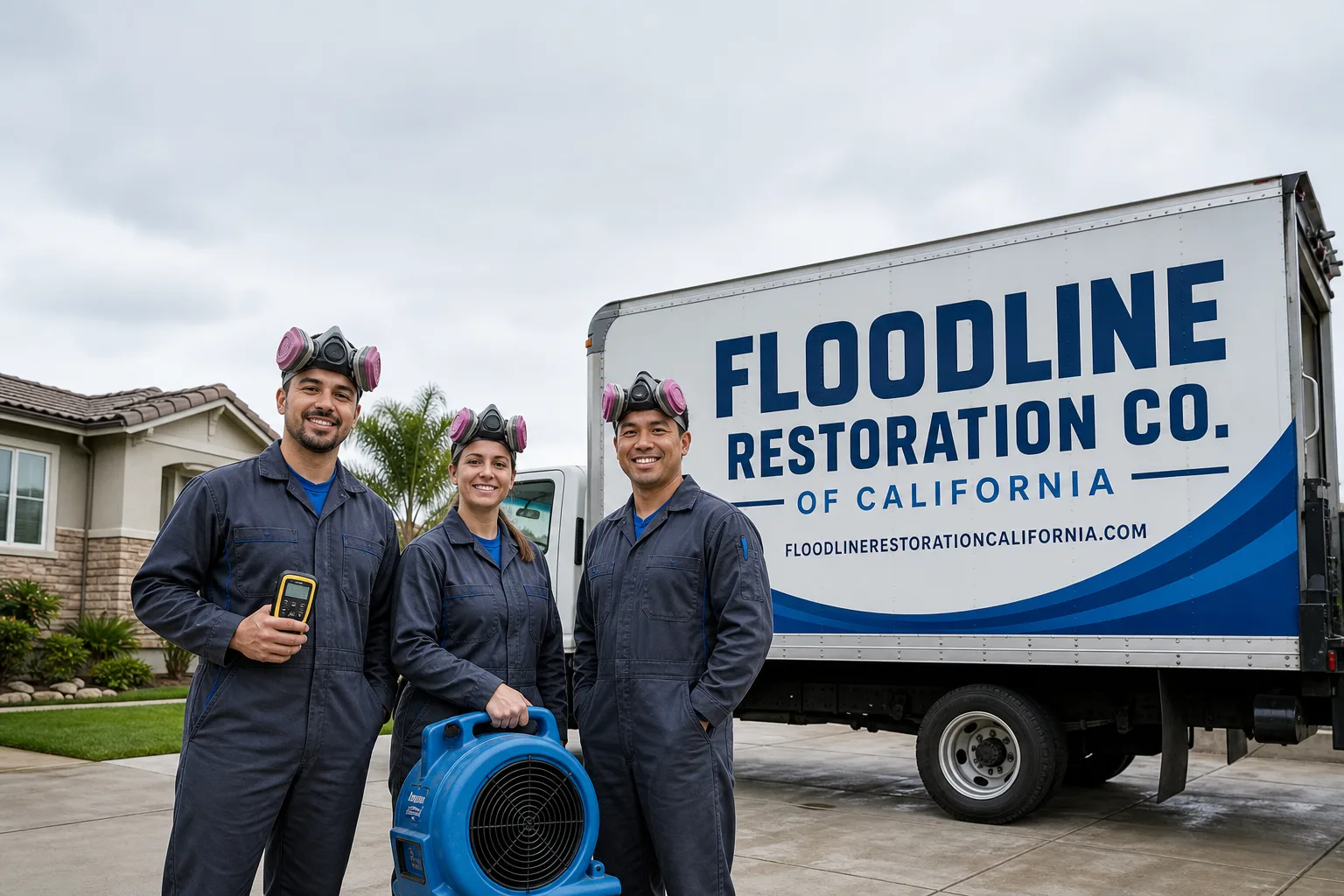
Fast, Reliable Storm & Disaster Restoration Across Long Beach
Storm damage in Long Beach rarely looks like the news footage. It’s a 1940s bungalow in Rose Park with water wicking up through lathe-and-plaster walls after a three-day downpour. It’s an apartment off Anaheim Street in 90805 where jalousie windows have been feeding mold for years. We’ve been walking into those homes since 2010. When you call (888) 737-2439, a live dispatcher answers. That matters at 2 a.m. when water is still coming in. We serve every ZIP from 90802 to 90822, and our crews know Long Beach construction the way only people who have opened the walls here do.
Why Floodline Restoration Co. of California Is Long Beach’s Preferred Storm & Disaster Restoration Company
Most restoration companies split the work. One crew does extraction. Another does drying. A third shows up weeks later for rebuild, and the homeowner spends their evenings acting as messenger between them and the adjuster. We don’t work that way. The same certified crew that reads the moisture map on day one handles daily readings, hands the log to you and your carrier, and rebuilds what needs rebuilding. That’s the point of our Storm & Disaster Restoration team: one company, start to finish, with a written 90-Day Done Right Promise at the end.
Long Beach homeowners have a particular reason to care about that. Our housing stock is old, and old houses hide things. A contractor who never worked in Wrigley or the Poly High corridor doesn’t know that many of these walls were patched after the 1933 earthquake with materials that now trigger asbestos and lead protocols. Our technicians do. They’re background-checked, uniformed, and certified to IICRC, RIA, and IFA standards. They show up in marked trucks, and they hand you a written scope before any wall comes open. That’s just how we’ve operated for over 42 years. Curt Bowman founded this company around a dispatch board, not a sales desk, and it shows in the way we answer the phone.
Our Storm & Disaster Restoration Services in Long Beach
Storm Damage Cleanup
Storms in Long Beach don’t just leave water. They leave debris, mud, and whatever the wind carried in from San Pedro Bay. Our storm damage cleanup crews handle all of it: downed tree limbs, wind-driven trash, mud tracked through a 1940s Spanish Colonial in Bluff Heights. We photograph everything for your adjuster as we work, because insurance carriers in Long Beach pay closer attention when the file is documented properly.
Flood Damage Restoration
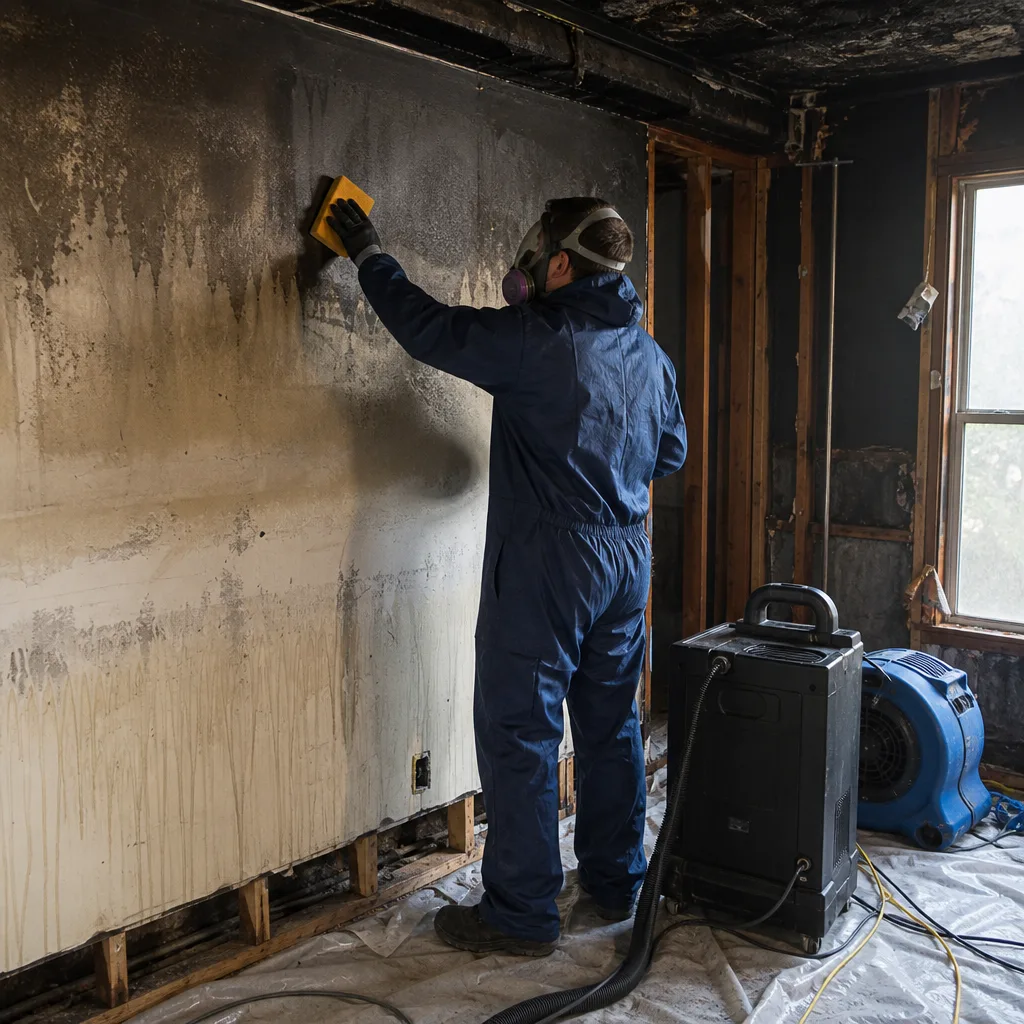
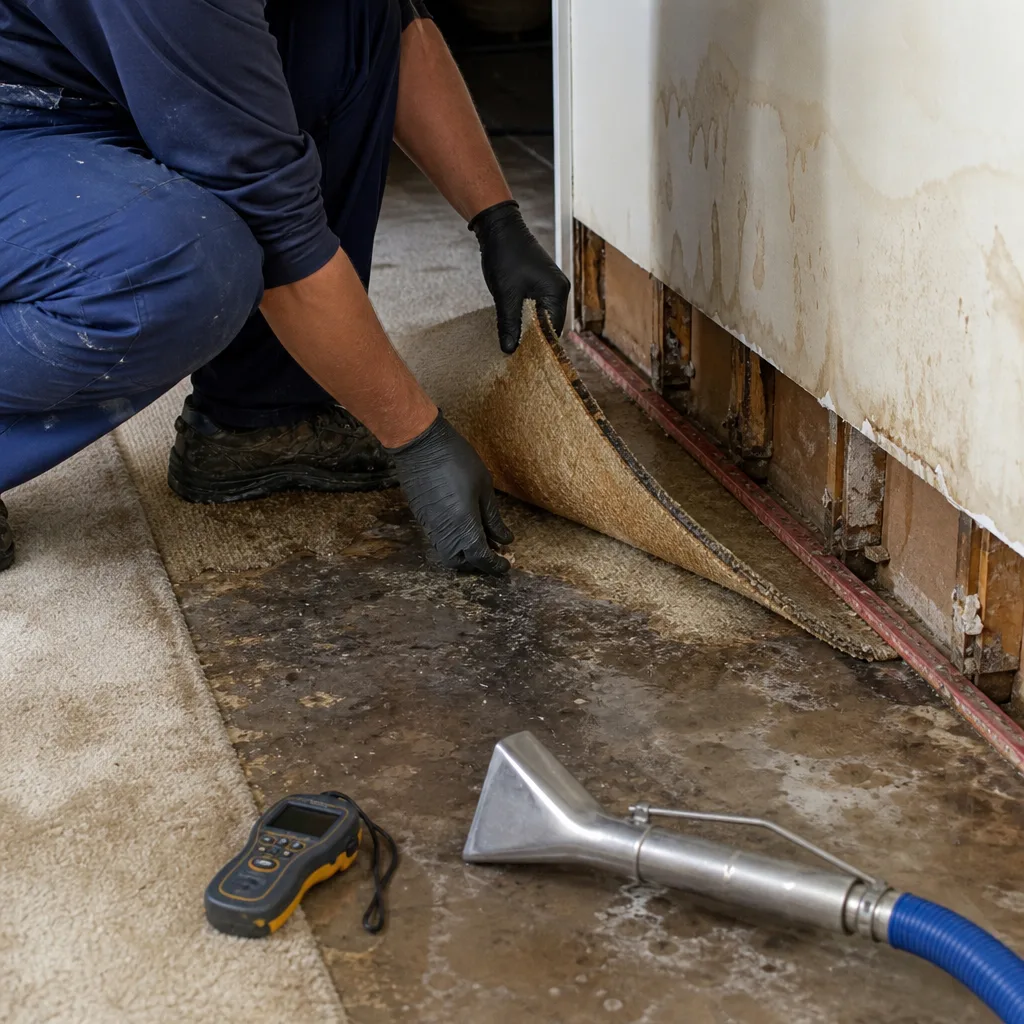
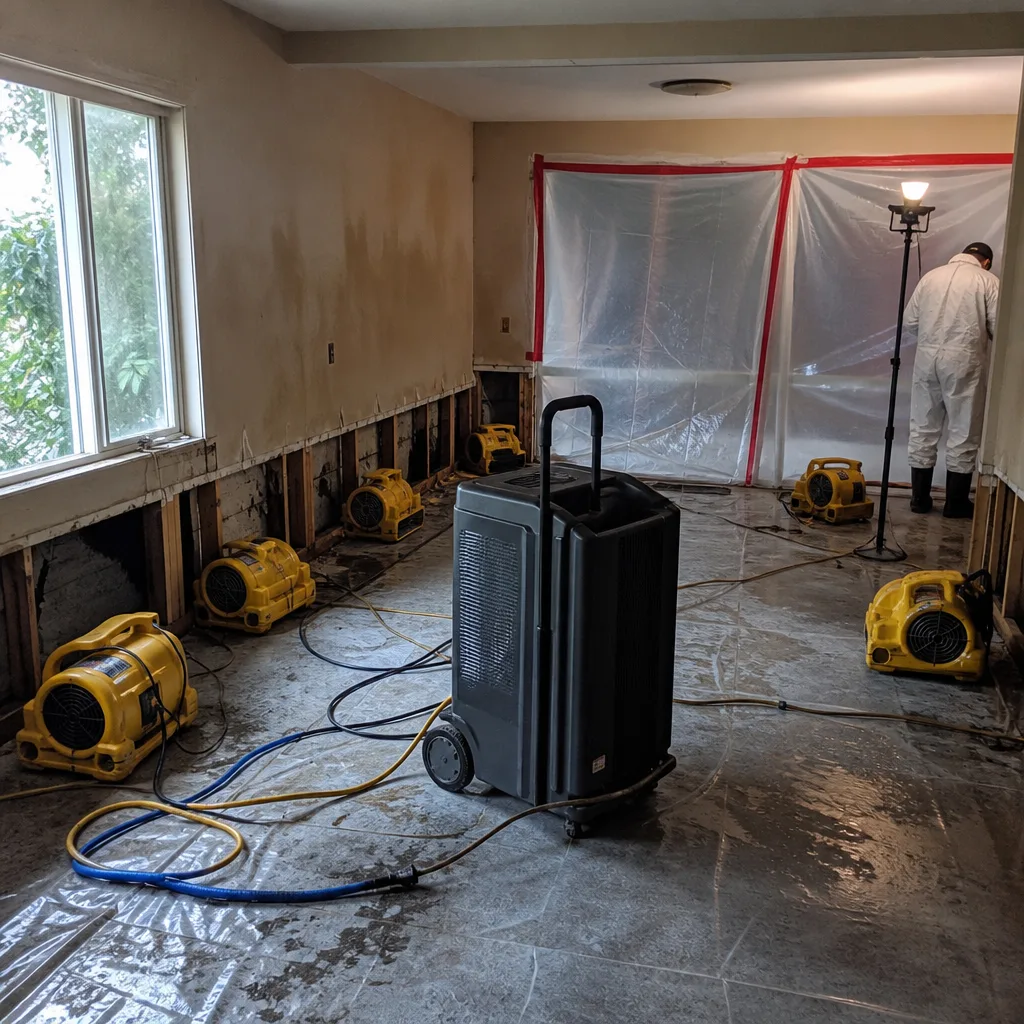
This is where Long Beach’s geography gets specific. Coastal neighborhoods sit under a marine layer that keeps relative humidity at 80 to 90 percent well into midday. A flood damage job that would dry in 48 hours in Carson takes 72 to 96 hours here. We plan for that on every job, using Dri-Eaz LGR dehumidifiers and Phoenix air movers with deployment schedules built around Long Beach’s actual drying conditions, not a national average. We also know that El Niño seasons bring storm-surge risk to low-lying areas, which means saltwater contamination and Category 3 water loss protocols. That’s not a detail you want a crew learning on the job.
Emergency Board-Up
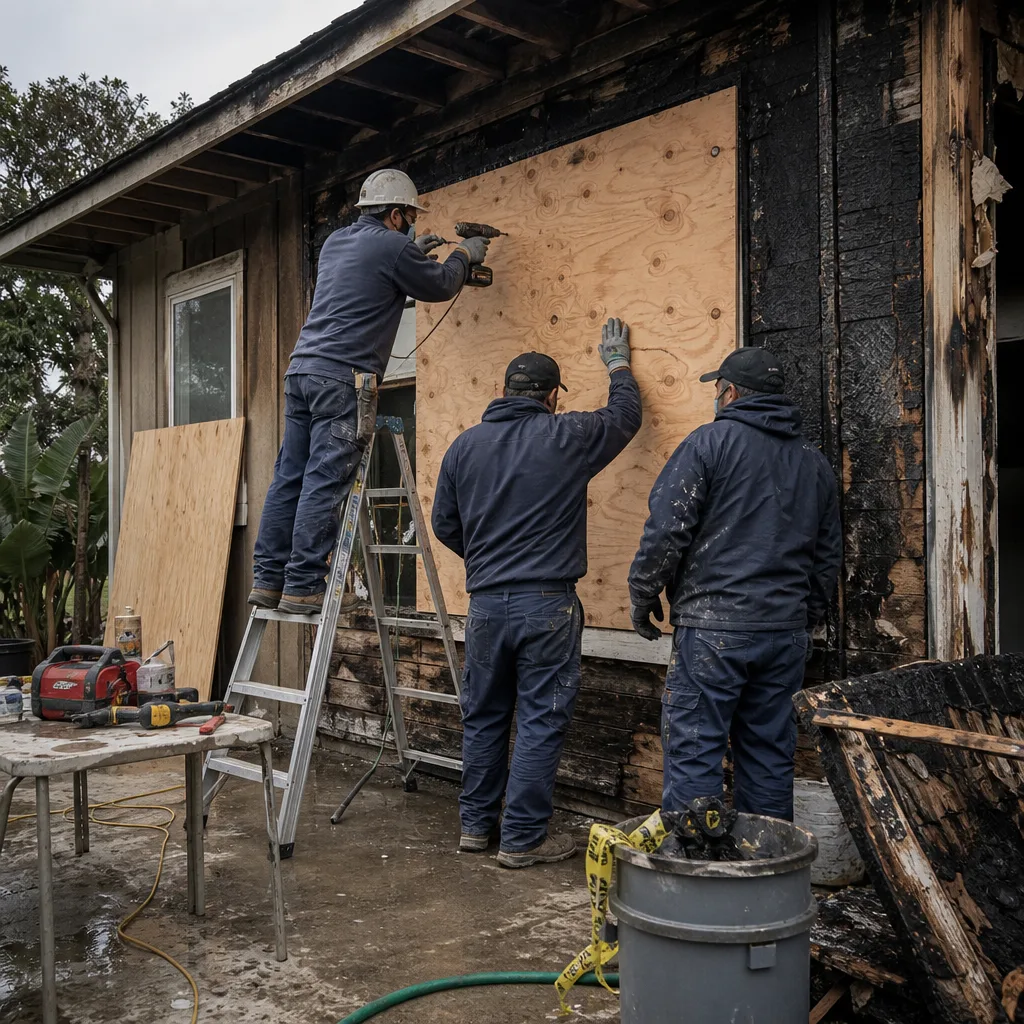
Long Beach’s pre-war bungalows don’t have standardized window openings. A 1938 craftsman in Rose Park has different frame dimensions than a 1928 Spanish Colonial two blocks over. Stock board-up kits fail here. Our crews cut and fit on site, and we keep the materials needed for older homes on our trucks. Board-up in Long Beach also means protecting lathe-and-plaster interiors, which stay vulnerable to additional moisture long after the storm has passed. We secure the envelope right the first time, because a second round of water behind those walls is a second restoration project.
Roof Tarping
Roof damage in Long Beach almost always means wind-driven rain off the bay. Salt-laden air accelerates corrosion on exposed flashing and fasteners, and wind damage doesn’t announce itself with an obvious hole. We tarp to cover the full affected area, not just the visible puncture, and our crews know the roof pitches common to Poly High bungalows and mid-century apartment blocks in 90805. A tarp from Floodline is secured for Long Beach wind conditions, which are different from what you’d see ten miles inland in Lakewood.
What happens when you call
- 1
A real person answersNo phone trees - you reach a local pro.
- 2
You get an upfront price rangeHonest numbers before anyone is dispatched.
- 3
A background-checked tech heads outLicensed & insured, dispatched right away.
- 4
You approve before work beginsNothing starts until you say go.
Trusted Brands We Service in Long Beach
Our technicians are trained to RIA and IFA standards, and the equipment we run is what you’d expect from a company that does full-cycle restoration: Dri-Eaz and Phoenix units are on every job, with daily readings logged until the dry standard is met. We don’t carry rental-grade equipment and we don’t swap in consumer fans because they’re easier to move. Long Beach’s marine-layer humidity is unforgiving with underpowered drying. You need professional-grade air movement and dehumidification, and that’s what our trucks carry.
Common Storm & Disaster Restoration Problems We See in Long Beach Homes
- Marine-layer humidity that stretches drying times. Relative humidity in Long Beach coastal neighborhoods holds at 80 to 90 percent until midday, and that means hidden moisture in wall cavities stays hidden longer. Underpowered equipment leaves the job looking dry while mold is already colonizing.
- Pre-WWII lathe-and-plaster walls that hide water migration. Houses in Rose Park, Wrigley, and the Poly High corridor were built before modern framing. Water travels through lathe-and-plaster unpredictably, and cutting into those walls without asbestos and lead testing can shut a project down with regulatory issues.
- Naples tidal groundwater wicking. In 90803, king tides and storm surge push water up through floor drains and low slab penetrations, not through walls or the roof. If the crew doesn’t account for tidal timing, extracted water returns on the next high tide and containment fails.
- Earthquake-era hidden leaks. The 1933 Long Beach earthquake cracked foundations and slab penetrations across the harbor district, and decades of oil extraction from the Wilmington field caused land subsidence that widened those cracks. Mid-century homes in 90802 and 90805 still have those original paths for water intrusion, and most homeowners never know until a storm finds them.
Pricing for Storm & Disaster Restoration in Long Beach, CA
Storm damage cleanup typically runs $650 to $1,800 depending on debris volume and affected area. Flood damage restoration in Long Beach generally lands between $1,200 and $4,500, with the higher end reflecting Saltwater Category 3 protocols in low-lying areas and extended drying times from the marine layer. Emergency board-up for older Long Beach bungalows runs $400 to $1,100 including on-site cutting for non-standard window openings. Roof tarping averages $350 to $900. Every job gets a written scope before work starts, so you know the number before we begin. We also offer $50 off any repair over $250, a $89 seasonal tune-up, and a 5 percent Senior & Veteran discount, always. Call (888) 737-2439 for an exact quote.
We Also Serve Cities Near Long Beach
Floodline Restoration Co. crews regularly work in Signal Hill, Lakewood, Carson, and Compton from our Storm & Disaster Restoration in Long Beach service area. If you’re in one of those neighboring cities, the same certified crews and equipment are available, with response times measured from the Long Beach dispatch desk.
Serving Long Beach, CA - Our Local Coverage Area
We’re based in the Long Beach area and know this community well. Use the map below to see our service coverage - if you’re nearby, we can almost certainly help.
FAQs - Storm & Disaster Restoration in Long Beach
Long Beach’s position on San Pedro Bay keeps coastal neighborhoods under a persistent morning marine layer that holds relative humidity at 80 to 90 percent well into midday, which means moisture doesn’t evaporate as fast as it does in inland cities like Torrance or Compton. A job that dries in 48 hours ten miles inland routinely takes 72 to 96 hours in Long Beach ZIP codes like 90814 or 90803. We set equipment schedules for Long Beach’s actual drying conditions, not a national average. Call (888) 737-2439 and we’ll explain how that affects your specific home.
In the Naples neighborhood of 90803, king tides and storm surge push water up through floor drains and low slab penetrations, which means the water is entering your home from below rather than through walls or a roof. Restoration crews working in Naples during winter storms have to account for tidal timing, because extracted groundwater can return on the next high tide if containment isn’t built for it. That failure mode is essentially nonexistent in any other Long Beach ZIP code and rare anywhere else in LA County.
Many of Long Beach’s pre-WWII craftsman bungalows and Spanish Colonial revivals were repaired after the 1933 earthquake using materials that now trigger mandatory asbestos and lead-paint protocols, and the earthquakes and Wilmington field subsidence left foundation cracks and slab penetrations that still function as water intrusion pathways. Lathe-and-plaster walls hide water migration unpredictably, so water from one storm can be traveling through wall cavities weeks later. A proper restoration starts with inspection, not demolition. Call (888) 737-2439 for an assessment before you let anyone open your walls.
Long Beach’s pre-war bungalows in Rose Park, Wrigley, and the Poly High corridor don’t have standardized window or door openings. A stock board-up kit from a big-box store simply won’t fit. Our crews cut and fit materials on site to match the actual frame dimensions of each home, and we secure lathe-and-plaster interiors that remain vulnerable to further moisture after the storm passes. Board-up done wrong in an older Long Beach home means a second round of water behind the walls.
The Port of Long Beach complex exposes large swaths of the city, especially west-side ZIP codes like 90810 and the downtown corridor, to salt-laden air and petroleum-adjacent chemical residue that dramatically accelerates corrosion on exposed flashing, fasteners, and metal roofing components. Wind damage repairs in Long Beach need materials rated for marine industrial exposure, not the standard residential products used in inland cities like Compton or Torrance. We spec accordingly, and that difference extends the life of the repair by years.
Contact Floodline Restoration Co. of California
If you’re dealing with storm damage in Long Beach, don’t wait for the marine layer to make it worse. Call us at (888) 737-2439. A live dispatcher answers, day or night. We’ll send a certified crew to your Long Beach home, hand you a written scope before work begins, and stand behind the result with our 90-Day Done Right Promise. That’s the Keystone Standard, and it’s in writing. No surprises on the bill, and we bill your carrier directly, so you never have to play messenger between us and your insurance company.
Written by Curt Bowman, Owner at Floodline Restoration Co. of California, serving Long Beach since 2010.