
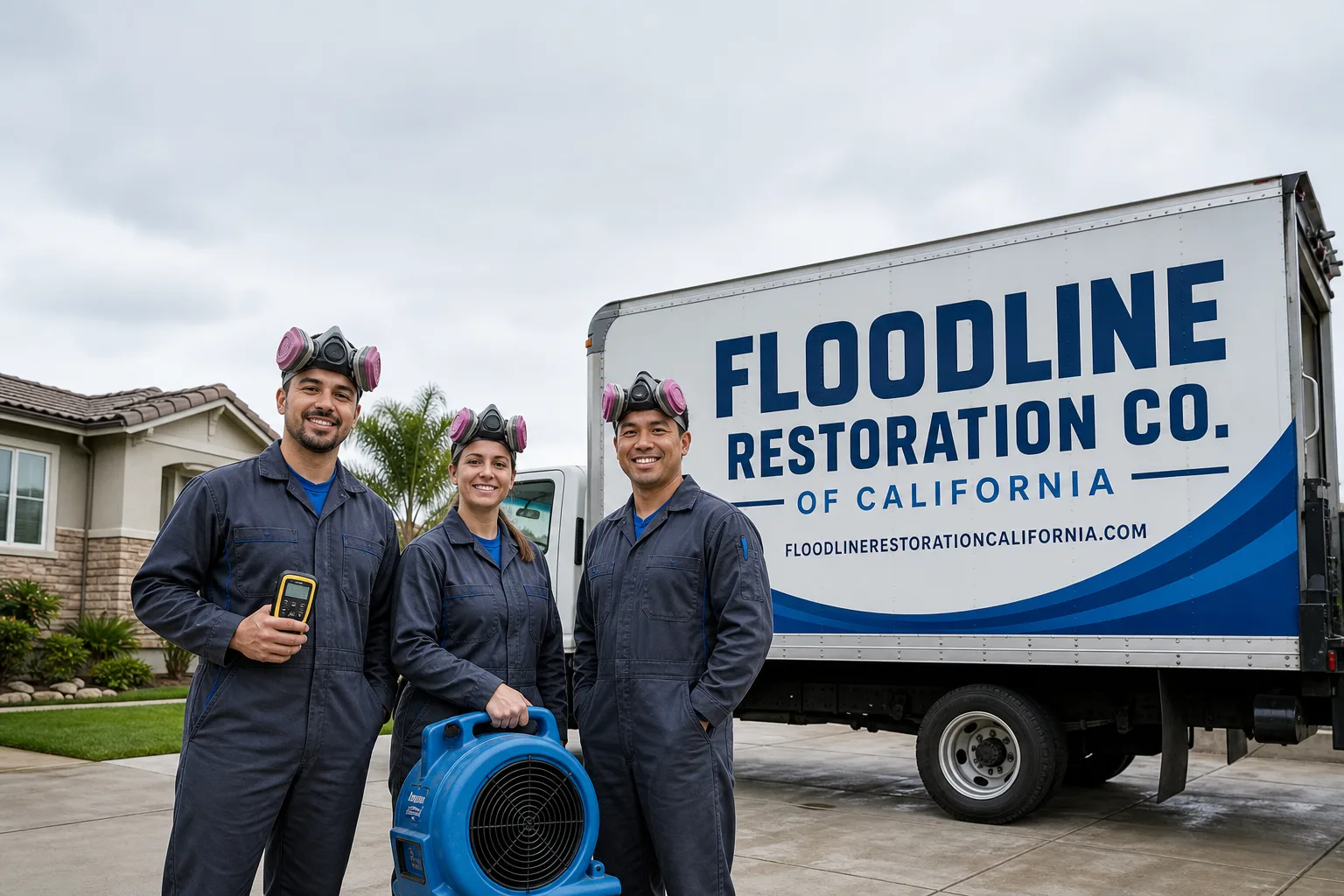
Fast, Reliable Storm & Disaster Restoration Across Golden Hills
Storm damage in Golden Hills hits differently than it does down in Bakersfield or out toward Rosamond. At roughly 4,000 feet in the Tehachapi Pass corridor, your home takes sustained wind gusts that peel shingles and drive rain under rooflines, plus hard winter freezes that split pipes open while you’re asleep. That pairing means restoration work here has to move fast and account for both threats at once. Our crews know the west-facing slopes, the 1980s tract layouts, and the freeze-thaw patterns specific to 93561. We answer live, 24/7, and a certified crew reaches Golden Hills the same day you call. Need us now? Dial (888) 737-2439.
Why Floodline Restoration Co. of California Is Golden Hills’s Preferred Storm & Disaster Restoration Company
We’ve built our reputation in Golden Hills on showing up when the wind finally quits and the real damage is just starting to show itself. Homeowners here tell us the same thing: the storm was loud, but the water in the attic was quiet until the ceiling stain appeared. That’s the call we take at 2 a.m. with a live dispatcher, not a recording, because Storm & Disaster Restoration work in this pass doesn’t keep business hours. Our technicians are background-checked, uniformed, and trained to IICRC, RIA, and IFA standards. We bring Dri-Eaz, Phoenix, and Injectidry equipment on the first truck, not the third. And every job finishes with the 90-Day Done Right Promise in writing. If it’s not done right, we make it right. No arguing. It’s the Keystone Standard, and it applies to every board-up, tarp, dry-out, and rebuild we do in Golden Hills.
Response time matters here because the pass doesn’t give you a break between weather systems. One storm moves through, and two days later another one stacks on top. A partially tarped roof or a half-dried wall becomes a much bigger problem fast. We keep Golden Hills as a priority dispatch zone, and our crews arrive with the moisture meters running on day one. We log daily readings until the dry standard is met, and we hand that moisture log to you and your insurance carrier. Curt Bowman founded Floodline in 2010 around a dispatch board, not a sales desk, and that’s still how we run jobs in Golden Hills: a real person answers, a real crew rolls, and the work gets backed in writing.
Our Storm & Disaster Restoration Services in Golden Hills
Roof Tarping
Roof tarping in Golden Hills has to start with the right exposure. The west- and southwest-facing slopes catch the brunt of Tehachapi Pass wind load, so those faces get tarped and dried in first. We see too many crews work front-to-back or wherever the ladder’s easiest, leaving the windward slope open while rain keeps wicking into the attic. Our crews secure tarp edges with battens rated for sustained 50-60 mph gusts, because a tarp that lifts at 3 a.m. isn’t a repair, it’s a new loss. If shingles are already gone and you can see daylight from the attic, call us at (888) 737-2439 and we’ll get the tarp on before the next system rolls through.
Emergency Board-Up
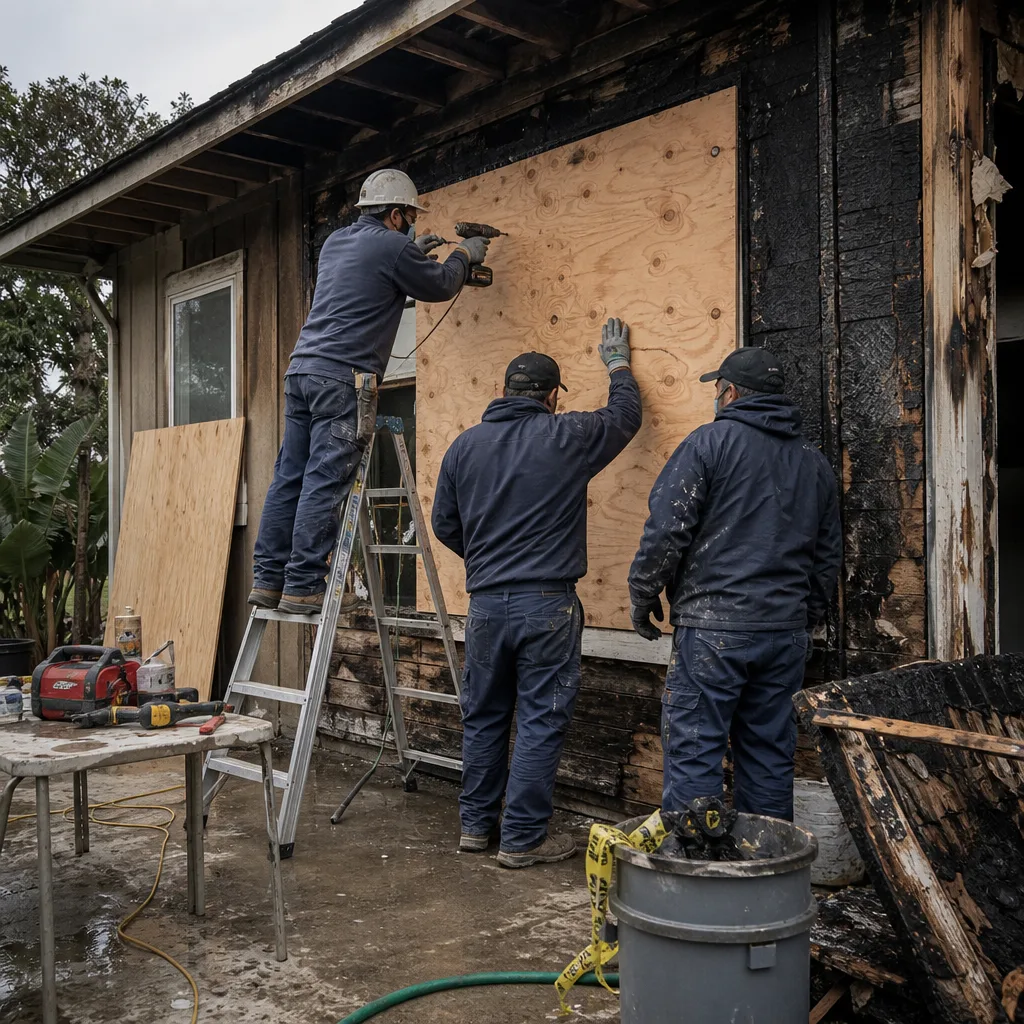
When a window seal fails during a Golden Hills windstorm, the glass doesn’t always break clean. The wind flexes the frame, the seal lets go, and then rain blows in sideways through a gap you can’t see from the street. Board-up means more than plywood over a broken pane. We seal the opening against driven rain, check the surrounding window assembly for seal failure, and document everything with photos for your adjuster. The same applies to storm-blown doors, breached garage panels, and roof punctures from wind-thrown debris. A board-up in Golden Hills has to hold against the next gust, not just look covered. We cut, fit, and anchor every panel to the actual opening, and we note the wind direction before we start.
Flood Damage Restoration
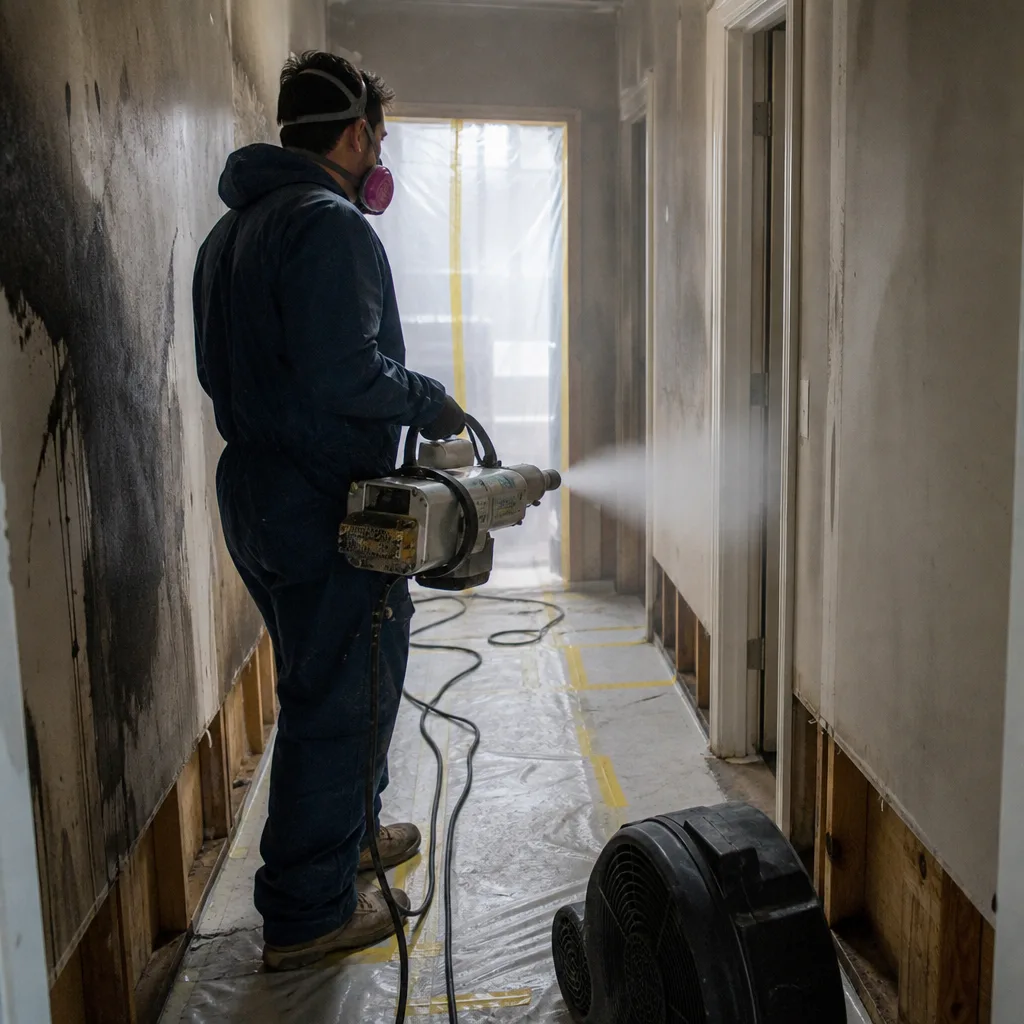
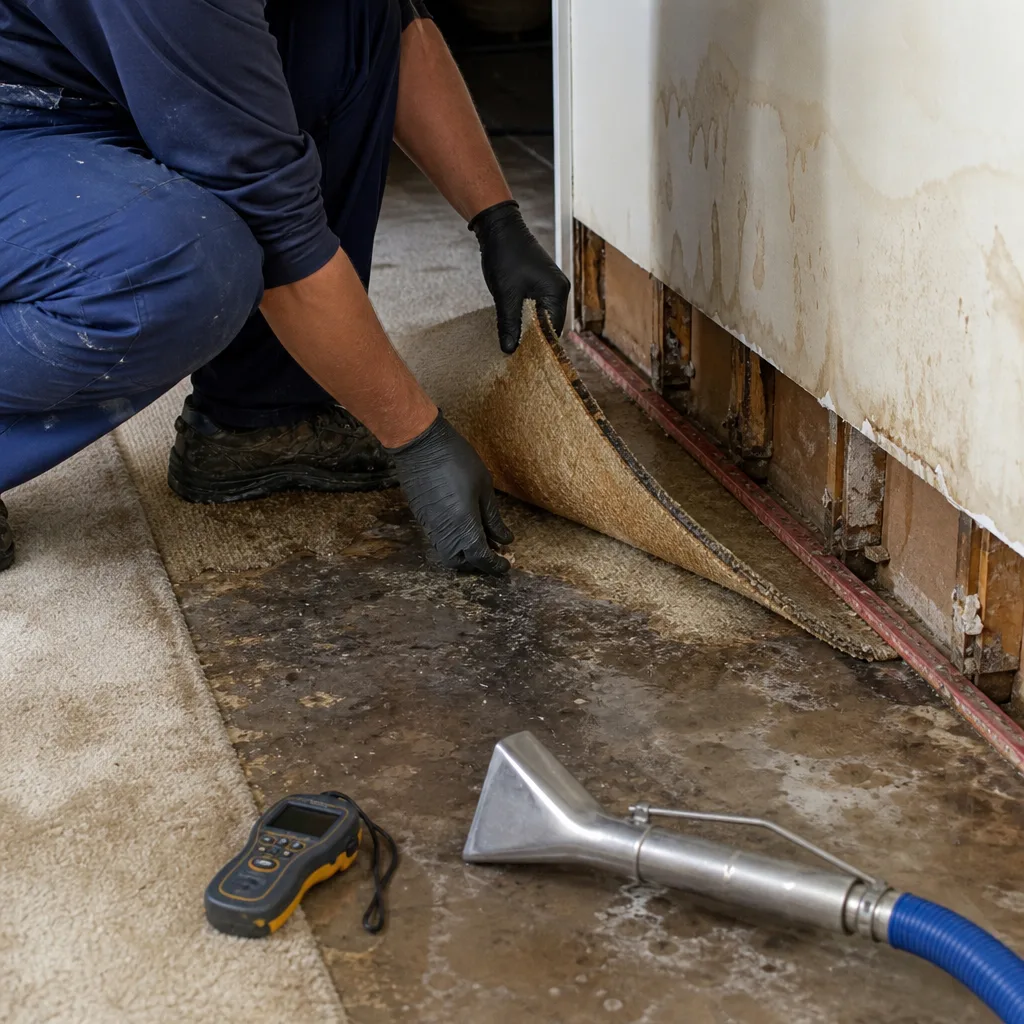
Flood damage in Golden Hills comes from two directions: the sky and your own plumbing. Winter freeze-thaw cycles split pipes in walls and crawlspaces, often in homes built in the 1980s and 1990s when insulation standards didn’t match local elevation. The water sits, the framing wicks, and the drywall holds moisture long after the visible puddle is gone. We extract first, then map the moisture with Phoenix and Dri-Eaz meters, then dry with Injectidry systems placed where the water actually is. You get a written drying log, updated daily, and we don’t stop until the dry standard is met. No mid-job handoff to a different crew. The same team that extracts rebuilds what needs rebuilding.
Storm Damage Cleanup and Wind Damage Repair
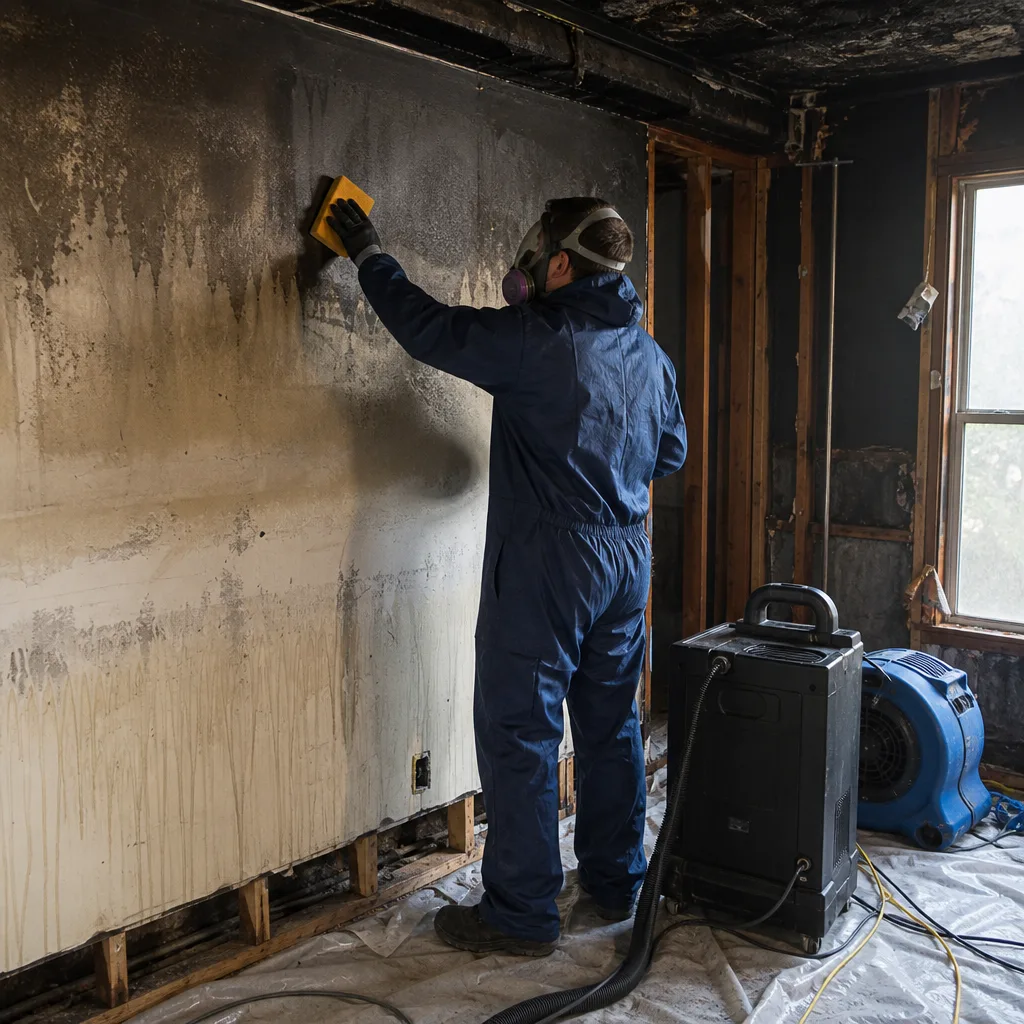
Wind damage in the Tehachapi Pass is repetitive. The same west-facing wall, the same lifted shingle pattern, the same weepy window seals. So cleanup isn’t just raking branches and pumping water. It’s checking stucco cracks for moisture penetration, pulling back insulation where wind-driven rain got behind it, and drying the framing before mold has a chance to colonize. We repair what the wind broke and we flag what the wind will break next, because in Golden Hills there’s always a next wind event. That’s the difference between cleaning up after a storm and actually restoring a home that has to survive the next one.
What happens when you call
- 1
A real person answersNo phone trees - you reach a local pro.
- 2
You get an upfront price rangeHonest numbers before anyone is dispatched.
- 3
A background-checked tech heads outLicensed & insured, dispatched right away.
- 4
You approve before work beginsNothing starts until you say go.
Trusted Brands We Service in Golden Hills
We work on every major style of 1980s-1990s tract home common across Golden Hills, including split-level ranches with stucco exteriors and wood-frame roof assemblies. Our technicians carry RIA and IFA training, and we run Dri-Eaz and Phoenix drying equipment because those brands hold up on multi-day jobs in cold mountain conditions. We stock the common sealants, fasteners, and moisture barriers needed for storm repair in this pass, so work doesn’t stall waiting on a part from down the mountain. Whether your home was built in the first Golden Hills subdivision wave or a later phase, we know the framing and flashing patterns builders used, and we restore to current wind-load standards, not just the original 1985 spec.
Common Storm & Disaster Restoration Problems We See in Golden Hills Homes
- Windward roof slope failures. The west- and southwest-facing roof planes take sustained gust loading from the Tehachapi Pass, and the shingles on those slopes lift first. Tarping that starts anywhere else leaves the most vulnerable exposure open, and attic water intrusion behind insulation is the predictable result.
- Freeze-thaw pipe bursts in underinsulated walls. Homes built in the 1980s and 1990s for lower-elevation climates often have plumbing runs in exterior walls with minimal insulation. A hard freeze splits the pipe, the thaw lets it spray, and the water damage shows up hours later. Fixing the leak without addressing the insulation means the same pipe fails next winter.
- Window seal and stucco failures that let wind-driven rain return. The wind here doesn’t just break things. It finds the small gaps: failing window seals, hairline stucco cracks, dried-out flashing. Water gets driven into those cavities during every storm, and a restoration that ignores them just hands the next storm a map back in.
- Secondary mold behind insulation before the claim is even filed. In Golden Hills’s cold season, moisture trapped in a wall cavity or attic doesn’t dry on its own. By the time a homeowner files a claim and an adjuster arrives, the insulation is often colonized. That’s why we tarp, dry, and log moisture readings from day one, not day ten.
Pricing for Storm & Disaster Restoration in Golden Hills, CA
In Golden Hills, emergency roof tarping typically runs $350-$800 depending on the slope count, pitch, and how much anchoring the wind conditions require. Board-up of a single window or door opening is generally $150-$400 per opening, with full perimeter board-up after major structural damage running higher. Storm flood extraction and drying usually falls between $2,500 and $7,000 for a typical 1980s ranch, with larger multi-level homes and water that’s been sitting longer landing at the top of that range. Wind damage repair to stucco, windows, and roof assemblies gets scoped individually, but most single-wall repairs run $1,200-$4,500. Call (888) 737-2439 for a free estimate, and we’ll give you a written scope before any work starts. We bill your insurance carrier directly, so you don’t play messenger.
Key Takeaways for Golden Hills Homeowners
- Tarp the west- and southwest-facing roof slopes first. That’s where the Tehachapi Pass wind pressure concentrates.
- Freeze-thaw pipe bursts aren’t one-off leaks. The underinsulated plumbing runs common in 1980s-1990s Golden Hills homes will fail again unless the insulation is addressed.
- Storm restoration in Golden Hills must treat wind intrusion and frozen-pipe water loss as co-equal threats, not separate seasons.
- Every Floodline job in Golden Hills comes with a written 90-Day Done Right Promise and a moisture log handed to you and your carrier.
- We answer live at 2 a.m. and get a certified crew to Golden Hills the same day. Call (888) 737-2439 while the damage is active.
We Also Serve Cities Near Golden Hills
Floodline Restoration Co. of California serves Golden Hills and the surrounding mountain and high-desert communities, including Tehachapi, Bear Valley Springs, Rosamond, and Arvin. The same certified crews, live dispatch, and written guarantee apply across the entire service area. Whether the call comes from a 93561 hillside home or a neighbor down the grade, we bring the same equipment and the same standard.
Serving Golden Hills, CA - Our Local Coverage Area
We’re based in the Golden Hills area and know this community well. Use the map below to see our service coverage - if you’re nearby, we can almost certainly help.
FAQs - Storm & Disaster Restoration in Golden Hills
Those slopes take the direct sustained wind load from the pass, so shingles there lift first and rain gets driven under the roofline where the pressure concentrates. Tarping the leeward or gable slopes first leaves the most vulnerable face open, and by the time a homeowner files a claim, attic insulation behind that windward face is often already wet enough to support mold. Our crews always start tarping on the west- and southwest-facing planes because that’s the exposure the wind punishes the most. Call (888) 737-2439 and we’ll assess which slopes are at risk before the next system arrives.
A Bakersfield leak is usually a fitting, a valve, or a slow drip. A Golden Hills freeze-thaw burst is a split pipe, often in an exterior wall or crawlspace where the original 1980s insulation wasn’t designed for 4,000-foot winters. The water release is sudden, and the damage sprays behind drywall where you can’t see it. Treating it as a one-off plumbing repair without addressing the insulation and pipe location means the same pipe splits again during the next hard freeze. We restore the water damage and flag the insulation failure so the repair actually holds.
Most of the time, yes, it can be restored, but the answer depends on how many times water has gotten into the same cavities. A one-time intrusion with fast tarping and drying is a repair. Repeated intrusions into the same wall or attic space often mean the roof assembly’s underlayment, flashing, and soffit details have failed beyond patching, and a sectional re-roof makes more sense than another repair that won’t survive the next wind season. We’ll give you a written recommendation after opening the affected areas and running moisture readings, and we’ll coordinate the claim with your insurer. Call (888) 737-2439 and we’ll walk you through what we find.
The window doesn’t need to shatter for the opening to become a serious leak. A failed seal lets the frame flex, and wind-driven rain enters the wall cavity through a gap that looks minor from outside. Our board-up seals the entire opening against driven rain, checks the surrounding windows for seal failure, and anchors the panel to resist the next gust, not just the current one. We photograph every opening before and after, which gives your adjuster a clear record of what the wind did. If you’re hearing wind whistle through a closed window in Golden Hills, call us before the rain backs it up.
Because winter in the Tehachapi Pass combines two separate damage mechanisms: sustained wind and hard freezes. A week of 40 mph gusts with no single dramatic event will still lift shingles, open window seals, and drive water into stucco cracks. The same week also drops nighttime temperatures low enough to freeze and split pipes. Homeowners don’t call about a “storm”; they call about a ceiling stain or a dead water heater line. But the mechanism is storm-season damage, and it concentrates in December through March. If you’re seeing new moisture or hearing new wind noise, call (888) 737-2439 before it turns structural.
Call Floodline Restoration Co. of California in Golden Hills
If your roof is open, your wall is wet, or you just found a ceiling stain after the last wind event, don’t wait for a second storm to make it worse. Call (888) 737-2439 and a live dispatcher will pick up, day or night. We’ll get a certified crew to your Golden Hills home the same day, tarp what’s open, dry what’s wet, and put the 90-Day Done Right Promise in your hands before we leave. The line the water left is where we start. And we’re not done until the rebuild is finished by the same crew that started it.
Written by Curt Bowman, Owner at Floodline Restoration Co. of California.