
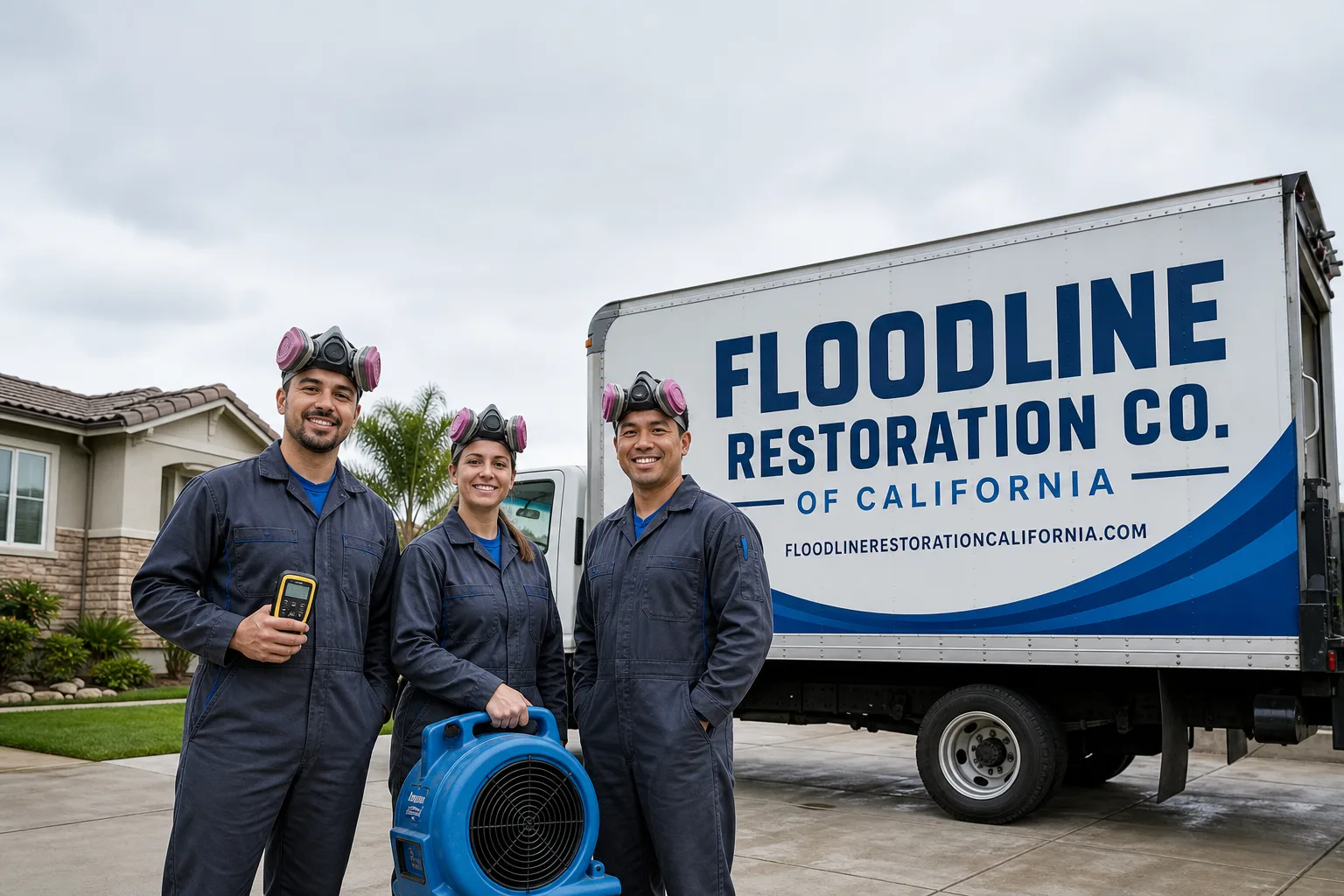
Fast, Reliable Storm & Disaster Restoration Across Fairfax
Storm damage in Fairfax doesn’t wait for business hours, and neither do we. When Fairfax Creek jumps its banks or a winter storm drives water into your home, you need a crew that knows the difference between a one-off incident and the repeat flood cycles this canyon valley produces. Floodline Restoration Co. of California has technicians staged to reach Fairfax neighborhoods fast, including the low-lying blocks off Sir Francis Drake Boulevard and older pockets near the creek. Call (888) 737-2439 and a live dispatcher answers, day or night. We’ll get extraction running the same visit.
Why Floodline Restoration Co. of California Is Fairfax’s Preferred Storm & Disaster Restoration Company
Fairfax presents a particular kind of storm damage problem, and we’ve spent years learning its patterns. The narrow canyon topography concentrates runoff so quickly that a winter storm can put a living room under water before the first sandbag is filled. We’ve handled enough Fairfax floods to know which streets flood first, which crawl spaces hold moisture longest, and which 1920s-era homes will need more than a quick dry-out. Our crews live and work in Marin, so they don’t need GPS to find the back roads into Fairfax when Sir Francis Drake is congested or partially closed. Local dispatch means a real person answers (888) 737-2439 at 2 a.m. and starts the process.
The company has served local communities for over 42 years, built around a dispatch board rather than a sales desk. Every technician who steps into a Fairfax home is background-checked, uniformed, and trained to IICRC, RIA, and IFA standards. We carry professional-grade Dri-Eaz and Phoenix drying systems on our trucks, which matters when you’re fighting a shaded hillside home that won’t dry on its own. Homeowners who remember being burned by a contractor once want a name they can hold accountable. We stand behind every job with the 90-Day Done Right Promise, in writing, with no paperwork battles and no arguing. If it’s not done right, we make it right. That’s the Keystone Standard.
Our Storm & Disaster Restoration Services in Fairfax
Flood Damage Restoration
Flood work in Fairfax usually means more than visible water. Older pier-and-beam homes absorb moisture downward into crawl spaces that sit inches from damp valley soil, and without vapor barriers, that moisture migrates back up through single-layer subfloors for weeks. We extract, dry, and map moisture from day one, with daily readings logged until the dry standard is met. Our Storm & Disaster Restoration team knows which Fairfax homes will need crawl-space treatment even when the living room looks fine.
Storm Damage Cleanup
After the water recedes, the debris and silt stay. Fairfax storm events push mud, branches, and creek debris into garages, crawl spaces, and first-floor rooms. We remove it. We also treat the surfaces left behind, because creek silt carries more than dirt. Storm cleanup in this valley often reveals hidden saturation in subfloors that looked dry at first glance. Our team documents everything with photos, so your insurance carrier sees exactly what we saw.
Emergency Board-Up
Wind damage and fallen limbs leave Fairfax homes exposed fast. A broken window on a wet, windy night becomes a mold incubator by morning. We board up windows and damaged entry points the same day, using materials that hold up to follow-up rain. The goal is simple: stop more water from getting in while restoration begins. Fairfax’s hillside lots mean many homes have uphill-side windows and doors that take the brunt of the storm, and we brace those openings properly.
Roof Tarping
Steep wooded hillsides around Fairfax shed branches onto roofs during every major wind event. A puncture turns into a ceiling leak within hours. We install tarping that stays put, even on the steep pitches common in Fairfax’s cabin-style homes. Temporary protection buys time for a proper repair and keeps interior drying from being undone by the next rain band. We’ll document the tarping for your carrier.
Debris Removal
Storm cleanup in Fairfax often starts with clearing what the creek and wind left behind. Fallen limbs, mud, sandbags, and creek overflow debris have to go before drying can work. We haul it, and we check drainage paths around the foundation. Hillside lots here hold debris against the uphill side of houses, and that debris traps moisture against siding and foundation walls. Clearing it properly is part of the restoration, not an afterthought.
Wind Damage Repair
Older Fairfax homes were built before modern wind-resistance standards. Original windows, early siding, and aging roof edges fail differently than newer construction. We assess what’s damaged, what’s vulnerable, and what needs to be repaired versus replaced. A square deal means you know the scope in writing before work starts, not after.
What happens when you call
- 1
A real person answersNo phone trees - you reach a local pro.
- 2
You get an upfront price rangeHonest numbers before anyone is dispatched.
- 3
A background-checked tech heads outLicensed & insured, dispatched right away.
- 4
You approve before work beginsNothing starts until you say go.
Trusted Brands We Service in Fairfax
We stock and service the equipment brands Fairfax homeowners and local contractors already trust. Our trucks carry Dri-Eaz and Phoenix drying systems, and our technicians maintain certification through RIA and IFA standards. For older Fairfax homes, parts availability matters as much as the labor. We keep common components stocked for the legacy systems found in 1920s through 1950s construction, so a restoration job isn’t delayed by a back-ordered part. When you call (888) 737-2439, you’re talking to a company that planned for Fairfax’s older housing stock.
Common Storm & Disaster Restoration Problems We See in Fairfax Homes
- Crawl spaces that fool the moisture meter. In Fairfax’s pier-and-beam homes, the interior can read dry while the crawl space stays above 20% wood moisture equivalent for two weeks or longer. Shaded, low-airflow conditions near Fairfax Creek slow evaporation dramatically.
- Buckled single-layer subfloors weeks after the storm. Original 1930s and 1940s subfloors were built as one layer. When moisture wicks up from the crawl space, those boards swell and buckle long after the visible water is gone.
- Repeat flood damage in the same low-lying blocks. The canyon-valley runoff pattern means homes near Sir Francis Drake Boulevard flood again during the next major storm. Second- and third-occurrence events in the same structure are common in Fairfax, not rare.
- Mold regrowth in the same crawl spaces. A flood restoration that treats only the interior leaves the crawl space behind. Two to three weeks later, active mold colonies appear in the exact same 1920s-1950s structures that flooded before. We treat the whole envelope, not just the room where the water pooled.
Pricing for Storm & Disaster Restoration in Fairfax, CA
A few things move the number. Homes with no vapor barrier will require encapsulation or the moisture returns. Original galvanized plumbing often fails during flood events and needs scoped repair. Shaded hillside lots dry slower, which means more equipment days. We give you a written scope before any work starts, and we bill your insurance carrier directly. No surprises on the bill. Call (888) 737-2439 for a free estimate.
We Also Serve Cities Near Fairfax
Our crews work throughout central Marin, so if you’re in Fairfax or any of the surrounding communities, we can reach you quickly. We serve San Anselmo, San Rafael, Kentfield, and Lucas Valley-Marinwood with the same live dispatch, certified technicians, and written guarantees. The flood and storm risks shift from town to town, but the standard doesn’t.
Serving Fairfax, CA - Our Local Coverage Area
We’re based in the Fairfax area and know this community well. Use the map below to see our service coverage - if you’re nearby, we can almost certainly help.
FAQs - Storm & Disaster Restoration in Fairfax
Fairfax’s 1920s-1950s pier-and-beam homes have no vapor barriers and minimal crawl-space clearance, so shaded, low-airflow spaces hold residual moisture far longer than interior moisture readings suggest. The initial inspection reads dry in the living space while the crawl space stays saturated. Active mold colonies then appear two to three weeks after the storm, even when the interior was cleaned and dried. If you own a raised-foundation home near Fairfax Creek, assume the crawl space needs treatment after any flood event. Call (888) 737-2439 and we’ll map it properly.
How does Fairfax’s canyon geography make flood damage different from nearby San Rafael or Novato?
Fairfax sits in a narrow canyon valley where steep hillside topography funnels storm runoff into the valley floor almost immediately. That means homes here flood faster and more repeatedly than in flatter Marin towns. The same storm that produces minor street ponding in San Rafael can drive Fairfax Creek over its banks and through the lower blocks along Sir Francis Drake Boulevard. The concentrated runoff also pushes debris into crawl spaces and first floors, which flatland homes rarely see.
Should I replace my original 1930s single-layer subfloor after a Fairfax Creek flood, or can it be dried and reused?
In most Fairfax flood cases where the crawl space saturated, replacement is the honest call. Single-layer subfloors from the 1930s and 1940s typically delaminate and buckle after sustained moisture wicking from below, even with aggressive drying. Drying may bring readings into range, but the wood’s structural integrity and fastener holding are already compromised. We’ll show you the moisture log and the condition of the boards before any recommendation, in writing.
How long do Fairfax homes along Sir Francis Drake Boulevard take to dry after a winter storm?
Expect two to four weeks for a full dry standard, and often longer on the shaded, low-lying blocks near the creek. Fairfax’s inland valley traps coastal moisture and the surrounding wooded hillsides block sunlight through winter, dramatically slowing evaporation. Homes with crawl spaces and no vapor barriers can take four to six weeks to reach dry standard throughout the entire structure. We log daily readings and give that log to you and your carrier.
What first step should I take after floodwater recedes from a raised-foundation home in Fairfax?
Call (888) 737-2439 before the interior looks like it’s drying on its own, because in Fairfax raised foundations, the crawl space is almost certainly saturated even when the living space reads dry. The first step is professional extraction and mapping of the full envelope, not just the visible water. The window to prevent secondary mold in Fairfax’s shaded, low-airflow crawl spaces is short. Our live dispatcher answers 24/7 and gets a certified crew moving toward Fairfax immediately.
Contact Floodline Restoration Co. of California
Fairfax storms don’t run on a schedule, and neither do we. If water is in your home, if your crawl space is soaked, if the creek came up and left silt behind, call (888) 737-2439 now. A live person answers. A certified crew gets dispatched. And the work is backed by the 90-Day Done Right Promise, in writing. Serving Fairfax and central Marin with storm and disaster restoration done right the first time.
Written by Curt Bowman, Owner at Floodline Restoration Co. of California, serving the Bay Area since 2010.