
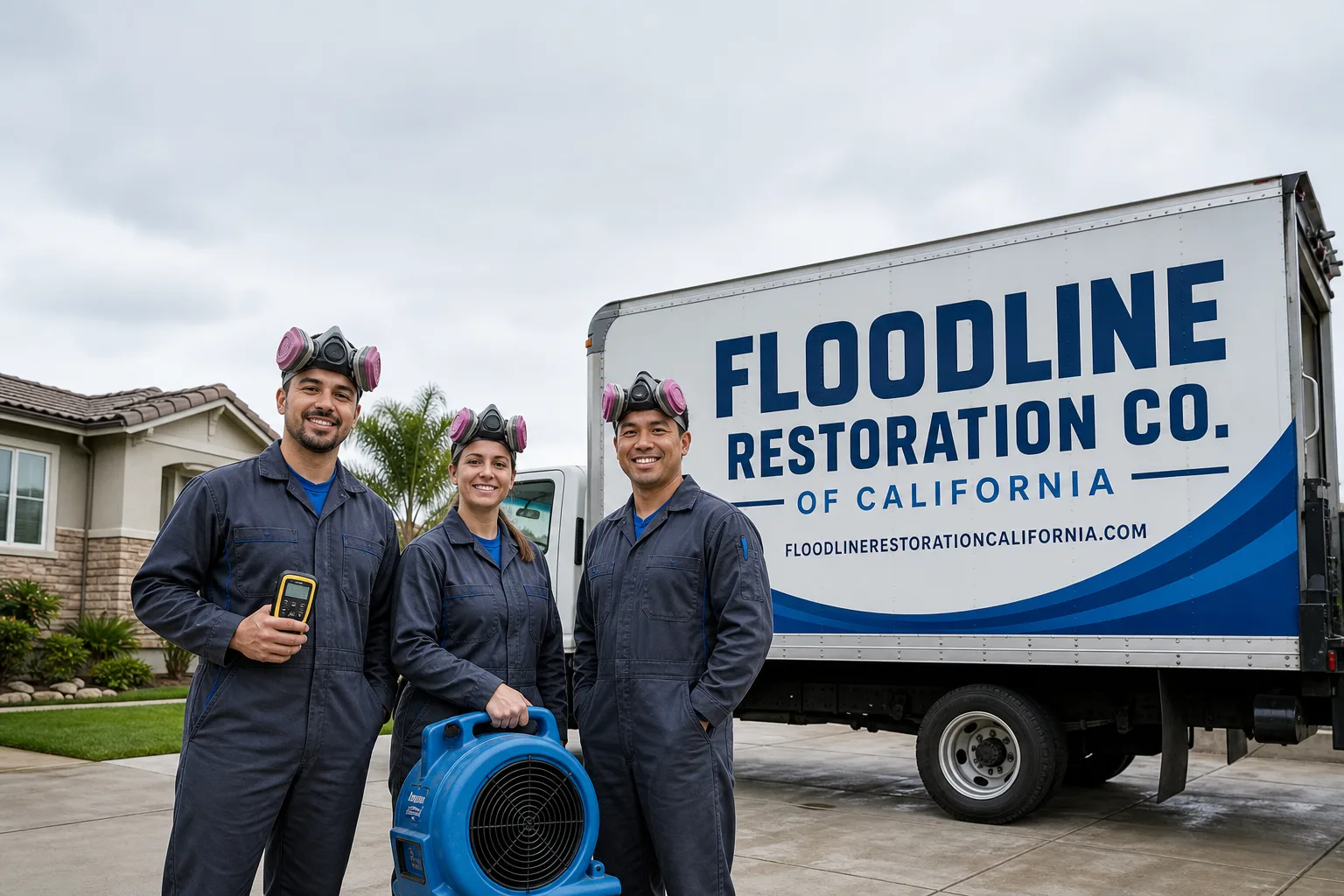
Fast, Reliable Storm & Disaster Restoration Across Covina
Storm and disaster restoration in Covina usually starts with a call from a homeowner standing in two inches of water or looking at a tarp flapping over a torn-off roof section. Our crews reach most Covina ZIP codes within 60 to 90 minutes, 24 hours a day. A live dispatcher answers at (888) 737-2439, not a recording. Then extraction starts the same visit, because water moving through a 1950s slab home on Covina’s hard-packed soil doesn’t wait for a callback.
We know Covina’s streets, its post-war tracts, and the particular way its older homes fail when storms hit. That local knowledge changes the restoration sequence from the first hour, and it’s the reason homeowners from Charter Oak to the 91722 downtown blocks call us before the puddle reaches the hallway.
Why Floodline Restoration Co. of California Is Covina’s Preferred Storm & Disaster Restoration Company
Floodline Restoration Co. has been answering emergency calls from Covina homeowners for years, and the job always starts the same way: a real person picks up the phone and a background-checked, uniformed technician gets dispatched. No sales desk, no phone tree, no “we’ll call you back.” On a storm-damaged house, that matters more than any brochure.
Crews arrive in marked vehicles with professional-grade Dri-Eaz dehumidifiers, Phoenix air movers, and XPOWER extraction units already loaded. We don’t drive out to assess and then return tomorrow with equipment. The equipment comes on the first truck because the first visit is when the real work begins.
Every restoration job in Covina carries our 90-Day Done Right Promise in writing. If it’s not done right, we make it right, no arguing and no paperwork battles. Curt Bowman founded this company around that guarantee, and we put it on paper for every single job, from a roof tarp in 91724 to a full slab dry-out in 91722.
We also handle insurance directly. Our techs photo-document everything, we bill your carrier ourselves, and you don’t play messenger between us and an adjuster. For Covina homeowners who remember being burned by a contractor once, that’s the square deal.
You’ll also see these standing offers on every Covina job: $50 off any repair over $250, the $89 seasonal tune-up, and a 5% discount for seniors and veterans, always.
Our Storm & Disaster Restoration Services in Covina
Our Storm & Disaster Restoration team handles the full sequence, from the first emergency call through structural drying and rebuild. Here’s what that looks like in Covina specifically.
Storm Damage Cleanup
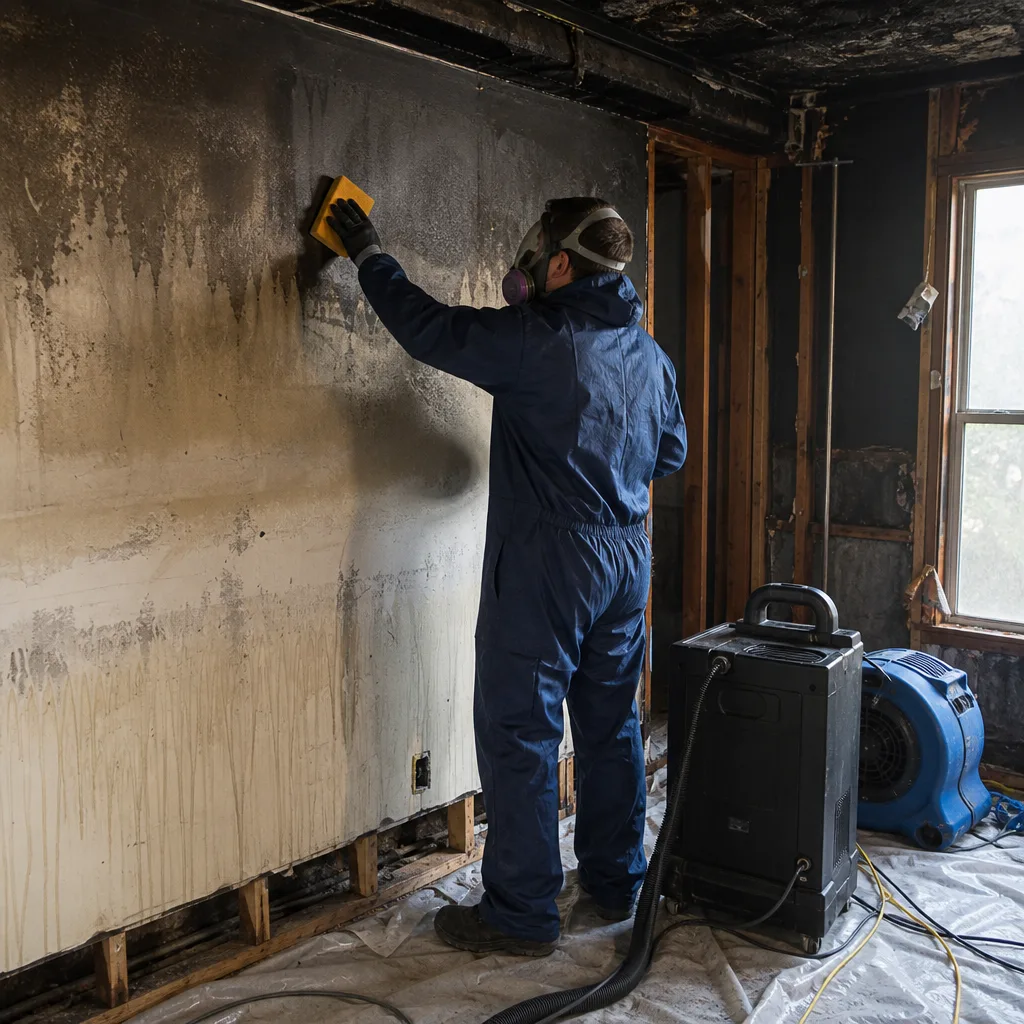
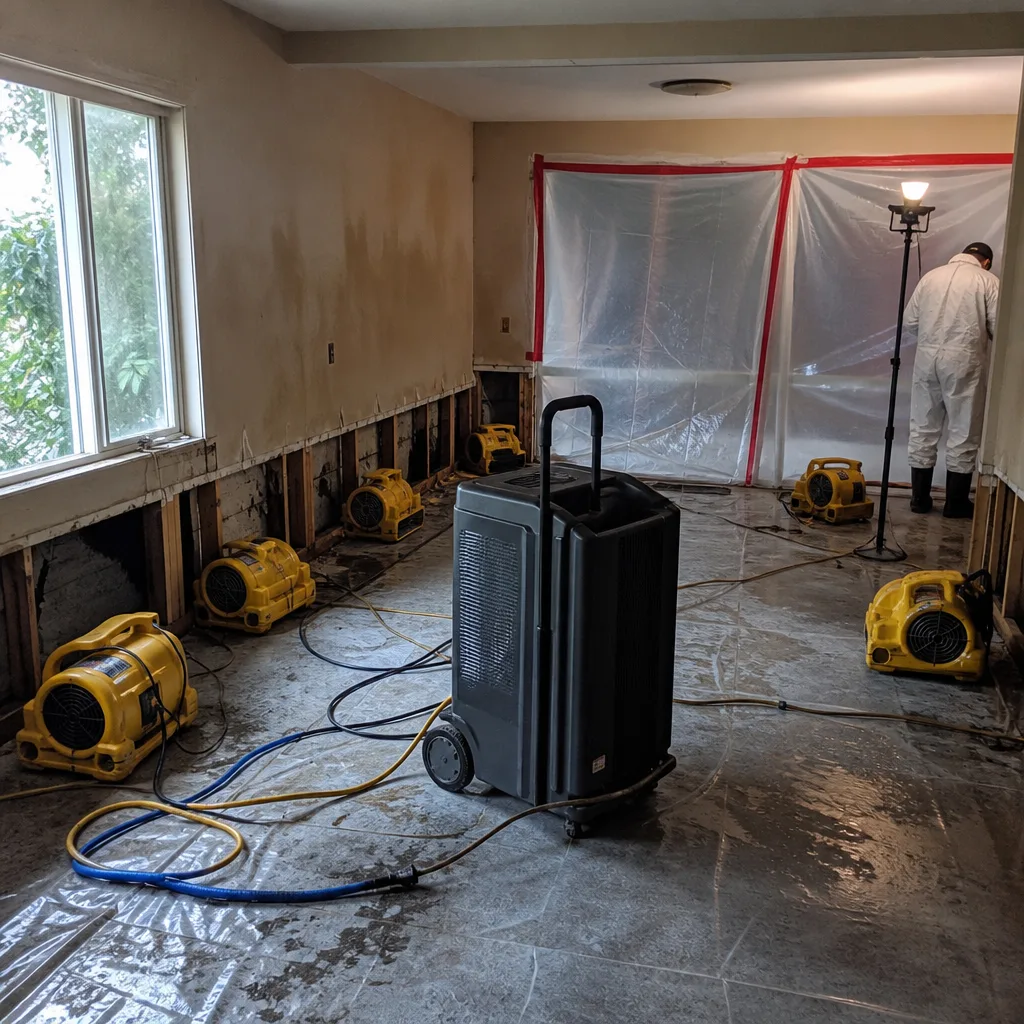
Covina sits directly south of the San Gabriel Mountains, and when an atmospheric river parks over the foothills, runoff hits the city’s older flat lots hard. Our storm damage cleanup teams remove standing water, saturated drywall, and storm debris, then set up drying before mold gets a chance to establish in pre-1980 framing. In a typical Covina storm cleanup, a full debris and water extraction on a ranch-style home runs $1,800 to $4,200 depending on square footage.
Flood Damage Restoration
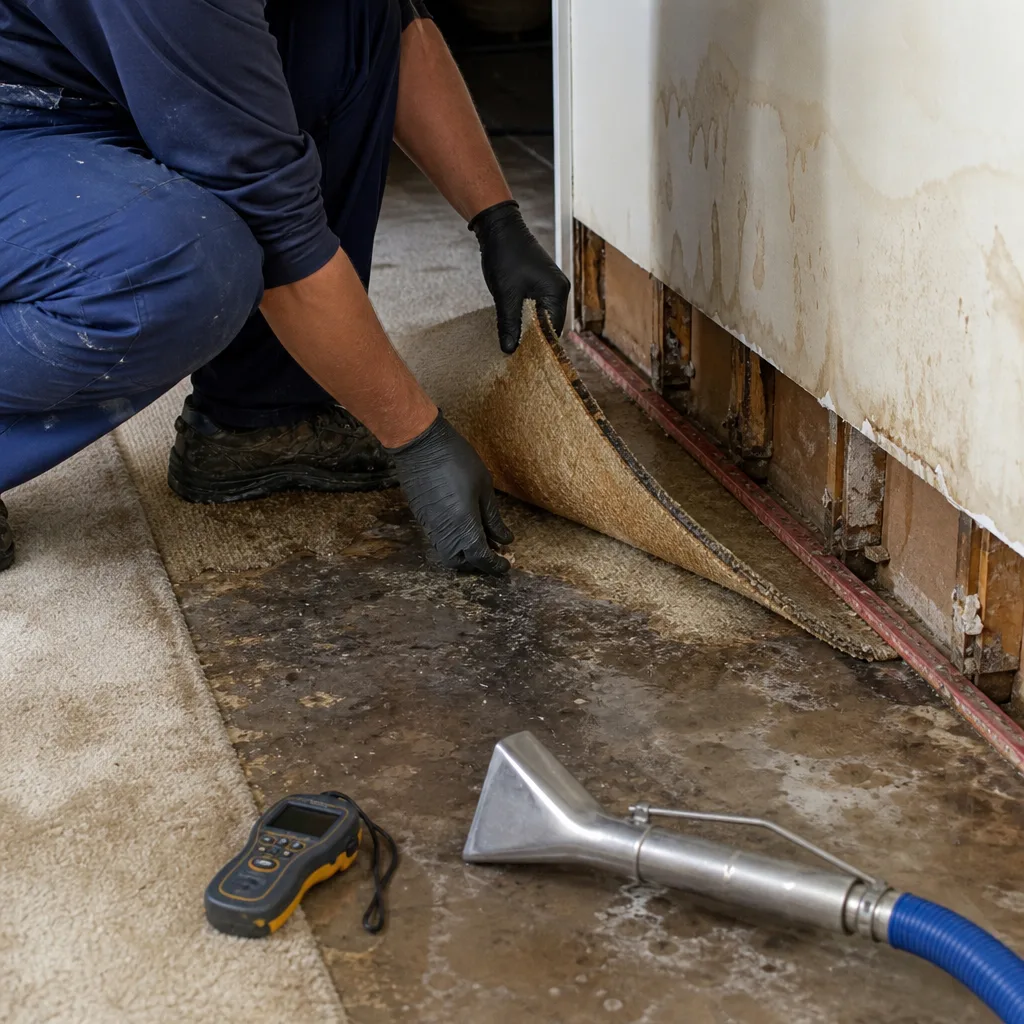
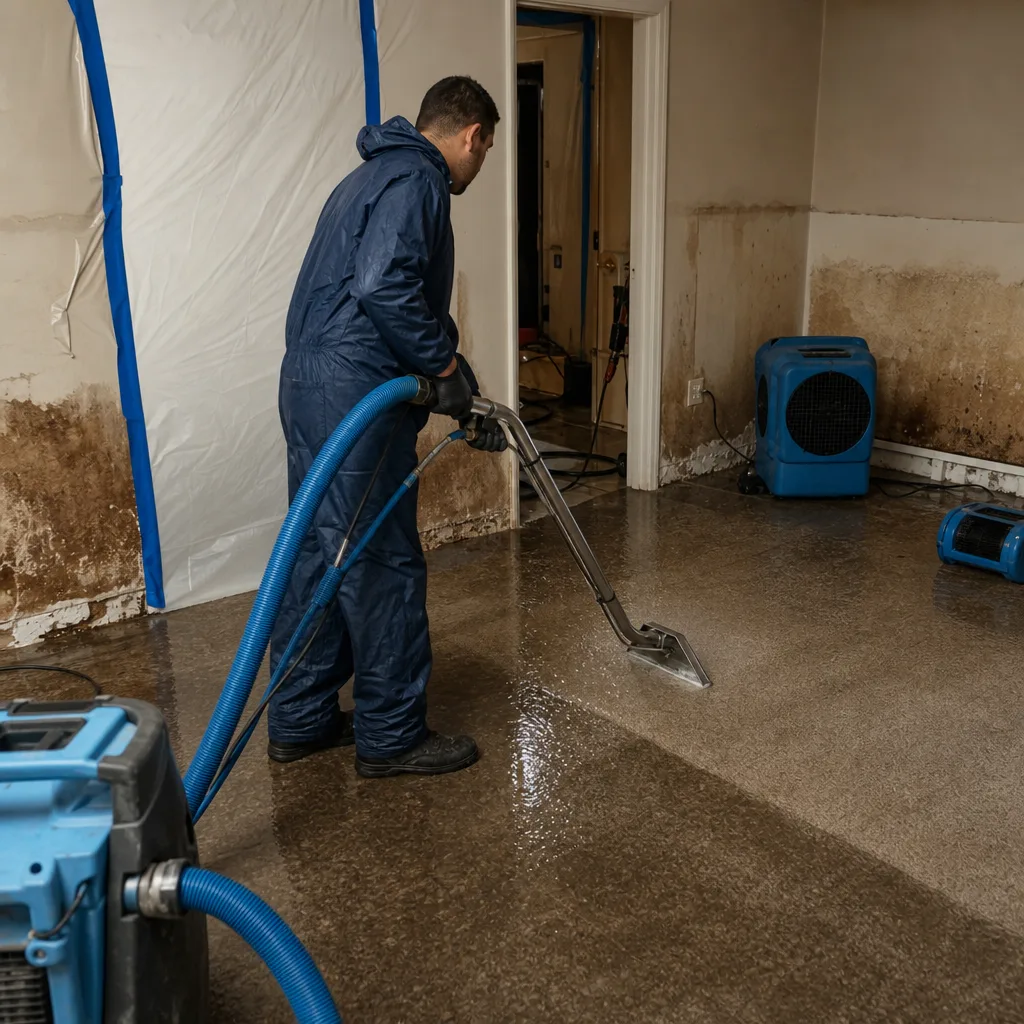
Flood damage in Covina homes follows predictable patterns. Water pools at slab perimeters where 1950s construction put no exterior drainage, then wicks under baseboards and into adjoining rooms. We moisture-map the entire slab, not just the visible puddle, using the same Dri-Eaz and Phoenix equipment we run on every job. Extraction and dry-out on a two-bedroom Covina slab home typically runs $3,000 to $7,500, with daily moisture readings logged until the dry standard is met and handed to you and your carrier.
Emergency Board-Up
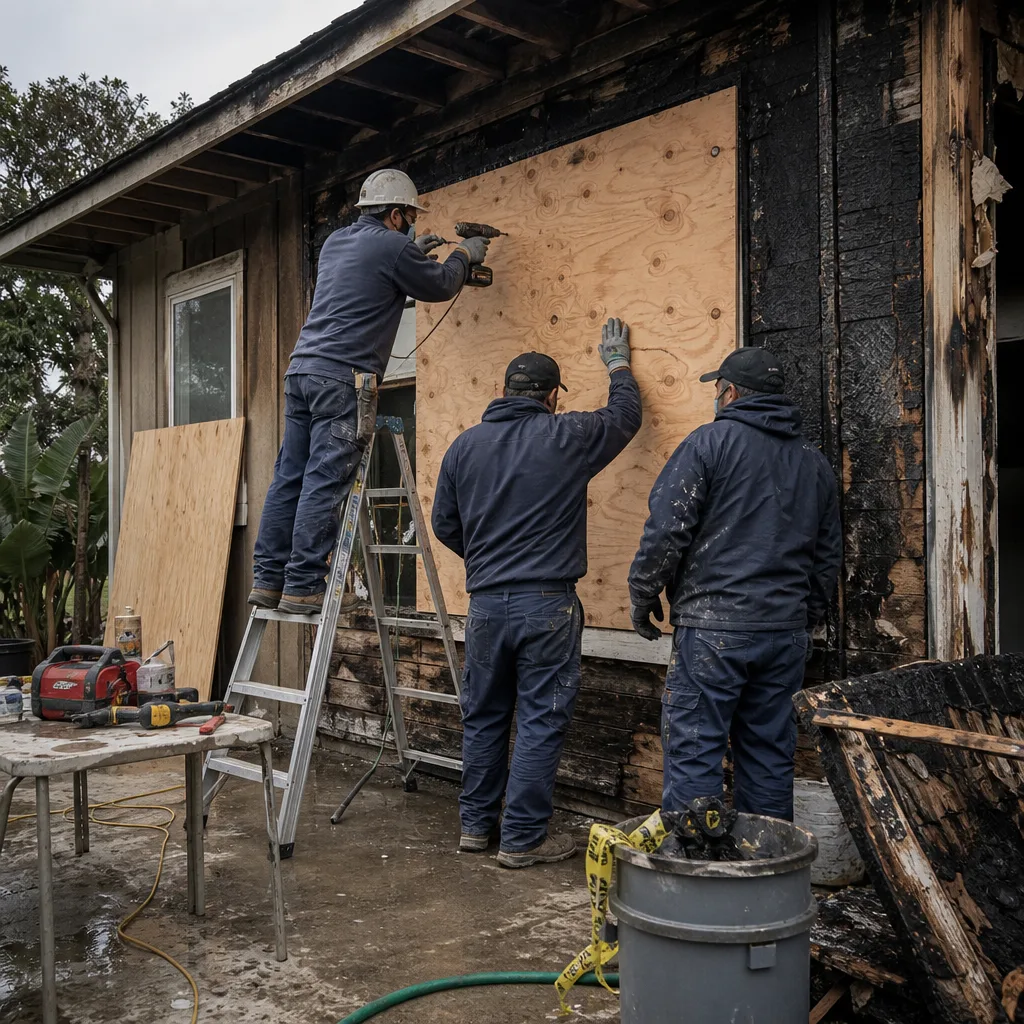
After a Santa Ana wind event, a missing window or a punctured wall leaves a Covina house open to animals, vandals, and the next rain. We board up with plywood and fasteners rated for sustained wind uplift, not a few nails and a prayer. Emergency board-up in Covina runs $400 to $900 for a standard window or door opening, same visit in most cases.
Roof Tarping
A storm-peeled section of composition shingle on a 1960s Covina roof needs a tarp that won’t peel back at the corners when the next Santa Ana gust hits. We tarp to the ridge and gable edges, mechanically fastened, not just weighed down. Roof tarping in Covina runs $450 to $1,100 depending on roof pitch and damaged area. The tarp buys you time; our team then works with your carrier on the permanent repair, so you’re not left with blue plastic as a long-term roof.
Debris Removal
When wildfire ash from the Angeles National Forest settles across 91724 properties, or a downed branch takes out a fence line, debris removal becomes part of the restoration scope. We use HEPA-filtered vacuums for fine ash, because a shop vac spreads soot into ducts a homeowner will smell for months. Debris removal in Covina starts around $350 for a single-property ash cleaning and scales with the size of the affected area.
Wind Damage Repair
Santa Ana winds in Covina don’t just lift shingles; they tear fascia, loosen gutters, and drive rain sideways into wall cavities that never see moisture in a normal storm. Our wind damage repair work starts with a moisture assessment of the affected wall assembly, then moves to structural repair and finish matching. Wind damage repair ranges from $800 for a gutter and fascia section to $8,000 or more when wall sheathing and framing need replacement.
What happens when you call
- 1
A real person answersNo phone trees - you reach a local pro.
- 2
You get an upfront price rangeHonest numbers before anyone is dispatched.
- 3
A background-checked tech heads outLicensed & insured, dispatched right away.
- 4
You approve before work beginsNothing starts until you say go.
Trusted Brands We Service in Covina
We don’t ask Covina homeowners to replace their home’s existing systems just because a tech has a preferred brand. Our crews have worked extensively with older residential framing and finish patterns common across 91722, 91723, and 91724, and we’re trained to IICRC, RIA, and IFA standards. That training matters when a 1950s slab home requires matching original plaster texture or replacing a built-in that predates modern dimensions.
Our trucks carry Dri-Eaz and Phoenix drying equipment calibrated for Covina’s inland heat. In summer, when ambient temperatures push past 100 degrees, you need dehumidifiers and air movers that hold their performance curve in high heat. That’s equipment we own, not rented, and it arrives on the first truck. Whether the damaged home is a Craftsman bungalow near downtown Covina or a 1970s one-story in 91724, we stock what the job needs and avoid the “we’ll order that part” delay.
Common Storm & Disaster Restoration Problems We See in Covina Homes
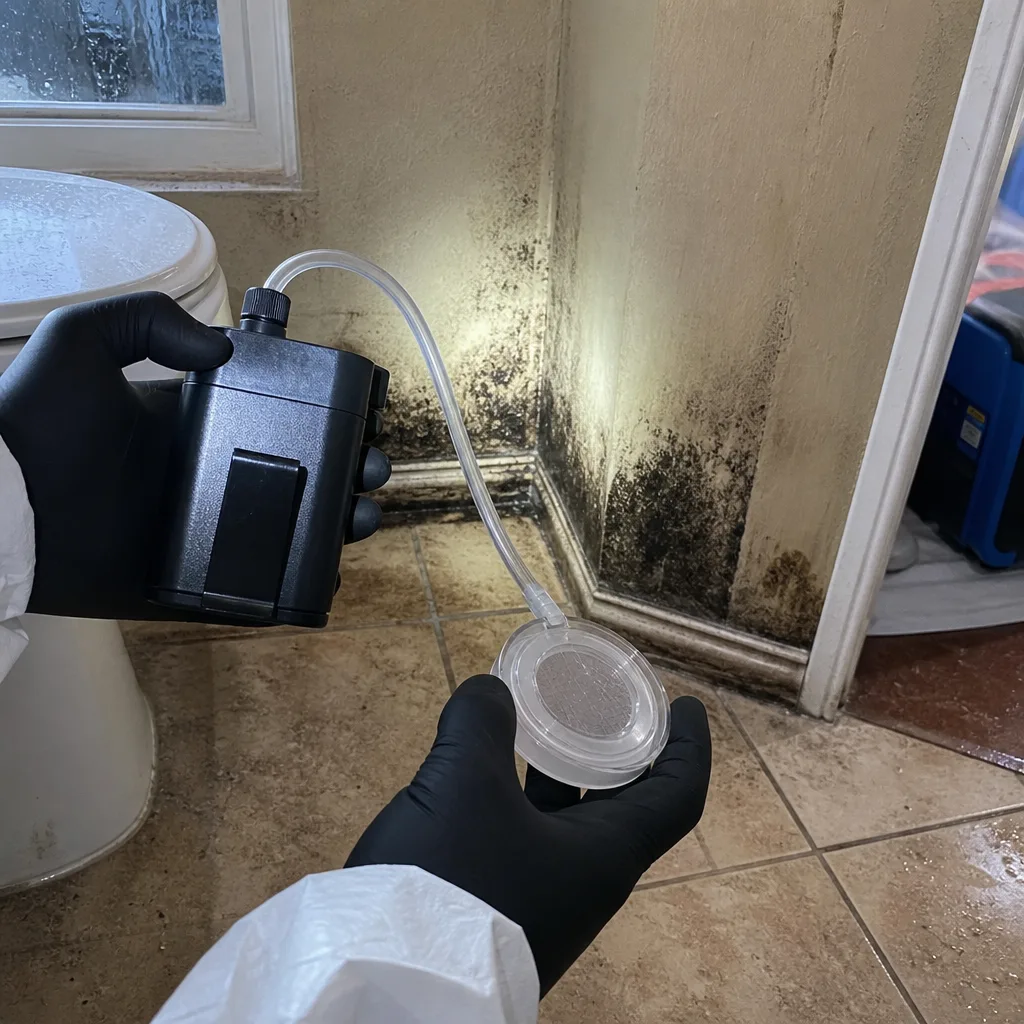
- Asbestos surprises under 1950s floors. In pre-1980 Covina slabs, 9×9 vinyl tile and popcorn ceilings routinely contain asbestos. We sample before we disturb, because starting a dry-out and then discovering airborne fiber means tearing out and starting over.
- Hard-water galvanized pipe failures hidden in slabs. Covina’s water often runs 350+ ppm TDS. Original galvanized supply lines corrode from the inside, so a “small water heater leak” is sometimes months of slow wicking through the slab that only shows up after a storm raises the water table and pushes moisture to the surface.
- Surface-only roof tarps failing in Santa Ana winds. A tarp that’s not mechanically fastened to ridge and gable edges peels in the first dry, 50 mph gust. We see re-flooded Covina tract homes every fall where the first tarp failed.
- Wildfire ash entering HVAC ductwork. Ash fallout from Angeles National Forest fires settles fine enough to pass through standard vacuum filters. Once that ash gets into a Covina home’s ducts, the whole system needs cleaning before restoration is actually finished, not just the floors.
Pricing for Storm & Disaster Restoration in Covina, CA
Covina’s restoration pricing reflects the age of its housing stock and the specific failure modes that come with it. A straightforward storm damage cleanup with water extraction and drying on a 1,500-square-foot slab ranches runs $2,500 to $5,500. Add flood damage from a burst hard-water galvanized line, and the scope in Covina homes routinely lands between $4,500 and $11,000 once slab drying, drywall replacement, and finish work are included.
What drives cost higher in Covina specifically? Asbestos testing and abatement, which is required before disturbing pre-1980 materials, adds $800 to $3,000 depending on the amount of suspect material. Wildfire ash cleanup with HEPA filtration adds $500 to $1,500 over standard debris removal. Roof tarping on steep-slope 1920s Craftsman roofs costs more than on low-slope 1950s ranches due to fall protection and fastener anchoring.
We give you a written scope before work starts. No vague “it depends” and no surprise line items. Estimates are free, and you can call (888) 737-2439 any time, day or night.
We Also Serve Cities Near Covina
Our crews work throughout the eastern San Gabriel Valley, so when a storm tracks through Covina, we’re already positioned to respond. We provide the same Storm & Disaster Restoration services to homeowners in Charter Oak, Azusa, Citrus, and West Covina. The same live dispatch, the same equipment on the first truck, and the same 90-Day Done Right Promise in writing.
Serving Covina, CA - Our Local Coverage Area
We’re based in the Covina area and know this community well. Use the map below to see our service coverage - if you’re nearby, we can almost certainly help.
FAQs - Storm & Disaster Restoration in Covina
Because Covina’s pre-1980 slab homes routinely contain asbestos in vinyl floor tile, sheet flooring backing, and drywall joint compound, and starting fans before sampling can stir up airborne fibers. In a 1954 East Badillo Street ranch in 91723, a “roof leak” turned out to be a failed galvanized supply line behind the water heater that had been wicking through the slab for months. We ran Dri-Eaz LGR 2800i dehumidifiers and XPOWER axial fans, but paused drying while a certified asbestos inspector sampled the 9×9 tile we exposed. The test came back positive, adding a three-day abatement window before structural drying could be completed. That’s the correct sequence: sample first, disturb after. Call (888) 737-2439 and we’ll explain exactly what your home’s vintage requires before we touch a single tile.
It changes what we look for before we even start drying. Covina’s water often exceeds 350 ppm TDS, which corrodes original galvanized pipe from the inside out. So when we respond to a burst pipe, we don’t just address the visible flooding; we inspect the entire run of galvanized supply line for internal thinning that predicts the next failure. In practice, that means a flood damage job in a 1950s Covina home often includes replacing the recirculation line or the main supply segment while the walls are already open, rather than drying, closing up, and waiting for the next leak. Want an honest assessment of your galvanized plumbing before another pipe bursts? Call (888) 737-2439. Estimates are free.
We check for knob-and-tube wiring and lath-and-plaster walls before introducing moisture-damaged demolition or heavy drying. Covina’s 91722 ZIP has a concentration of 1920s and 1930s Craftsman bungalows, and those homes often still carry original knob-and-tube circuits behind lath-and-plaster. When storm water intrudes into those wall cavities, you cannot simply cut out wet plaster and patch drywall; you have to coordinate electrical decommissioning and sometimes full rewiring alongside the water remediation. That’s a Covina-specific sequence that a generic restoration crew from a newer city might miss. If your downtown Covina bungalow flooded, call (888) 737-2439 and we’ll walk the site with both moisture meters and electrical experience.
Tarping stops the immediate water entry, but a mechanically fastened tarp is a temporary measure, not a repair. In Covina, because Santa Ana wind events are a recurring fall condition, a roof that has already lost shingles in one wind event is likely to lose more in the next. After tarping, we assess the roof deck, the underlayment condition, and the fastener pattern. Many 1960s Covina roofs were installed with fewer nails per shingle than today’s wind codes require. A retrofit with proper nailing, better underlayment, and edge-secured drip metal runs $2,500 to $7,500 on a typical ranch-style roof, and helps avoid a second emergency call. Call (888) 737-2439 and we’ll give you a written scope for both the interim tarp and the permanent fix.
We treat wildfire ash as a contaminant, not just dirt. Covina’s position south of the San Gabriel Mountains means smoke and ash from Angeles National Forest fires settle across 91722, 91723, and 91724 regularly during fire season. That ash is fine enough to pass through standard vacuums and lodge inside HVAC ducts, so every surface cleaning after a fire event in Covina uses HEPA-filtered equipment, and we inspect the duct system before declaring the home clean. Coastal cities get marine layer; Covina gets ash fall. That’s why we stock HEPA units and duct inspection tools on our Covina-dispatch trucks. Call (888) 737-2439 for a same-visit assessment after any wildfire ash event.
Written by Curt Bowman, Owner at Floodline Restoration Co. of California, serving Covina and the eastern San Gabriel Valley.
If your Covina home has storm or flood damage, don’t wait for the water to spread or the tarp to fail. Call Floodline Restoration Co. of California at (888) 737-2439 now. A live person answers, a Covina-ready crew responds, and the job is backed in writing. Done right, every time, your home first, standing behind it.