
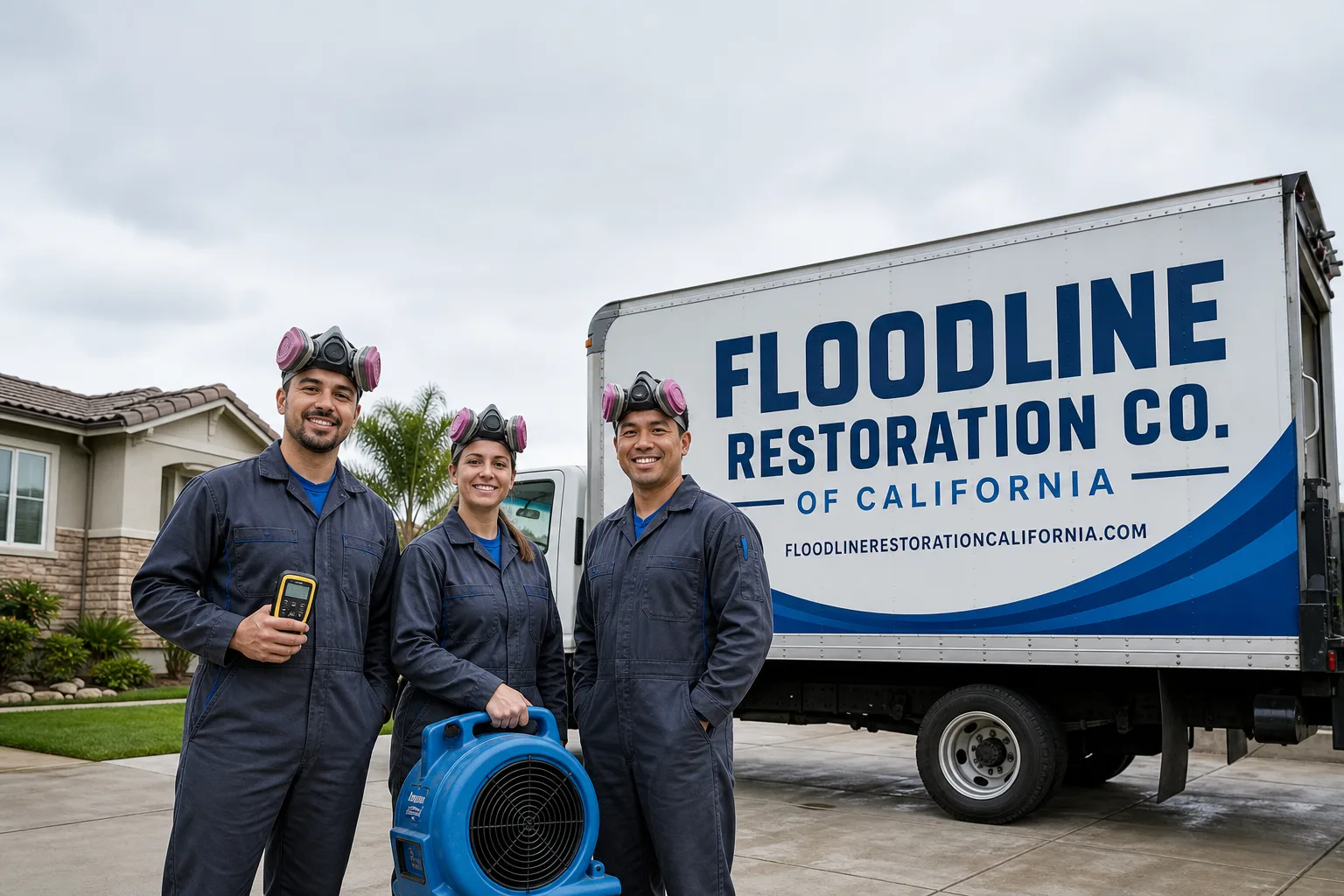
Fast, Reliable Storm & Disaster Restoration Across Coronado
Storm damage on Coronado moves fast, and so do we. Floodline Restoration Co. of California answers calls with a live dispatcher 24/7, and our certified crews reach Coronado homes quickly from our San Diego dispatch office, hauling professional-grade Dri-Eaz, Phoenix, XPOWER, and Injectidry equipment across the bridge or down the Silver Strand the moment water or wind breaks through. This isn’t a place where you can wait a day or two. Salt-laden marine air turns damp drywall into mold in under 48 hours here. If you’re staring at water where it shouldn’t be, call (888) 737-2439 now, and a real person will start the work order while you’re still on the line.
Why Floodline Restoration Co. of California Is Coronado’s Preferred Storm & Disaster Restoration Company
Homeowners in the 92118 ZIP, from the village streets near Orange Avenue to the beachfront blocks off Ocean Boulevard, call us because our crews understand what salt air does to a house before, during, and after a storm. We have been pulling water out of Coronado homes long enough to know that the visible puddle is rarely the whole story. The framing behind it, the fasteners holding the structure together, and the garage door hardware on the windward side are usually carrying years of quiet corrosion that the storm just exposed. That’s the job we’re actually here to do.
Every Floodline technician on a Coronado call is background-checked, uniformed, and trained to IICRC, RIA, and IFA standards. Not a subcontracted crew, not a rotating cast. We are same company from first extraction to final rebuild. You get a moisture log with daily readings, a written scope of work before anything goes beyond mitigation, and our 90-Day Done Right Promise, the Keystone Standard, in writing. If it’s not done right, we make it right. No arguing. And no Coronado homeowner has to play messenger between us and their carrier; we bill insurance directly and hand the adjuster the full documentation set.
Our Storm & Disaster Restoration Services in Coronado
Coronado’s storms come off the Pacific, which means wind-driven rain, salt spray, and surge. The damage they leave behind moves quickly into framing, slabs, and garage hardware. These are the services Coronado homeowners call us for most often.
Storm Damage Cleanup
Wind and rain tear shingles loose, blow in windows, and drive water through every small gap in the building envelope. On Coronado’s older wood-frame Victorians and Craftsmans near the Hotel del Coronado, we regularly find that a storm “leak” has actually been feeding moisture into wall cavities for hours or days before the homeowner noticed. Our response starts with a full moisture map, not just a mop and a fan. We strip only what needs stripping, dry the structure to the IICRC dry standard, and document every reading for whoever needs to see it.
Flood Damage Restoration
Flooding on this peninsula behaves differently than it does inland. Coronado’s shallow slabs and sandy, low-lying soils mean water can migrate sideways under the slab and wick up into walls days after the visible water is gone. That’s why we run Injectidry floor systems and Phoenix desiccants longer here than we would in El Cajon or Santee. We’re looking for hidden moisture under cabinets, in wall bases, and below flooring. The goal isn’t just a dry surface; it’s a dry structure, verified with a written log you hand to your insurer.
Emergency Board-Up
A broken window or blown-in door leaves a Coronado house open to more rain, salt spray, and, frankly, unwanted entry. We board up within hours, not days. On beachfront properties near the 92118 ZIP, the priority is always securing the envelope before the next tide cycle adds more moisture. Our techs cut and fit plywood on site, secure it properly into framing, and photograph everything for your carrier. This is temporary security done right, not a sheet of flapping plywood.
Roof Tarping
Coronado’s roofs take a beating from coastal winds and constant salt exposure. We tarp with heavy-duty material sealed at the edges, because a tarp that lifts at 2 a.m. is worse than no tarp at all. The real skill on a Coronado roof job is anchoring the tarp into sound framing; years of salt moisture quietly rots the wood at fastener points. Find the good wood, secure the tarp, and keep the house dry while the rebuild is scheduled. We do it all in the same visit whenever the weather allows safe work.
What happens when you call
- 1
A real person answersNo phone trees - you reach a local pro.
- 2
You get an upfront price rangeHonest numbers before anyone is dispatched.
- 3
A background-checked tech heads outLicensed & insured, dispatched right away.
- 4
You approve before work beginsNothing starts until you say go.
Common Storm & Disaster Restoration Problems We See in Coronado Homes
Living on a salt-saturated peninsula changes what we find on every job. Here’s what we see over and over in Coronado:
- Corroded garage-door springs snap during wind-load buffeting. The constant marine air strips zinc coating off torsion springs, and when a coastal storm pushes against the door, the spring fails violently. The door drops or jams half-open, exposing the garage interior and everything behind it to driven rain.
- Salt-corroded track fasteners pull loose from saturated wood framing. The screws holding garage door tracks to the wall lose their bite after years of corrosion. In a storm, the first place water finds is the crack behind the track bracket. We re-anchor into sound wood, then install the tarp or board-up properly.
- Nylon rollers seize on corroded steel bearing shafts. When the bearings rust, the door can derail during an emergency board-up, pinning a half-open panel and making the opening harder to secure. We swap in stainless hardware and coated springs so the door works and stays sealed.
- Slab moisture intrusion from Coronado’s sandy soils. There are no basements on this peninsula, and the slab sits close to the water table. After a flood, moisture wicks up through the concrete and into flooring and walls. This is a signature Coronado problem, and it demands sub-slab drying judgment, not just fans in the room.
Pricing for Storm & Disaster Restoration in Coronado, CA
What moves the number is the same thing that makes Coronado different from anywhere else: salt. When fasteners are pre-corroded, replacement takes longer. When slab moisture migrates, drying takes longer. You should never be surprised by a bill, which is why we walk you through the written scope before mitigation work begins. Estimates are free. Call (888) 737-2439 and our estimator will give you real numbers, not ranges you have to guess at.
Trusted Brands We Service in Coronado
Coronado’s housing stock spans more than a century, and we stock parts that span it too: galvanized torsion springs, stainless fasteners, nylon rollers, and rebuilding materials that match older homes near the Hotel del Coronado and mid-century ranch houses further down the Strand. We service and install all major storm-related hardware brands and carry common local sizes for fast turnaround. Our techs work with the equipment manufacturer standards, which is why we hold IICRC, RIA, and IFA certifications on top of our product-specific training. If the storm wrecked it, we likely have what it needs on the truck.
Coronado’s Salt Air and Storm Damage: The Full Story
Coronado sits entirely surrounded by saltwater, the Pacific on the west, San Diego Bay on the east. That’s not a postcard detail. It’s a mechanical fact. Every metal component on a Coronado house lives in a mildly corrosive bath, and garage door hardware is the canary. Torsion springs, hinge pins, track brackets, opener chains, the stuff that holds the door in place during a wind event, all of it corrodes years faster than the same parts in National City or Bonita.
Here’s the pattern we see over and over in the 92118 ZIP. A coastal storm pushes into a beachfront home near the Hotel del Coronado. The wind buffets the garage door, and a torsion spring that has been quietly rusting for five years finally fractures. The door sags, the track flexes, and somewhere a seal breaks. Rainwater gets driven into the wall cavity behind the track. By the time we arrive, the visible problem is a broken spring and a wet garage floor. But the hidden problem is a wall cavity full of salt-laden moisture, framing fasteners that have turned to flakes, and a door system that needs to be pulled and rebuilt, not just repaired.
On one beachfront property in the 92118 ZIP near the Hotel del Coronado, we responded to a storm-driven window leak that had been quietly feeding salt moisture into the garage. The springs on the overhead door had already lost their zinc coating to pitting, and both side hinges showed white corrosion bloom at the pin barrels. Our techs pulled the door, treated the framing with a phosphate conversion coating, and reinstalled with galvanized torsion springs and stainless fasteners before drying the wall cavity. That is the difference between a quick fix and a restoration that holds up. This page gives you the corrosion-specific inspection checklist and the access constraints only a crew operating on Coronado’s salt-soaked peninsula would know.
Access Constraints Most Restoration Companies Don’t Mention
If you live here, you already know: Coronado has one land route besides the bridge, and that’s the Silver Strand. The Strand is a near-sea-level causeway that can be closed by storm surge during the same coastal storms that drive restoration calls. When that happens, the Coronado Bridge becomes the sole chokepoint for every truck, every piece of large drying equipment, and every crew trying to reach the island.
That’s a real operational constraint, and we plan for it. Our San Diego dispatch office pre-stages equipment and materials so a storm call doesn’t wait on a bridge crossing. Large desiccant units, board-up materials, and replacement hardware are positioned ahead of weather events whenever the forecast warrants. You don’t want to be the homeowner figuring out at 1 a.m. that the only restoration crew that answers their phone can’t actually reach you. You can reach us. Call (888) 737-2439 and a live dispatcher picks up, no recording, no hold music message tree.
We Also Serve Cities Near Coronado
Our crews work all over the South Bay and coastal San Diego County. If you’re in National City, San Diego, Imperial Beach, or Bonita, the same Storm & Disaster Restoration team that serves Coronado can be at your door. The salt air knows no municipal boundaries, but our service area does, and it covers these communities with the same certified technicians, the same written 90-Day Done Right Promise, and the same live 24/7 dispatch. We answer the phone at (888) 737-2439 no matter which side of the bridge you call from.
Serving Coronado, CA - Our Local Coverage Area
We’re based in the Coronado area and know this community well. Use the map below to see our service coverage - if you’re nearby, we can almost certainly help.
Frequently Asked Questions: Storm & Disaster Restoration in Coronado
How does Coronado’s salt air affect garage door hardware after a storm?
Salt air corrodes garage door springs, hinges, rollers, and track fasteners years faster than inland environments, which means a storm that merely rattles a door in El Cajon can snap a weakened torsion spring in Coronado. The failure pattern is predictable: wind buffeting stresses the already brittle spring, the door drops out of plumb, and driven rain enters through the gap. We recommend a post-storm corrosion inspection of all garage door hardware, even if the door still opens. Our techs can do this during the same visit as any storm cleanup, and we carry galvanized springs and stainless fasteners on the truck so the fix is completed that day. Call (888) 737-2439 for a free estimate on a full corrosion and storm assessment.
Can storm surge close the Silver Strand and delay restoration?
Yes, storm surge has closed the Silver Strand during the same coastal events that damage Coronado homes. When the Strand is impassable, the Coronado Bridge becomes the only land route for all restoration equipment and crews. That’s why our San Diego dispatch office pre-stages equipment ahead of major weather and why we maintain local inventory rather than running everything across the bridge on demand. If you’re planning ahead for a storm, call us before it hits and we’ll review your property’s vulnerability while there’s still time to board up properly. If the storm already hit, call anyway; we’ll tell you exactly what access looks like from our dispatchers’ screens and when our first available crew can reach you.
Why does drying take longer in Coronado than in El Cajon or Santee?
Coronado’s geography keeps relative humidity elevated year-round; the peninsula is surrounded by water on all sides and rarely sees the low-dew-point drying windows that speed remediation in inland San Diego communities. In practical terms, that means our Phoenix desiccants and Dri-Eaz dehumidifiers run longer to hit the same IICRC dry standard, and the mold colonization window compresses to 48-72 hours after water intrusion. We don’t guess at this. We use daily moisture readings and deliver a written log that shows exactly where your structure is in the drying curve. That log is also the document your insurance carrier uses to confirm the job is done right. Call (888) 737-2439 if you have water in your Coronado home; the sooner drying starts, the shorter the equipment run.
Does Coronado’s sandy soil cause problems under slabs after flooding?
Yes, Coronado’s shallow slabs sit on sandy, low-lying soil that allows water to migrate horizontally and wick up through the concrete. There are no basements on this peninsula, so a flood that receded days ago can still be feeding moisture into your flooring, baseboards, and even wall cavities from below. This is a common secondary finding on ground-floor Coronado water jobs. Our techs look for it specifically, use Injectidry systems to draw water through the slab surface, and monitor with daily readings until the sub-slab moisture reaches an acceptable level. If you’re not sure whether your flood is really dry, call (888) 737-2439 and we’ll map the moisture before recommending any next step.
Are restoration protocols different on NAS North Island property?
Yes, NAS North Island falls under federal jurisdiction, and work there follows DoD protocols rather than standard civilian insurance workflows. That means coordination goes through base facilities management, documentation needs to meet military standards, and access is controlled differently than anywhere else in the 92178 ZIP. Floodline Restoration Co. of California has the background-checked, uniformed crews and documentation discipline required for federal property work, and we keep the same 90-Day Done Right Promise in writing for every job, on base or off. If you’re on NAS North Island and need damage assessment, call (888) 737-2439 and our dispatcher will walk you through the specific steps for your situation.
Call Floodline Restoration Co. of California for Storm & Disaster Restoration in Coronado
When the storm passes and you’re standing in your garage looking at a snapped spring, a wet wall, and a door that won’t close, the last thing you need is a phone tree. Floodline Restoration Co. of California answers every call with a live person, every hour of every day. We’ve been fixing what coastal weather and salt air do to Coronado homes for years, and we stand behind every job with our written 90-Day Done Right Promise. A square deal, no surprises on the bill, and a name you can hold accountable.
Call (888) 737-2439 for a free estimate. We’ll be there when we say.
Written by Curt Bowman, Owner at Floodline Restoration Co. of California, serving Coronado and the surrounding coastal communities.