
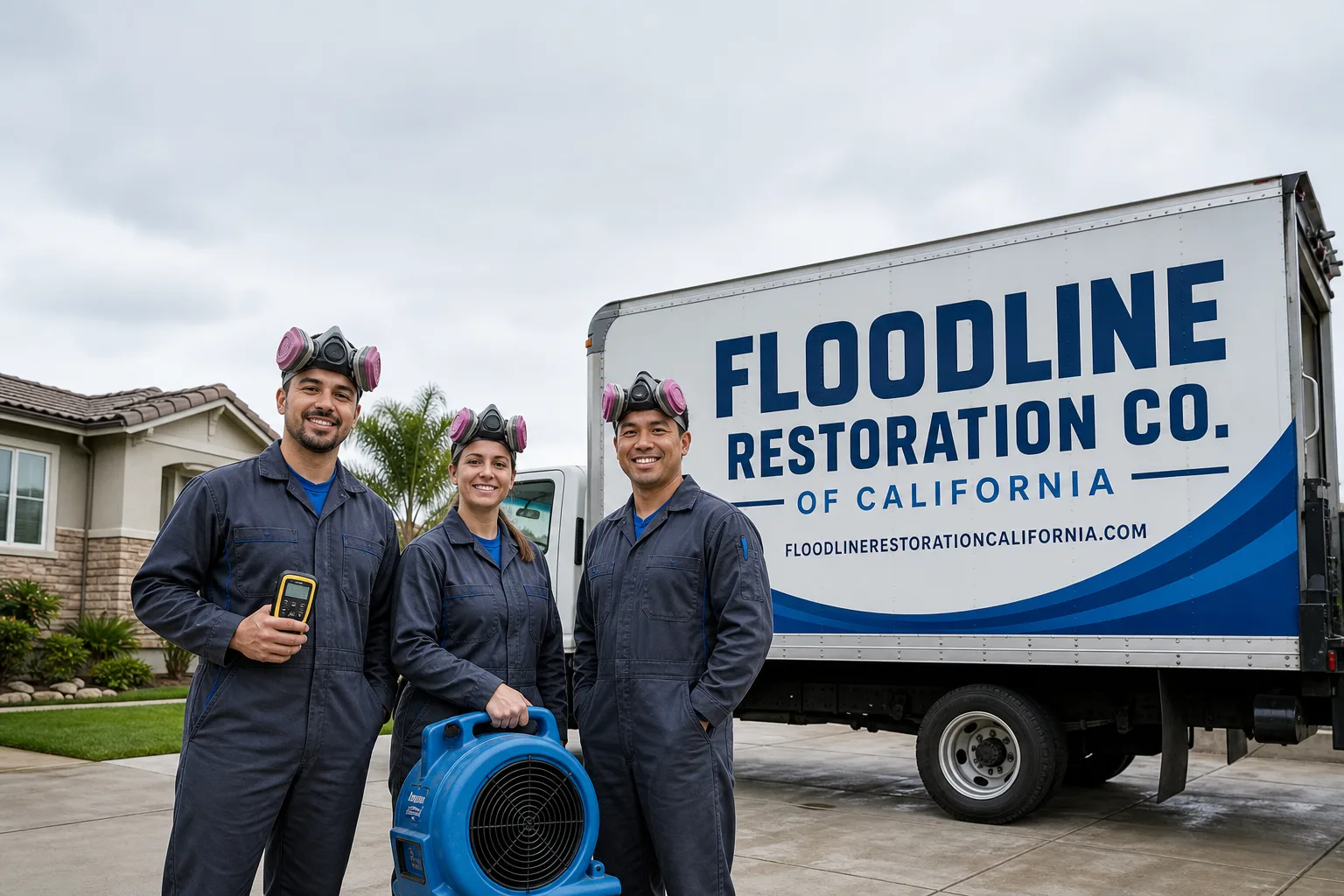
Fast, Reliable Storm & Disaster Restoration Across Apple Valley
When a storm hits Apple Valley, the damage doesn’t wait for business hours. Flash floods from monsoon downpours, wind-driven rain through cracked stucco, or a roof compromised by a fallen limb all need attention now. Storm and disaster restoration in Apple Valley means extracting water before it wicks into slab foundations at 92307 and 92308, tarping a roof before the next cloudburst hits, and boarding up a broken window before the wind does more damage. Our crews reach Apple Valley fast, with equipment loaded and a live dispatcher on the line at (888) 737-2439 any hour of any day. We know this High Desert terrain, its hardpan soil, and its seasonal extremes. We’ll be there when we say.
Why Floodline Restoration Co. of California Is Apple Valley’s Preferred Storm & Disaster Restoration Company
Floodline Restoration Co. of California has been answering the phone with a live person since 2010, when Curt Bowman founded the company around a dispatch board rather than a sales desk. Apple Valley homeowners call us because the person who picks up at 2 a.m. can actually send a crew, same visit, with extraction running before sunrise. No recording, no call center script. Our technicians arrive in uniform, background-checked, and trained to IICRC, RIA, and IFA standards. They carry Dri-Eaz dehumidifiers, Phoenix air movers, and XPOWER extraction units sized for the single-story slab homes that dominate Apple Valley’s 1970s-through-2000s tract neighborhoods.
We’ve worked along Bear Valley Road, through the 92307 corridor, and across 92308. We know that Apple Valley’s homes mostly sit on slab-on-grade foundations with no crawlspace buffer, so ground-level water intrusion moves straight into drywall and flooring. We also know that the same home can flood from monsoon runoff in August and freeze a supply line in January. That local read on the problem changes how we set equipment, how long we monitor moisture, and when we call the job dry. Every job ends with a written moisture log you can hand to your carrier, and the 90-Day Done Right Promise in your hands. Done right, and backed in writing.
We are proud to serve Storm & Disaster Restoration in Apple Valley with the same full-cycle approach we bring everywhere: extraction, drying, and rebuild handled by one certified crew, with no mid-job handoff and no homeowner playing messenger between us and the insurance company.
Our Storm & Disaster Restoration Services in Apple Valley
Storm damage in Apple Valley usually arrives as one of four problems: standing water where it shouldn’t be, a breached roof, a broken opening, or debris that’s become a hazard. Our Storm & Disaster Restoration team handles all of them, often on the same visit.
Flood Damage Restoration
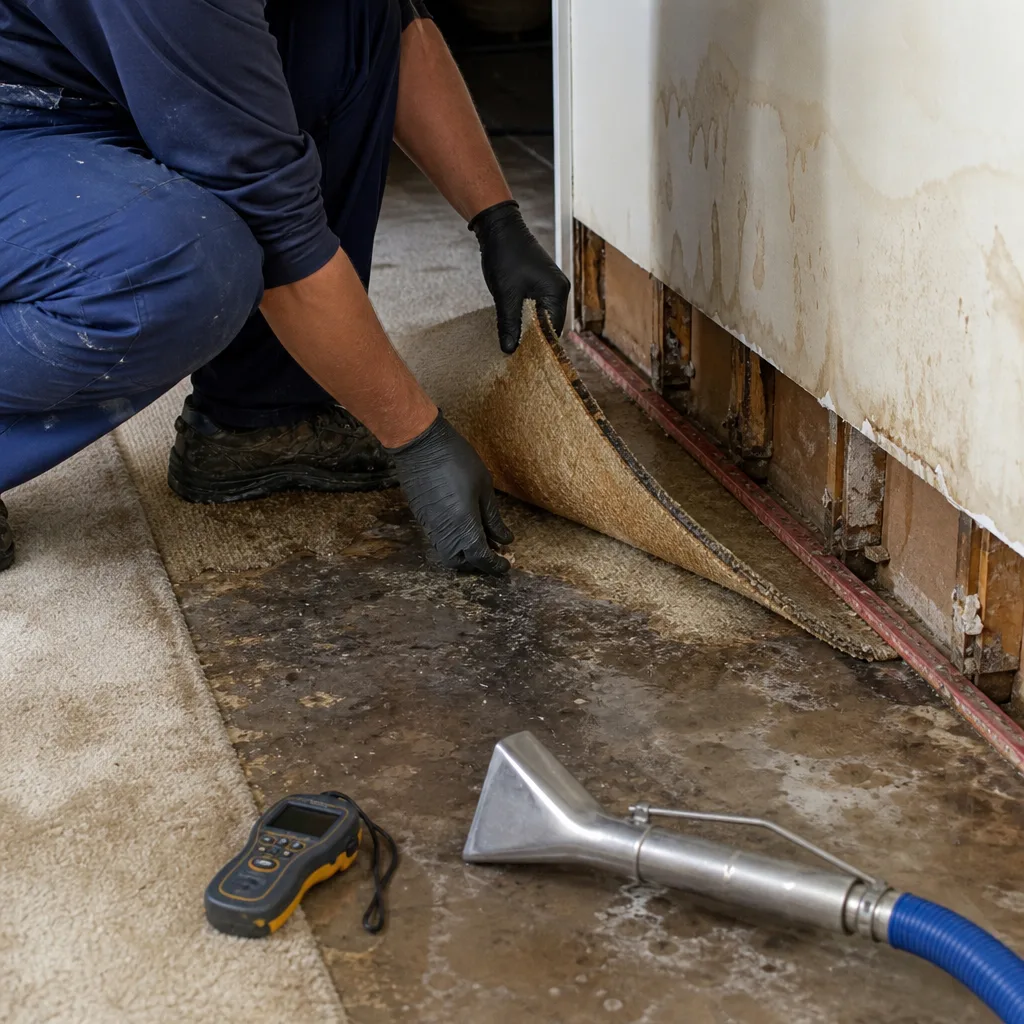
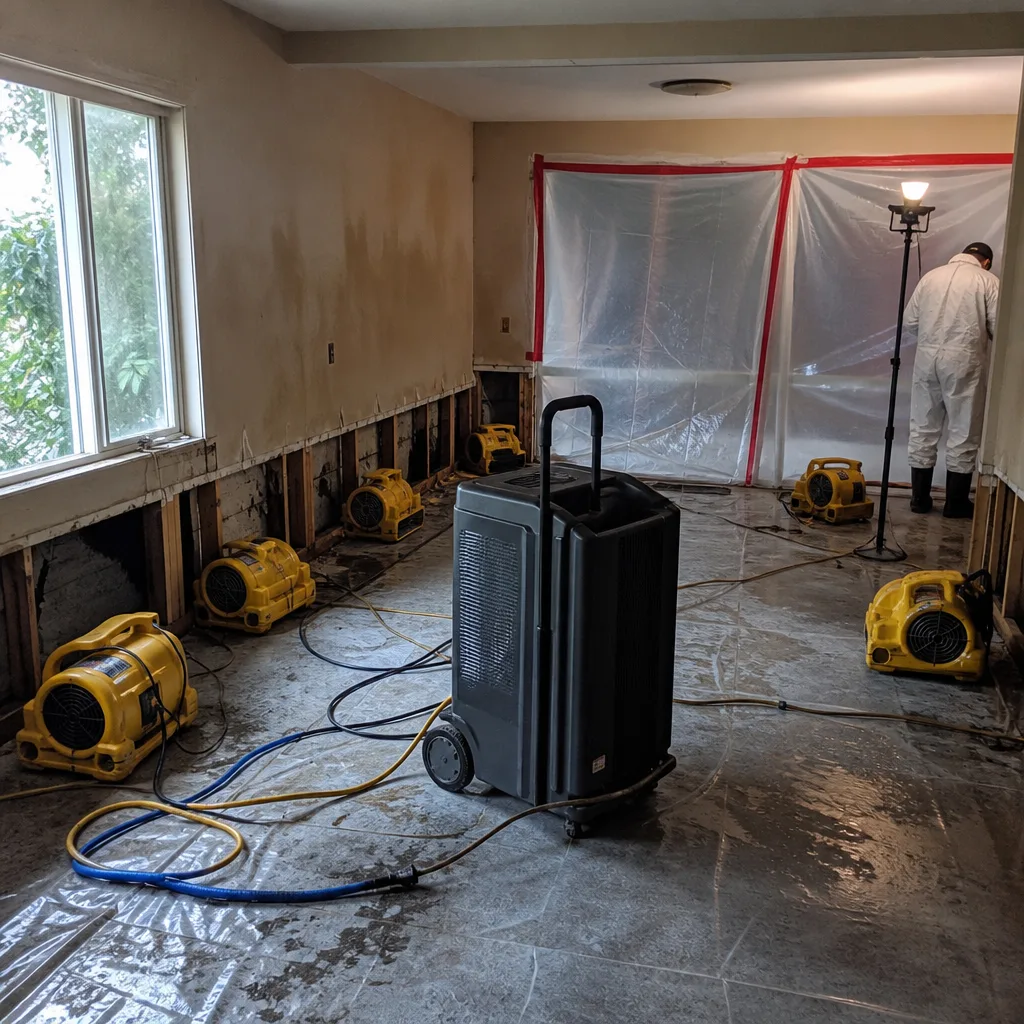
Monsoon cells in July and September drop intense, short-duration rain on hydrophobic desert hardpan. The ground sheds water instead of absorbing it, and that runoff sheets across driveways, under door thresholds, and through foundation stem walls. In Apple Valley’s slab-on-grade homes, there’s no crawlspace to slow it down. We extract standing water with truck-mounted and portable Dri-Eaz equipment, set Phoenix air movers, and place Injectidry drying mats along slab edges where moisture hides. Daily readings continue until the dry standard is met, and the log goes to you and your adjuster.
Emergency Board-Up
High-desert wind doesn’t announce itself politely. A broken window on a 105°F day lets dust and heat in; a broken window during a January cold snap lets pipes freeze. Our board-up crews use commercial-grade plywood and fasteners to secure openings quickly, and we cut to fit Apple Valley’s standard stucco ranch window frames. Boarding up is temporary; we coordinate the permanent repair with your carrier so the opening doesn’t sit exposed.
Roof Tarping
Monsoon winds routinely tear shingles and lift flashing on Apple Valley’s 1970s and 1980s tract homes. Once the roof is breached, the next storm drives water into attic sheathing. Our roof tarp team anchors reinforced polyethylene over the damaged section with furring strips and nails, sized to hold through the next wind event. Tarps buy time for the insurance scope and a proper repair, and we photograph everything before and after for your adjuster.
Storm Damage Cleanup
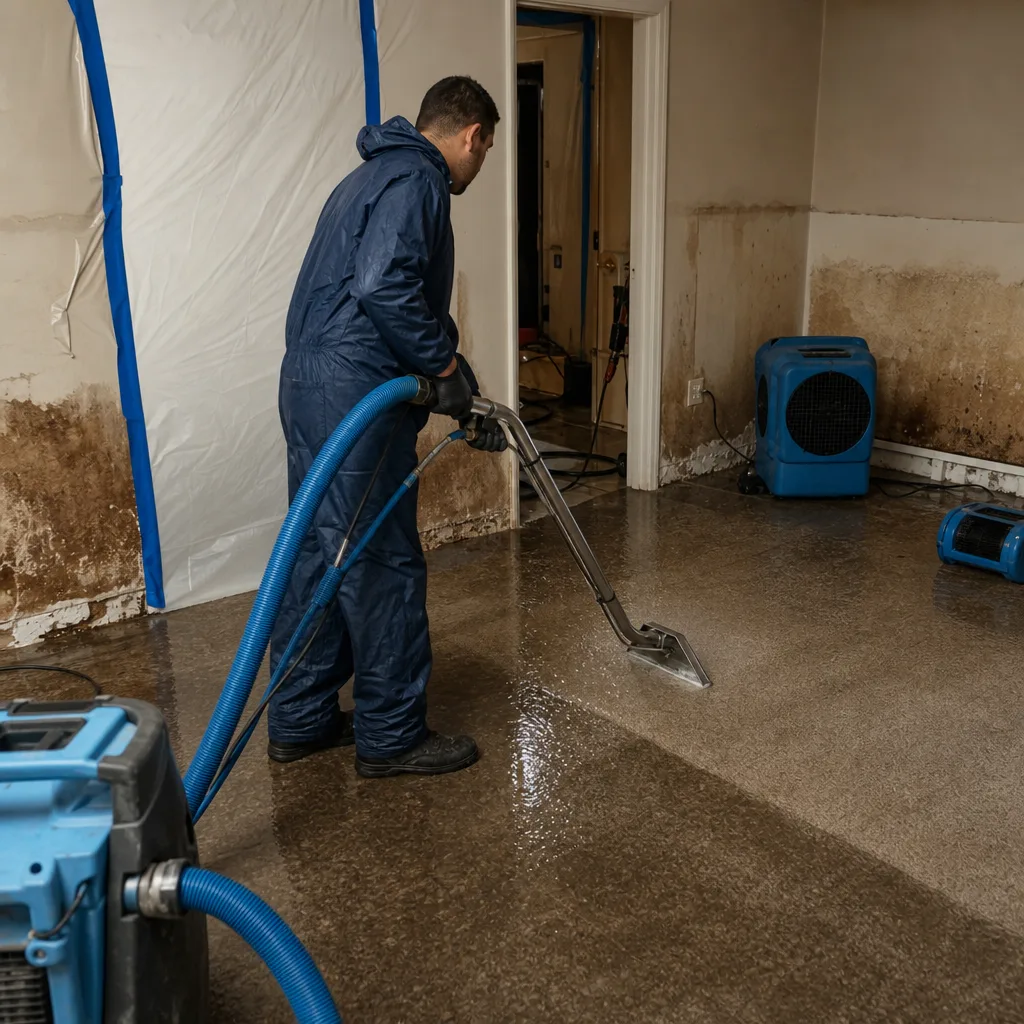
Floodwater in Apple Valley carries silt, caliche grit, and whatever the runoff picked up on its way to your slab. We remove contaminated materials, cut and haul saturated drywall, and treat affected framing before drying begins. If the water came from outside rather than a supply line, we test and document that too, because High Desert soil and runoff carry different contaminants than a clean pipe break.
What happens when you call
- 1
A real person answersNo phone trees - you reach a local pro.
- 2
You get an upfront price rangeHonest numbers before anyone is dispatched.
- 3
A background-checked tech heads outLicensed & insured, dispatched right away.
- 4
You approve before work beginsNothing starts until you say go.
Common Storm & Disaster Restoration Problems We See in Apple Valley Homes
- Corroded galvanized supply lines in 1970s-era 92307 homes. The Victor Valley’s hard, mineral-heavy groundwater scales and corrodes original galvanized pipes from the inside. During Apple Valley’s rapid temperature swings, these weakened lines develop pinhole leaks that saturate cabinet bases and slab-edge subfloor before anyone notices.
- Evaporative cooler overflow during monsoon humidity spikes. Swamp coolers are nearly universal on older Apple Valley homes. When July and August humidity climbs, they run around the clock and frequently overflow or develop pan leaks. Trapped moisture in a 100°F-plus attic seeds mold colonies in rooflines within days.
- Flash-flood runoff on hydrophobic desert hardpan. Apple Valley’s caliche soil sheds water fast. Intense monsoon rain overwhelms drainage and pushes water under door thresholds and through foundation stem walls directly into slab-on-grade living spaces.
- Frozen exterior-wall supply lines in winter. Apple Valley’s desert mindset means many homes have supply lines in uninsulated exterior walls, because “it never freezes here.” But winter lows regularly drop into the mid-20s°F. When pipes burst, water travels down wall cavities and into flooring fast.
Pricing for Storm & Disaster Restoration in Apple Valley, CA
Storm and disaster restoration in Apple Valley follows honest, line-item pricing with no surprises on the bill. Here’s what homeowners in 92307 and 92308 can typically expect:
- Emergency board-up: $250-$600 per opening, depending on size and access.
- Roof tarping: $400-$850 for a typical monsoon-damaged section, including materials and anchoring.
- Water extraction and drying (small single-room flood): $1,800-$3,400, including equipment, monitoring, and moisture log.
- Full storm cleanup with drywall removal and slab-edge drying: $3,500-$7,500 depending on affected square footage.
What moves the number is how far the water traveled, whether it hit a slab edge, and how long it sat before extraction started. That’s why we answer at 2 a.m. and why extraction starts the same visit. We bill insurance carriers directly, we photo-document everything for your adjuster, and the Senior & Veteran 5% discount and $50 Off Any Repair Over $250 always apply. Call (888) 737-2439 for an exact quote. Estimates are free.
We Also Serve Cities Near Apple Valley
Our crews serve Spring Valley Lake, Victorville, Hesperia, and Oak Hills with the same live dispatch, the same certified technicians, and the same 90-Day Done Right Promise. If you’re in a neighboring High Desert community and water is moving, call (888) 737-2439. A live person answers, and a truck heads your way.
Serving Apple Valley, CA - Our Local Coverage Area
We’re based in the Apple Valley area and know this community well. Use the map below to see our service coverage - if you’re nearby, we can almost certainly help.
FAQs - Storm & Disaster Restoration in Apple Valley
Apple Valley’s caliche hardpan and sandy soil shed water rather than absorbing it. When a monsoon cell drops an inch of rain in 40 minutes, that runoff sheets across driveways and under door thresholds, and since most Apple Valley homes sit on slab-on-grade foundations with no crawlspace, the water goes straight into drywall and flooring. A desert doesn’t prevent flooding. It just changes how the water moves. Call (888) 737-2439 the moment you see standing water, because every hour it sits, it wicks further into the slab.
With attic temperatures above 100°F and trapped moisture from a swamp cooler pan leak, mold colonies can begin within 48 to 72 hours. Apple Valley’s evaporative coolers run almost constantly during humid monsoon months, and the overflow or pan leak saturates roofline sheathing where no one looks. If you smell mustiness in August or see staining on the ceiling below the cooler, call (888) 737-2439. We’ll inspect the attic, document what we find, and get drying started.
Check your door thresholds, garage slab edges, and any exterior wall that faces the runoff path. In Apple Valley, water typically enters through foundation stem walls and under garage doors because the ground can’t absorb it fast enough. If you see wet carpet tack strips, bubbling baseboards, or a damp line along the garage slab, call (888) 737-2439. Our crew will bring moisture meters and check the slab edge, which is where hidden damage starts.
Yes. The Victor Valley’s mineral-heavy groundwater scales and corrodes galvanized supply lines from the inside, especially in 1970s-era Apple Valley homes along the 92307 corridor. Over decades, that corrosion thins the pipe wall until a rapid temperature swing, like a 105°F day followed by a low-20s°F night, causes a pinhole leak or full split. The leak often starts inside a cabinet base or exterior wall where it isn’t seen until the subfloor is saturated. If you suspect a pinhole leak, call (888) 737-2439 for a moisture assessment.
If shingles are lifted, flashing is torn, or the underlayment is visible, yes. The next monsoon cell in Apple Valley can arrive within days, and an untarped breach lets water into the attic where 100°F heat accelerates mold growth. Tarping is a temporary, insurance-documented stopgap that prevents the damage from doubling before a permanent repair is scoped. We anchor tarps to hold through wind, photograph everything for your adjuster, and coordinate the fix. Call (888) 737-2439 and we’ll get someone up there before the next storm.
When storm water is moving through your Apple Valley home, you don’t need a sales pitch. You need a crew that shows up fast, works the problem from the floodline to the finish, and stands behind the result in writing. That’s what we do. Call (888) 737-2439 any hour, any day. A live person answers.
Written by Curt Bowman, Owner at Floodline Restoration Co. of California, serving Apple Valley and the High Desert.