
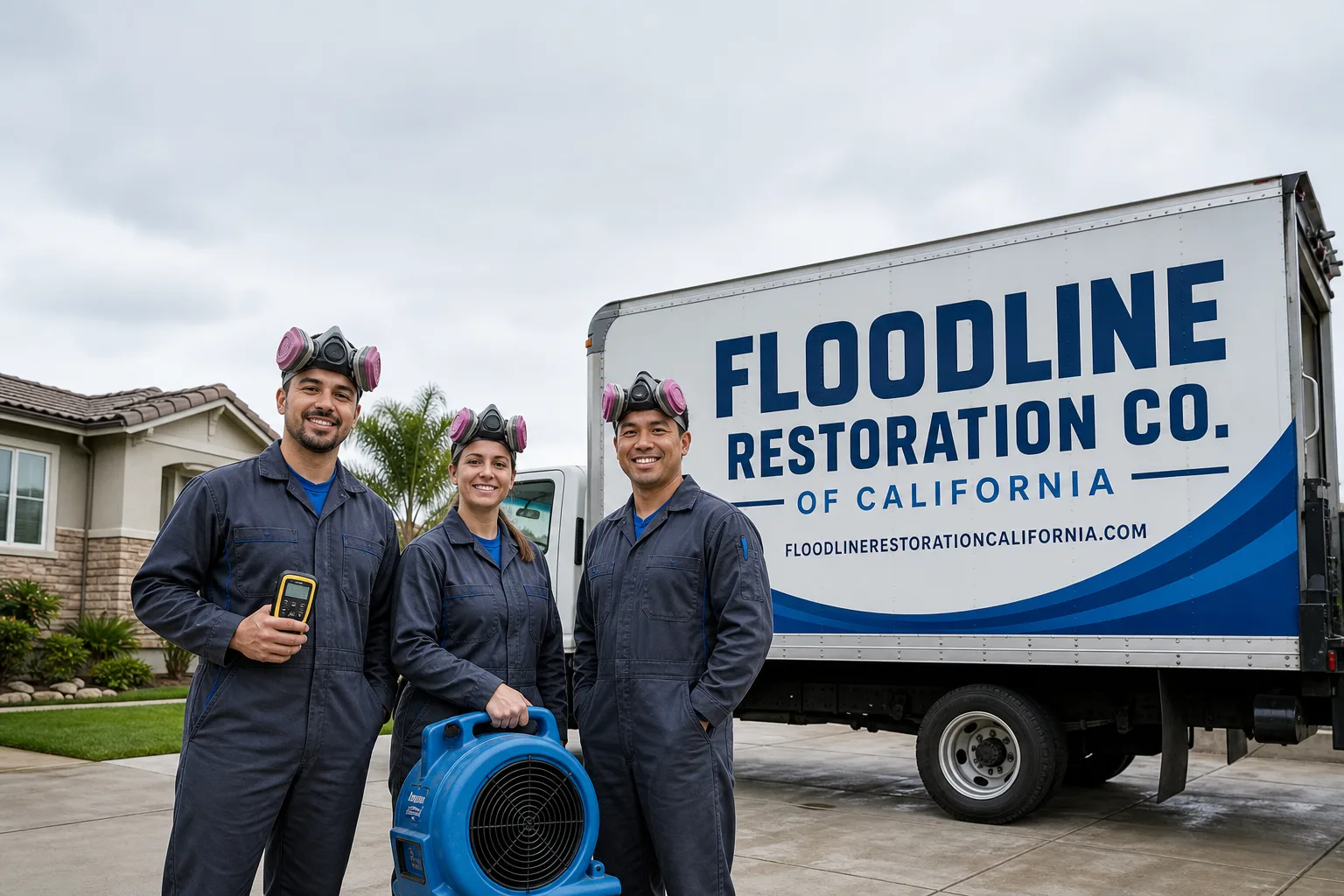
Storm & Disaster Restoration in Antelope: What It Costs and How Fast We Get There
Storm damage restoration in Antelope typically runs $1,800-$7,500 for water extraction and drying, $800-$2,800 for emergency board-up and tarping, and $4,000-$40,000+ when rebuild work enters the picture. Floodline Restoration Co. of California answers the phone with a live dispatcher and can have a certified crew at your Antelope door, often the same visit. If water is moving through your house right now, call (888) 737-2439 and we’ll walk you through the first steps while the truck rolls.
Antelope’s housing stock has a problem most homeowners don’t see until the rain finds it. We’ll get into the specifics below, but the short version is this: homes built here in the late 1980s and early 1990s are now aging in lockstep, and storm damage restoration on these post-tension slabs requires expertise that out-of-area crews routinely lack.
Fast, Reliable Storm & Disaster Restoration Across Antelope
When wind tears shingles off a roof on Elverta Road or an atmospheric river sends water under the door on North Loop Boulevard, you need a crew that already knows what they’re walking into. Our Storm & Disaster Restoration team has worked homes across 95843 long enough to know which subdivisions have original 1990s flashing, which streets sit on the most reactive clay, and where water hides when it runs under a post-tension slab. That local knowledge changes how fast we work and how much damage gets stopped before it spreads.
We know Antelope because we’ve been in and out of these homes for years. The dispatcher who answers at 2 a.m. isn’t reading from a script. The tech who shows up knows that a stucco home near Barrett Hills needs a different drying plan than a two-story on Walerga Road. And when we say we’ll be there, we mean it. Call (888) 737-2439 and you’ll get a person on the line, not a voicemail tree.
Why Floodline Restoration Co. of California Is Antelope’s Preferred Storm & Disaster Restoration Company
Homeowners in Antelope tend to stay put. They bought their house in 1992 and they’re not selling. That means when storm damage hits, they want a restoration company that plans to be around in thirty years, not a franchise that flew in last week. Floodline Restoration Co. was founded in 2010 by Curt Bowman, built around a dispatch board rather than a sales desk, and we’ve spent years earning trust in Sacramento County neighborhoods like this one.
Our technicians are background-checked, uniformed, and trained to IICRC, RIA, and IFA standards. That’s not a slogan. When a crew walks into your Antelope home, they carry a moisture map from day one and log daily readings until the structure hits the dry standard. We hand that log to you and your insurance carrier. Nobody gets left guessing whether the walls are actually dry.
The 90-Day Done Right Promise applies on every job we do in Antelope. If the work isn’t done right, we make it right. In writing. No arguments, no paperwork battles. We call it the Keystone Standard, and it’s part of every quote we hand to a homeowner in 95843.
Our Storm & Disaster Restoration Services in Antelope
Flood Damage Restoration
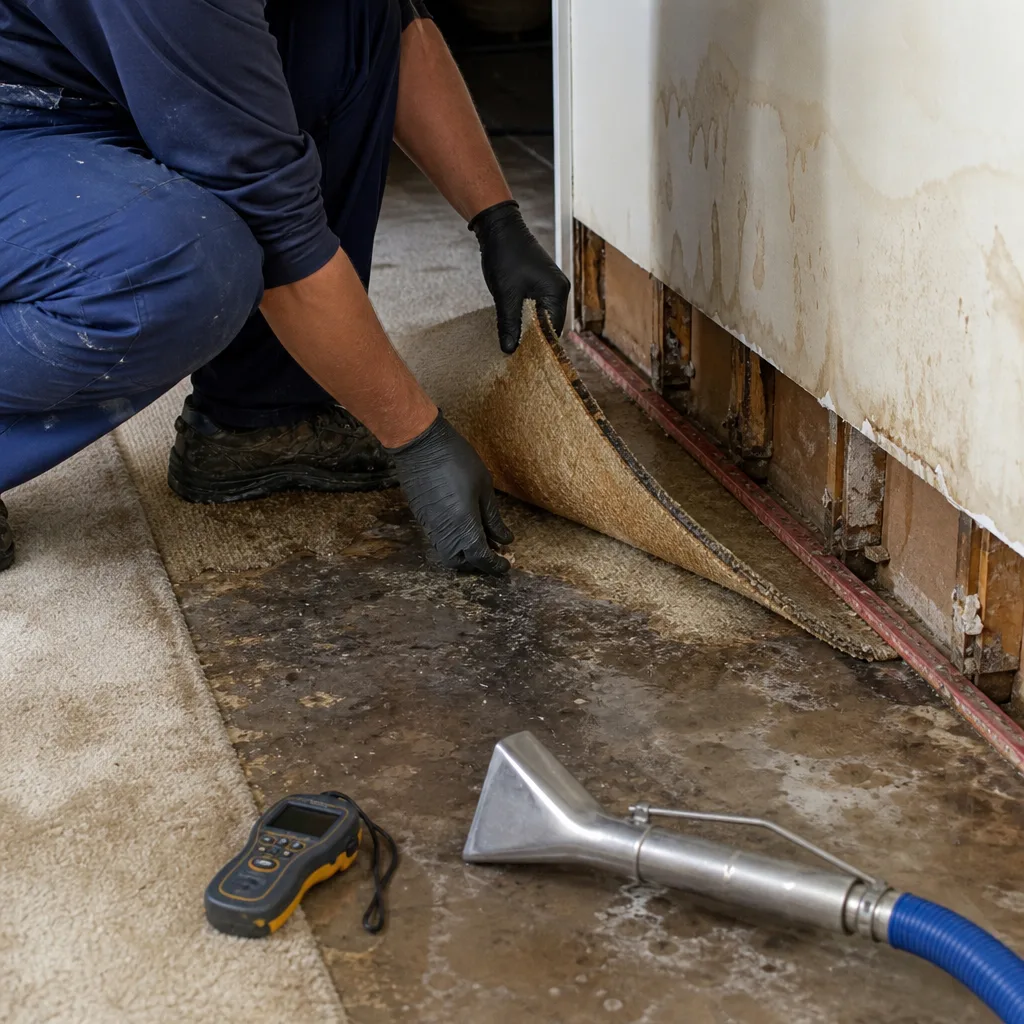
When an atmospheric river parks over Antelope and drops three inches of rain in a day, water finds every weakness your house has been hiding. We extract standing water, set professional-grade drying equipment, and monitor moisture levels daily until the structure is dry. The biggest mistake we see in Antelope is crews treating flood damage as a surface problem. On post-tension slabs with no crawlspace, water migrates laterally under the concrete and can resurface days later as mold or flooring failure. Our team moisture-maps the full affected area, not just the visible puddle.
Flood damage restoration in Antelope typically runs $2,200-$6,800 depending on how far the water traveled and how long it sat. We use Dri-Eaz dehumidifiers and Phoenix air movers on most jobs, and we document everything for your adjuster.
Storm Damage Cleanup
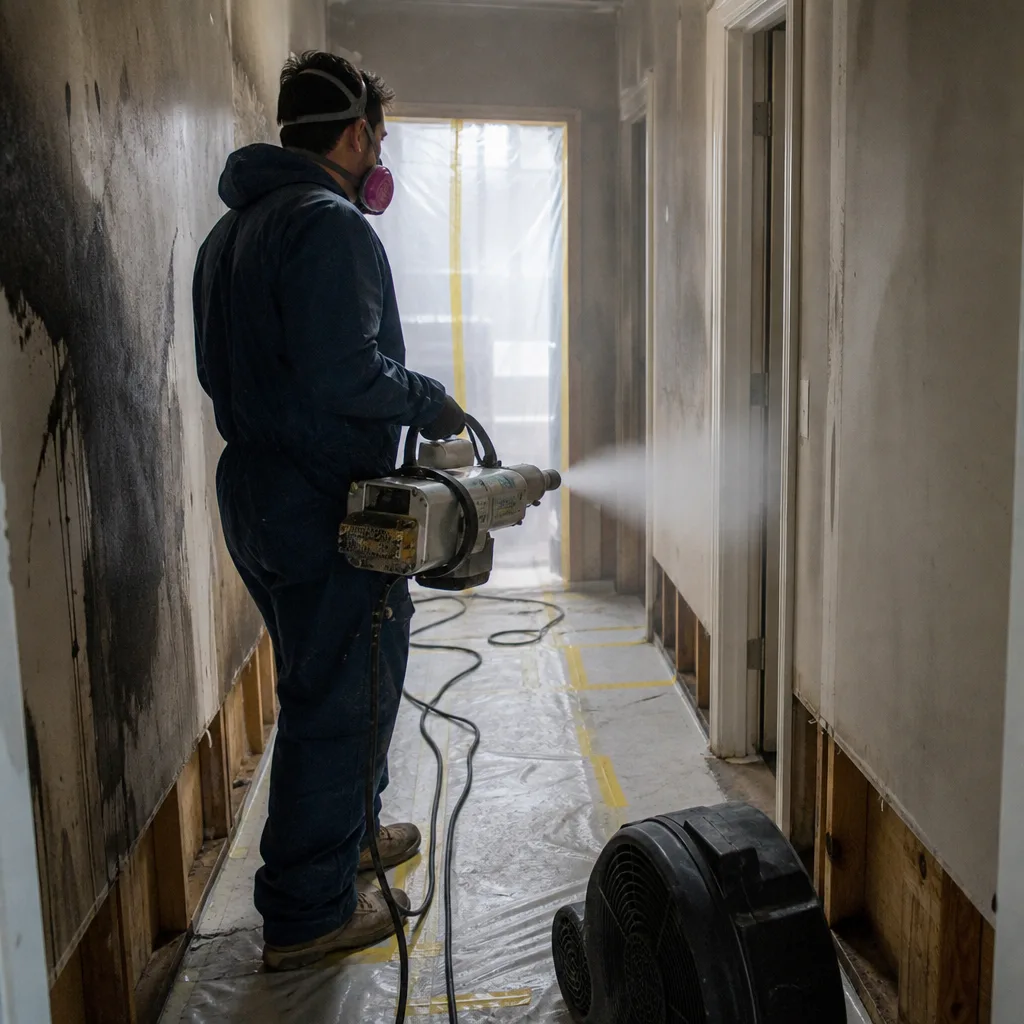
Wind-driven debris, downed tree limbs, and saturated drywall all need to come out before drying can begin. We handle the full cleanup: removing damaged materials, hauling debris, and setting a clean work area so restoration can proceed. In Antelope’s stucco tract homes, storm cleanup frequently reveals failed caulk joints and degraded original housewrap behind the surface damage. We flag those problems early so you’re not paying for the same repair twice.
Storm damage cleanup in Antelope generally runs $1,200-$4,000. The range depends on how much material has to come out and whether original 1980s-era building materials need remediation.
Emergency Board-Up
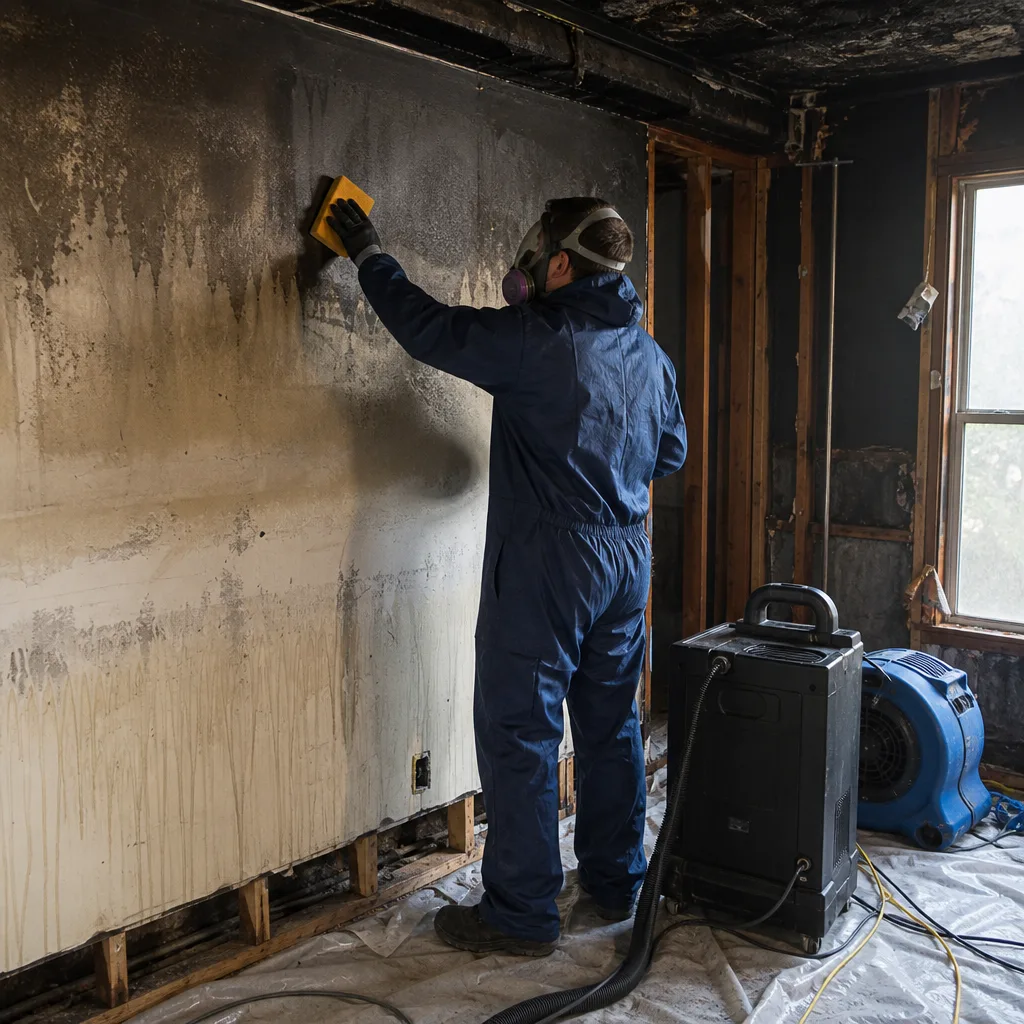
A broken window or blown-in door in Antelope can’t wait until morning. We board up openings fast to keep out weather, animals, and unwanted visitors. Our crews carry materials that fit the standard window and door sizes common in 95843 tract homes, so emergency board-up usually happens on the first visit, not after a parts run. Expect $400-$1,400 for most Antelope board-up jobs, depending on the number of openings.
Roof Tarping
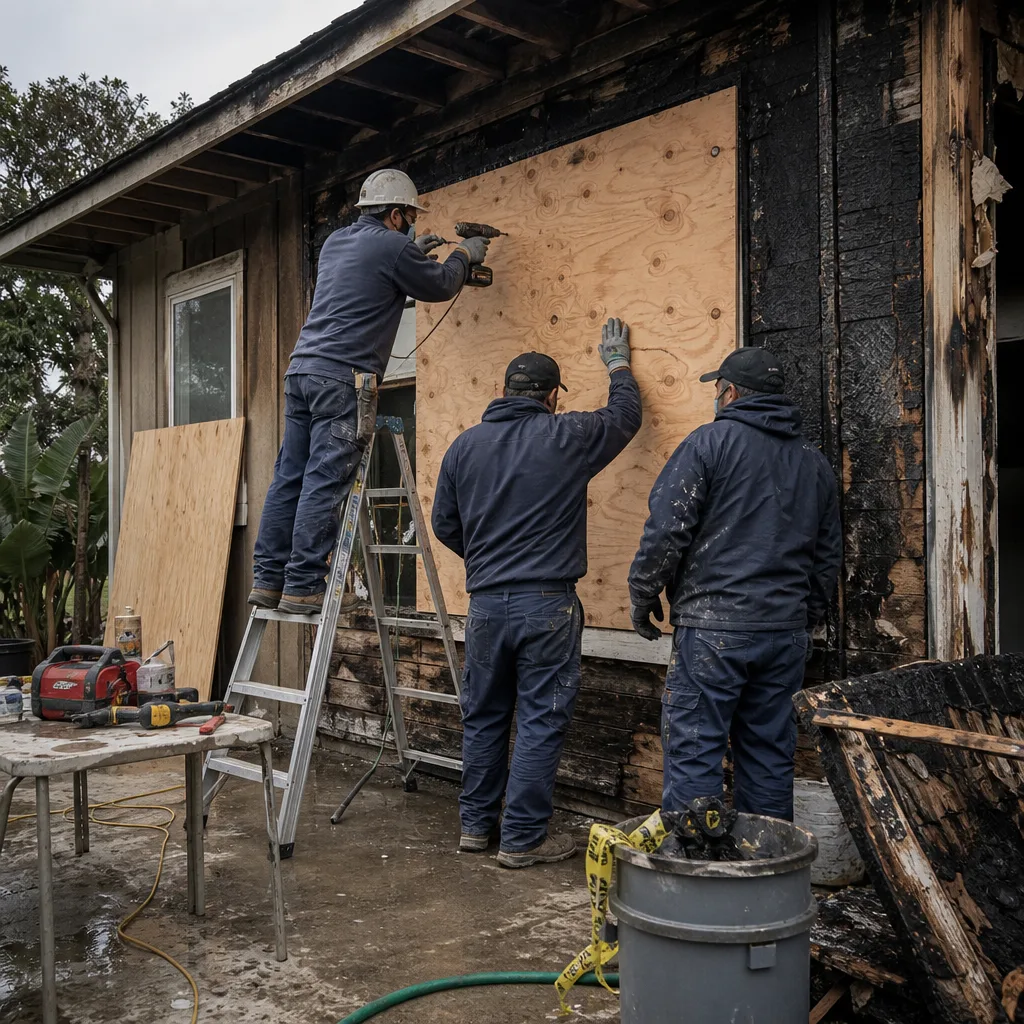
Sacramento Valley wind events rip shingles off Antelope roofs with brutal efficiency. We tarp damaged roof sections the same day we’re called, using fasteners that hold through the next storm. Our tarping crews know the roof pitches and materials common in Antelope’s late-80s and 90s builds, which means we don’t waste time figuring out your house on the clock. Roof tarping in Antelope typically costs $500-$1,800, and the sooner it’s done, the less water damage you’re dealing with inside.
What happens when you call
- 1
A real person answersNo phone trees - you reach a local pro.
- 2
You get an upfront price rangeHonest numbers before anyone is dispatched.
- 3
A background-checked tech heads outLicensed & insured, dispatched right away.
- 4
You approve before work beginsNothing starts until you say go.
Trusted Brands We Service in Antelope
We work with the equipment brands that restoration professionals trust because Antelope homeowners deserve professional-grade drying, not rental-store gear. Our crews run Dri-Eaz LGR dehumidifiers, Phoenix axial air movers, and Injectidry drying systems that pull moisture from wall cavities and under slabs without unnecessary demolition. For Antelope’s post-tension slab homes, that equipment matters more than most places. We stock filters, hoses, and replacement parts locally and keep our gear in service rotation so downtime doesn’t delay your drying plan.
Common Storm & Disaster Restoration Problems We See in Antelope Homes
- Water hiding under post-tension slabs. Antelope homes sit on concrete slabs with tensioning cables running through them. Water from a storm or pipe failure travels laterally under the slab and can surface days later in another room. Standard drying equipment placed only on visible water misses half the problem.
- Failed original flashing and caulk joints. Homes built in the late 1980s and early 1990s are now hitting the 30-40 year mark, which is exactly when original window flashing, caulk joints, and roof underlayment fail. After months of 100°F heat desiccates those materials, the first heavy rain exploits every gap at once.
- Expansive clay soil shifting under foundations. Sacramento County’s clay soils expand and contract with seasonal moisture. After a big storm, that movement stresses slabs and creates subsurface pathways for water to travel where drying equipment can’t easily reach.
- Contractors who drill before they locate. Out-of-area crews unfamiliar with Antelope’s construction era sometimes core-drill post-tension slabs to place drying equipment without locating the tensioning cables first. That’s a structural risk and a voided warranty waiting to happen. We locate cables before any drilling, every time.
Pricing for Storm & Disaster Restoration in Antelope, CA
Here’s what Antelope homeowners can expect to pay for common storm restoration work. Emergency board-up runs $400-$1,400. Roof tarping runs $500-$1,800. Water extraction and structural drying run $1,800-$7,500. Full flood restoration with rebuild runs $4,000-$40,000+ depending on scope. These ranges reflect Antelope’s housing stock: stucco tract homes on slabs with no crawlspace, which makes drying more equipment-intensive than a raised-foundation home in an older neighborhood.
What changes your price? How far water traveled, how long it sat, how much drywall and insulation has to come out, and whether original 1980s materials like failed housewrap need replacement. We give you a written scope before work starts, and we bill your insurance carrier directly. Call (888) 737-2439 for a free estimate. You’ll get a number, not a runaround.
We Also Serve Cities Near Antelope
If your home is in Antelope or one of the surrounding communities, we’re already nearby. Floodline Restoration Co. of California serves Foothill Farms, North Highlands, Citrus Heights, and Elverta with the same live 24/7 dispatch and the same written guarantee. Our Sacramento County dispatch office coordinates crews locally, so response times stay short across the whole area.
Serving Antelope, CA - Our Local Coverage Area
We’re based in the Antelope area and know this community well. Use the map below to see our service coverage - if you’re nearby, we can almost certainly help.
FAQs - Storm & Disaster Restoration in Antelope
Antelope homes built in the late 1980s and 1990s sit on post-tension concrete slabs with steel cables running through them under high tension. Cutting or core-drilling into the slab without first locating those cables can sever one, which risks structural failure and voids any foundation warranty. Our crews locate the cables before any drilling. In most cases, we can dry the slab using Injectidry floor mats placed along safe zones and Dri-Eaz dehumidifiers pulling moisture through the surface, which avoids cutting the slab entirely. Call (888) 737-2439 if water has moved under your slab; we’ll map it properly and dry it without putting your foundation at risk.
Sacramento County clay expands when wet and contracts when dry. After a big storm, that swelling shifts your slab foundation enough to open small gaps at wall bases and plumbing penetrations. Water that pooled outside your house can travel along those gaps and under the slab, showing up as damp carpet or warped flooring weeks later. That’s why we check for subsurface moisture even when the visible damage looks minor. If your floor feels damp days after a storm, call us at (888) 737-2439; we’ll trace the water to its source.
Water is finding a path that isn’t the roof. In Antelope’s 1990s tract homes, the usual culprits are degraded original housewrap, failed caulk joints around windows, or worn weep screeds at the base of stucco walls. Rain drives into those gaps and runs behind the stucco until it finds a path into the ceiling cavity. We trace the intrusion back to its entry point rather than just painting over the stain, because if the entry isn’t fixed, the next atmospheric river does the same damage all over again. Call (888) 737-2439 and we’ll find where the water is actually getting in.
Yes, and it comes down to drying speed and thoroughness. Homes built in Antelope’s 95843 build-out era have dense stucco exteriors and slab foundations, which traps moisture inside wall cavities longer than raised-foundation homes. If drying isn’t aggressive and doesn’t hit the dry standard before rebuild begins, mold takes hold in as little as 48-72 hours. Our crews log daily moisture readings and keep drying until every affected area is below the dry standard, then we treat surfaces before any drywall goes back up. That diligence is why our 90-Day Done Right Promise covers the result in writing.
That means water is entering from somewhere other than the tarped area, or the tarp isn’t sealed well enough to stop wind-driven rain. In Antelope homes, the most common secondary entry points are failed window flashing, compromised exterior caulk joints, and gaps where stucco meets roofing. You may also have water already pooled under the slab from the original breach. Call (888) 737-2439 and we’ll send a crew to reassess the tarp, locate every entry point, and re-map the moisture inside your home. Don’t wait; trapped water in wall cavities gets worse and more expensive by the day.
Written by Curt Bowman, Owner at Floodline Restoration Co. of California, serving Antelope and Sacramento County since 2010.