
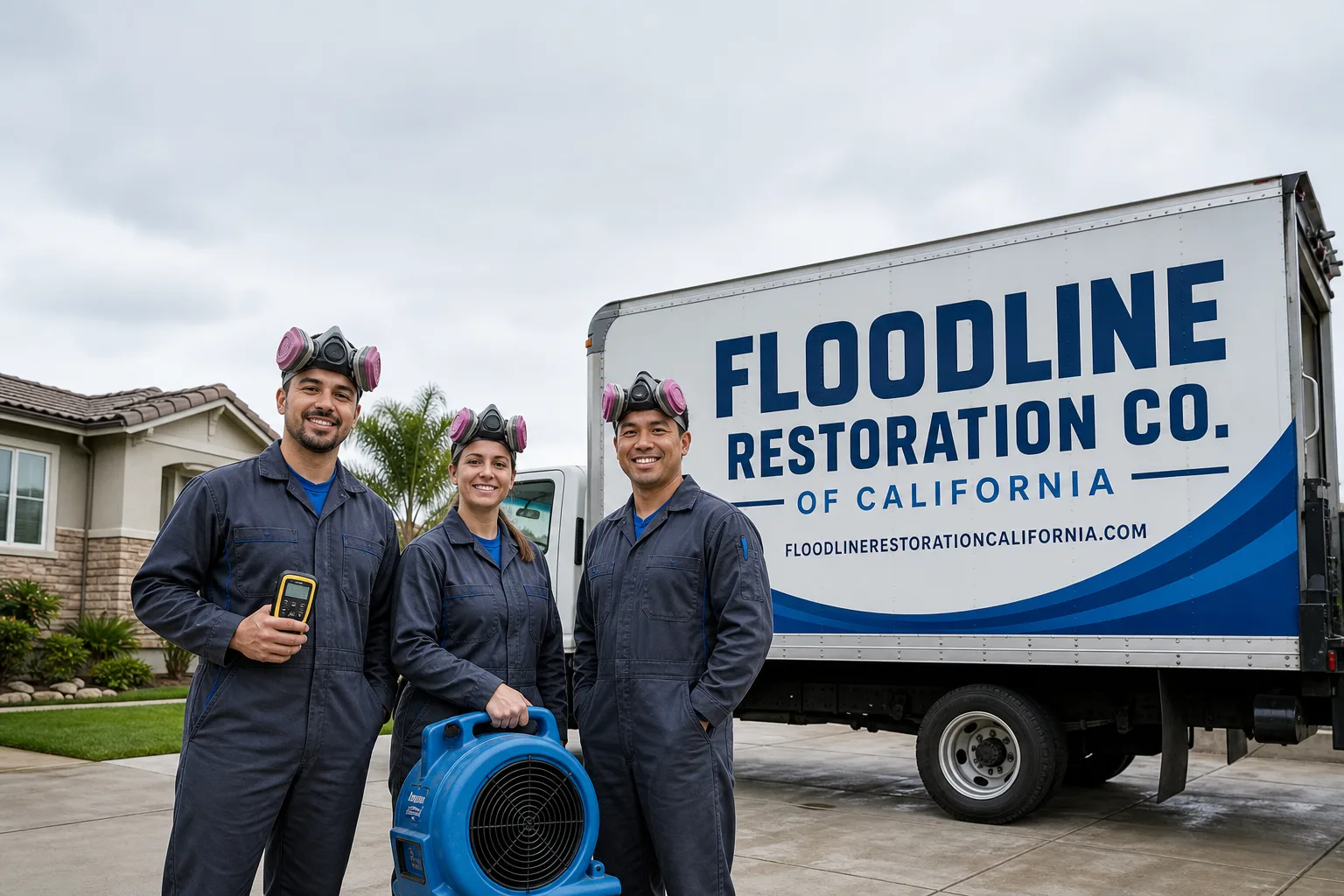
Fast, Reliable Sewage Cleanup Across Los Angeles
Sewage cleanup in Los Angeles typically costs $1,800-$4,500 for a full Category 3 water extraction and disinfection, and most homes we respond to can be stabilized the same day we arrive. When a sewer line backs up into a bungalow in South LA or a courtyard building in Koreatown, every hour counts before contamination spreads behind walls and under flooring. Our crews know Los Angeles building stock, we answer the phone with a real dispatcher at 2 a.m., and we carry professional extraction equipment on every truck. Call (888) 737-2439 and a certified technician will be on the way.
Why Floodline Restoration Co. of California Is Los Angeles’s Preferred Sewage Cleanup Company
Floodline Restoration Co. of California has spent over 42 years serving homeowners across Los Angeles, and our phone has never been answered by a recording. When a sewage line fails in a 1920s bungalow off Crenshaw or a flat-roofed courtyard building near MacArthur Park, the homeowner gets a live dispatcher who knows the neighborhoods and can route the nearest certified crew. Background-checked, uniformed technicians arrive with moisture-mapping equipment and a written scope of work before anything gets torn out. That matters in a city where older construction hides contamination for weeks.
Customers across Los Angeles call us because we don’t hand the job to a subcontractor after extraction. The same Floodline crew that pumps black water from a crawl space in View Park-Windsor Hills is the crew that dries the framing, logs daily moisture readings, and stands behind the result with the 90-Day Done Right Promise, our Keystone Standard, given in writing. We know the difference between a simple toilet overflow and a cracked clay lateral feeding sewage under a raised foundation, because we see both every week from Koreatown to Echo Park. That local field knowledge means we scope the job correctly the first time, with no mid-job surprises on the bill.
Our Los Angeles office coordinates dispatch for crews stationed across the metro area, so response time to Silver Lake, South LA, or View Park-Windsor Hills is measured in hours, not days. We bill insurance carriers directly, provide photo documentation for adjusters, and keep the homeowner out of the paperwork loop. For Los Angeles homeowners who have lived in the same house for twenty years and plan to stay, that’s the square deal: a name you can hold accountable, a written guarantee, and a crew that answers the phone.
Key Takeaways:
- Live dispatch answers 24/7, including holidays and 2 a.m. calls, with crews stationed across Los Angeles.
- Every job starts with a written scope, photo documentation, and moisture mapping before demolition starts.
- Floodline handles extraction, drying, sanitization, and rebuild with the same certified crew, no mid-job handoff.
- The 90-Day Done Right Promise is given in writing, tied to our K.E.Y.S. values code, and honored without argument.
- We bill your insurance carrier directly and provide adjuster-ready documentation on every Los Angeles job.
Our Sewage Cleanup Services in Los Angeles
Our Sewage Cleanup team handles the full scope of Category 3 water damage in Los Angeles, from first extraction to finished rebuild. Here’s what that looks like in the neighborhoods we serve.
Sewage Backup Cleanup
A sewage backup in Los Angeles usually traces back to one of three sources: a city main surcharge during a winter storm, a cracked clay lateral on an older property, or a blockage from roots in a dry-season line. We stop the source first, then extract and disinfect every affected surface. In older wood-frame homes around South LA, we routinely find effluent that has traveled 15 or 20 feet under the subfloor before it ever shows as a stain, so our crews map moisture with professional meters before we decide what comes out.
Toilet Overflow Cleanup
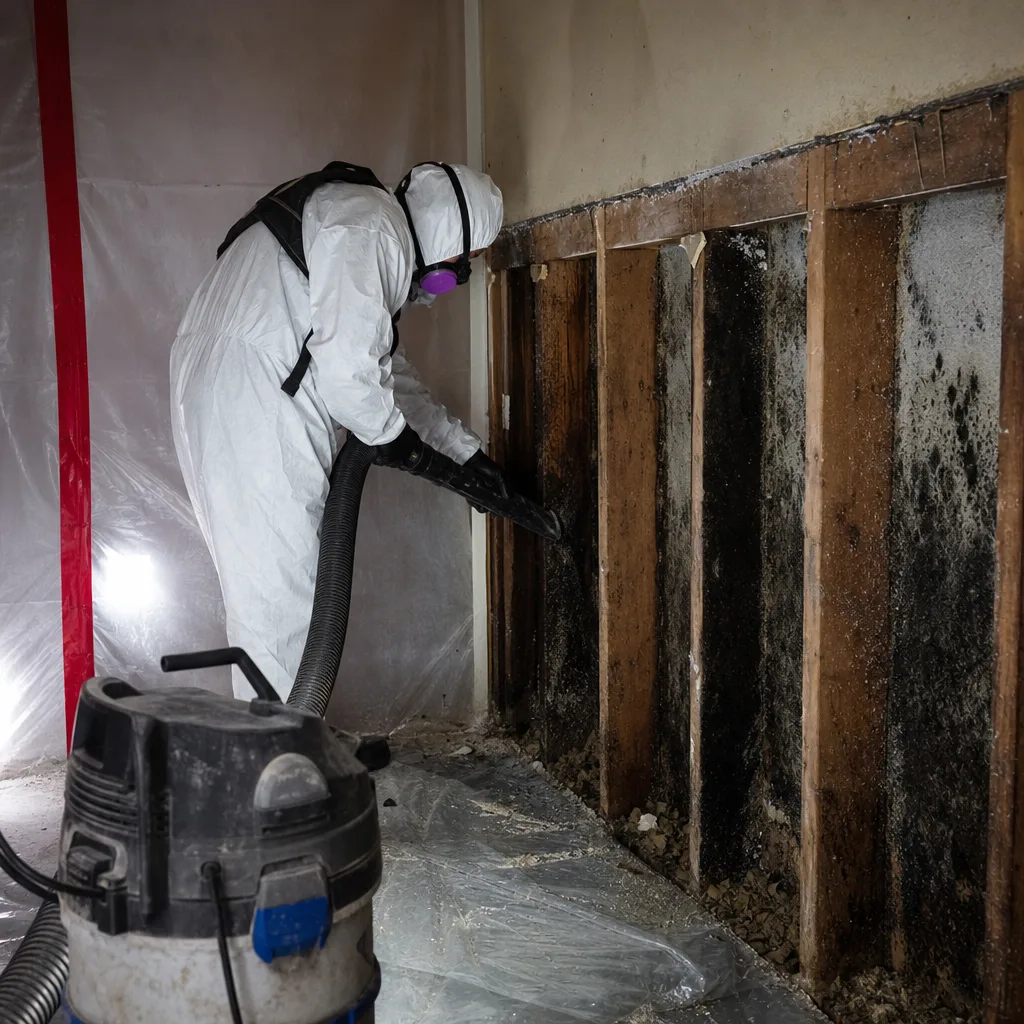
Toilet overflows in Los Angeles apartments and homes are rarely just a bathroom problem. In Koreatown and Pico-Union, where many buildings have original plaster-on-lath walls, a second-story overflow can wick through plaster and framing down into the unit below within hours. We remove contaminated water, cut no more drywall or plaster than the moisture map justifies, and dry to the IICRC standard with daily readings logged for you and your carrier.
Septic Failure Cleanup
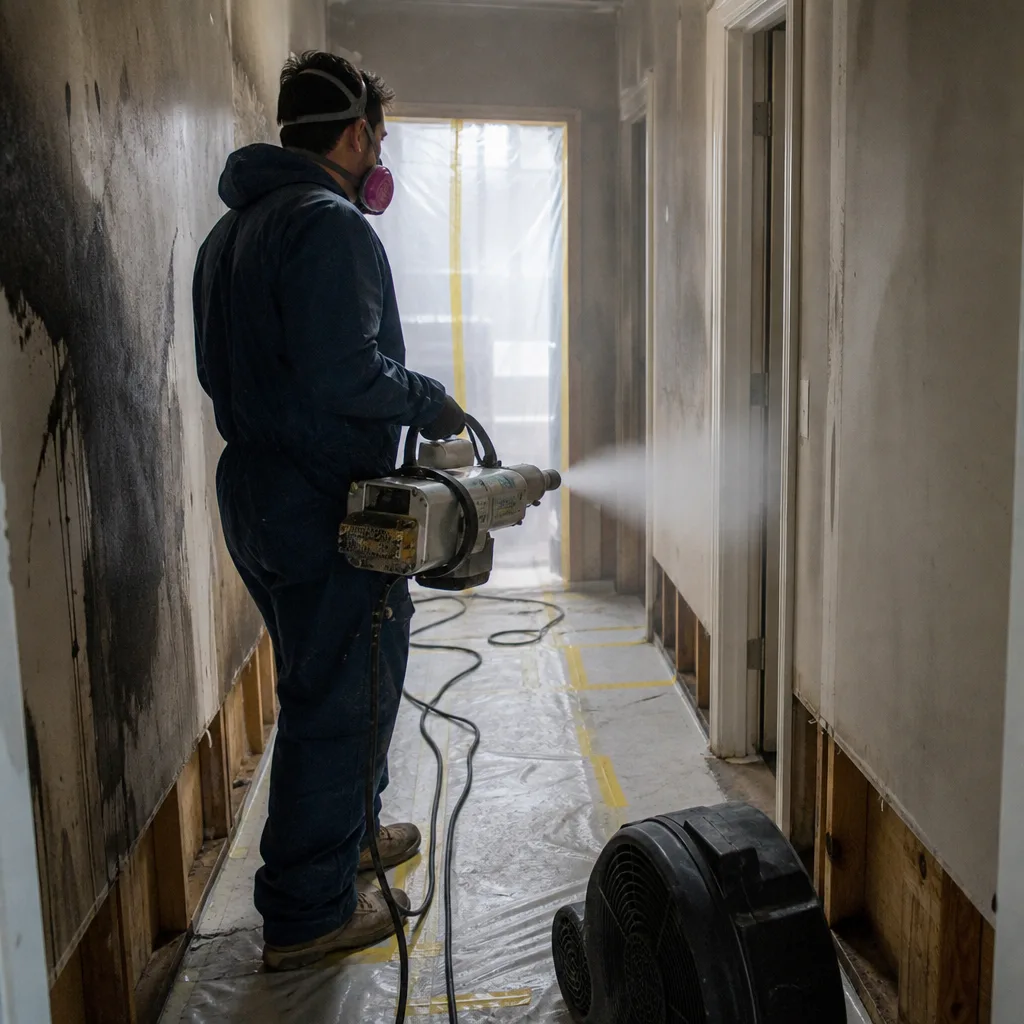
Homes on septic in parts of Los Angeles County deal with a different failure pattern than homes on city sewer. Dry-season root intrusion into aging laterals slows drainage for months before a full backup, and the first sign is often an odor under the house, not standing water. When Santa Ana winds pressurize a crawl space, those odors push indoors. We locate the failed lateral or tank, pump the black water, and disinfect the crawl space so the house doesn’t smell like the failure after the repair is done.
Black Water Extraction
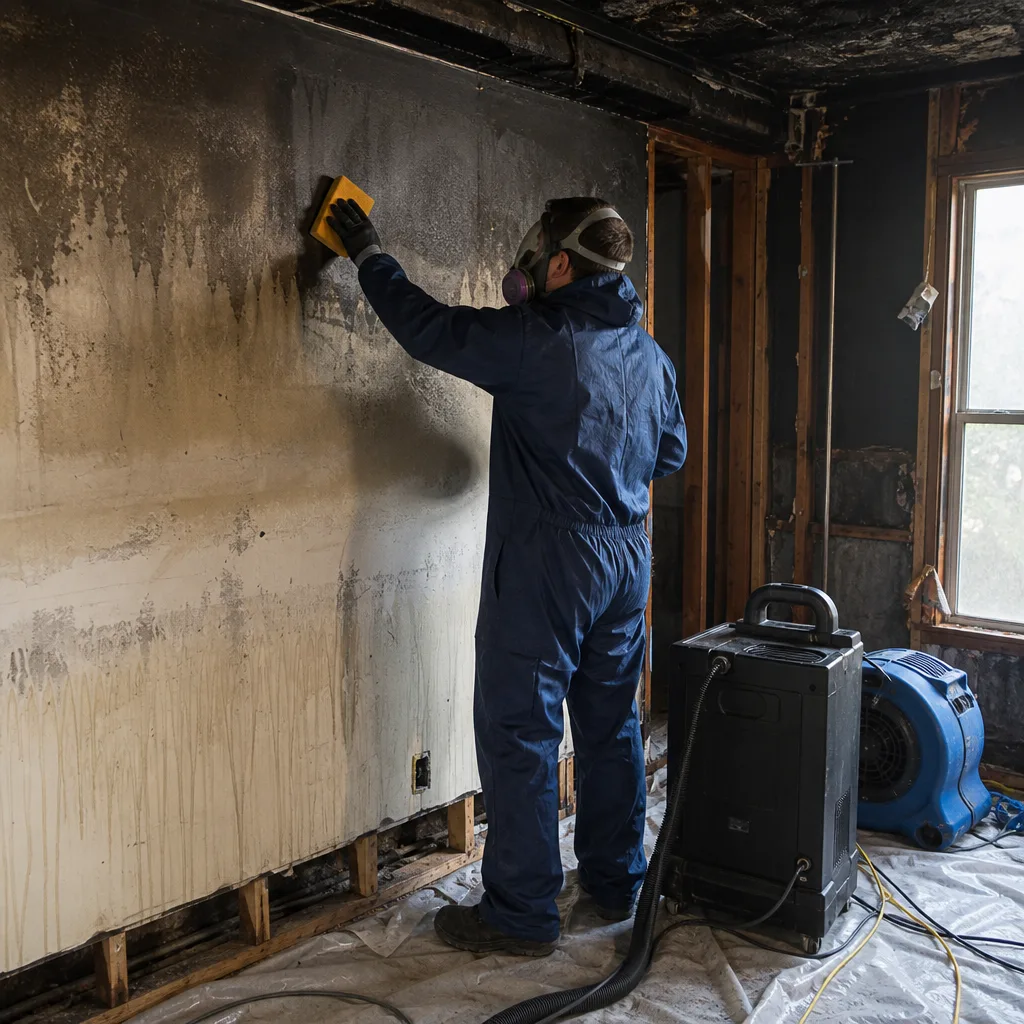
Black water is any water that has come into contact with human waste or sewage, and it requires a different protocol than a clean-water leak. We use professional-grade pumps and extractors, then run HEPA-filtered air scrubbers and antimicrobial treatments. In Los Angeles, where post-storm temperatures rarely dip below 60°F, mold can establish within 48 to 72 hours of a sewage event, so we move fast: extraction starts the same visit, and drying equipment is placed before we leave.
Crawl Space Sewage Removal
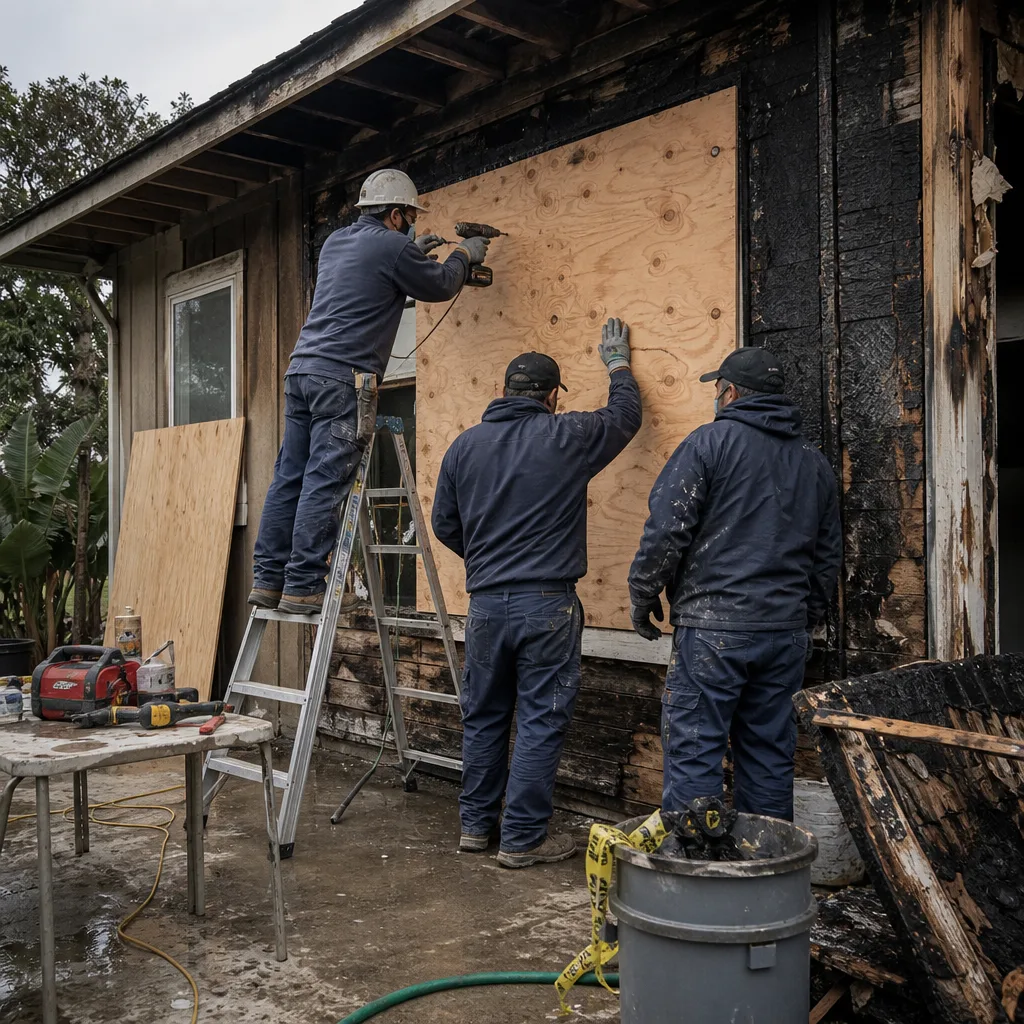
Crawl space sewage removal in Los Angeles is one of the most common jobs we handle in the 90001-90010 corridor. Raised foundations from the 1920s and 1930s sit over low, often tight crawl spaces that trap moisture and odor for weeks after a line fails. Our crews physically enter the space, remove contaminated soil where necessary, treat the framing, and set XPOWER air movers with B-Air HEPA filtration to bring the space to a dry standard before new insulation goes in.
Sanitization & Disinfection
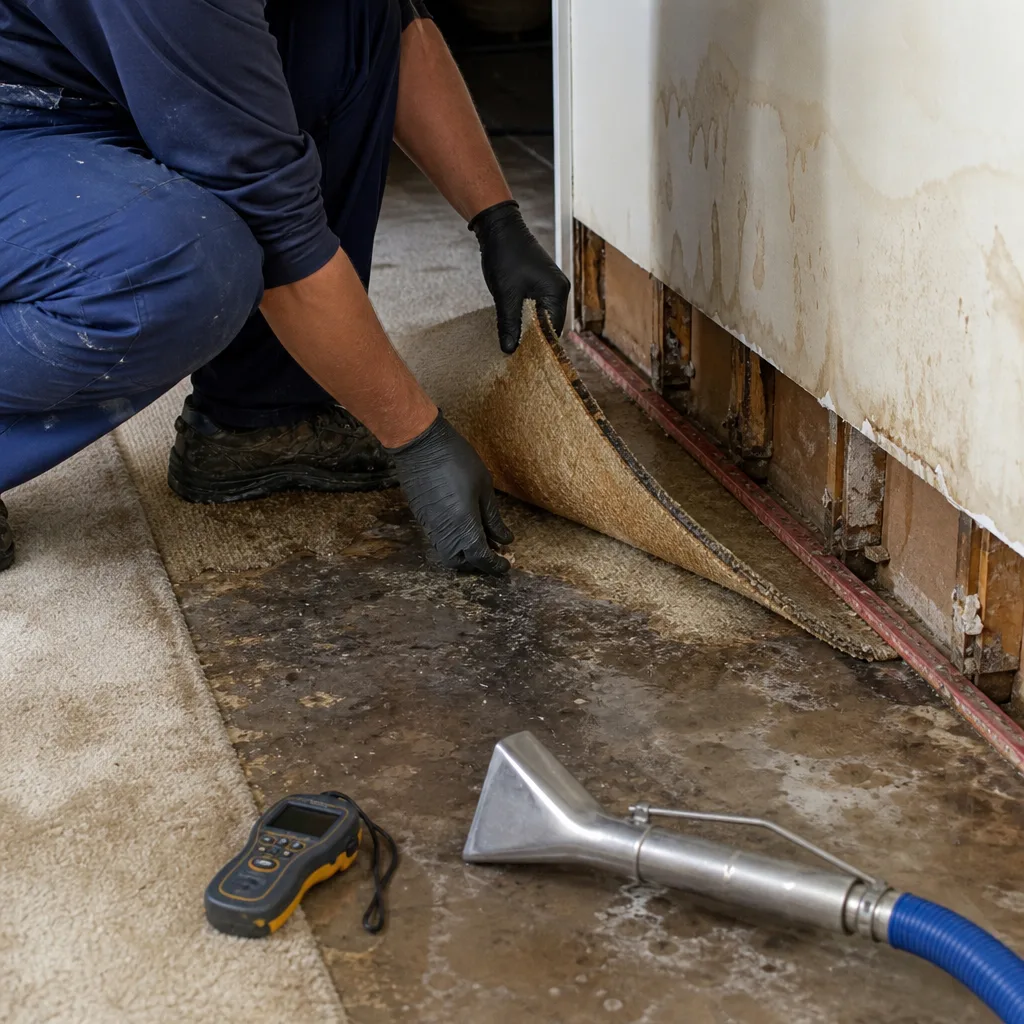
Sanitization after sewage in Los Angeles has to account for the city’s specific building materials. Plaster walls absorb effluent differently than drywall, and unpermitted renovations often hide voids and chases that let contaminated air move through a building. We fog, wipe, and treat surfaces with IICRC-compliant antimicrobials, then verify with moisture and air readings before the space is cleared for rebuild. We hand you and your insurance carrier a written log of every reading.
What happens when you call
- 1
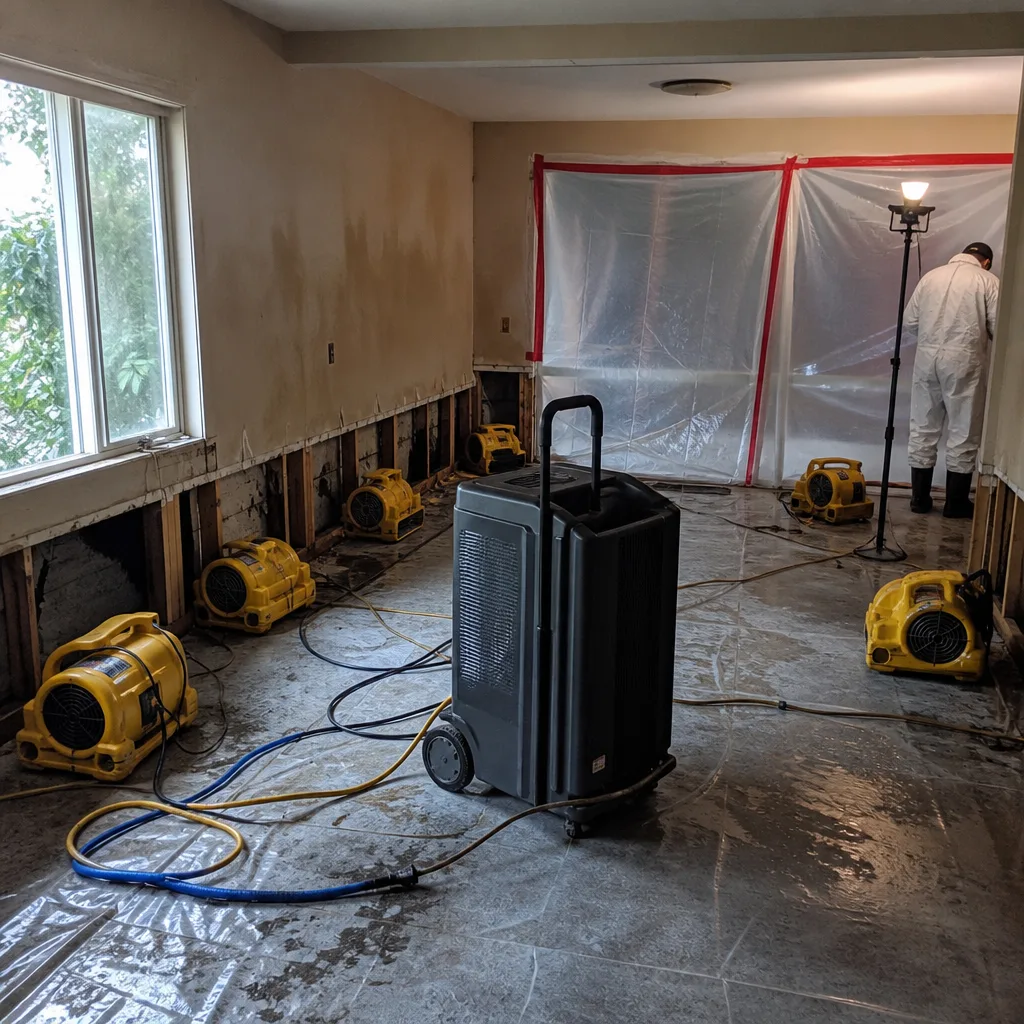
A real person answersNo phone trees - you reach a local pro.
- 2
You get an upfront price rangeHonest numbers before anyone is dispatched.
- 3
A background-checked tech heads outLicensed & insured, dispatched right away.
- 4
You approve before work beginsNothing starts until you say go.
Trusted Brands We Service in Los Angeles
Our crews are trained to IICRC, RIA, and IFA standards and we run professional-grade equipment from Dri-Eaz, XPOWER, B-Air, and Injectidry on every Los Angeles job. Using commercial drying and extraction gear isn’t a marketing line; it’s the difference between a crawl space that’s actually dry and one that’s just surface-dry. We stock replacement parts and sanitizing agents locally, so a pump failure on a Wednesday night doesn’t mean pausing a job for four days waiting on a distributor.
Common Sewage Cleanup Problems We See in Los Angeles Homes
Los Angeles sewage damage doesn’t look like sewage damage in Phoenix or Seattle. The city’s housing stock, sewer lines, and storm patterns create their own failure modes, and a crew that hasn’t worked here won’t find them until the smell comes back. Here’s what we encounter week after week.
- Post-storm backups in flat-roofed courtyard apartments: Buildings from the 1940s through the 1960s, common in Koreatown, Pico-Union, and Harvard Heights, pool stormwater at interior roof drains. When leaves and debris clog those drains, water pushes through ceilings in multiple units at once, mixing with sewage from blocked waste lines below. The contamination hides inside wall cavities behind lath and plaster until it wicks through and stains the wall.
- Seismic cracks in unreinforced masonry (URM) parapets: Los Angeles has thousands of URM apartment buildings that have shifted during past earthquakes. Cracks in parapets and wall separations let stormwater enter wall cavities, where it mixes with sewage from back-upped drains. The result is a Category 3 situation hidden inside a wall that a standard water restoration scope misses entirely.
- Root intrusion into clay laterals during dry season: The 90001-90010 corridor is dense with 1920s-1940s bungalows still on original clay sewer laterals. During the 6-8 months of dry weather that defines Los Angeles, tree roots force their way into those old clay joints seeking moisture. Sewage then seeps slowly into the crawl space for weeks or months, only becoming noticeable when a Santa Ana wind event pushes the odor into the living space.
- Hidden contamination behind unpermitted renovation layers: Many Los Angeles homes have had additions and remodels completed without city permits over the decades. That adds framing voids, false walls, and closed-off chases that hide sewage contamination and give odor a pathway through the entire house. We’ve pulled back wallboard to find sewage-saturated framing three rooms away from the initial backup, with no visible signs on any surface.
How Los Angeles’s Climate and Geography Affect Sewage Cleanup
In Los Angeles, sewage cleanup often follows atmospheric river storms that overwhelm the city’s aging combined sewer system. Before we ever set up extraction equipment, our crews check for stormwater infiltration through cracked clay laterals and failing septic systems. That’s a source-control step that doesn’t exist in neighboring cities with modern separated sewers, and it’s the reason a backup in South LA can recur within days if the lateral isn’t scoped. The extended dry season bakes clay sewer lines to a brittle state, and when a big winter storm finally arrives, lines that held for years suddenly crack under saturated, shifting soil.
Then there’s the mold timeline. Los Angeles post-storm temperatures rarely fall below 60°F, even in January. That means a sewage spill behind a plaster wall in Echo Park has a 48-72 hour window before mold colonies become visible and the contamination becomes a larger remediation project. Colder-climate restoration companies might have a week. We don’t, and we work like we don’t.
Pricing for Sewage Cleanup in Los Angeles, CA
Here’s honest pricing for the Los Angeles market. A small, contained toilet overflow in a bathroom typically runs $1,800-$2,800 including extraction, disinfection, drying, and clearance testing. A larger sewage backup that reaches multiple rooms or a crawl space in a Koreatown apartment or South LA bungalow usually lands between $3,200 and $5,500, depending on how much contaminated material must be removed and how far the sewage traveled. Full crawl space sewage remediation under a raised foundation, including contaminated soil removal and vapor barrier replacement, generally runs $4,500-$8,000 in Los Angeles.
What drives the cost is how far the black water spread, whether framing or plaster must be removed, and how long the space needs mechanical drying. We give you a written scope before any work starts, with line-item pricing, and we bill your carrier directly if it’s a covered loss. Call (888) 737-2439 for a free estimate. Current standing offers: $50 off any repair over $250, a $89 seasonal tune-up, and a 5% discount for seniors and veterans, always.
We Also Serve Cities Near Los Angeles
Floodline Restoration Co. of California serves Sewage Cleanup in Los Angeles and the surrounding communities of Koreatown, Echo Park, Silver Lake, and View Park-Windsor Hills. If you’re two blocks east of Crenshaw or up in the hills off Sunset, we’re the same crew, the same phone number, and the same written guarantee.
Serving Los Angeles, CA - Our Local Coverage Area
We’re based in the Los Angeles area and know this community well. Use the map below to see our service coverage - if you’re nearby, we can almost certainly help.
FAQs - Sewage Cleanup in Los Angeles
Los Angeles’s clay soil expands and contracts dramatically with the dry-wet cycle, and that movement cracks old clay sewer laterals and shifts raised foundations just enough to pull pipe joints apart. When the next winter storm saturates the soil, those cracks let stormwater into the sewer line and sewage out into the crawl space. We scope the lateral before we finish any crawl space cleanup, because skipping that step means the backup comes back. Call (888) 737-2439 for an inspection.
Yes, in many cases. Los Angeles Department of Building and Safety requires a habitability review for older unreinforced masonry buildings, including many in Koreatown and Pico-Union, when sewage contamination is found in wall cavities or common areas. We coordinate that review before restoration work proceeds, and we handle the documentation so the homeowner or property owner never has to chase a city inspector. Call (888) 737-2439 and we’ll walk you through what applies to your building.
You have about 48 to 72 hours after a sewage spill in Los Angeles before mold colonies become visible, because local temperatures stay warm enough year-round for rapid mold growth. That’s why we place drying equipment and HEPA air scrubbers the same visit we extract, not the next day. The faster the space reaches a dry standard, the less demolition is needed. For a free assessment, call (888) 737-2439.
Flat-roofed courtyard apartments in Harvard Heights and nearby Koreatown collect stormwater at interior roof drains that are often clogged with years of leaf debris and roof gravel. When those drains fail, water runs through ceilings into multiple units at once, and it picks up sewage from waste lines and blocked drains along the way. The first check our crew does on these buildings is at the roof drain, not the water stain.
Yes, and it’s common in South LA bungalows with raised foundations and septic systems. When the septic line backs up, effluent pools in the low space under the floor joists and spreads through the crawl space before any sign appears in the living area. We remove the contaminated water, treat the framing, and run drying equipment under the house until the wood reaches a dry standard. Call (888) 737-2439 and we’ll send a crew to map the spread.
Call Floodline Restoration Co. of California for sewage cleanup in Los Angeles. A live dispatcher answers 24/7. A certified, background-checked crew arrives with pro-grade extraction and drying equipment. You get a written scope before work starts, direct insurance billing, and the 90-Day Done Right Promise in writing when the job is finished. Reach us at (888) 737-2439 for a free estimate.
Written by Curt Bowman, Owner at Floodline Restoration Co. of California.