
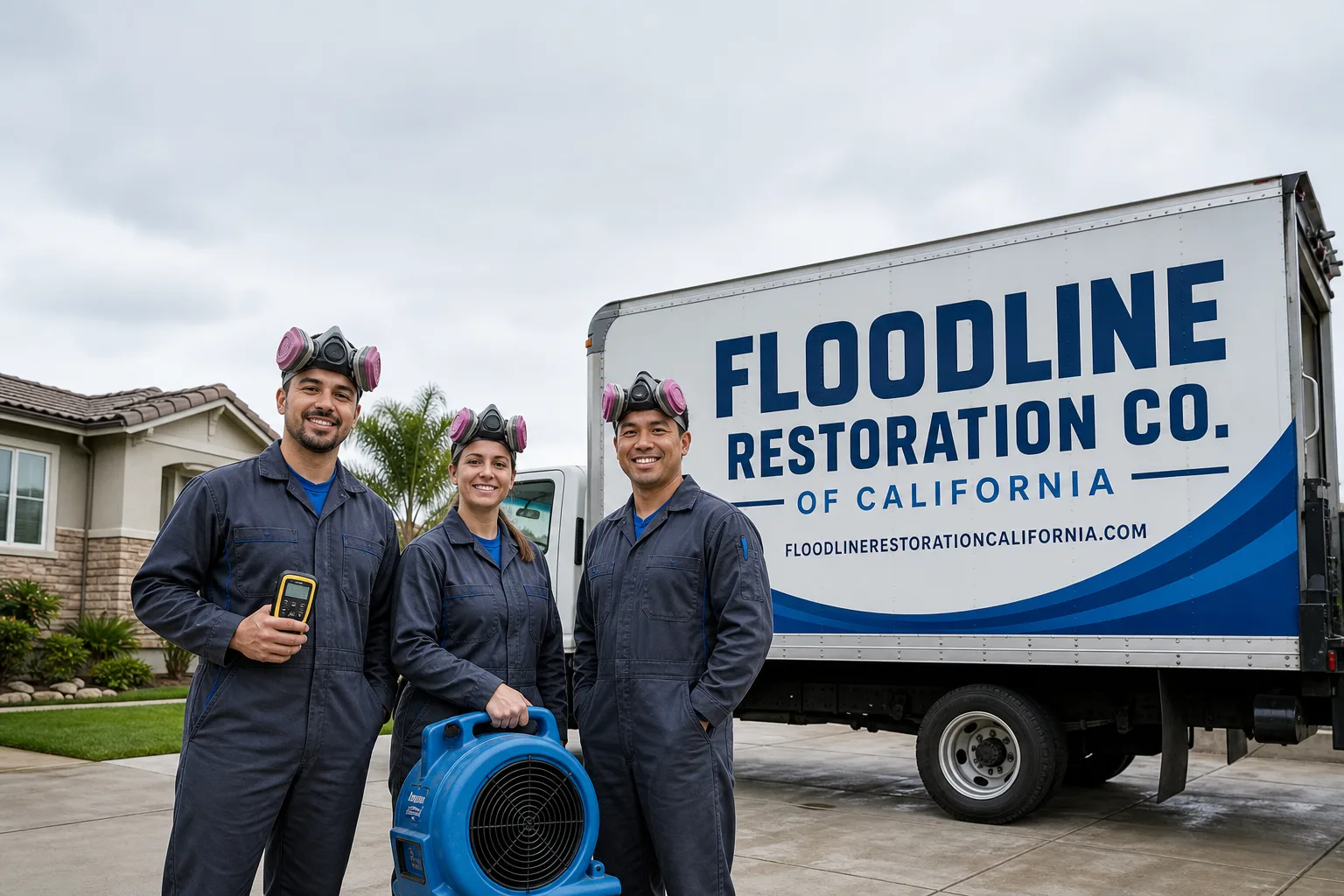
Fast, Reliable Sewage Cleanup Across Fillmore
Sewage cleanup in Fillmore typically costs $2,800-$6,500 depending on how far black water has traveled through your home, and a certified crew can usually be on site within 60-90 minutes. That speed matters here more than most places. A sewage backup in a 1920s bungalow on Central Avenue behaves differently than one in a newer Moorpark tract home, and we’ve spent 42 years learning exactly how. If you’re standing in water or smelling sewer gas right now, call (888) 737-2439 and a live dispatcher will answer, not a recording.
We’re Floodline Restoration Co. of California, led by Curt Bowman. We coordinate dispatch from our Los Angeles office and keep crews working throughout the Santa Clara River Valley, including Fillmore’s 93015 and 93016 ZIP codes. When sewage backs up in Fillmore, the clock is running against cast iron, galvanized pipe, and old plaster that drinks black water like a sponge.
Why Floodline Restoration Co. of California Is Fillmore’s Preferred Sewage Cleanup Company
Fillmore homeowners call us because we’ve handled the ugly jobs other companies won’t touch. Sewage in a pier-and-beam crawl space off Sespe Street. Black water pooled under a 1930s cottage on Central Avenue. A toilet overflow that soaked through the subfloor and into the garage. We show up with background-checked, uniformed technicians certified to IICRC, RIA, and IFA standards, and we don’t leave until the moisture log reads dry.
Our reputation in Fillmore rests on two things: speed and honesty. Speed because sewage doesn’t wait for business hours. Honesty because nobody wants a contractor selling a full $20,000 rebuild when a $4,500 extraction and sanitization job would restore the space. We write the scope before work starts. You see the number, you approve the number, and the number doesn’t change. That’s the Keystone Standard, backed by our 90-Day Done Right Promise in writing.
We answer the phone at 2 a.m. with a live dispatcher, not a voicemail tree. A crew reaches most Fillmore properties within 60-90 minutes of your call, extraction equipment running the same visit. When you’re dealing with raw sewage in a home built before highway plumbing codes existed, that response time is the difference between cleaning and gutting.
Our Sewage Cleanup Services in Fillmore
Our Sewage Cleanup team handles every phase of the job: extraction, removal of contaminated materials, sanitization, drying, and rebuild. In Fillmore, that usually means going deeper than the surface because the water always finds the crawl space. Here’s how we approach the most common situations:
Sewage Backup Cleanup
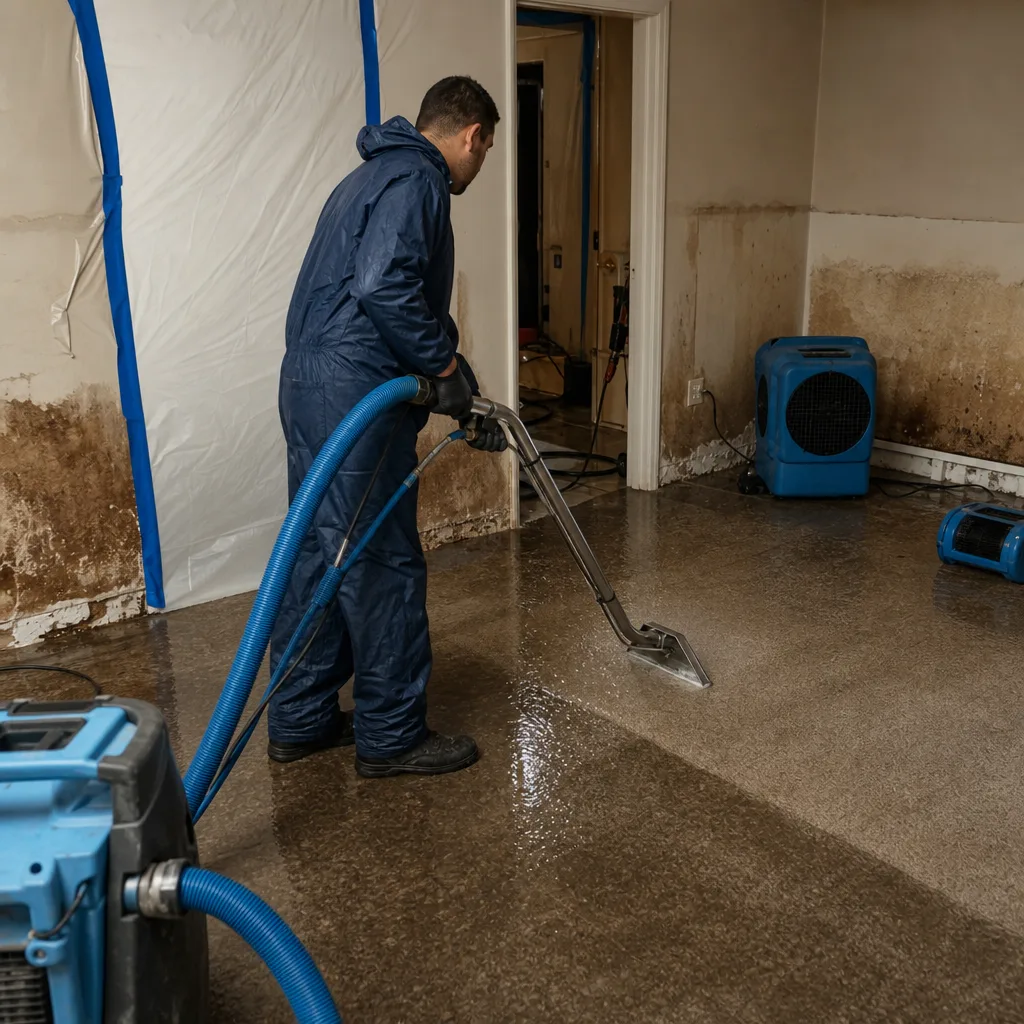
A sewage backup in Fillmore’s older homes rarely stays in one room. It follows the slope of the floor, runs along joists, and drips into the crawl space. We contain the affected area first, then extract standing water using truck-mounted systems and Dri-Eaz extraction units. After black water is vacated, we remove saturated materials, cut drywall to the correct flood line, and begin sanitization with IICRC-approved antimicrobials. In Fillmore’s 1920s-1950s housing stock, we’re almost always working in tight hallways and small closets, so our crews carry compact extraction equipment that fits through 24-inch crawl space hatches.
Toilet Overflow Cleanup
Toilet overflows in Fillmore hit two types of homes hardest: those on original galvanized waste lines and those on pier-and-beam foundations. A toilet overflow that runs for even ten minutes can put 50-100 gallons of contaminated water into the subfloor. We extract what’s reachable, pull baseboards and flooring where the water wicked, and run XPOWER air movers plus Phoenix dehumidifiers until the dry standard is met. In Fillmore’s older downtown grid, we often find the overflow travels along old mortar-bed tile and into neighboring rooms before anyone notices. That’s why we don’t just dry the bathroom; we trace the water.
Septic Failure Cleanup
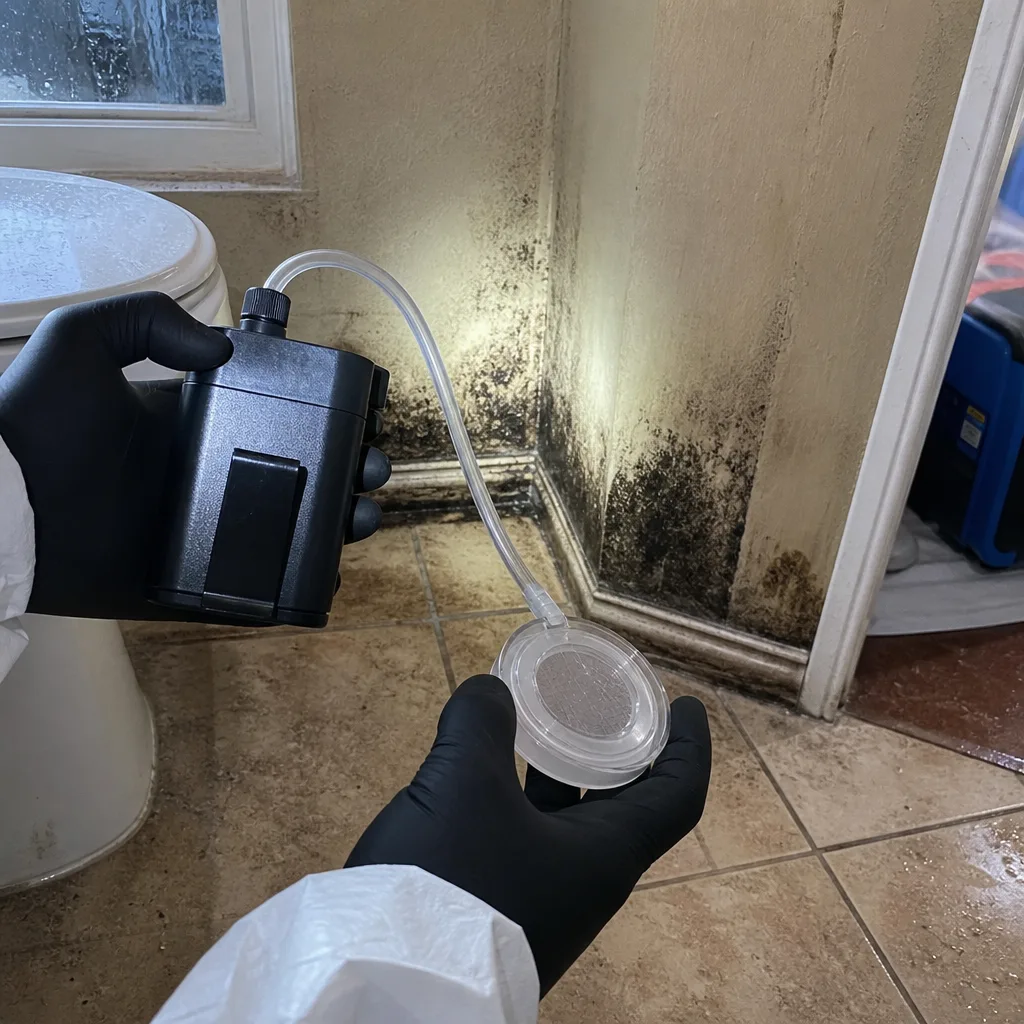
Many Fillmore properties east of Central Park and in the 93015 ZIP rely on septic systems that date back to the town’s citrus-boom housing wave. A failed leach field or a full tank backs up into the house through the lowest drain. That’s black water with a high organic load, and it demands more than a shop vac. We extract, remove contaminated building material, apply sanitization and disinfection, and coordinate with the septic contractor to make sure the source of the failure is resolved before we rebuild. You don’t want a second backup two weeks after the first one. We won’t hand you that risk.
Black Water Extraction
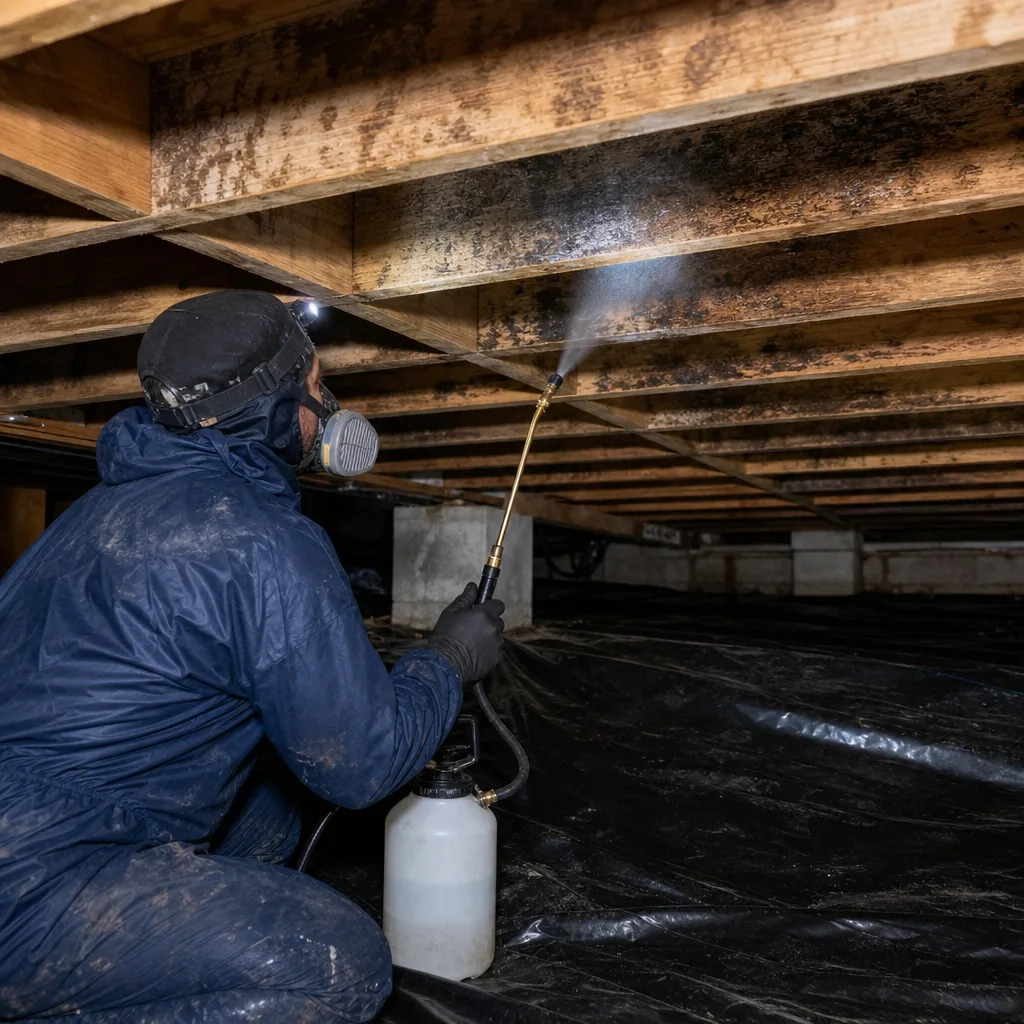
Black water, by the IICRC definition, contains raw sewage and dangerous microorganisms. In Fillmore, it often contains something else: post-fire sediment. When heavy rain hits the burn-scarred hillsides above town, debris-laden runoff finds its way into older sewer lines and storm drains. If that water mixes with a backup, you’re not just extracting sewage; you’re extracting mud, ash, and organic debris that has been sitting on the Los Padres National Forest floor. Our Dri-Eaz and Phoenix equipment can pull it out, but the sanitization step matters twice as much. We don’t cut corners there, and our daily moisture readings prove it.
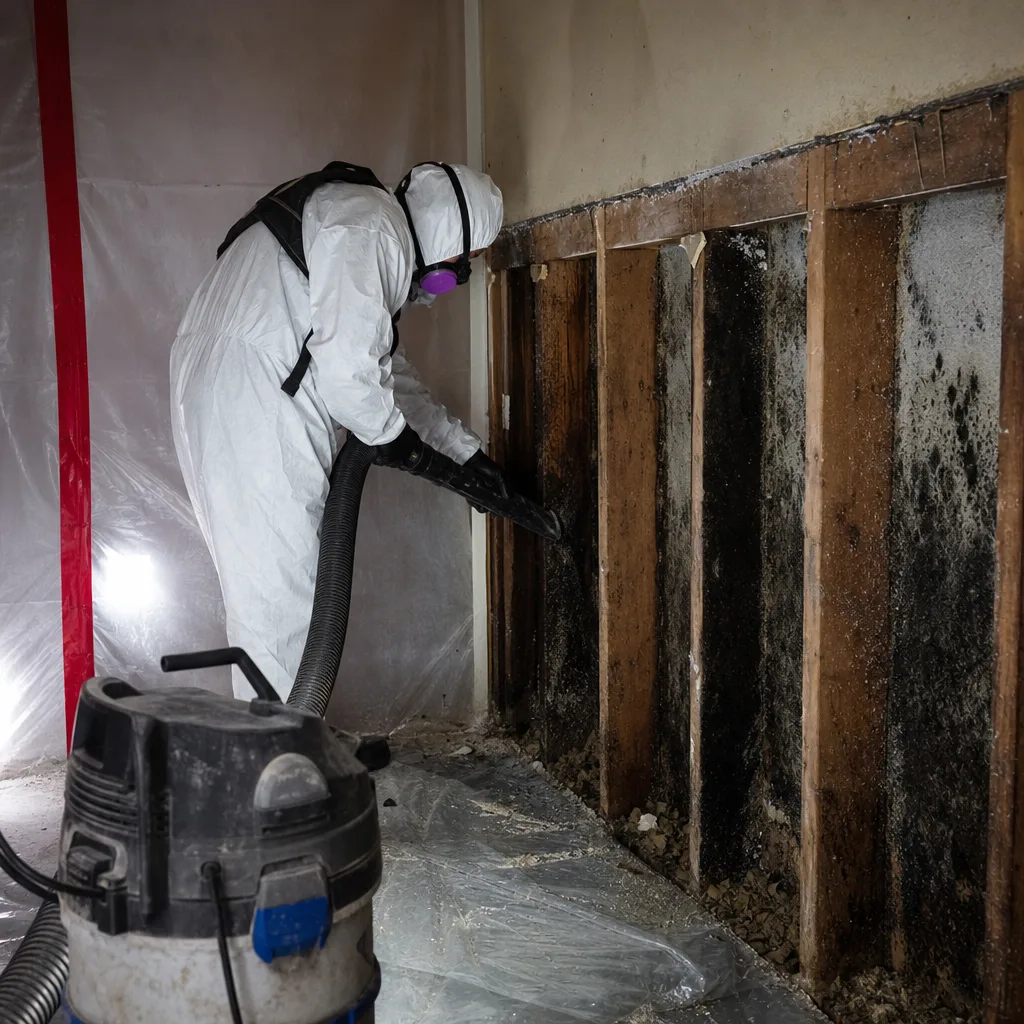
Crawl Space Sewage Removal
Fillmore’s pier-and-beam foundations create a hidden reservoir for sewage problems. When a waste line cracks or a backup spills into the crawl space, the black water pools beneath the house and wicks up into subflooring, floor joists, and sometimes into hardwood flooring above. We send uniformed technicians underneath with proper PPE, extract the standing sewage, remove saturated insulation and vapor barrier, and treat all affected wood with antimicrobial agents. Then we install new vapor barrier and verify the space dries to the IICRC dry standard before we leave. This is the service that separates restoration companies from general contractors. We do it every week in Fillmore.
What happens when you call
- 1
A real person answersNo phone trees - you reach a local pro.
- 2
You get an upfront price rangeHonest numbers before anyone is dispatched.
- 3
A background-checked tech heads outLicensed & insured, dispatched right away.
- 4
You approve before work beginsNothing starts until you say go.
Trusted Brands We Service in Fillmore
We run professional-grade equipment and follow the standards that keep your home safe. Our crews train to IICRC, RIA, and IFA protocols, and we use Dri-Eaz and Phoenix equipment on the majority of Fillmore jobs. Dri-Eaz extraction units pull water out of tight crawl spaces and under toe-kicks faster than rental equipment, and Phoenix dehumidifiers run quiet enough that a family can stay in the home while drying continues. When a Fillmore job comes up, we arrive with the right tool for the construction type, not the tool we happen to have in the truck.
Common Sewage Cleanup Problems We See in Fillmore Homes
- Burn-scar debris in sewage backups. After the Thomas Fire stripped vegetation from the hillsides above Fillmore, even a normal winter rain sends sediment and ash into the valley’s older sewer infrastructure. When a backup happens, that sediment rides along and makes the black water heavier, nastier, and harder to fully extract. Standard sewage scoping that ignores sediment load will under-dry the space and leave contamination behind.
- Black water hidden in pier-and-beam crawl spaces. Sewage pools below the floor, wicks into old wood, and hides until the smell reaches the living space. By the time a Fillmore homeowner notices, the contamination has usually spread several feet beyond the visible area. Our moisture mapping finds it before drywall goes back up.
- 1920s-1950s plaster walls that absorb sewage from the bottom. Old plaster is thirsty. Water wicks up through baseboards and into plaster at a rate that surprises people. If Fillmore homeowners wait a day or two to call, walls that could have been saved need tear-out instead. Fast response on day one protects far more of your home than most people realize.
- Mixed pre- and post-earthquake construction that complicates drying. Many Fillmore buildings were repaired or partially rebuilt after the 1971 Sylmar and 1994 Northridge earthquakes. One wall might be original lath and plaster; the adjoining wall might be modern drywall on a new stud frame. Each dries differently, and we read both separately. A one-size-fits-all drying plan fails on Fillmore buildings.
Pricing for Sewage Cleanup in Fillmore, CA
A straightforward toilet overflow cleanup in a Fillmore bathroom typically runs $1,800-$3,400, depending on whether flooring and baseboards need to come out. A sewage backup that reaches multiple rooms and the crawl space usually lands between $4,200 and $8,500 because it involves extraction, demolition of saturated material, sanitization, drying, and reconstruction. Crawl space sewage removal alone runs $2,200-$5,000 depending on square footage and the condition of the subfloor. Every job comes with a written scope before work starts, direct insurance billing, and the 90-Day Done Right Promise in writing. Call (888) 737-2439 for a free estimate. We’ll give you the real number, not a guess.
We Also Serve Cities Near Fillmore
Our Fillmore crews also cover Moorpark, Santa Paula, Simi Valley, and Camarillo. If you own property in one of those cities and need sewage cleanup, the same live dispatcher answers the phone, and the same 90-Day Done Right Promise applies to the work. We coordinate from our Los Angeles office and keep crews close to the 93015 and 93016 ZIP codes.
Serving Fillmore, CA - Our Local Coverage Area
We’re based in the Fillmore area and know this community well. Use the map below to see our service coverage - if you’re nearby, we can almost certainly help.
FAQs - Sewage Cleanup in Fillmore
The Thomas Fire stripped vegetation from the hillsides above Fillmore and left hydrophobic soil that repels water. When rain falls, the water runs off fast, carrying ash, sediment, and organic debris into lower-lying neighborhoods along Center Street and the Santa Clara River corridor. If that runoff enters a backed-up sewer line, the sewage you’re dealing with is mixed with sediment and fire debris, which raises the microbial load and makes extraction considerably more difficult. Standard sewage cleanup without sediment-aware sanitization will leave contamination behind. Call (888) 737-2439 and we’ll scope it correctly.
The pier-and-beam foundation is the culprit. Sewage falls through the floor and pools in the crawl space, where it soaks into old-growth wood subflooring and wicks up into 1920s-1950s plaster walls. By the time you see water, the hidden damage below is usually worse. Full remediation in these homes means going under the house with PPE, removing saturated material, and drying to the IICRC standard, not just cleaning the visible mess.
Yes. The areas along the river corridor and in the older downtown grid sit at the bottom of the watershed. When post-fire rain hits the burn-scarred slopes above town, debris-laden water moves downhill fast and overwhelms older sewer lines. Properties that had no prior flood history suddenly deal with silty, sewage-mixed water after even modest rain events. Homeowners who know this call us early, which protects more of the structure.
We treat each room as its own drying environment. Original lath and plaster walls absorb water differently than post-earthquake drywall on modern stud frames. We take separate moisture readings for each section, set up equipment according to those readings, and log everything daily. That level of detail is especially important in Fillmore, where many buildings are a patchwork of original 1920s construction and later earthquake repairs. Guesswork fails on those jobs.
Because old plaster and old wood absorb black water quickly, and every hour of saturation expands the amount of material that has to be removed. In a dense neighborhood where homes sit close together and crawl spaces are shared by a few feet, contamination spreads fast under the house. Calling within the first hour often means the difference between drying a wall and gutting it. Our dispatchers answer live 24/7 and crews reach most Fillmore homes in 60-90 minutes.
Written by Curt Bowman, Owner at Floodline Restoration Co. of California, serving Fillmore since our founding in 2010.