
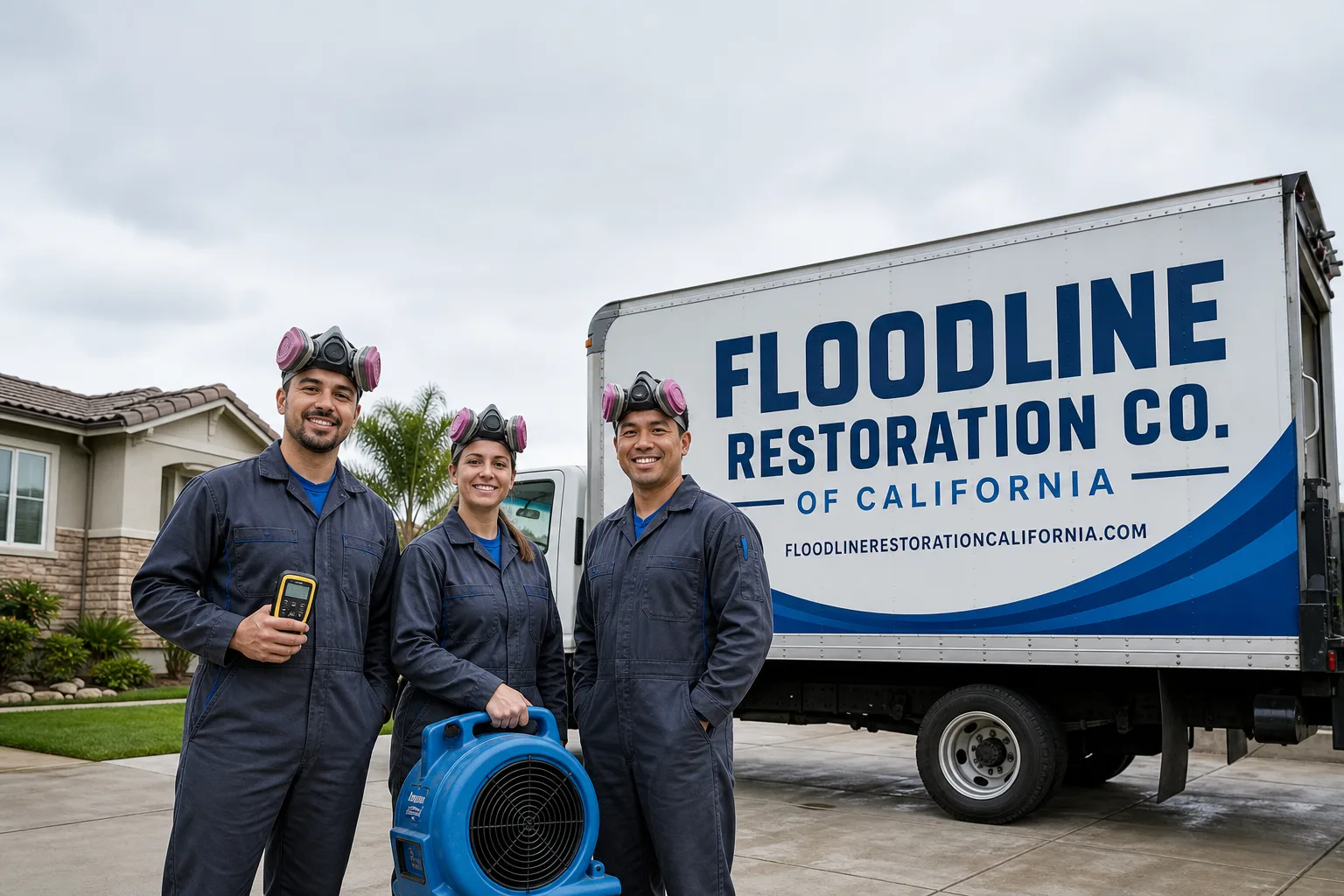
Fast, Reliable Reconstruction & Cleanup Across Monrovia
Reconstruction and cleanup in Monrovia starts with understanding the city’s unique position: pressed against the San Gabriel Mountains, with 1920s Craftsman bungalows and Spanish Colonial homes lining streets that slope toward Myrtle Avenue. When a mudflow, a pipe burst, or a fire damages one of these older homes, the rebuild has to respect the original construction while meeting modern code. Floodline Restoration Co. of California handles the full cycle, from first extraction to finished drywall, without handing your home off to a different crew. Call (888) 737-2439 any hour, and a live dispatcher answers.
Our Reconstruction & Cleanup team works Monrovia’s oldest neighborhoods regularly. We know Hillcrest Boulevard, the homes along the Sawpit Wash corridor, and the tight alley-load lots behind Myrtle. That local familiarity means we show up with the right equipment the first time, not the second.
Why Floodline Restoration Co. of California Is Monrovia’s Preferred Reconstruction & Cleanup Company
Homeowners in Monrovia tend to stay put. The people we work for have often lived in the same house for twenty or thirty years, and they plan to stay twenty more. That changes how we approach a rebuild. We are not patching walls to get a house sold; we are restoring a home someone intends to live in for the rest of their life. Curt Bowman founded Floodline Restoration Co. in 2010 to give these homeowners something they rarely find after a disaster: one crew, one phone number, and a written guarantee that means something.
Our technicians arrive background-checked and in uniform, trained to IICRC, RIA, and IFA standards. The same certified crew that reads the moisture map on day one handles the daily readings, logs the numbers, and rebuilds what needs rebuilding. That consistency matters in Monrovia’s older homes, where plaster-and-lath walls and original hardwood floors do not dry like modern drywall and require a technician who reads the building, not just the meter.
Response time to Monrovia is real and measurable. We dispatch from our Los Angeles office, but crews serve Monrovia locally, which means a live person takes your call at 2 a.m. and a crew is on the road that same visit. No voicemail trees. No “we’ll call you back in business hours.” When water is soaking into 1940s fir flooring at midnight, you call, we answer, and extraction starts.
Our Reconstruction & Cleanup Services in Monrovia
Full-Service Reconstruction
Full reconstruction in Monrovia means more than hanging drywall. We rebuild homes the way they were built, which matters when the original framing is old-growth Douglas fir and the walls are hand-troweled plaster. Our crews handle structural repair, finish carpentry, paint, and trim, coordinating the entire job from first demolition to final walkthrough. One crew, one schedule, one name on the work.
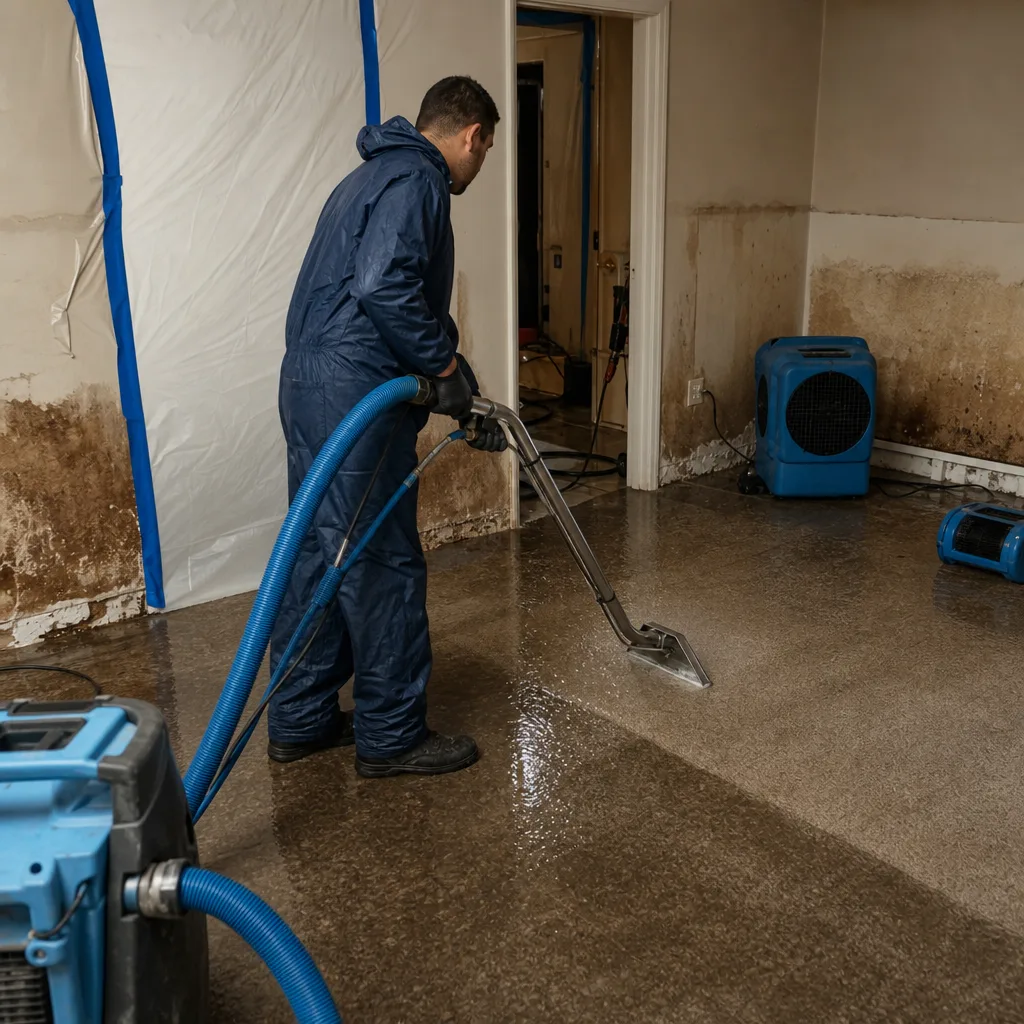
Drywall & Flooring Repair
Older Monrovia homes often mix original materials with later additions. You might have plaster-and-lath in the front of the house and drywall in a 1970s addition. Each dries differently after a water event, and each requires a different repair approach. We match textures, patch lathe properly, and either restore or replace flooring based on what the moisture map tells us. Original oak that can be dried in place stays; saturated subfloor that has swollen goes.
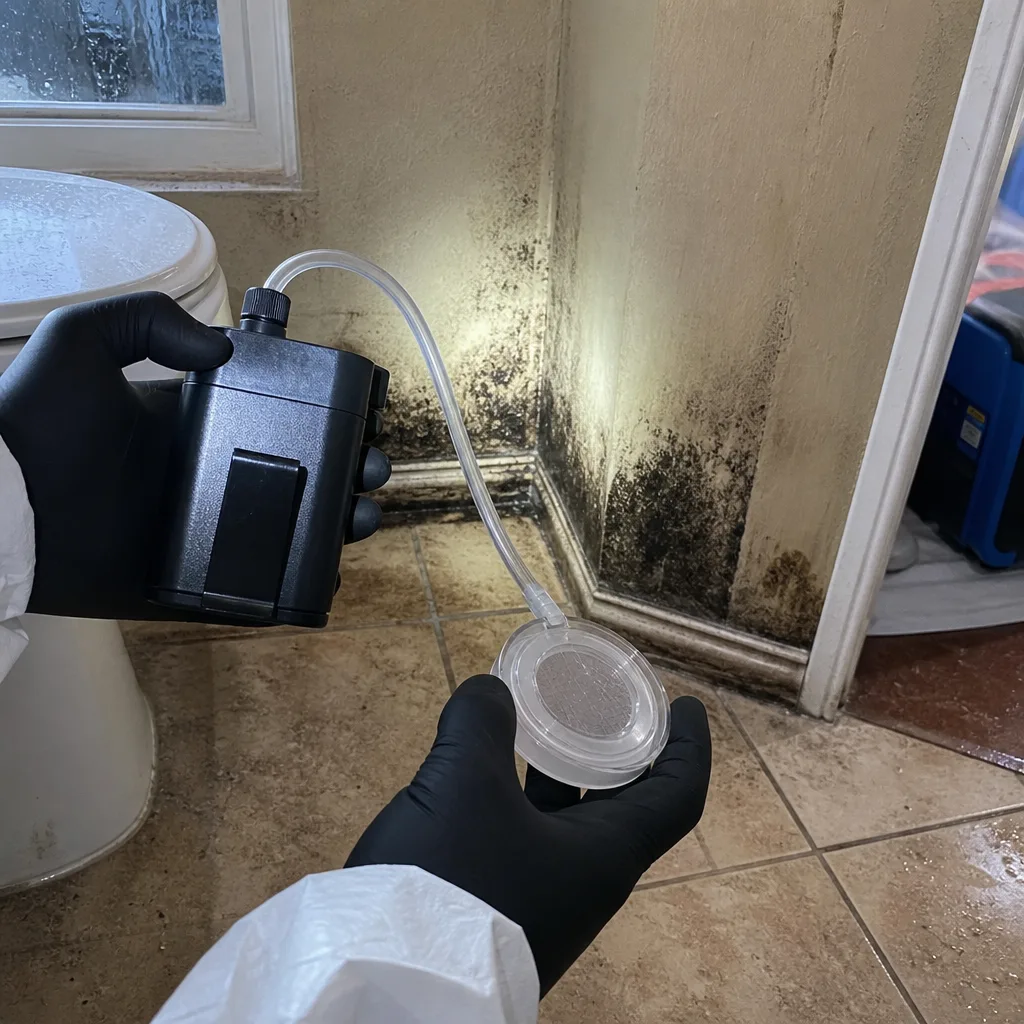
Contents Restoration & Pack-Out
When a mud event or a sewer backup forces you out of part of your home, we pack out, inventory, and restore your contents. Every item gets a photo and a line on the inventory sheet before it leaves the house. That documentation goes to your adjuster directly, so you are not the one carrying paperwork between us and the insurance carrier. For Monrovia homeowners with decades of accumulated belongings, this service is often the difference between a claim paid in full and a claim argued line by line.
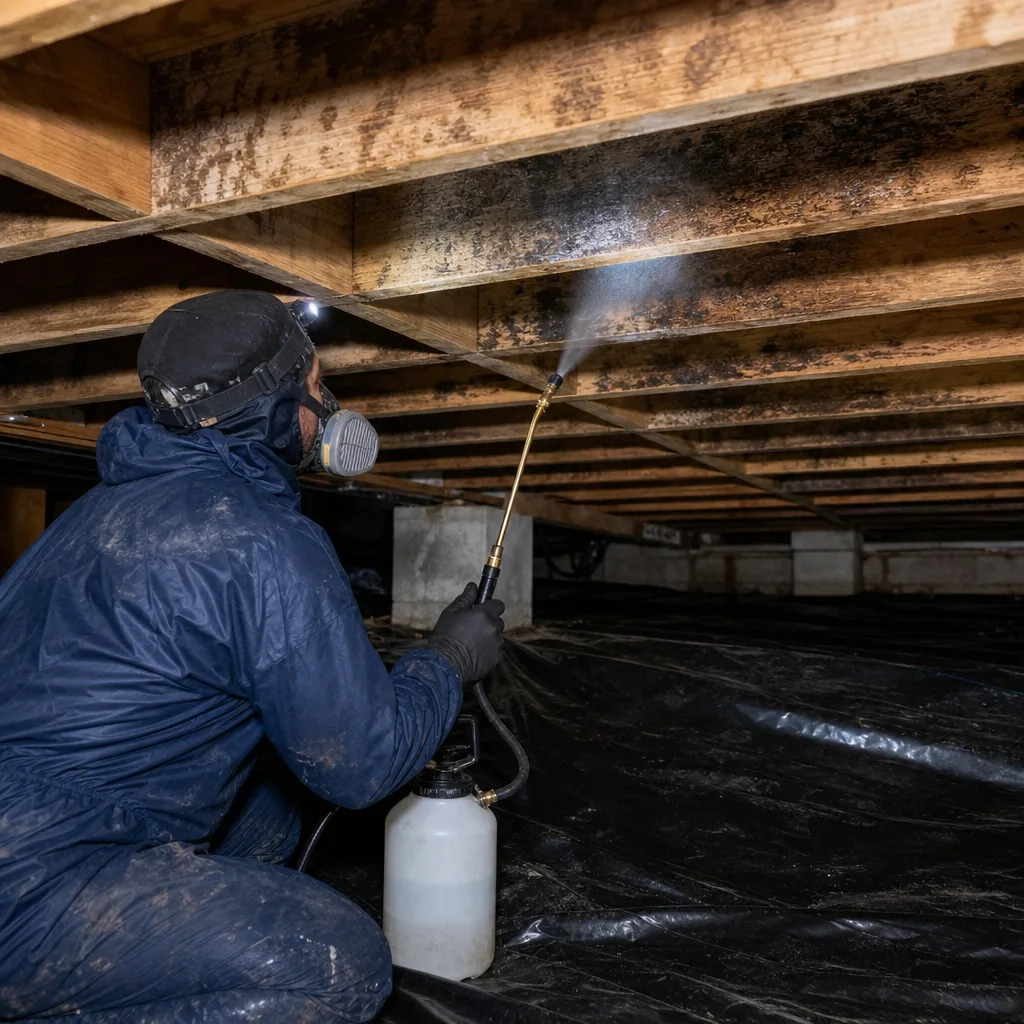
Carpet & Upholstery Cleaning
Post-construction cleanup and even routine carpet work in Monrovia is shaped by the mountain dust. Canyon winds drive fine particulate into carpet fibers and upholstery, and after a fire season, that dust includes ash that abrasive and acidic. Our cleaning process uses professional-grade extraction, not rental machines, and we log before-and-after readings so you know what was actually removed.
What happens when you call
- 1
A real person answersNo phone trees - you reach a local pro.
- 2
You get an upfront price rangeHonest numbers before anyone is dispatched.
- 3
A background-checked tech heads outLicensed & insured, dispatched right away.
- 4
You approve before work beginsNothing starts until you say go.
Trusted Brands We Service in Monrovia
Our crews in Monrovia stock common parts for the bathrooms, kitchens, and flooring systems we see most often. We also work with professional-grade drying and extraction equipment from Dri-Eaz, XPOWER, B-Air, and Injectidry, with the Injectidry systems proving especially useful in dense lots where conventional drying setups will not fit. Training to IICRC and RIA standards means the equipment gets used correctly, and the daily moisture log proves it.
Common Reconstruction & Cleanup Problems We See in Monrovia Homes
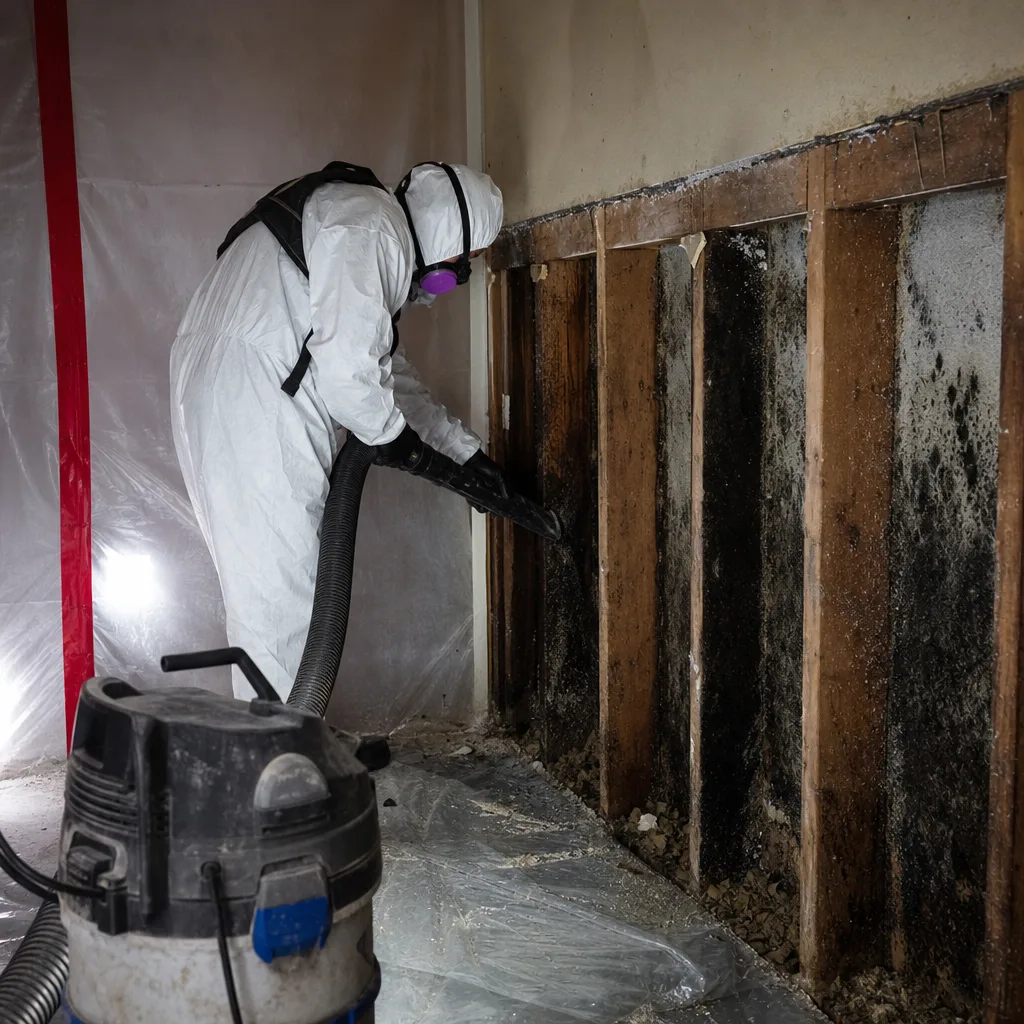
- Layered fire and mud damage. On streets approaching Hillcrest Boulevard, we regularly find homes with smoke-saturated attic insulation from a prior fire season, then mud intrusion from the next wet winter. The reconstruction sequence has to remove the biohazard and ash contamination before structural drying begins, or the problems resurface as odor and hidden mold.
- Plaster-and-lath drying times. 1920s and 1930s Craftsman homes in Monrovia do not dry like post-WWII drywall construction. Water wicks through gypsum plaster and into wood lath, and if you pull equipment too early, you get warping, cracking, and a mold bloom behind the wall.
- Tight clearances and alley-only access. Many of the older homes around downtown Monrovia and along Myrtle Avenue have narrow side yards or alley-load entries. Oversized drying equipment simply cannot reach affected rooms without some planning. We carry compact Injectidry and XPOWER units specifically for these layouts.
- Stormwater backup along the Sawpit Wash corridor. When debris basins above the city reach capacity during post-fire rain events, stormwater concentrates in the wash and can back up into adjacent properties. The water arrives fast, carries sediment and contaminants, and demands a different response than a clean pipe-burst.
Pricing for Reconstruction & Cleanup in Monrovia, CA
Reconstruction and cleanup pricing in Monrovia runs on honest, written scopes. A typical drywall repair after a ceiling leak runs $800 to $2,400 depending on access and texture matching. Full room reconstruction, including framing repair, insulation, drywall, and paint, typically runs $4,500 to $11,000 per room in Monrovia’s older homes, where original materials slow the work. Hardwood floor restoration after saturation runs $6 to $12 per square foot, while full replacement runs $14 to $22 per square foot installed. Contents pack-out and restoration for a single room runs $1,200 to $4,500.
Every estimate is free, and we never begin work without a written scope you have approved. The $50 Off Any Repair Over $250 offer, the $89 Seasonal Tune-Up, and the Senior & Veteran 5% discount apply to qualifying Monrovia jobs. Call (888) 737-2439 for an exact number on your specific situation.
We Also Serve Cities Near Monrovia
Floodline Restoration Co. serves the entire Reconstruction & Cleanup in Monrovia area, including Mayflower Village, Duarte, Arcadia, and Sierra Madre. If your home sits just over the city line, you get the same crew, the same response time, and the same written guarantee.
Serving Monrovia, CA - Our Local Coverage Area
We’re based in the Monrovia area and know this community well. Use the map below to see our service coverage - if you’re nearby, we can almost certainly help.
FAQs - Reconstruction & Cleanup in Monrovia
The sequence shifts from dry-then-rebuild to remove-then-dry-then-rebuild. After fires like the 2016 Fish Fire denuded the slopes above Monrovia, the following rainy season sent mud into the northernmost residential streets. A home near Hillcrest Boulevard can have smoke and ash contamination embedded in attic insulation and HVAC systems before a mud event even hits. Reconstruction has to start with debris excavation and biohazard clearing, move into structural drying, and only then enter the rebuild phase. We document each phase with photos and moisture logs for your carrier. Call (888) 737-2439 to talk through a specific situation.
Yes, and we plan for that before we arrive. Our crew runs compact Injectidry drying systems and XPOWER air movers that fit through narrow side doors and alley entries common around downtown Monrovia. In one Craftsman off Hillcrest Boulevard, we positioned Dri-Eaz desiccants through a slim alley-load side door and saved the original plaster-and-lath walls without removing a single load-bearing stud. Equipment size is a known problem in Monrovia’s older homes, so we stock the compact gear and send the right crew for the layout.
We document every phase, and we send it to your adjuster directly. That means photos of the mud intrusion, moisture readings, dry-standard logs, and line-item contents inventories all go from our office to the carrier without you playing messenger. For a mudslide claim with pre-existing fire damage, the documentation has to show which damage came from each event, and our written records do that. You receive the complete file, too.
Plaster-and-lath typically takes 4 to 7 days to hit the dry standard in Monrovia’s microclimate, versus 3 to 5 days for modern drywall under the same conditions. The difference is the material itself: gypsum plaster holds water in a thicker layer, and the wood lath behind it wicks moisture into wall cavities. Pulling drying equipment too early leads to cracking, warping, and mold that shows up months later. Our daily moisture readings tell you exactly when the wall is actually dry, not just when the surface looks dry.
The best approach is to extract standing water immediately, then dry the floor in place using controlled desiccant systems and daily moisture readings. Sawpit Wash stormwater carries sediment and contaminants, so the water itself is a biohazard concern, not just a moisture concern. We handle contaminated water extraction, then determine whether each board is salvageable. Original hardwood that has not cupped or warped can often be saved; boards that have delaminated from the subfloor get replaced to match. Call (888) 737-2439 for a free assessment before the damage spreads.
Call Floodline Restoration Co. of California at (888) 737-2439 for a free estimate on reconstruction and cleanup work in Monrovia. A live dispatcher answers, day or night, and the crew arrives on schedule with a written plan and no surprises on the bill.
Done right, and backed in writing. That is the Keystone Standard.
Written by Curt Bowman, Owner at Floodline Restoration Co. of California, serving Monrovia and the San Gabriel Valley.