
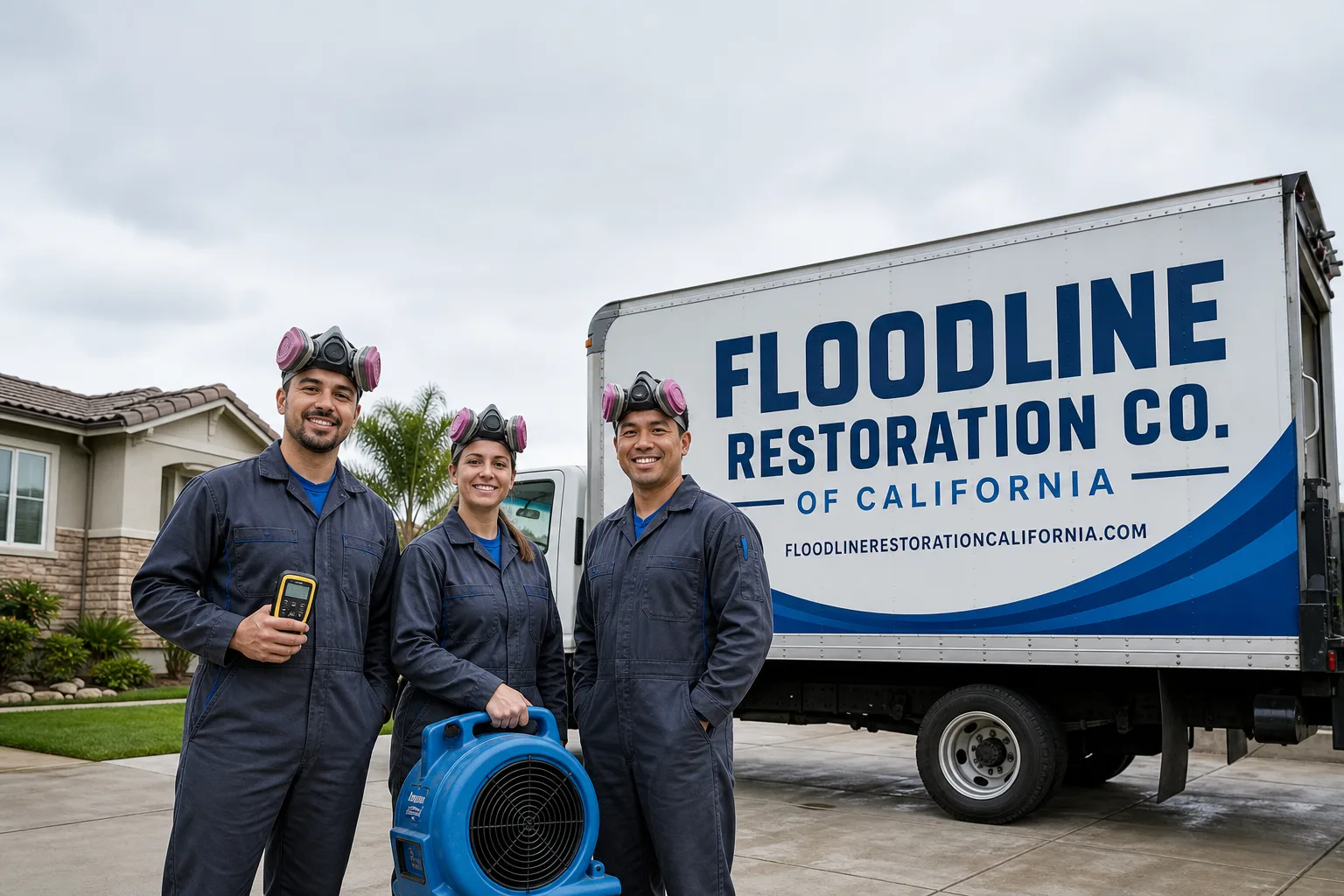
Fast, Reliable Reconstruction & Cleanup Across Long Beach
When water, fire, or mold damage tears into a Long Beach home, the work isn’t finished when the equipment comes out. It’s finished when the drywall is replaced, the floors are sanded, the contents are back on the shelf, and the insurance file is closed with the documentation it needs. For homeowners in Long Beach, that means dealing with a specific set of problems: salt-laden air off San Pedro Bay, pre-WWII framing, hidden slab cracks from decades of harbor-district subsidence, and marine-adjacent humidity that extends every drying schedule by days. Our Reconstruction & Cleanup team handles the whole sequence, from first extraction to final coat of paint, with the same certified crew and a written 90-Day Done Right Promise on every job. Call (888) 737-2439 and a live dispatcher answers, any hour.
Why Floodline Restoration Co. of California Is Long Beach’s Preferred Reconstruction & Cleanup Company
Long Beach homeowners have a long memory. Many have been burned before by a contractor who showed up late, left mid-job, or handed the rebuild to a sub crew nobody vetted. That’s why we answer the phone with a person, not a recording, and why every technician who walks through your door is background-checked, uniformed, and trained to IICRC, RIA, and IFA standards. The same crew that reads the moisture map on day one handles the daily readings, hands the log to you and your adjuster, and rebuilds what needs rebuilding. No handoffs. No messenger duty between you and the carrier. We have served the Long Beach area for years, and the work stands behind itself: the 90-Day Done Right Promise, in writing, with no paperwork battles. If it’s not done right, we make it right.
Our Reconstruction & Cleanup Services in Long Beach
Full-Service Reconstruction
Reconstruction in Long Beach means working around materials that predate modern code. We routinely pull permits, coordinate structural inspections, and manage lead-paint and asbestos protocols on pre-WWII craftsman bungalows in Rose Park, Wrigley, and the Poly High corridor. After a slab leak or fire, we rebuild framing, drywall, trim, and finishes to match the original character of the house, not just to pass an inspection. The goal is a result that looks like the home never had a problem, with no shortcuts hidden behind fresh texture.
Drywall & Flooring Repair
Water travels down and sideways inside Long Beach walls long after the surface feels dry. Salt-laden air slows evaporation and extends the drying curve on drywall, lathe-and-plaster, and subfloor. We cut only what the moisture meter says is compromised, dry the cavity to the IICRC dry standard, then hang, tape, texture, and paint. For floors, that means matching original hardwood where salvageable or installing engineered planks and tile that handle Long Beach’s humidity swings without cupping or buckling.
Contents Restoration & Pack-Out
When a kitchen wall is opened in a 1920s craftsman, everything inside that kitchen needs to move, be cleaned, and come back without new damage. We pack out contents room by room, photograph every item, clean what can be cleaned using professional-grade Dri-Eaz and Phoenix equipment, and store the rest in climate-controlled space until the rebuild is done. For Long Beach homeowners with antiques, family photos, or original built-ins, this is the part of the job where damage multiplies fast if handled carelessly. We handle it as if it were our own furniture.
Carpet & Upholstery Cleaning
Long Beach’s marine layer holds relative humidity at 80 to 90 percent well into midday, which means carpet and upholstery dry slower and mold grows faster than it does inland. After any water loss or simply as seasonal maintenance, we deep-clean carpet and upholstery with truck-mounted extraction, then run air movers to bring the materials to dry standard quickly. For older homeowners in 90802 and 90805 apartment blocks with original single-pane windows, this step matters more than it looks: condensation-driven dampness hides in fibers and keeps feeding musty odors.
What happens when you call
- 1
A real person answersNo phone trees - you reach a local pro.
- 2
You get an upfront price rangeHonest numbers before anyone is dispatched.
- 3
A background-checked tech heads outLicensed & insured, dispatched right away.
- 4
You approve before work beginsNothing starts until you say go.
Trusted Brands We Service in Long Beach
We don’t use off-brand equipment or parts. Our crews run professional-grade Dri-Eaz, Phoenix, and XPOWER air movers and dehumidifiers, and we recommend replacement hardware and materials that survive Long Beach’s coastal air. When we rebuild after water damage, we use mold-resistant drywall and stainless or coated fasteners where the old materials failed from corrosion. For Long Beach customers, that means parts and materials ordered locally, stocked locally, and replaced on the same visit instead of ordered weeks out.
Common Reconstruction & Cleanup Problems We See in Long Beach Homes
- Salt-driven pipe corrosion: Original galvanized supply lines in pre-1960 homes, especially in 90802 and 90805, fail from internal corrosion accelerated by marine air. Pinhole leaks weep for months inside wall cavities, feeding mold long before water shows on the baseboard. We replace the damaged section with stainless or PEX and rebuild the cavity with mold-resistant board.
- Hidden slab cracks from harbor-district subsidence: Decades of oil extraction from the Wilmington field caused documented land settling across Long Beach. In mid-century structures, that means cracked slab penetrations that channel groundwater upward during high tides or heavy rain. Recurring mold behind baseboards is a common first sign.
- Condensation in original window pockets: Single-pane jalousie and aluminum windows in older apartment blocks trap condensation against drywall and produce chronic mold inside wall cavities. We dry the cavity, replace damaged sections, and recommend window or ventilation upgrades as part of the rebuild scope.
- Storm-surge contamination in Naples: In the Naples neighborhood (90803), winter king tides and storm surge can force saltwater up through floor drains and low slab penetrations instead of entering through walls or the roof. That turns what looks like a routine Category 2 water loss into a Category 3 with hidden salt-contaminated wicking. It changes how we cut, how long we dry, and what we document for the carrier.
Pricing for Reconstruction & Cleanup in Long Beach, CA
- Drywall repair and texture: $750 to $2,100 for a typical wall or ceiling section, depending on cavity treatment and lead-paint protocol requirements.
- Flooring repair: $900 to $3,500 for hardwood sanding and refinish or engineered plank replacement in a standard Long Beach room.
- Contents pack-out and cleaning: $1,200 to $4,800 for a full room, including inventory, photo documentation, cleaning, and storage coordination.
- Full-service reconstruction after water or fire: $8,000 to $45,000 depending on square footage, framing damage, permit requirements, and whether asbestos or lead protocols apply.
These are Long Beach market ranges for standard residential work. The exact figure depends on what the moisture meter finds inside the walls. Call (888) 737-2439 for a free estimate. And remember the standing offers: $50 Off Any Repair Over $250, the $89 Seasonal Tune-Up, and a Senior & Veteran 5% Discount, always.
We Also Serve Cities Near Long Beach
The same crews that work Long Beach neighborhoods also serve Signal Hill, Lakewood, Carson, and Compton. If you live a few miles outside the city line, we will still show up with the same equipment, the same written scope, and the same 90-Day Done Right Promise. Call and ask.
Serving Long Beach, CA - Our Local Coverage Area
We’re based in the Long Beach area and know this community well. Use the map below to see our service coverage - if you’re nearby, we can almost certainly help.
FAQs - Reconstruction & Cleanup in Long Beach
Because the wall cavity was likely never actually dried to the IICRC dry standard, and because the original galvanized supply lines behind those lathe-and-plaster walls are still weeping through pinhole corrosion from decades of salt-air exposure. A one-time dry-out without re-piping the failing section only removes the symptom. Our crew in Rose Park opened a 1920s craftsman’s kitchen walls after a slab leak and found exactly that: original galvanized lines weeping, with the salt-air-hardened lathe-and-plaster trapping moisture and turning the cavity into a hidden mold incubation chamber. We replaced the drywall with mold-resistant board, encapsulated the remaining plaster per Long Beach’s lead-paint protocol, and installed a new stainless re-pipe before any cosmetic finish work. That is the difference between a dry-out and a reconstruction. Call (888) 737-2439 if mold keeps coming back. We will find the source.
Yes. Units built before the 1950s in 90805 often sit on land affected by Wilmington field subsidence, which means slab penetrations and framing members may have shifted over decades. Chronic window condensation is a water-damage symptom, but the bigger question is whether the building’s structural movement has cracked plumbing or drains inside the wall. Before we hang new drywall, we recommend a structural once-over and a plumbing pressure test. If the building has original single-pane jalousie windows, we will also flag them as a continuing condensation source and recommend ventilation or window replacement as part of the scope, not as an afterthought.
It adds one to three days to the equipment deployment. The morning marine layer holds relative humidity at 80 to 90 percent well into midday in Long Beach, which slows evaporation at the surface and inside wall cavities. A job that would dry in two days in Compton or Torrance may need four or five days in Long Beach with the same equipment. That means more dehumidifiers, more air movers, and more daily moisture readings until the dry standard is met. We log every reading and hand it to you and your adjuster, so nobody has to guess whether the cavity is actually dry.
When water comes up through floor drains or low slab penetrations instead of through walls or the roof, especially during an El Niño winter or a king tide. That water carries salt, harbor sediment, and petroleum residue. It is Category 3 by definition: grossly contaminated. In Naples, the failure mode is distinctive because the neighborhood sits on man-made canal islands in Alamitos Bay, and tidal timing controls whether groundwater wicking keeps feeding moisture back into the slab even after the visible water is gone. That means controlled demolition of wet drywall and flooring, sanitizing of framing, and contents handling that treats every affected item as contaminated until cleaned. If your Naples home flooded from below, call (888) 737-2439 before you pull up the carpet yourself.
It does. Much of the housing stock in the Poly High corridor was rebuilt after the 1933 Long Beach earthquake using materials and framing practices that are now 90 years old. Original lathe-and-plaster, cut nails, and early composition lumber all behave differently than modern materials when they get wet or when we open a wall for reconstruction. Lead paint and asbestos protocols apply to any project in that area, and the permitting office still holds records from post-1933 rebuilds that can affect what we are allowed to do structurally. We factor that into every scope before work starts, in writing, so there are no surprises on the bill or in the permit review.
Contact Floodline Restoration Co. of California in Long Beach
If your Long Beach home needs reconstruction, cleanup, or help with an insurance claim after water, fire, or storm damage, call (888) 737-2439. A live dispatcher answers, day or night. We will schedule a certified crew to reach your home, assess the damage, and give you a written scope before any work starts. The estimate is free. The documentation is photo-based and adjuster-ready. And every job, from first extraction to final coat of paint, is backed by the 90-Day Done Right Promise in writing. Done right, or we make it right. That is the deal.
Written by Curt Bowman, Owner at Floodline Restoration Co., serving Long Beach and surrounding communities.