
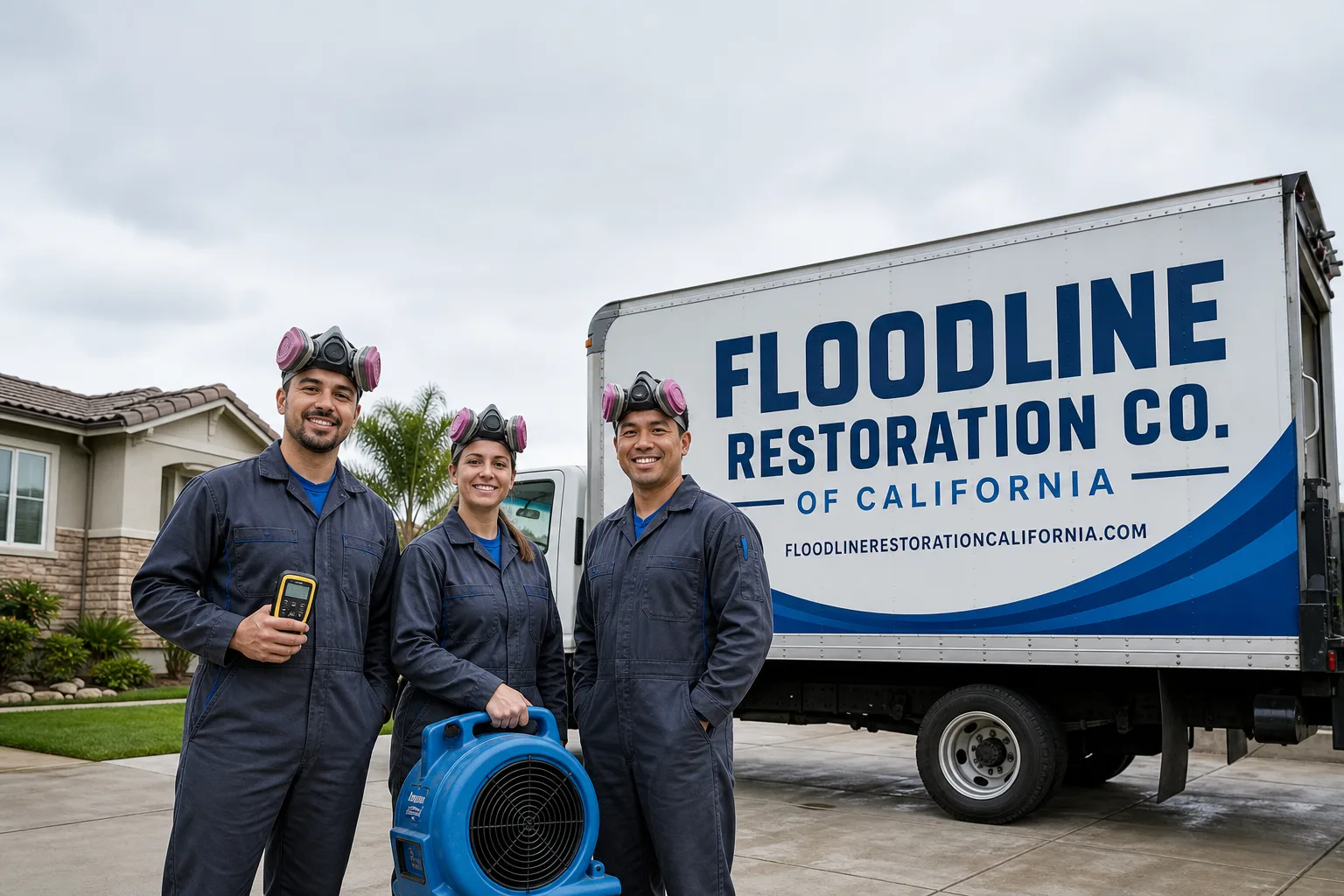
Fast, Reliable Mold Remediation Across Tehachapi
Mold remediation in Tehachapi typically costs $1,800-$6,500 depending on how far the growth has spread and whether it started in a crawl space, an exterior wall cavity, or an attic. Most jobs in the 93561 and 93581 ZIP codes can be assessed within 24 hours, with containment and treatment starting the same week. If you’re smelling mustiness after a hard freeze or spotting dark staining along baseboards, call (888) 737-2439 and a live dispatcher will get a certified crew routed to your home.
We know Tehachapi’s housing stock because we work it every week, from the mid-century ranches near downtown to the custom builds in Bear Valley Springs. Our Mold Remediation team has walked crawl spaces under east-side tract homes and peeled back drywall in mountain cabins. The mold you’re seeing usually started months earlier, behind a wall or under a floor, where freeze-thaw plumbing failures left moisture nobody noticed. That’s the mold we find and remove in Tehachapi more than any other kind.
Why Floodline Restoration Co. of California Is Tehachapi’s Preferred Mold Remediation Company
Floodline Restoration Co. has been answering calls since 2010, and Curt Bowman built the company around a dispatch board, not a sales desk. When a Tehachapi homeowner calls at 2 a.m. with water in the walls, a live person picks up. No phone tree, no answering service that promises a callback. The same background-checked, IICRC-certified technicians who respond then handle the drying, the treatment, and the rebuild, so you’re not handed off to a crew you’ve never met halfway through the job.
Tehachapi homeowners have a particular reason to be cautious about mold contractors. The freeze-thaw cycle at 4,000 feet creates hidden moisture paths that look like nothing on the surface. A contractor who only treats visible mold and walks away has missed the problem. We moisture-map every job with Dri-Eaz and Phoenix equipment, log daily readings until the dry standard is met, and then hand you that log along with the 90-Day Done Right Promise in writing. If it’s not done right, we make it right. No arguing.
Our Mold Remediation in Tehachapi work is handled by uniformed technicians who understand mountain-winter construction flaws. They know what a burst copper line inside an uninsulated exterior wall looks like after the first hard freeze, because they’ve opened enough of those walls to recognize the pattern before demolition even starts. That local knowledge means faster diagnosis and less unnecessary demolition in your home.
Our Mold Remediation Services in Tehachapi
Mold Inspection & Testing
We start every Tehachapi mold job by finding where the moisture is coming from, not just where the mold is growing. In a town where freeze-thaw cycles crack stucco and roof membranes every winter, we check exterior wall cavities, crawl spaces, attic sheathing, and the plumbing runs most vulnerable to freezing. For homes in Tehachapi, testing includes air sampling and surface swabs when the source isn’t obvious, with results interpreted against the dry standard required before we call a job finished.
Mold Removal
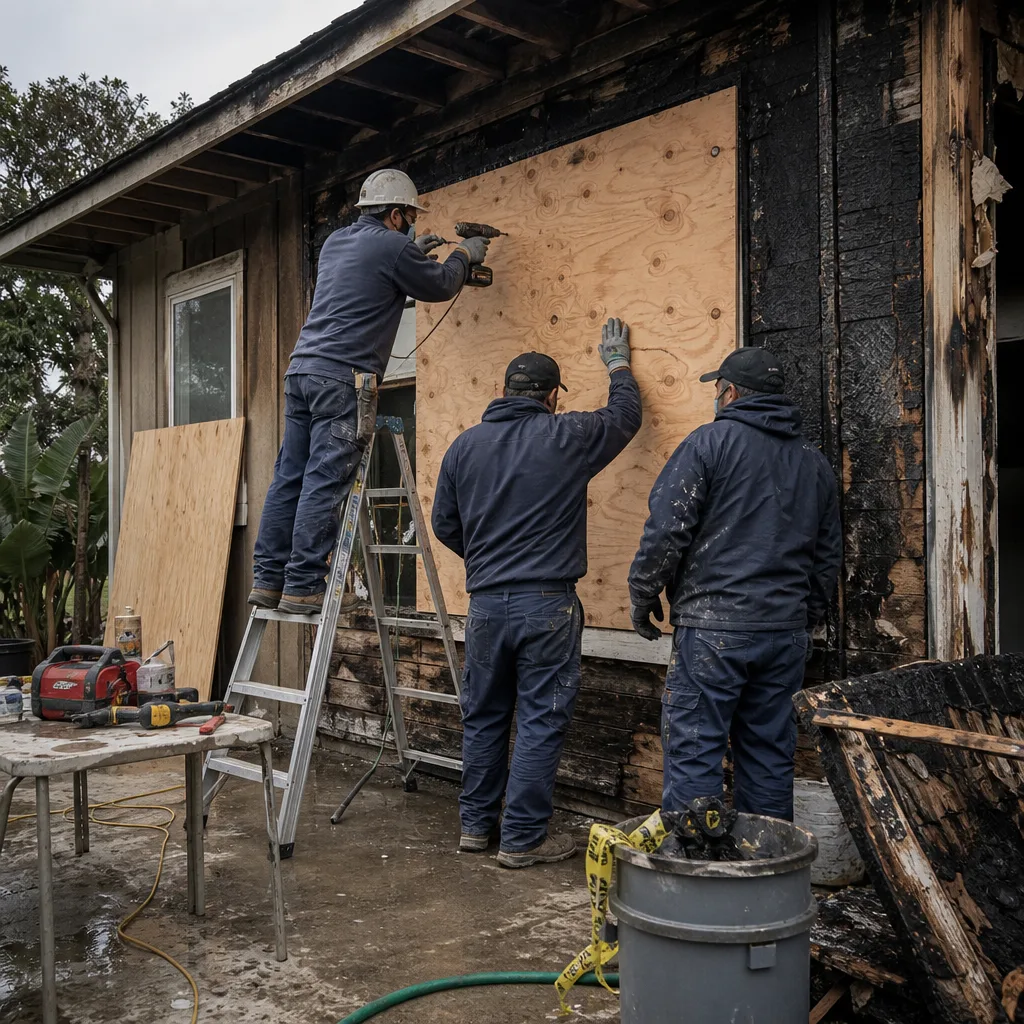
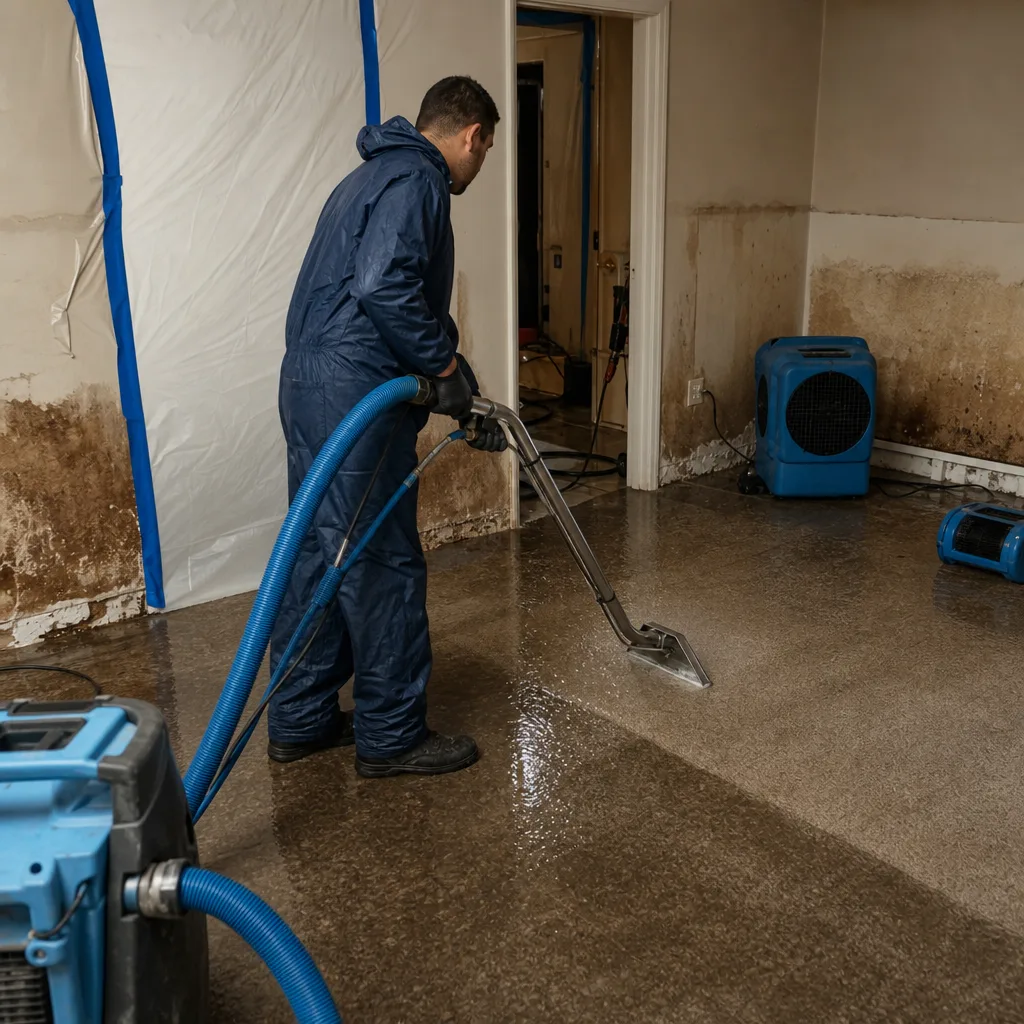
Removal means physically removing contaminated drywall, insulation, carpet, and subfloor, then HEPA-vacuuming and treating the exposed framing. In Tehachapi’s 1980s and 1990s tract homes, we frequently remove baseboards to find mold that has climbed the backside of drywall from a slab leak or a shallow crawl space. We contain the affected area, filter the air with HEPA scrubbers, and don’t release the containment until air samples confirm the space is clean.
Black Mold Remediation
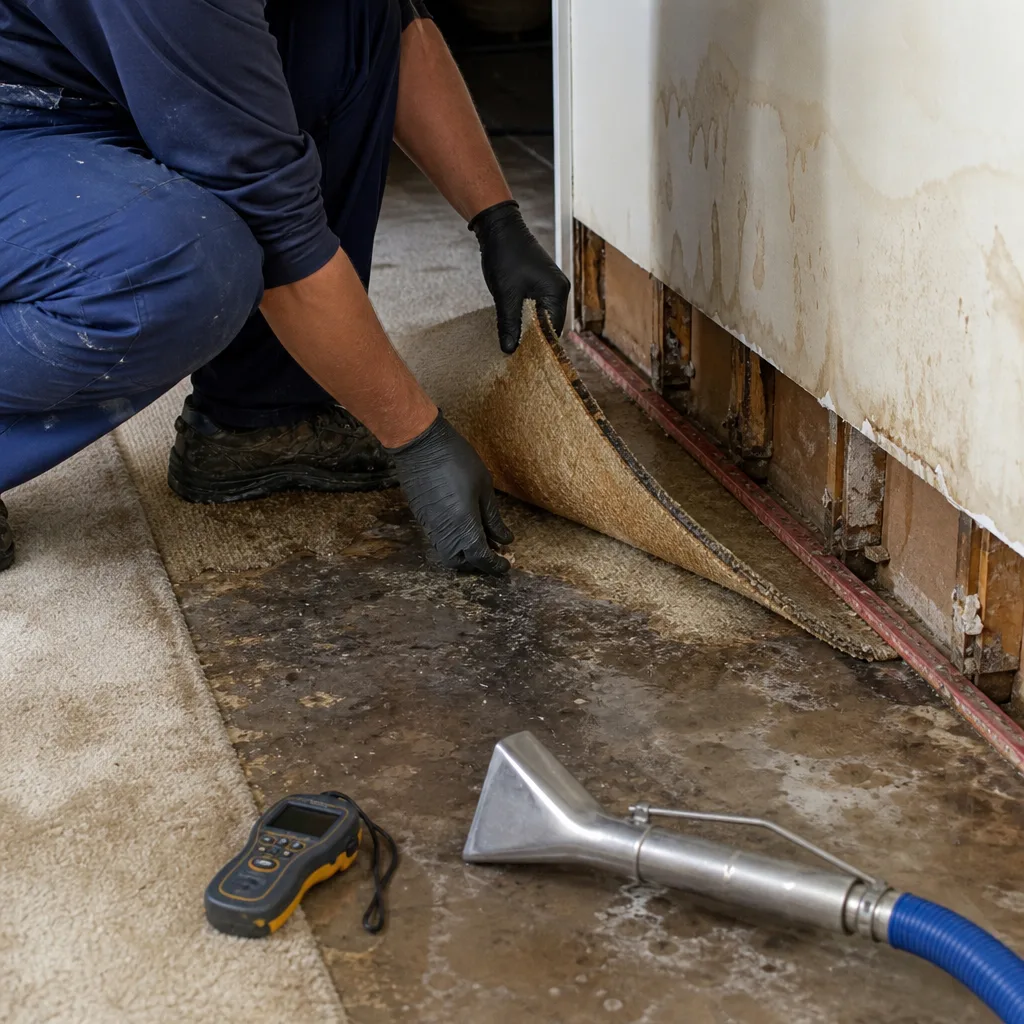
Black mold, or Stachybotrys, gets its reputation because it’s toxigenic and grows on materials that have stayed wet for weeks. We see it in Tehachapi most often in crawl spaces under pier-and-beam homes where standing water from a hard freeze never fully dried, and in attics where wind-driven rain from Tehachapi Pass soaked insulation that stayed damp through the summer. Our remediation for black mold is the same disciplined process: contain, remove, treat with an EPA-registered antimicrobial, dry, verify, and document. You get the moisture log and air sample results before you sign off.
Air Quality Restoration
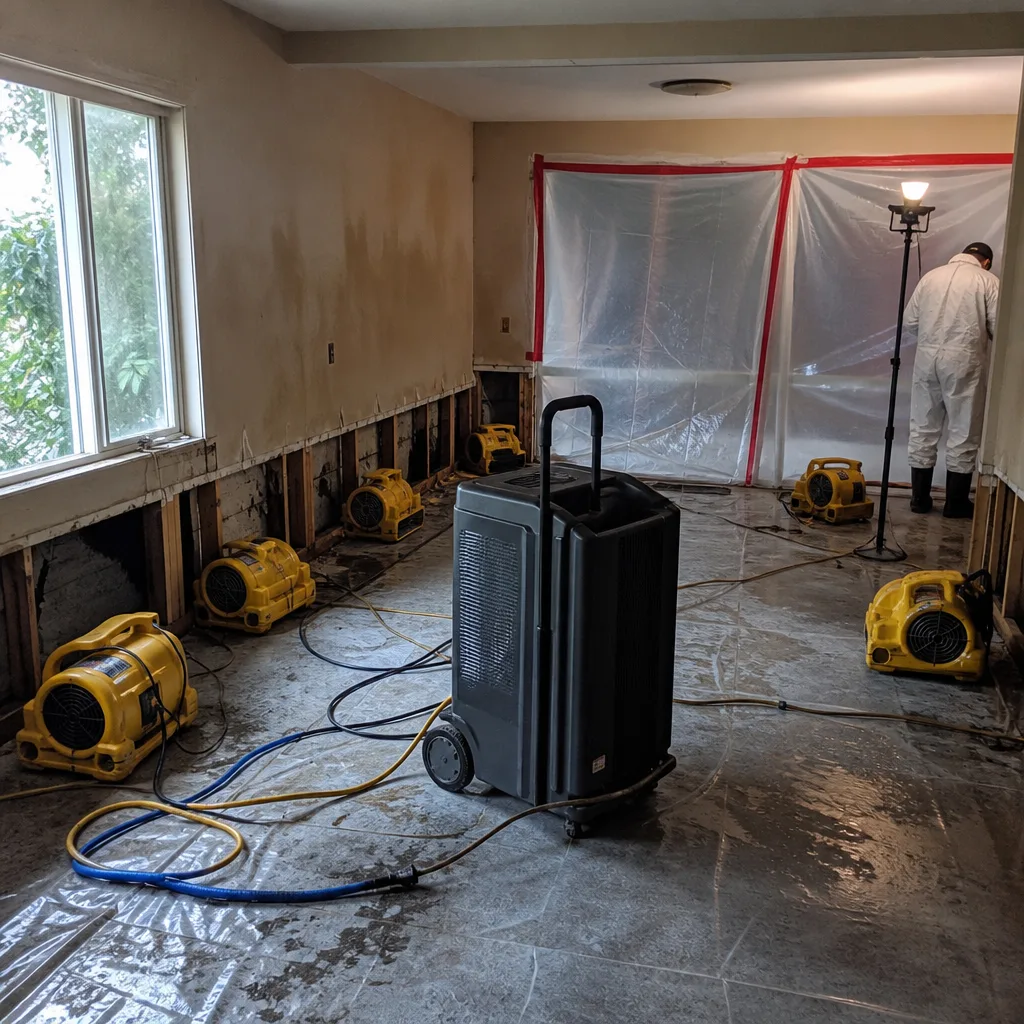
After removal and treatment, the air in your Tehachapi home still carries spores and particulate until we run HEPA air scrubbers long enough to pull the airborne load down. In mountain homes where high winds through the pass constantly push outside air into the structure, sealing envelope leaks matters as much as scrubbing. We balance the airflow so the home isn’t left in negative pressure, which would just pull more dust and spores through the same gaps that let the rain in.
What happens when you call
- 1
A real person answersNo phone trees - you reach a local pro.
- 2
You get an upfront price rangeHonest numbers before anyone is dispatched.
- 3
A background-checked tech heads outLicensed & insured, dispatched right away.
- 4
You approve before work beginsNothing starts until you say go.
How Tehachapi’s Climate Creates Mold Problems Most Contractors Miss
Tehachapi sits at roughly 4,000 feet in the Tehachapi Mountains, the only community in Kern County that regularly receives snow and hard freezes. Bakersfield, 45 miles away at 400 feet elevation, doesn’t face this. What that means for your home: every winter, the freeze-thaw cycle stresses supply lines, roof membranes, and stucco exteriors in ways valley contractors didn’t anticipate when many of these homes were built. The legacy is a housing stock where pipes run through uninsulated exterior walls or shallow crawl spaces, a Central Valley plumbing practice that leads to burst lines the first winter a homeowner turns the heat down.
Here’s what that looks like in practice. We responded to a Bear Valley Springs home with musty odors after the first hard freeze, and our tech traced the moisture to a burst copper supply line inside an uninsulated exterior wall of the 1980s-era custom build. After repairing the freeze damage, we ran Dri-Eaz dehumidifiers and HEPA air scrubbers for five days, then treated the open wall cavity with an EPA-registered antimicrobial before replacing the drywall and insulation to stop mold from returning. That sequence, freeze, burst, hidden soak, mold bloom, is the most common mold path in Tehachapi, and it’s why we don’t treat mold without first finding the water that fed it.
Tehachapi’s wind through the pass adds a second layer. Sundowner events and seasonal high winds routinely drive rain under rooflines, into gable vents, and through cracked stucco. The water pools in attic insulation and wall cavities where nobody sees it until indoor heating dries the living space and drives humidity into cooler outer walls. That’s when the dark staining appears along baseboards and window casings, sometimes months after the storm that caused it.
Common Mold Remediation Problems We See in Tehachapi Homes
- Hidden wall-cavity mold after freeze bursts. Tehachapi’s uninsulated exterior supply lines fail in the same walls every winter. The mold grows behind the drywall while the surface stays clean. We find it with thermal imaging and moisture meters, then open the wall only where the map says the water traveled.
- Crawl space mold from standing water. East-side tract homes from the 1980s and 1990s sit over shallow crawl spaces that hold water after every hard freeze. That water raises the humidity under the subfloor and feeds mold you won’t see until it reaches the living space. Crawl space treatment in Tehachapi means drying the ground, sealing the vapor barrier, and treating the framing before closing it back up.
- Snow-load roof leaks on mid-century ranches. Older homes near downtown Tehachapi were built before mountain snow-load standards applied. A hard winter puts weight on roof membranes that were already aged. The leak seeps into wall cavities and only surfaces as mold after the heating season starts pulling moisture outward.
- Wind-driven rain intrusion through the pass. Tehachapi Pass funnels high wind against west-facing walls and rooflines. The rain pushed through stucco cracks and under flashing soaks attic insulation. Mold can bloom in that insulation for months before anyone notices, and by then the sheathing underneath has started to rot.
Pricing for Mold Remediation in Tehachapi, CA
A typical mold inspection with air sampling in Tehachapi runs $350-$700. A contained mold removal project in a single room, including demolition, HEPA scrubbing, antimicrobial treatment, and drying, generally lands between $1,800 and $3,200. Full crawl space remediation with vapor barrier replacement and ventilation work runs $4,000-$8,000 depending on square footage and access. Black mold jobs that touch multiple rooms or require structural drying after a freeze burst can reach $10,000 or more, particularly when drywall and insulation replacement are included. What moves the number is what’s behind the mold: a clean water source that’s been repaired versus a roof leak that needs decking replacement, a sealed crawl space versus a wet one, a contained single room versus an open floor plan that shares air. We give a written scope before work starts, and we bill your carrier directly so you’re not fronting money and chasing reimbursement. Call (888) 737-2439 for a free estimate, and ask about the Senior & Veteran 5% discount and the $50 Off Any Repair Over $250 offer.
We Also Serve Cities Near Tehachapi
Beyond Tehachapi proper, we serve Golden Hills, Bear Valley Springs, Rosamond, and Arvin. Homes in Golden Hills and Bear Valley Springs face the same freeze-thaw and wind-driven rain patterns as Tehachapi, while Rosamond and Arvin deal more with high-desert heat and occasional storm runoff. Wherever the moisture started, our Tehachapi crew can route to your door.
Serving Tehachapi, CA - Our Local Coverage Area
We’re based in the Tehachapi area and know this community well. Use the map below to see our service coverage - if you’re nearby, we can almost certainly help.
FAQs - Mold Remediation in Tehachapi
Because the leak happened inside an uninsulated exterior wall or shallow crawl space where the pipe burst, soaked the framing and drywall, and then froze again before anyone saw water on the floor. The mold grows in that hidden cavity and only becomes visible weeks or months later when indoor heating drives moisture outward. We trace these with moisture meters and thermal imaging, not guesswork.
Wind-driven rain doesn’t fall straight down; it gets pushed sideways under shingles, through gable vents, and behind flashing. That means the water entry point is often far from the visible stain on your ceiling. Remediation after a storm claim in Tehachapi has to include a roof inspection and often a moisture map of the attic before the interior is opened, so the scope captures all the wet areas the adjuster can see plus the ones they can’t. We document everything with photos and coordinate directly with your adjuster.
Yes, significantly. Valley towns at lower elevation don’t experience the hard freezes that fill Tehachapi’s shallow crawl spaces with standing water each winter, and valley homes are more often slab-on-grade. In Tehachapi, a pier-and-beam or raised foundation with a dirt floor is a mold risk every year, not just every decade. That’s why we recommend crawl space treatment as part of any mold job in Tehachapi, even when the visible mold is upstairs.
Because the same crawl space that fed the mold you just paid to remove will collect water again next winter unless you seal it. A sealed crawl space with a proper vapor barrier and ventilation keeps the humidity below the level mold needs to grow, and it protects the subfloor from the ground moisture that Tehachapi’s clay soil holds. We include crawl space sealing recommendations in every Tehachapi mold report, with a written scope and fixed price before work begins.
No. A HEPA air scrubber removes airborne spores, but it does nothing to the mold growing in soaked insulation and roof sheathing, and it doesn’t stop the water that’s still entering through the damaged roof. In Bear Valley Springs, where snow-load damage is common on custom builds, the roof has to be repaired and the wet insulation removed before air scrubbing is meaningful. An air scrubber is part of the process, not the fix. Call (888) 737-2439 and we’ll walk you through what the full scope looks like.
Call Floodline Restoration Co. of California for Mold Remediation in Tehachapi
If you smell mold or see staining in your Tehachapi home, don’t wait for it to spread through the wall cavities and into the air you breathe. Our certified team answers the phone live, 24/7, and we can schedule an assessment quickly. Every job is backed by the 90-Day Done Right Promise in writing, and our technicians stand behind the Keystone Standard: done right, every time, your home first. Call (888) 737-2439 for a free estimate, and ask about the Senior & Veteran 5% discount, the $50 Off Any Repair Over $250 offer, and the $89 Seasonal Tune-Up for your HVAC system as part of a full moisture-control plan.
Written by the team at Floodline Restoration Co., serving Tehachapi and the surrounding mountain communities.