
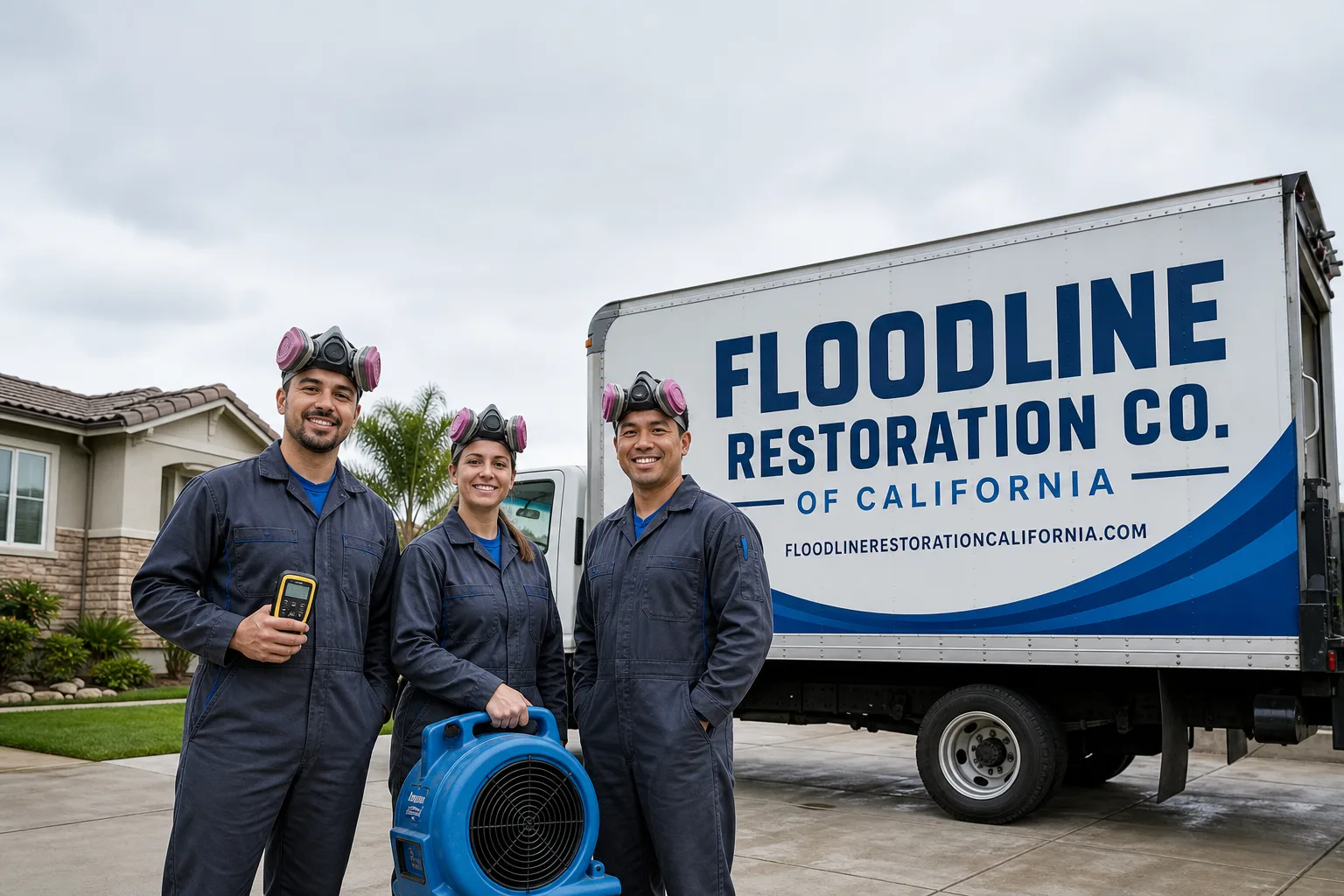
Fast, Reliable Mold Remediation Across San Marino
Mold remediation in San Marino typically runs $1,800 to $6,500 for a contained crawl space or wall cavity job, and a full inspection with lab testing starts around $350 to $600. Most work in the 91108 and 91118 ZIP codes is completed within three to five days once we’ve mapped the moisture source. If you’ve found mold in a lath-and-plaster wall or smelled that telltale mustiness near an original hardwood floor, call (888) 737-2439. A live dispatcher answers, and we’ll have a certified tech walking your property within hours, not days.
Why Floodline Restoration Co. of California Is San Marino’s Preferred Mold Remediation Company
We’ve worked enough San Marino estates to know that a 1935 Spanish Colonial Revival on Lombardy Road doesn’t dry like a 1990s tract house in East San Gabriel. That’s not contractor talk, it’s building science. Lath-and-plaster holds moisture longer than drywall, old-growth oak floors swell and cup differently than engineered plank, and clay drain lines under a 1920s foundation behave like nothing modern. Floodline Restoration Co. of California has been handling damage restoration since 2010, and our crews are trained to IICRC, RIA, and IFA standards. When we show up in San Marino, we bring the right drying math and the right materials for the house, not a generic playbook.
Curt Bowman built Floodline around a dispatch board, not a sales desk. That means when you call at 6 a.m. or 11 p.m., a person answers and a uniformed, background-checked crew gets routed to San Marino immediately. Reviews from local homeowners consistently point to one thing: we show up when we say, we explain the scope in writing before the first cut, and we don’t hand the job off to someone you’ve never met. Every phase, from the initial Mold Remediation inspection to the final moisture reading, stays with our own people.
Our Mold Remediation Services in San Marino
Mold Inspection & Testing
An inspection in a San Marino home starts with finding the water, not just the stain. We look at original clay and cast-iron drain lines, window flashing on period casings, and the crawl space grade under 1920s and 1930s foundations. Air and surface samples go to an independent lab, and you get a written report that separates mold from normal San Marino dust and pollen. We don’t test for the sake of testing; every sample has a reason tied to a moisture reading or a visible condition.
Mold Removal
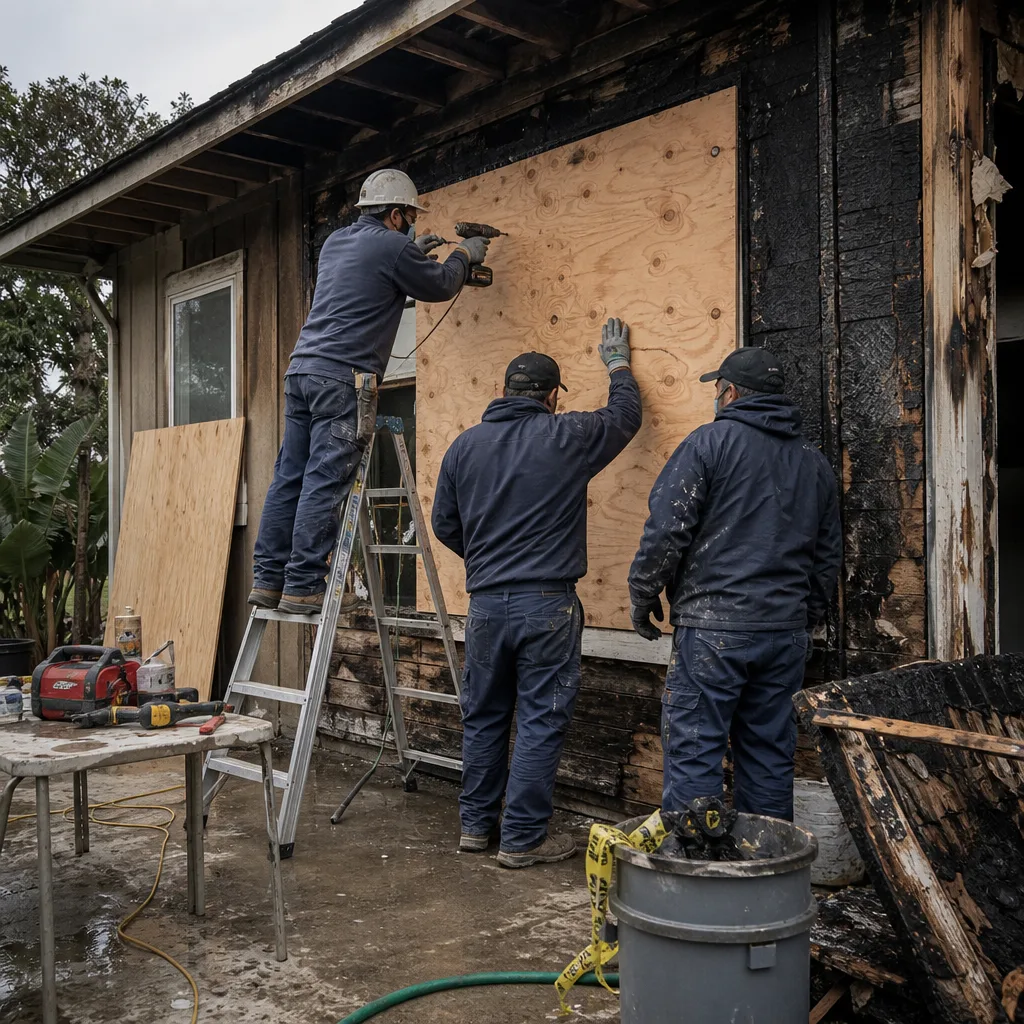
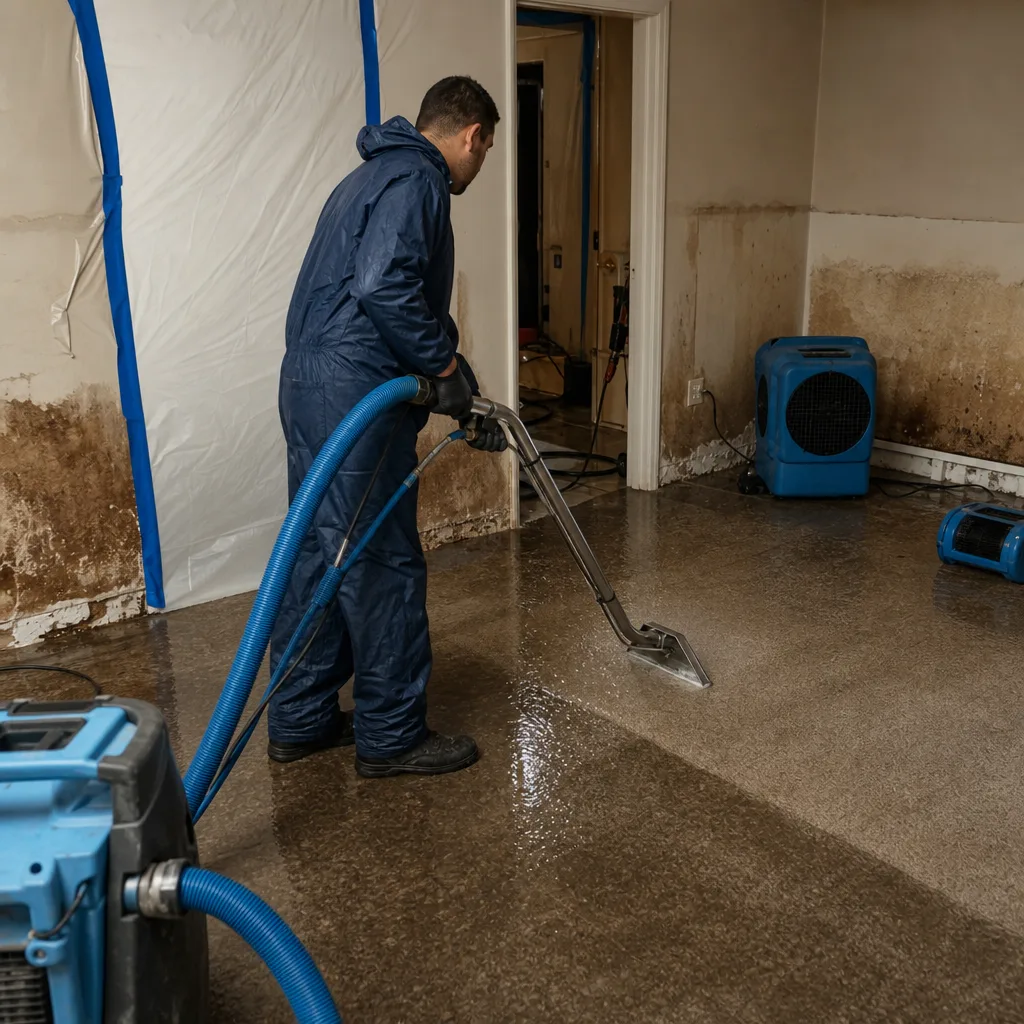
Removing mold inside a lath-and-plaster wall is a containment job first. We isolate the affected room with negative air pressure and HEPA filtration so spores don’t settle into original wool carpet or open-grain millwork in the next room. The infected plaster is cut conservatively, not in big rectangular slabs, because every inch of that wall is part of the home’s character and the city’s architectural fabric. After removal, we document the full scope for your insurance carrier with photos and moisture logs.
Black Mold Remediation
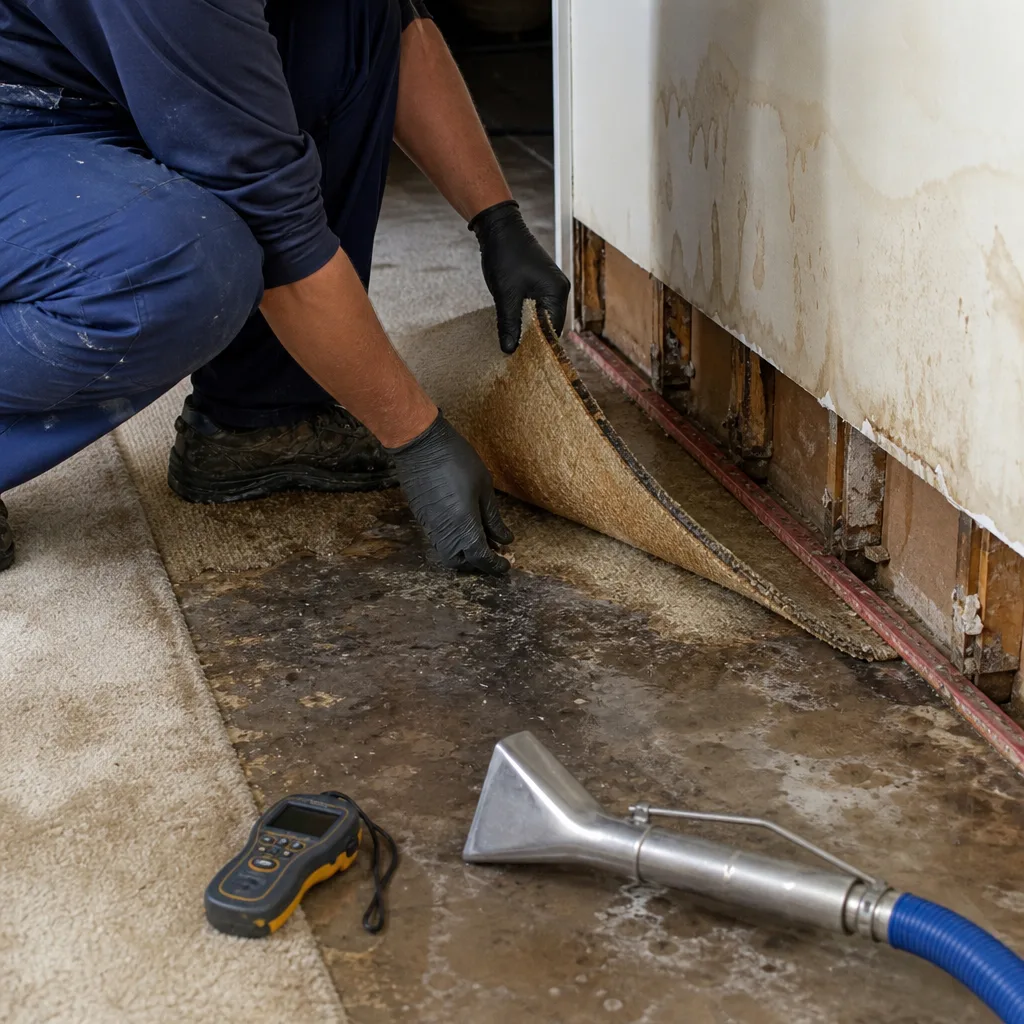
Stachybotrys, the mold most people mean when they say black mold, needs constant moisture to thrive. In San Marino, we commonly find it in crawl spaces where a 1938 clay line has cracked and wicked water into subfloor joists for months. We treat it with EPA-registered antimicrobials after drying the framing to under 8% wood moisture content, then address the drain line itself. Killing the spores without fixing the water source means you’ll be calling us again in a year.
Air Quality Restoration
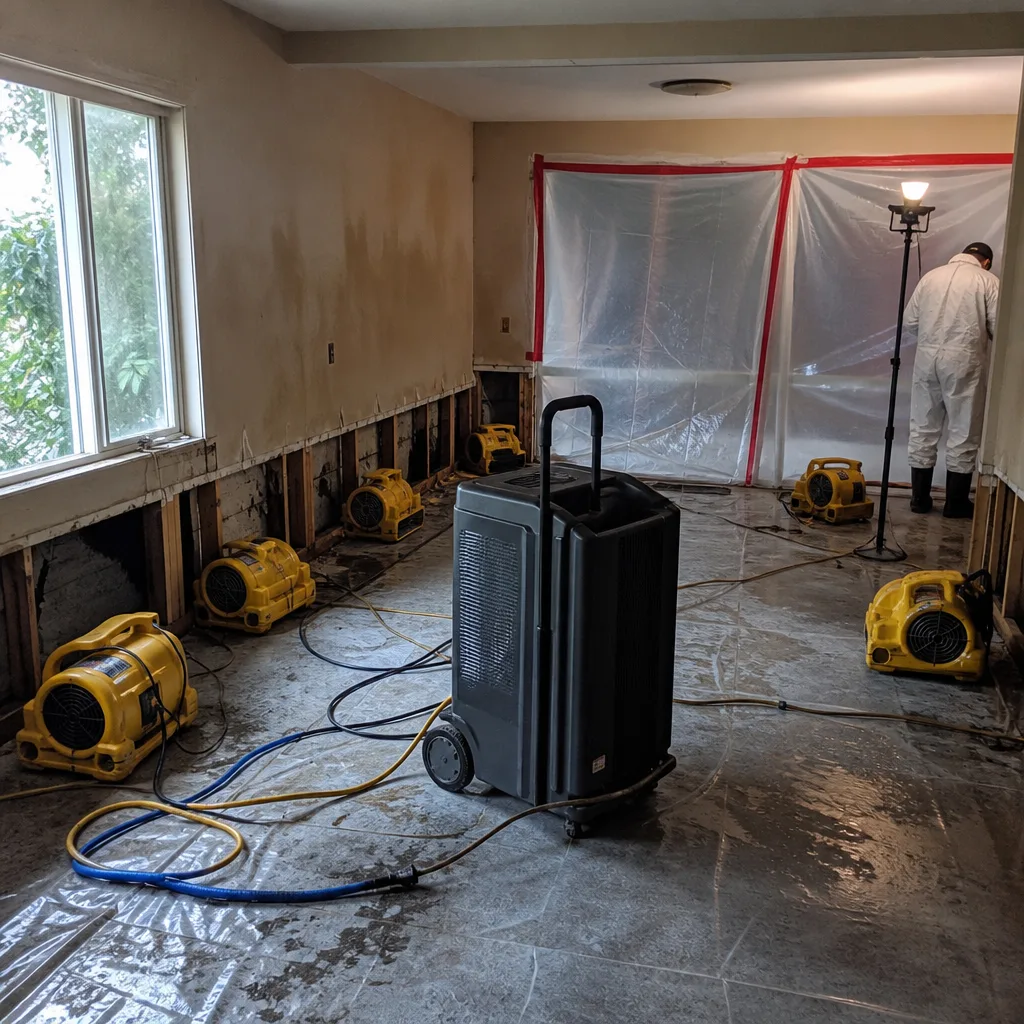
After physical removal, we scrub the air with HEPA filtration and monitor particle counts until the indoor air reads clean. This matters more in San Marino than in newer-built cities because original homes hold onto more dust, and old plaster walls can release mineral dust during any invasive work. We run the air scrubbers through the last day of the job and into the first day after, then hand you the before-and-after readings.
What happens when you call
- 1
A real person answersNo phone trees - you reach a local pro.
- 2
You get an upfront price rangeHonest numbers before anyone is dispatched.
- 3
A background-checked tech heads outLicensed & insured, dispatched right away.
- 4
You approve before work beginsNothing starts until you say go.
Trusted Brands We Service in San Marino
Floodline Restoration Co. of California runs professional-grade Dri-Eaz, Phoenix, XPOWER, B-Air, and Injectidry equipment on every San Marino job. For this city specifically, we carry and use Injectidry systems for drying wall cavities and plaster restoration matrices without tearing out original finishes. Our techs are certified to IICRC and RIA standards, and they know which tool fits a 1931 Tudor’s wall system versus a 1960s ranch in the same ZIP code. We stock parts and materials locally so turnaround stays fast when a San Marino homeowner calls on a Wednesday night.
Common Mold Remediation Problems We See in San Marino Homes
- Cracked clay drain lines under 1920s and 1930s foundations. These original lines develop micro-cracks over decades, wicking moisture into subfloor framing and feeding slow crawl space blooms. Standard mold removal that skips the drain repair leaves the home reinfected within months.
- Differential shrinkage in lath-and-plaster. Quick-drying a plaster wall with aggressive heat causes the plaster to shrink faster than the wood lath behind it, creating cracks that radiate far beyond the original mold area. We dry slowly and monitor with daily moisture readings to avoid turning a small remediation into a full replaster.
- Spore spread into period textiles and millwork. Without proper containment and negative air pressure, mold spores from one affected room settle into original wool carpeting, open-grain wood trim, and even the custom period tile grout in adjacent areas, where they cannot be fully cleaned.
- Historic finish matching after removal. A contractor who patches a 1920s Spanish Colonial Revival plaster ceiling with modern drywall and latex paint will be asked to leave. Local techs know the baseline in San Marino is skim-coat plaster matching and period-tinted paint, and we quote it that way from the start.
Pricing for Mold Remediation in San Marino, CA
A mold inspection with lab testing in San Marino runs $350 to $600 depending on the number of samples and the home’s square footage. Crawl space mold treatment typically lands between $1,800 and $4,200 for full containment, drying, antimicrobial application, and drain line assessment. Wall cavity remediation in a lath-and-plaster home runs $2,500 to $6,500 because of the containment requirements and the need to match historic finishes after removal. If the mold has spread across multiple rooms or the crawl space framing needs structural repair, costs rise accordingly. Every quote is written, itemized, and agreed to before we start. We bill your insurance carrier directly when there’s a covered loss, and estimates are free. Call (888) 737-2439 to schedule a walkthrough.
We Also Serve Cities Near San Marino
Floodline Restoration Co. of California handles mold remediation across San Marino and the surrounding communities. We routinely send crews to San Gabriel, East San Gabriel, Alhambra, and East Pasadena, often on the same day a homeowner calls. If you’re in one of those cities and found mold, the same live dispatcher at (888) 737-2439 will route a certified tech to your door.
Serving San Marino, CA - Our Local Coverage Area
We’re based in the San Marino area and know this community well. Use the map below to see our service coverage - if you’re nearby, we can almost certainly help.
FAQs - Mold Remediation in San Marino
It differs in drying speed, containment precision, and finish matching. Lath-and-plaster holds moisture longer than drywall, so we dry slowly with desiccant and LGR dehumidifiers rather than cranking heat, which causes differential shrinkage cracks. We also build tighter containment because original homes have more pathways, open-grain millwork and wool carpet, for spores to travel. The patch after removal matters just as much: we skim-coat plaster and tint paint to match the original surface, which a drywall patch simply won’t do. If you’re in a San Marino historic home, call (888) 737-2439 and ask for a tech who knows pre-1960 construction.
For most mold remediation work, no permit is required because the work falls under cleaning and restoration rather than new construction. However, if remediation involves structural repair, new framing, or changes to drainage or plumbing systems, a permit may be needed through the city’s building department. We handle the permit paperwork when it applies and can tell you in the first walkthrough whether your job needs one. We also coordinate directly with your insurance adjuster so you’re not left figuring out the paperwork alone.
We protect them with floor runners and isolation mats over all traffic paths, seal the crawl space access with negative air containment, and monitor subfloor moisture daily to catch any movement in the wood before it cups permanently. When we recently remediated a crawl space bloom in a 1938 Tudor on Cambridge Road, original clay drain lines had wicked moisture into the oak strip floor above. Our techs used Dri-Eaz LGR dehumidifiers and HEPA air scrubbers to dry the crawl to under 8% wood moisture, then matched the home’s original 2¼-inch quartersawn oak for a 14-square-foot patch. The homeowner and city inspectors both accepted the repair without issue. That’s the standard we hold on every San Marino floor.
Yes. We match plaster texture, finish sheen, and period-tinted paint after mold removal, and we coordinate with local plasterers who specialize in San Marino’s Spanish Colonial Revival and Mediterranean homes. The match isn’t an upgrade option here, it’s the baseline. A standard drywall patch painted with off-the-shelf white will be visible in a period room under any natural light. Tell us what you’re seeing when you call (888) 737-2439 and we’ll bring a finish sample deck to the inspection.
Most 1930s San Marino homes with original clay drain lines dry in four to seven days once the water source is stopped, but the full job including remediation, antimicrobial treatment, and drain line assessment takes three to five days on site. Clay lines under these foundations can stay damp for weeks after the visible water stops, which is why we use daily moisture readings and don’t pull our equipment until the framing reads under 8% wood moisture. We hand you the moisture log in writing, and the 90-Day Done Right Promise covers the work. If you suspect a slow leak under your foundation, call (888) 737-2439 for a free estimate.
Call Floodline Restoration Co. of California for Mold Remediation in San Marino
A mold problem in a San Marino estate home doesn’t wait, and neither should you. Call (888) 737-2439 and a live dispatcher will answer, day or night. We’ll send a background-checked, uniformed technician to your property in 91108 or 91118, write the scope before any work begins, and handle your insurance carrier directly with photo documentation and a written moisture log. Done right, and backed in writing: that’s the 90-Day Done Right Promise, and it applies to every mold remediation job we do in San Marino.
Written by Curt Bowman, Owner at Floodline Restoration Co. of California.