
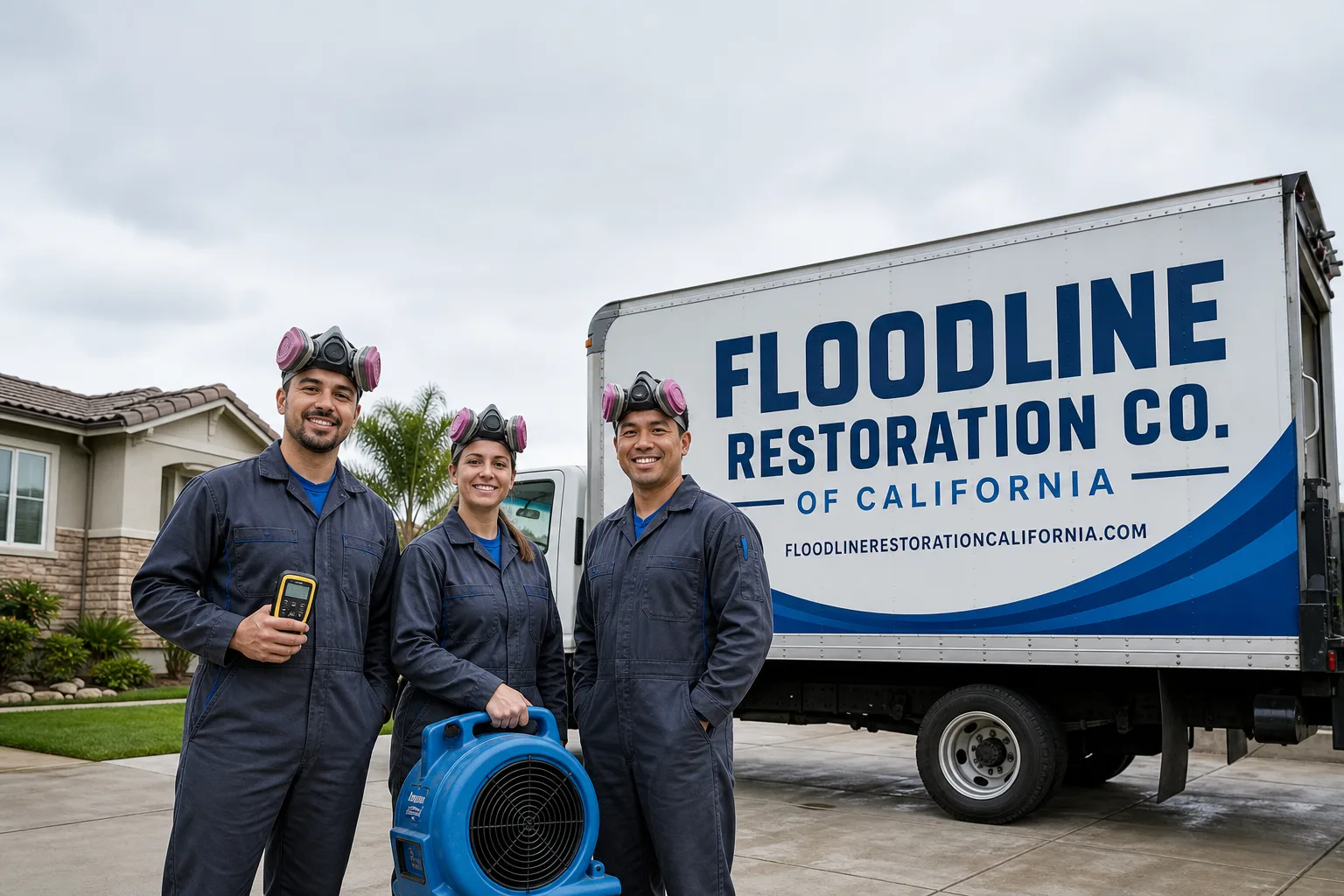
Fast, Reliable Mold Remediation Across San Clemente
Mold remediation in San Clemente typically costs $1,800-$6,500 depending on square footage, and in most cases we can have a certified crew at your door within 90 minutes. If you’re in the 92672, 92673, or 92674 zip codes and you’ve spotted discoloration on a wall, caught that musty smell in a hallway, or noticed warped baseboards after a storm, call Floodline Restoration Co. of California at (888) 737-2439 right now. We know exactly how salt air and canyon runoff work against San Clemente homes, and we’ll tell you straight what needs doing before any work starts.
What sets us apart here is simple: we’ve spent over 42 years in coastal restoration work, and we’ve seen how a Talega tract home fails differently than a 1950s Ole Hanson cottage in the Pier Bowl. A live dispatcher answers at 2 a.m., not a recording. The same background-checked, uniformed crew that reads the moisture map on day one handles daily readings and hands you and your carrier the log when we’re done. San Clemente homeowners don’t get handed off to a subcontractor who’s never seen the job.
Why Floodline Restoration Co. of California Is San Clemente’s Preferred Mold Remediation Company
We’ve been called out to homes near Shorecliffs Golf Course, up in the Talega hills, and down along Avenida Del Mar enough times that we can usually tell you what’s happening before we even open a wall. San Clemente’s building stock has a specific failure pattern: the stucco shell looks fine from the street, but the weep screed at the base has corroded through from decades of salt-laden humidity, and moisture has been wicking up the wall cavity for months. We don’t guess at that. We verify with infrared scanning and moisture mapping, then we show you the readings.
Our team is led by Curt Bowman, who founded Floodline Restoration Co. in 2010 around a dispatch board, not a sales desk. Every technician is trained to IICRC, RIA, and IFA standards. We carry Dri-Eaz dehumidifiers and Phoenix air movers on every San Clemente job, and we log daily moisture readings until the dry standard is met. The work is backed by the 90-Day Done Right Promise, our written guarantee. If it isn’t done right, we make it right. No arguing, no paperwork battles. That’s the Keystone Standard, and it’s in writing on every job we start in San Clemente.
San Clemente homeowners remember being burned by a contractor once. We hear it on every other call. “The last guy said he’d fix it and the mold came back in six months.” That’s why we hand you the moisture log. That’s why we don’t leave until post-remediation air sampling comes back clear. And that’s why our phone number is answered by a person every hour of every day: (888) 737-2439.
Our Mold Remediation Services in San Clemente
Mold Inspection & Testing
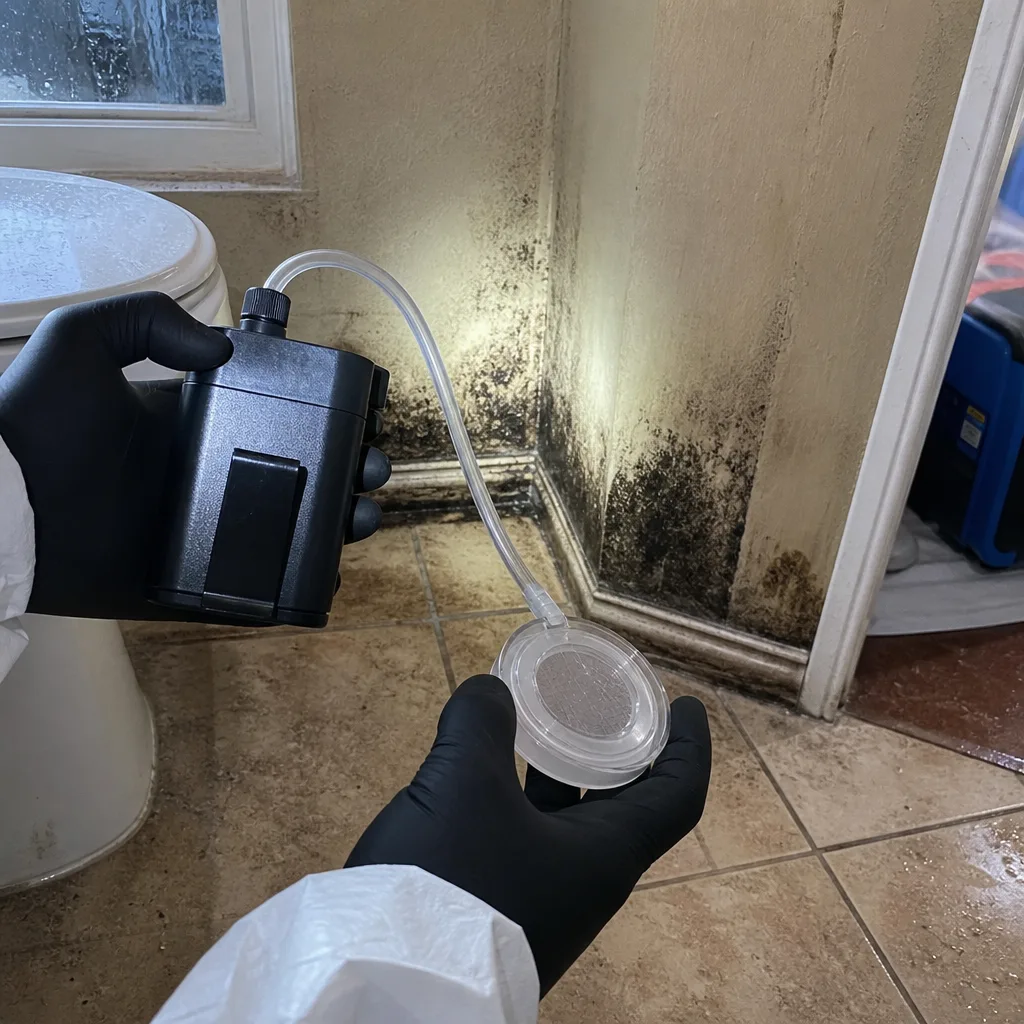
Before we remove anything, we find out what we’re actually dealing with. In San Clemente, that means checking attics under clay tile roofs, wall cavities behind stucco, and crawl spaces below hillside foundations. We use infrared cameras and moisture meters to map the extent of the water intrusion, and we sample air and surfaces so you know what species of mold is present and how concentrated it is. Homes in the 92672 coastal core often hide mold behind original single-wythe stucco walls that never had proper vapor barriers installed.
Mold Removal
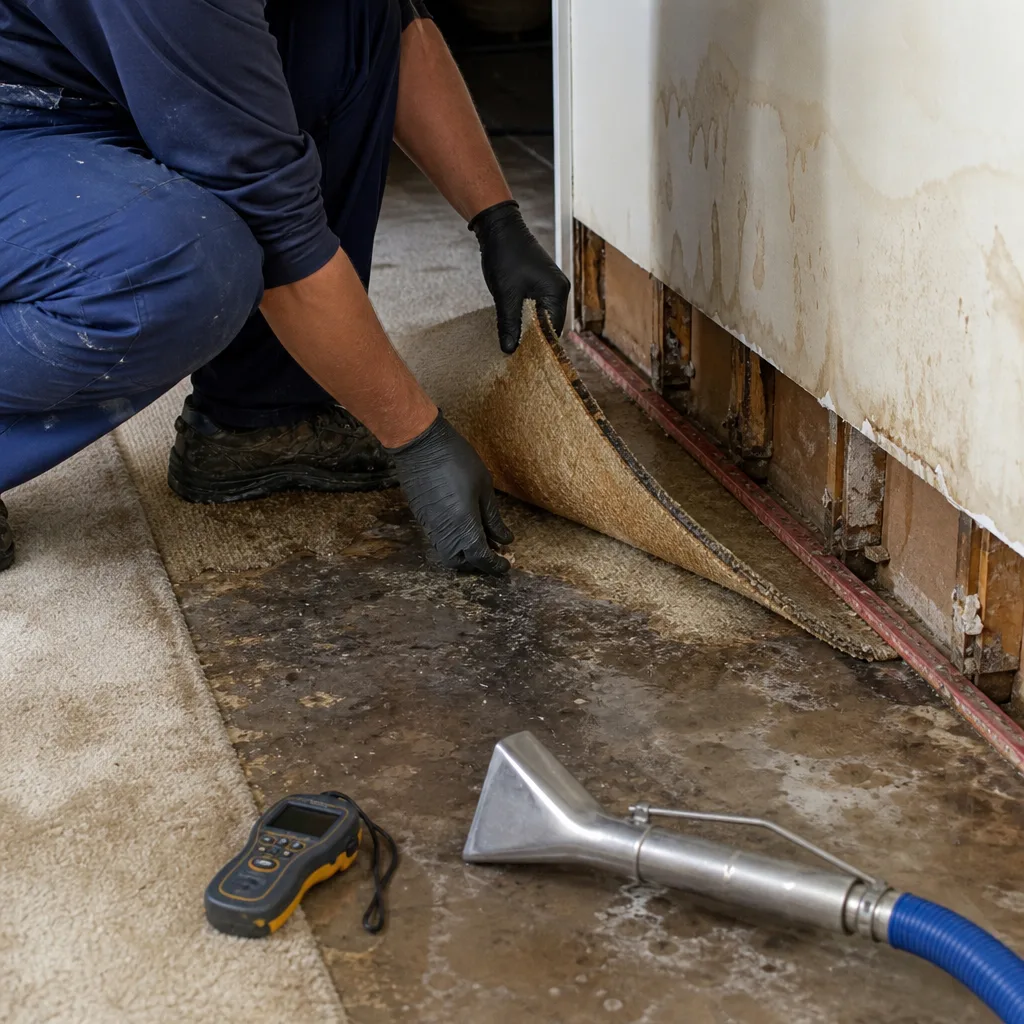
Mold removal in San Clemente involves containment, HEPA air filtration, and physical removal of contaminated materials. We set up negative air pressure so spores don’t spread to your kitchen while we work in your crawl space. We use professional-grade Dri-Eaz and XPOWER equipment to keep the air clean during the job. Then we haul out the affected drywall, insulation, or sheathing, and we treat the framing with an EPA-registered antimicrobial. This is standard practice on hillside homes in Talega where OSB sheathing swells and supports mold growth once the stucco envelope is breached.
Black Mold Remediation
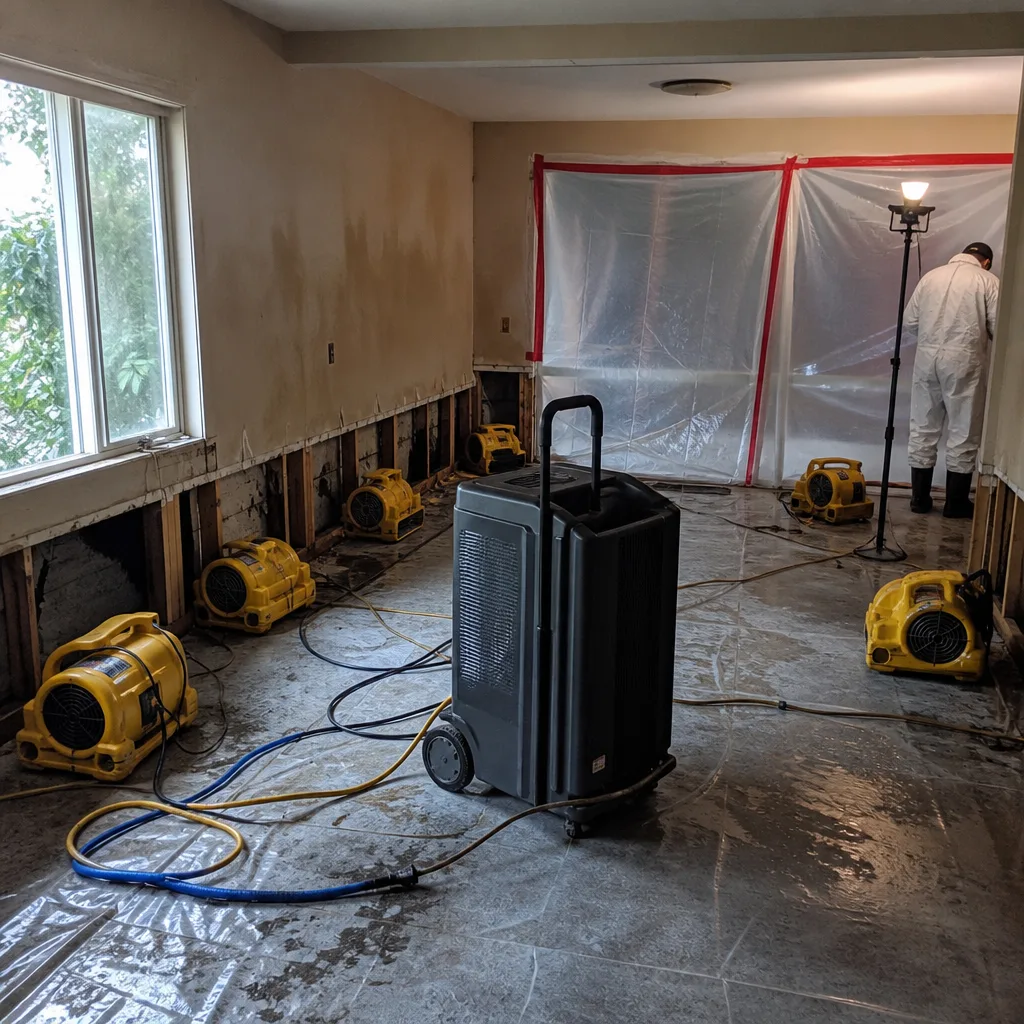
Black mold, usually Stachybotrys chartarum, thrives on chronically wet cellulose materials like paper-faced drywall and the backside of OSB. San Clemente’s coastal humidity means materials dry slowly once they get wet, which is exactly the condition black mold prefers. We treat black mold with full containment, negative air pressure, and complete removal of porous materials that cannot be adequately cleaned. There’s no coating, paint, or spray that makes colonized drywall safe to leave behind. We remove it, and we find and fix the moisture source so it doesn’t regroup.
Air Quality Restoration
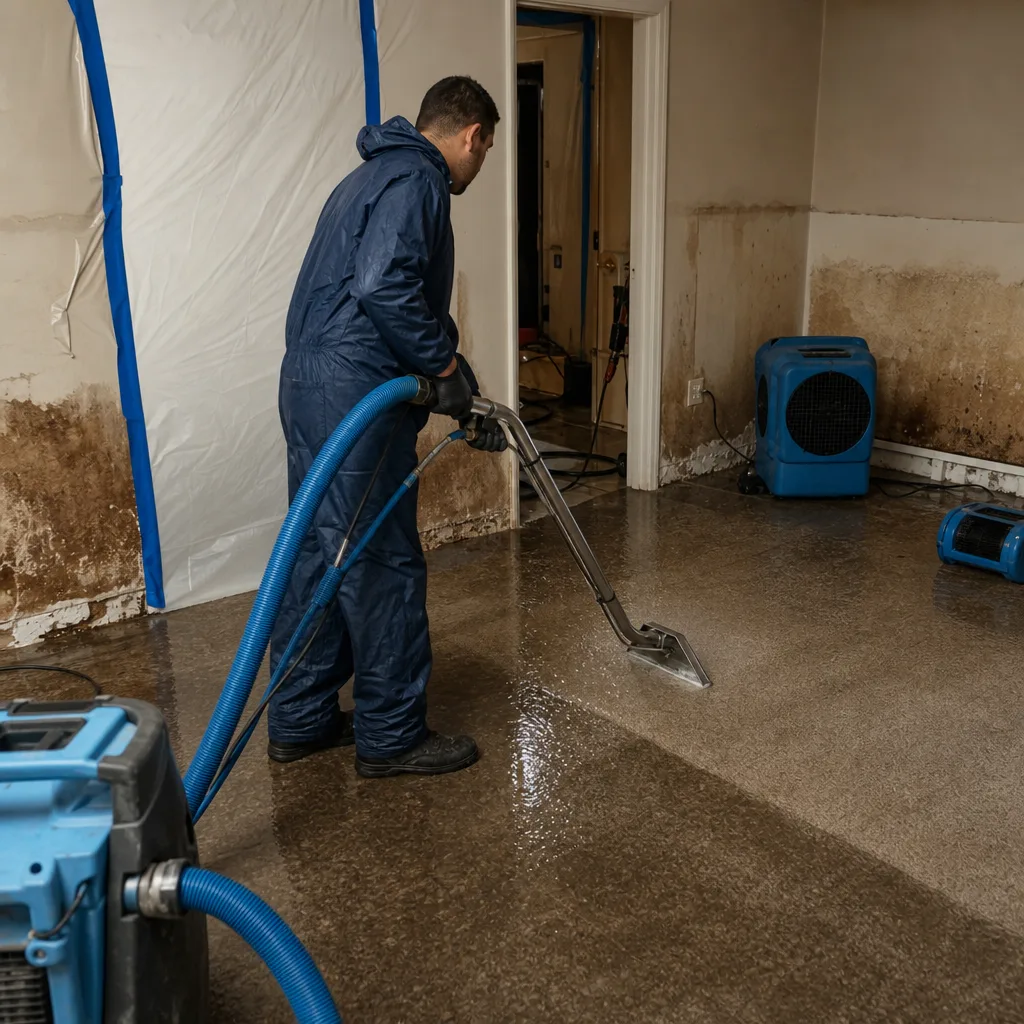
After removing mold, we restore your indoor air. That means HEPA air scrubbing, post-remediation air sampling with a third-party lab, and verification that spore counts inside your San Clemente home are at or below outdoor baseline. For homes in 92673 with recent water intrusion, we often find elevated spore counts in the HVAC system. We clean the ductwork and replace filters, and we recommend a dehumidifier for homes that fight the marine layer every single morning. Air quality restoration is not an add-on; it’s how we prove the job is actually finished.
What happens when you call
- 1
A real person answersNo phone trees - you reach a local pro.
- 2
You get an upfront price rangeHonest numbers before anyone is dispatched.
- 3
A background-checked tech heads outLicensed & insured, dispatched right away.
- 4
You approve before work beginsNothing starts until you say go.
Trusted Brands We Service in San Clemente
Our crews are trained to IICRC and RIA standards, and we run Dri-Eaz dehumidifiers, Phoenix air movers, and XPOWER air scrubbers on San Clemente jobs every week. Why does the equipment matter? Because coastal homes dry on a different schedule than inland homes. The marine layer keeps relative humidity high overnight, which slows evaporation unless your drying chamber is engineered properly. We match the equipment to the building envelope: larger dehumidification capacity for stucco-walled homes that trap moisture, and Injectidry systems for the interior wall cavities in Talega’s hillside construction where horizontal drying is the only way to reach the damp layer behind the tile.
We stock the consumables needed for San Clemente work: HEPA filters for our air scrubbers, reinforcing patches for the containment barriers we build in occupied homes, and replacement weep screeds in stainless steel. When a 1950s bungalow near Las Palmas Elementary has corroded steel weep screeds, we don’t wait three days for a part to ship. We have it on the truck.
Common Mold Remediation Problems We See in San Clemente Homes
- Clay tile roofs that look perfect but leak. The 30-year-old felt underlayment beneath the tile degrades invisibly. We’ve moisture-mapped dozens of San Clemente attics where the tiles were pristine but the underlayment was brittle and torn, dumping rainwater into ceilings for years. Infrared scanning catches this before the ceiling collapses.
- Salt-air corrosion at weep screeds and J-channels. The bottom edge of stucco walls is designed to let moisture drain out. When the metal weep screed corrodes through from years of marine air, the path reverses: moisture travels up, not out. This is the number one cause of hidden mold we find behind intact-looking stucco in the 92672 and 92673 zip codes.
- Atmospheric river runoff against downslope foundations. When heavy rain comes through Cristianitos Creek and the Avenida Pico corridor, water and debris concentrate against hillside foundations. Crawl spaces in canyon-adjacent homes saturate, and without proper drying, that’s a mold factory.
- Crawl spaces that never quite dry. Many San Clemente homes, especially the pre-1960s cottages in the coastal core, have dirt crawl spaces with no vapor barrier. The combination of high groundwater after winter rains and humid marine air means the sill plates and subfloor stay damp for months. Mold grows on the underside of the flooring while the living space above remains completely normal.
San Clemente’s combination of coastal bluff-and-canyon topography with city-mandated Spanish Colonial Revival architecture creates a damage restoration environment found nowhere else on the coast. When atmospheric rivers make landfall here, stormwater funnels through the city’s deep transverse canyons directly into hillside homes, while the mandated clay-tile roofs and stucco exteriors, salt-air corroded at the flashing and weep-screed points, allow water to wick behind wall systems that look intact from the outside. Restoration here almost always means navigating both hydrology-driven structural intrusion and concealed moisture behind stucco shells. This is the local reality we train our crews on, and it’s why our Mold Remediation team doesn’t skip the moisture mapping step.
Last winter after an atmospheric river, our crew responded to a 1990s Talega hillside home where the clay tile roof looked perfect but infrared scanning revealed a ceiling moisture plume from failed felt underlayment. We contained the attic, removed mold from paper-faced drywall and OSB sheathing, then installed a Dri-Eaz dehumidification system and replaced corroded weep screeds with stainless steel, verifying clearance with post-remediation air sampling. That homeowner called us for a ceiling stain. What we found was a wall cavity full of Stachybotrys that had been growing for at least two years. The homeowner never saw it because the stucco exterior looked untouched.
Pricing for Mold Remediation in San Clemente, CA
Here’s honest pricing for San Clemente’s market. A crawl space mold treatment typically runs $1,800-$3,200. A single-room mold remediation with full containment and air scrubbing runs $2,500-$4,800. A whole-home remediation, which is what we see after atmospheric river events when multiple rooms are saturated behind stucco, runs $5,000-$9,500. Black mold jobs push toward the higher end because of the containment requirements and disposal of contaminated materials.
| Service | Typical Range in San Clemente |
|---|---|
| Mold Inspection & Air Sampling | $395-$750 |
| Crawl Space Mold Treatment | $1,800-$3,200 |
| Single-Room Full Remediation | $2,500-$4,800 |
| Whole-Home Remediation | $5,000-$9,500 |
| Mold Removal + Crawl Space Encapsulation | $7,000-$12,500 |
What moves the number in San Clemente is access. Hillside homes in Talega often need exterior containment or scaffolding for attic access. Historic Ole Hanson cottages can have tight crawl spaces that slow the job. Salt-damaged stucco repairs add to the total if we’re replacing corroded flashing and weep screeds. Every estimate is written, itemized, and agreed to before we start. Call (888) 737-2439 for a free estimate with no obligation.
We offer $50 Off Any Repair Over $250, an $89 Seasonal Tune-Up, and a standing 5% Senior & Veteran Discount. Direct insurance billing means you never play messenger between us and your carrier. We do photo documentation and adjuster coordination as part of the job.
We Also Serve Cities Near San Clemente
Floodline Restoration Co. of California serves San Clemente’s neighboring communities including San Juan Capistrano, Dana Point, Ladera Ranch, and Laguna Niguel. Each city has its own microclimate and housing patterns; we see more hillside townhomes in Ladera Ranch, more single-wall construction in Dana Point’s older beachside streets, and more flat-land tract housing in Laguna Niguel. If you’re outside the San Clemente zip codes but need the same square deal, call us at (888) 737-2439.
Serving San Clemente, CA - Our Local Coverage Area
We’re based in the San Clemente area and know this community well. Use the map below to see our service coverage - if you’re nearby, we can almost certainly help.
FAQs - Mold Remediation in San Clemente
Because the stucco’s bottom weep screed drains corrode through after years of salt-laden coastal air, and water then wicks upward into the wall cavity instead of draining out. The outside of your wall looks fine. The inside stays damp for months, growing mold you can’t see or smell yet. This is the most common hidden mold pattern we find in the 92672 and 92673 zip codes, and it typically requires invasive inspection, infrared scanning, or both to catch. If your San Clemente home is stucco-clad and older than about 25 years, call (888) 737-2439 and we’ll schedule a moisture assessment.
Salt air corrodes the metal components of the building envelope, flashings, J-channels, weep screeds, and HVAC penetrations, years earlier than inland, creating more entry points for water. It also means materials dry more slowly because the marine layer holds humidity high overnight, and wet, slow-drying building materials are exactly what mold needs. Our remediation approach in San Clemente includes addressing the corrosion source, not just removing the visible mold, since leaving it in place guarantees recurrence.
After a heavy atmospheric river, check your ceilings for faint discoloration, especially around recessed lights and along exterior walls, and check for a musty odor that gets stronger in the late afternoon. In San Clemente, the first surfaces to show moisture after canyon runoff events are often the garage wall against the downslope foundation and the bathroom ceiling under a tile roof valley. Damp staining on OSB sheathing inside the garage is a red flag. If you see any of these, call us at (888) 737-2439 for an inspection before the mold has time to colonize.
Yes, and the difference is the building envelope. Talega homes from the 1990s and 2000s used paper-faced drywall and OSB sheathing that swell and support mold growth aggressively once water breaches the stucco envelope, so remediation there usually means cutting out and replacing large sections of wall. Ole Hanson cottages in the 92672 coastal core are often single-wythe stucco with no vapor barrier, so the wall cavity hides moisture in a different way and often requires opening interior plaster to reach it. Both need moisture mapping before any scoping conversation.
Because in San Clemente, the groundwater in canyon-adjacent homes stays high for months after winter rains, and the marine layer keeps crawl space relative humidity at 70% or above almost year-round. If your crawl space was remediated without installing a vapor barrier, sealing the vents, and adding a dehumidifier, the mold returned because the moisture source was never eliminated. We treat crawl spaces by containing the area, removing contaminated insulation, treating the framing, then installing encapsulation and a dehumidistat-controlled drying system. That’s the difference between remediation that lasts and remediation that fails in 18 months.
Written by Curt Bowman, Owner at Floodline Restoration Co. of California, serving San Clemente and surrounding coastal communities.