
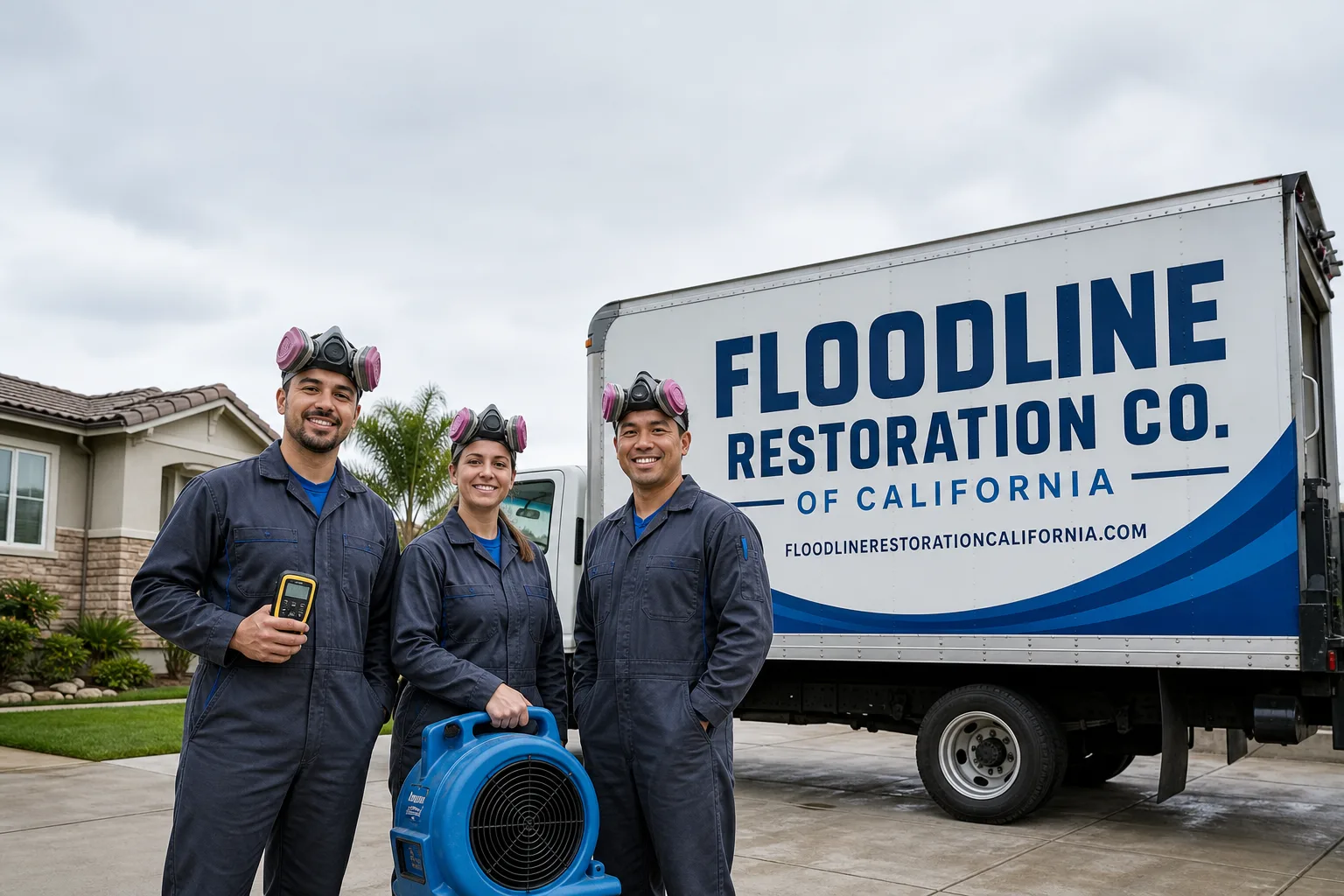
Fast, Reliable Mold Remediation Across Koreatown
Mold remediation in Koreatown typically costs $1,800-$6,500 depending on how far the colony has spread through shared walls, and most jobs in the 90005 ZIP are underway within 24 hours of the first call. Koreatown’s pre-war courtyard buildings and 1960s-1980s stucco blocks hide moisture in ways newer construction doesn’t, which means a visible patch of ceiling mold is rarely the whole story. We dispatch certified crews to Koreatown seven days a week, and a live person answers at (888) 737-2439 no matter the hour.
Why Floodline Restoration Co. of California Is Koreatown’s Preferred Mold Remediation Company
We know Koreatown’s buildings because we’ve worked inside hundreds of them: the Spanish Colonial Revival courtyards on South Berendo and Oxford, the Streamline Moderne walk-ups west of Wilshire, the flat-roof stucco blocks that line the side streets off Vermont. Our Mold Remediation team has pulled back drywall in Koreatown units built before 1940 and found galvanized risers that should have been replaced decades ago. That local familiarity changes how we scope a job: we look first at the vertical wet-wall alignment between stacked units, then at the soft-story ground floor beneath, because those are exactly where Koreatown’s hidden mold colonies live. Curt Bowman founded this company in 2010 around a simple idea: answer the phone with a person, show up when we say, and stand behind the work in writing. Koreatown property owners call us back because the 90-Day Done Right Promise isn’t a slogan; it’s a written guarantee, and the Keystone Standard behind it means we don’t leave until the moisture log says the dry standard is met in every affected unit.
We’ve built our Koreatown reputation one courtyard building at a time. Landlords managing remotely, many of them communicating primarily in Korean, tell us the same thing: they want a contractor who will walk the entire building, not just the one unit with visible mold. That’s how we work. Our uniformed, background-checked technicians are trained to IICRC, RIA, and IFA standards, and they arrive with professional-grade equipment: Dri-Eaz dehumidifiers, Phoenix axial air movers, Injectidry drying panels, B-Air and XPOWER units sized for multi-unit spaces. Response time to any Koreatown address is typically under two hours from your call, and scheduling is coordinated from our Los Angeles office with crews serving Koreatown locally every day.
Key Takeaways
- Koreatown mold jobs routinely expand beyond one unit because stacked wet walls align vertically in older apartment buildings. We scope accordingly from the start.
- Soft-story retrofits and post-seismic displacement create hidden interstitial mold that standard water-loss scoping misses. We inspect those cavities specifically.
- Real Koreatown pricing runs $1,800-$6,500 for most remediations; crawl space treatment typically runs $900-$2,400.
- Every job is backed by the 90-Day Done Right Promise in writing, billing goes directly to your carrier, and estimates are free.
Our Mold Remediation Services in Koreatown
Mold Inspection & Testing
A proper mold inspection in Koreatown starts with the building, not the stain. We run moisture mapping across stacked units, check the soft-story ground floor for post-seismic wall-cavity cracks, and test air quality in shared corridors and utility closets. Surface mold on one bathroom ceiling in a 1940s courtyard building often traces back to a corroded riser or a flat-roof membrane failure two floors up. We photograph everything and hand you a written scope before any remediation work begins.
Mold Removal
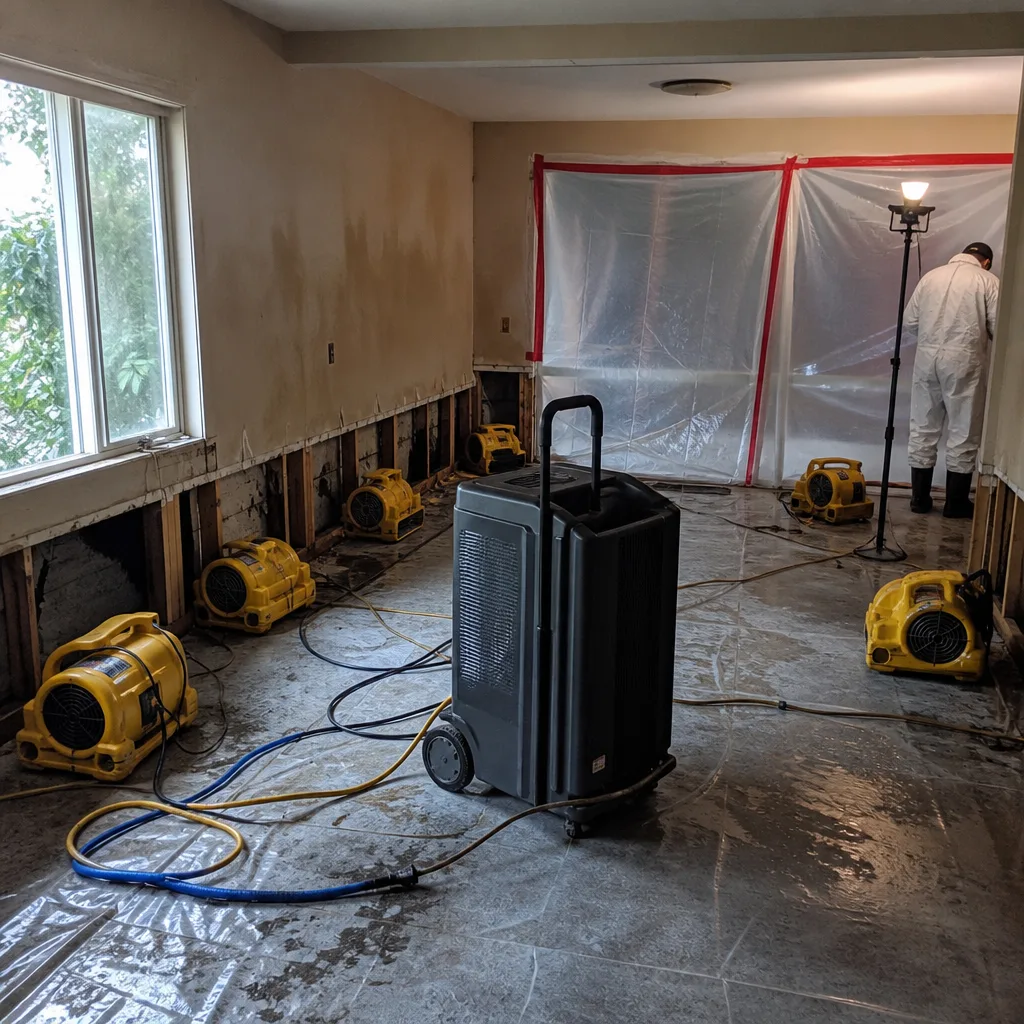
Mold removal in Koreatown apartments means containing the colony before it spreads through shared wall cavities. We use HEPA-filtered negative air machines and full containment barriers at each affected unit’s doorway, then remove contaminated drywall, insulation, or plaster down to clean framing. In multi-unit buildings, we coordinate with property managers to keep tenants informed and keep stairwells and courtyards passable during the job. Most Koreatown mold removals are completed in a single visit, with the same crew running daily moisture readings until the structure is dry.
Black Mold Remediation
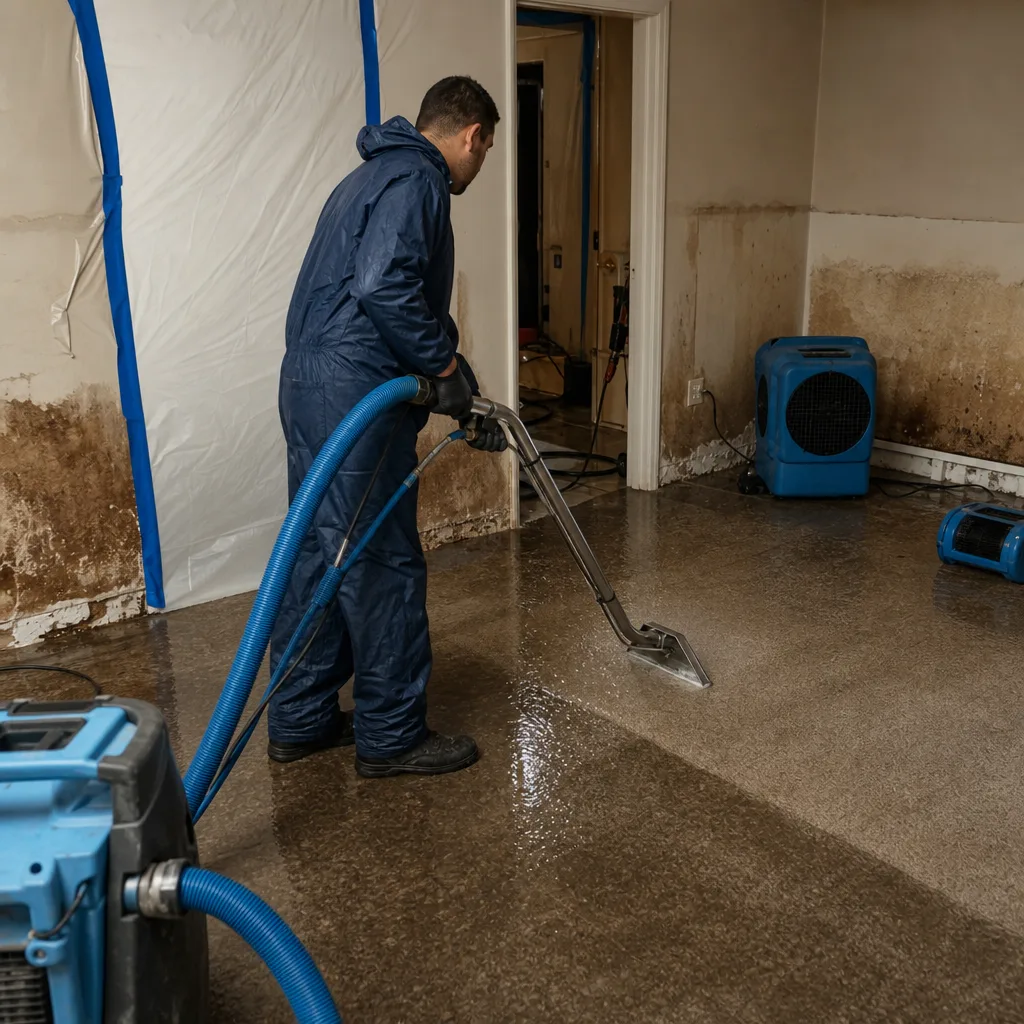
Black mold, usually Stachybotrys, shows up in Koreatown’s hidden interstitial spaces more than any other neighborhood we serve. That’s not an accident: non-retrofitted soft-story ground floors torque after seismic events, cracking wall cavities where moisture sits stagnant. We treat black mold as a structural issue, not a surface cleaning problem. That means targeted removal of affected materials, antimicrobial treatment of framing, and drying protocols that account for Koreatown’s minimal cross-ventilation and urban heat island effect, which accelerates mold growth within 48 hours of a moisture event.
Air Quality Restoration
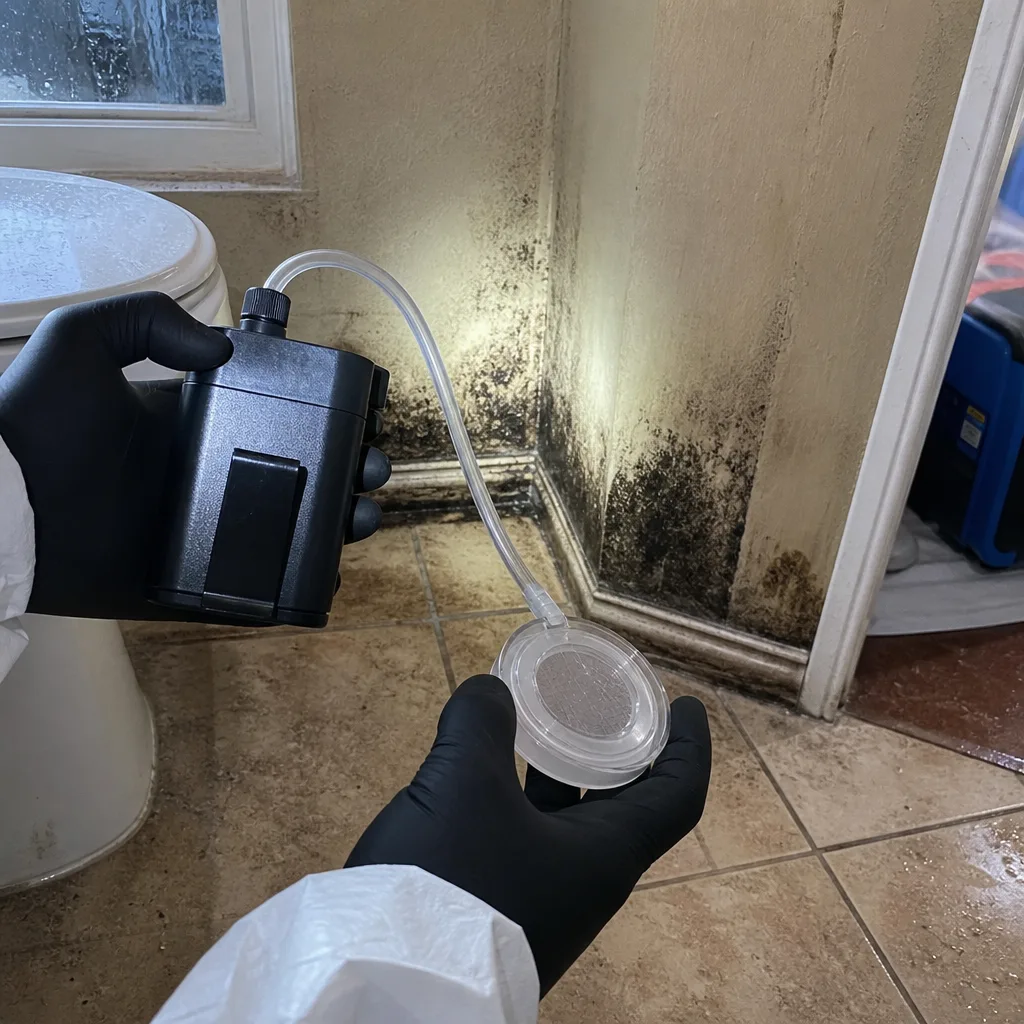
After physical removal and drying, the air inside a Koreatown unit needs to be brought back to a safe standard. We run HEPA air scrubbers during remediation and perform post-remediation verification air sampling so you have independent confirmation the spore count is normal for the 90005 baseline. This matters particularly in interior courtyard units where windows open onto shared wells and cross-ventilation is poor. The written moisture log and air quality report go to both you and your insurance carrier, with no chasing on your end.
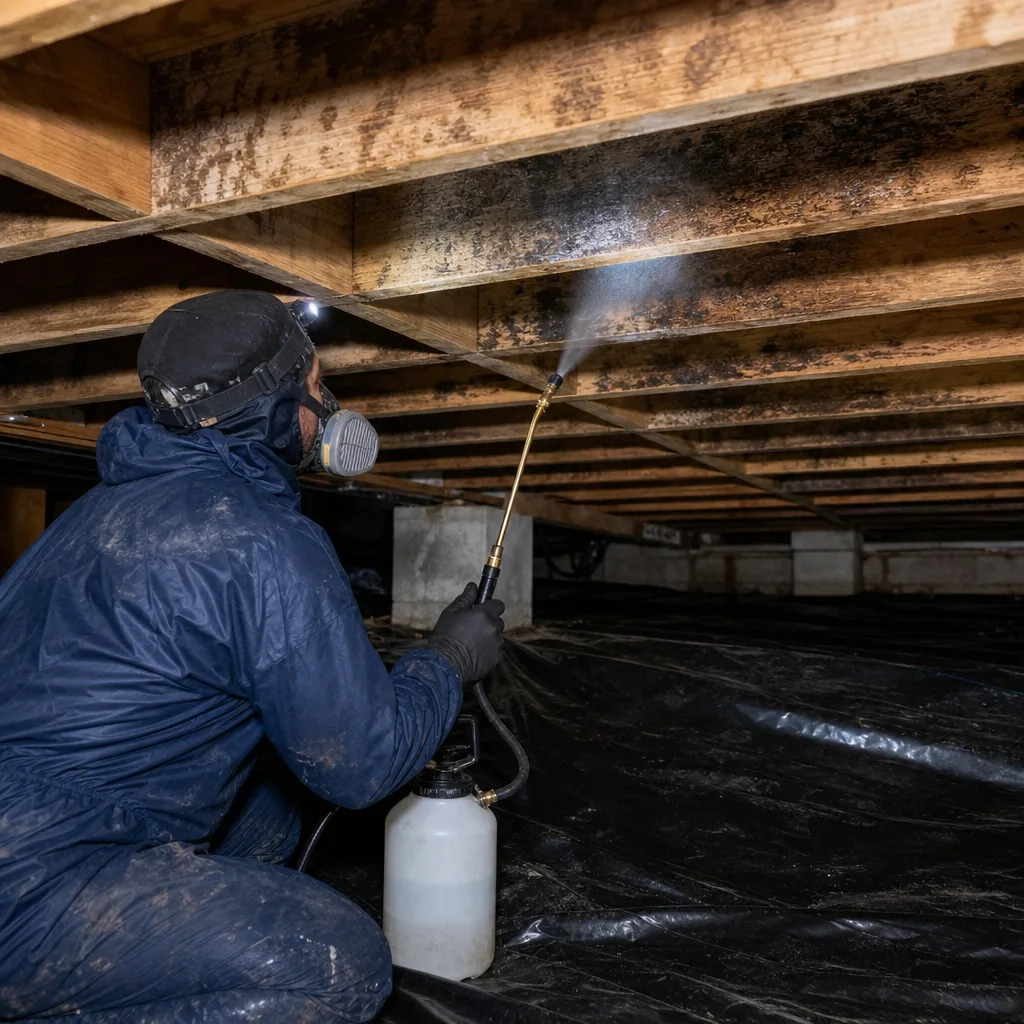
Crawl Space Treatment
Koreatown’s older buildings frequently have dirt-floor crawl spaces under the soft-story carport or rear wing, and those spaces feed moisture upward into ground-floor units. We install vapor barriers, treat fungal growth on joists and subflooring, and add mechanical ventilation where the building envelope allows. A crawl space treatment in Koreatown typically runs $900-$2,400 depending on square footage and access, and it’s one of the most effective ways to stop recurring mold in lower units.
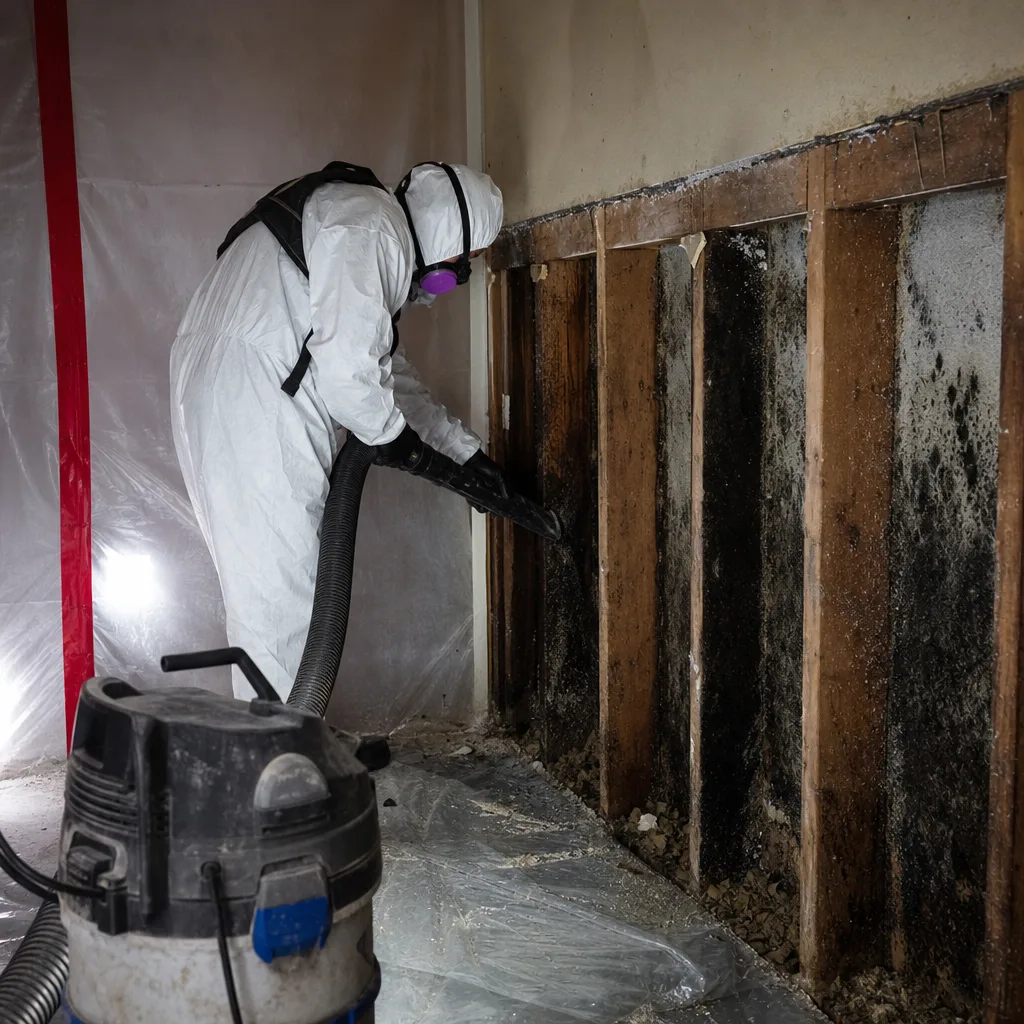
Moisture & Humidity Control
Koreatown units with minimal cross-ventilation need active moisture management, not just a one-time drying pass. We assess each unit’s dew point profile, install or recommend appropriately sized dehumidification, and where feasible improve airflow through existing window and vent configurations. For flat-roof 1960s-1980s blocks, we also flag membrane issues that will re-wet the envelope every winter atmospheric river event. Moisture and humidity control typically runs $700-$1,800 per unit in Koreatown depending on equipment needs.
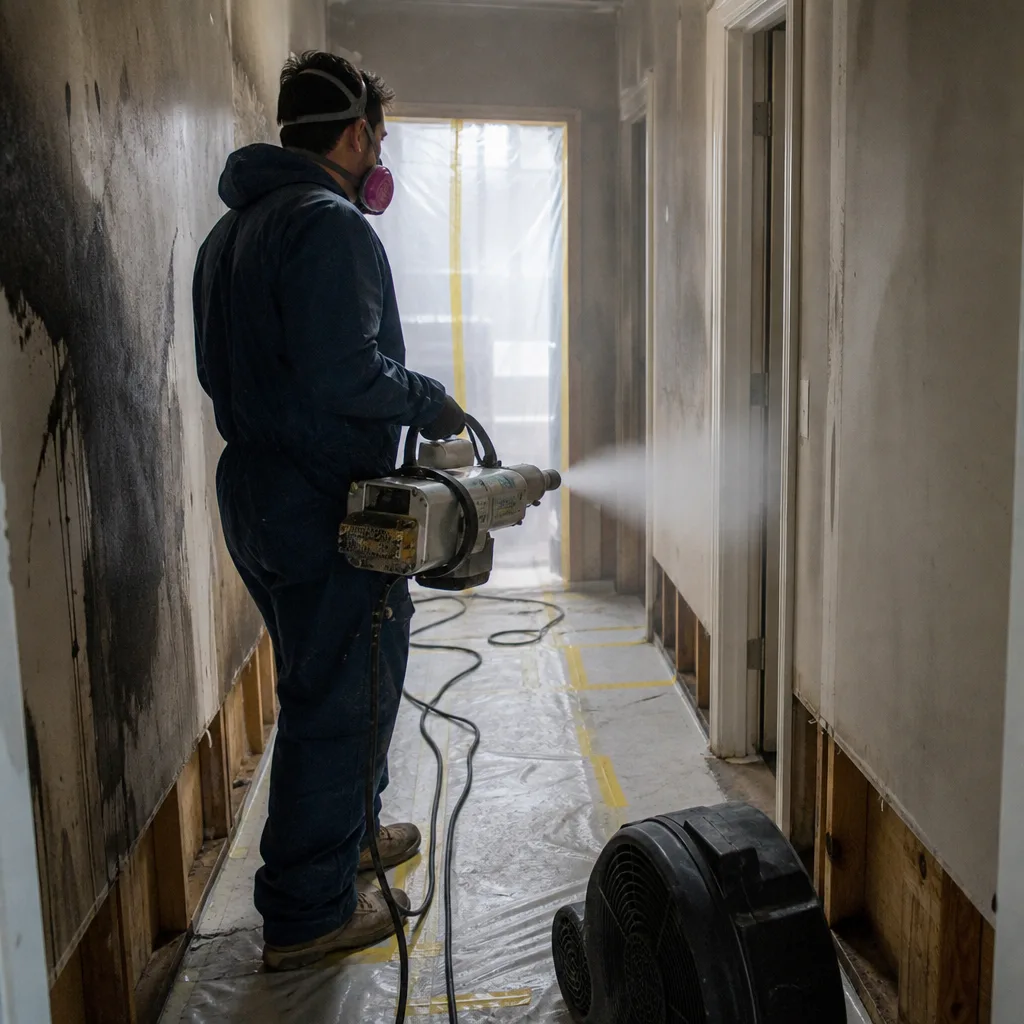
What happens when you call
- 1
A real person answersNo phone trees - you reach a local pro.
- 2
You get an upfront price rangeHonest numbers before anyone is dispatched.
- 3
A background-checked tech heads outLicensed & insured, dispatched right away.
- 4
You approve before work beginsNothing starts until you say go.
Trusted Brands We Service in Koreatown
Our Koreatown crews stock parts and consumables for the equipment already in place across the neighborhood’s property management inventory. We service and dry with Dri-Eaz dehumidifiers and Phoenix air movers on nearly every job, and we’re familiar with the moisture mapping and drying panel setups those systems require. Whether you’re managing a 1940s courtyard on South Berendo or a 1970s block off Western, we keep turnaround fast because we don’t have to wait on out-of-area parts runs for the brands we already run daily.
Common Mold Remediation Problems We See in Koreatown Homes
- Multi-unit migration through stacked wet walls: In Koreatown’s open floor-plan stacking, a roof membrane breach or pipe failure in one unit saturates drywall in two or three units below before visible mold appears. We scope all affected verticals on the first walkthrough, not just the unit where the stain showed up.
- Hidden interstitial mold in soft-story cavities: Post-seismic displacement in non-retrofitted soft-story ground floors cracks wall cavities and creates hidden spaces where moisture collects and Stachybotrys thrives. Standard water-loss scoping misses these entirely; our inspection includes them by default for any Koreatown building flagged under the Mandatory Seismic Retrofit Ordinance.
- Accelerated growth from poor ventilation and heat: Interior courtyard units in Koreatown often have windows facing shared wells with little airflow. The dense urban heat island effect raises ambient temperatures, and mold colonies establish within 48 hours of a leak, outpacing typical drying schedules. We adjust our drying plan accordingly.
- Corroded legacy galvanized and cast-iron supply lines: Koreatown’s 1920s-1940s buildings still run original supply plumbing in many cases. A pinhole leak behind a wall can go unnoticed for weeks, feeding mold behind plaster and lath. Our moisture mapping identifies these slow leaks even when the wall face looks dry.
Pricing for Mold Remediation in Koreatown, CA
Mold remediation in Koreatown runs $1,800-$6,500 for a typical single-unit scope, with the range driven by how many stacked units are involved and whether the soft-story cavity or crawl space is part of the problem. Mold inspection and testing alone typically runs $350-$700. Crawl space treatment runs $900-$2,400. Moisture and humidity control runs $700-$1,800 per unit. A single confined bathroom ceiling patch can sometimes stay under $1,500; a three-unit stacked remediation with shared wall cavity involvement and soft-story access will land in the $5,000-$6,500 range. These are real Koreatown numbers, not national averages. Every estimate is free, given in writing before work starts, and backed by the 90-Day Done Right Promise, the Keystone Standard, in writing, with no arguing if something isn’t right.
We also bill your insurance carrier directly and coordinate with your adjuster using photo documentation from day one. You don’t play messenger. Call (888) 737-2439 for an exact quote. Current standing offers: $50 off any repair over $250, an $89 seasonal tune-up, and a 5% senior and veteran discount, always.
We Also Serve Cities Near Koreatown
While this page is written for Koreatown property owners and landlords, our crews handle mold jobs across the surrounding basin every day. We regularly work in Koreatown and the adjacent neighborhoods of Los Angeles, Echo Park, Silver Lake, and Hollywood. If your building sits on the eastern edge of the 90005 ZIP or just over the line into a neighboring district, the same certified team and the same written guarantee apply.
Serving Koreatown, CA - Our Local Coverage Area
We’re based in the Koreatown area and know this community well. Use the map below to see our service coverage - if you’re nearby, we can almost certainly help.
FAQs - Mold Remediation in Koreatown
It means any mold job in a soft-story wood-frame building under the Mandatory Seismic Retrofit Ordinance must include inspection of the ground-floor wall cavities and the space behind the carport, because post-seismic displacement creates hidden interstitial spaces where moisture collects and mold grows unseen. A standard scoping that only addresses the visible mold in an upper unit will miss colonies in those displaced cavities. Our Koreatown scopes include soft-story cavity inspection by default on any flagged building. Call (888) 737-2439 and we’ll walk the building with you before quoting.
Yes, in most cases it does. A 1940s courtyard building on Oxford Ave. with original galvanized or cast-iron supply lines and stacked wet walls means moisture from one unit’s failure routinely migrates through shared floors and ceilings into the units below. Our crew was called to a Streamline Moderne courtyard on South Berendo Street for ceiling mold in a third-floor unit and traced moisture through stacked drywall to a corroded galvanized riser in a ground-floor utility closet. The mold had already spread to a shared crawl space behind the soft-story carport. We ran Phoenix axial dryers with Injectidry panels and performed full HEPA remediation across four units in three days. Expect the scope to expand; plan for it from the first call.
Yes. The flat or low-pitch roofs on Koreatown’s 1960s-1980s stucco apartment blocks are poorly equipped for the intense atmospheric river rain events that hit the basin each winter, and the membrane failures that follow re-wet the same walls over and over. After mold removal in one of these buildings, we recommend adding active dehumidification in units with minimal cross-ventilation and addressing the roof membrane itself if it’s near the end of its service life. Otherwise the cycle repeats within a season.
Yes, that’s a common situation in Koreatown, and we handle it routinely. Our scope of work is written in plain English with photo documentation, and we can coordinate with your designated local property manager or on-site contact if one exists. We walk the entire building, not just the unit with visible mold, and send daily moisture readings with photos so you can see progress from anywhere. Direct insurance billing means you’re not wiring payments back and forth while the job is underway. Call (888) 737-2439 and we’ll set up the first walkthrough.
Two reasons work together: Koreatown’s interior courtyard apartments have minimal cross-ventilation, so moisture stays trapped inside units, and the dense urban heat island effect in this corridor raises ambient temperatures above the basin average, accelerating mold colonization within 48 hours of a moisture event. Outlying neighborhoods with lower density and better airflow typically see slower growth. That’s why we recommend calling immediately after any water event in the 90005 ZIP; a 24-hour delay in Koreatown can mean the difference between surface mold and a structural remediation.
Call Floodline Restoration Co. of California for Koreatown Mold Remediation
If you’ve seen mold in a Koreatown unit, or if a leak just happened and you know what’s coming, call us now at (888) 737-2439. A live dispatcher answers at 2 a.m. the same as at 2 p.m., and a certified crew can be at your address in under two hours. You’ll get a written scope before work starts, a moisture log with daily readings through the job, direct insurance billing with photo documentation for your adjuster, and the 90-Day Done Right Promise in writing when we finish. The line the water left is where we start. Done right, and backed in writing.
Written by Curt Bowman, Owner at Floodline Restoration Co. of California, serving Koreatown and greater Los Angeles since 2010.