
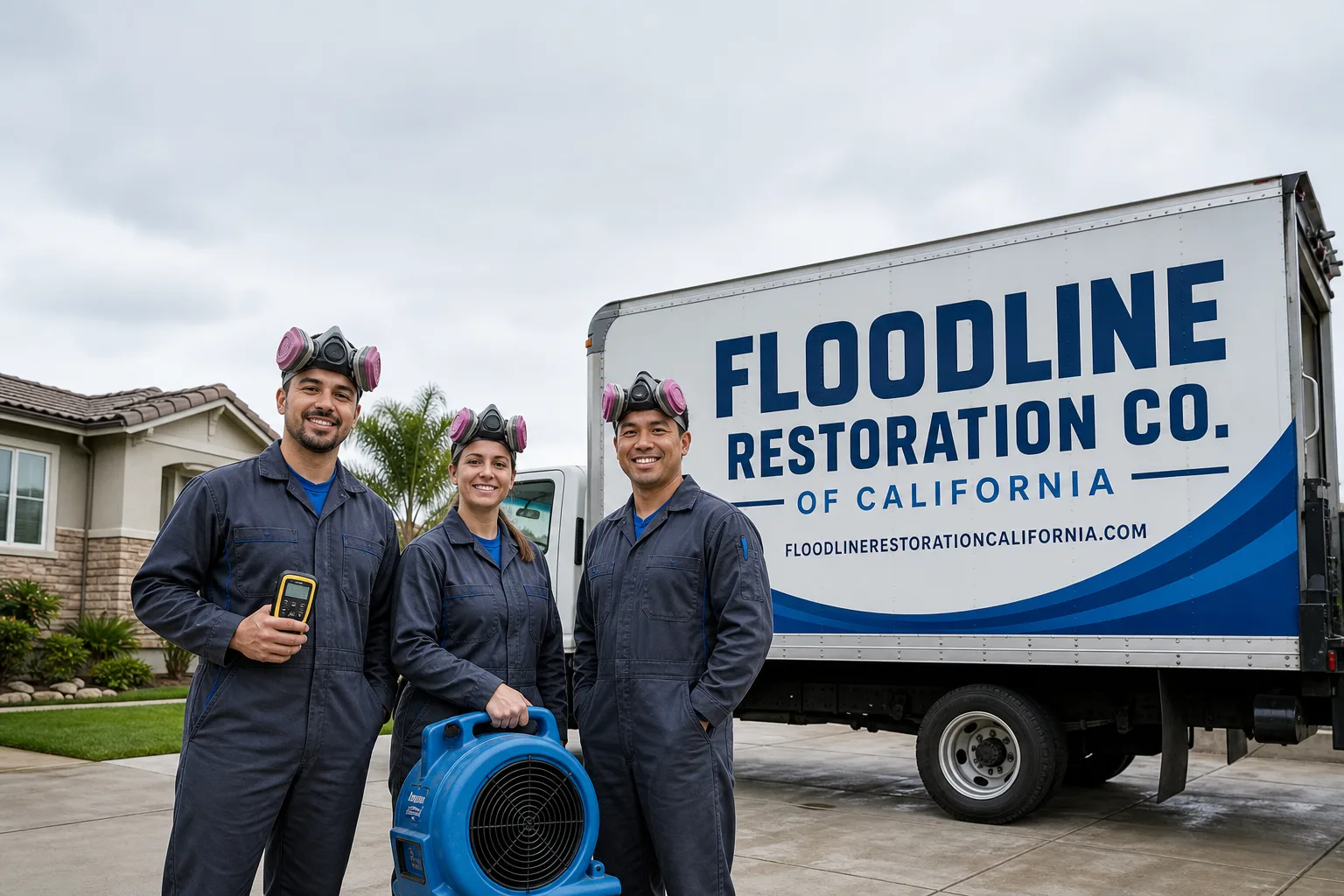
Fast, Reliable Mold Remediation Across Firebaugh
Mold remediation in Firebaugh typically costs $1,800-$6,500 depending on how far the growth has spread and whether crawlspaces or HVAC systems are involved. Most inspections in the 93622 ZIP code are scheduled within 24 to 48 hours, and because we keep crews staged in the Central Valley, a technician can usually be at your door the same day you call. Firebaugh’s older frame homes and manufactured housing carry a specific set of moisture problems, and those problems don’t wait. Call (888) 737-2439 and a live dispatcher picks up, any hour.
Why Floodline Restoration Co. of California Is Firebaugh’s Preferred Mold Remediation Company
Firebaugh homeowners call us because we don’t treat mold as a surface stain. We treat it as a moisture problem with a local cause. Around here, that cause is often the ground itself. The west side of the San Joaquin Valley has experienced some of the most severe land subsidence in North America from decades of groundwater overdraft. In Firebaugh, that means slabs crack, buried pipes shear, and water finds its way into places it shouldn’t. A standard mold cleanup that doesn’t account for subsidence will fail when the next ground shift reopens the crack and the moisture comes back. Our Mold Remediation team works from the premise that Firebaugh homes need a different playbook than homes in Madera or Kerman.
We’ve been doing this for over 42 years as a company, founded in 2010 by Curt Bowman and built on a dispatch board, not a sales desk. The technicians who arrive are background-checked, uniformed, and certified to IICRC, RIA, and IFA standards. They carry Dri-Eaz, Phoenix, XPOWER, B-Air, and Injectidry equipment, and they know what a Tule fog winter does to a crawlspace. Every job is backed by our 90-Day Done Right Promise, the Keystone Standard, in writing. If it’s not done right, we make it right. No arguing.
Our Mold Remediation Services in Firebaugh
Mold Inspection & Testing
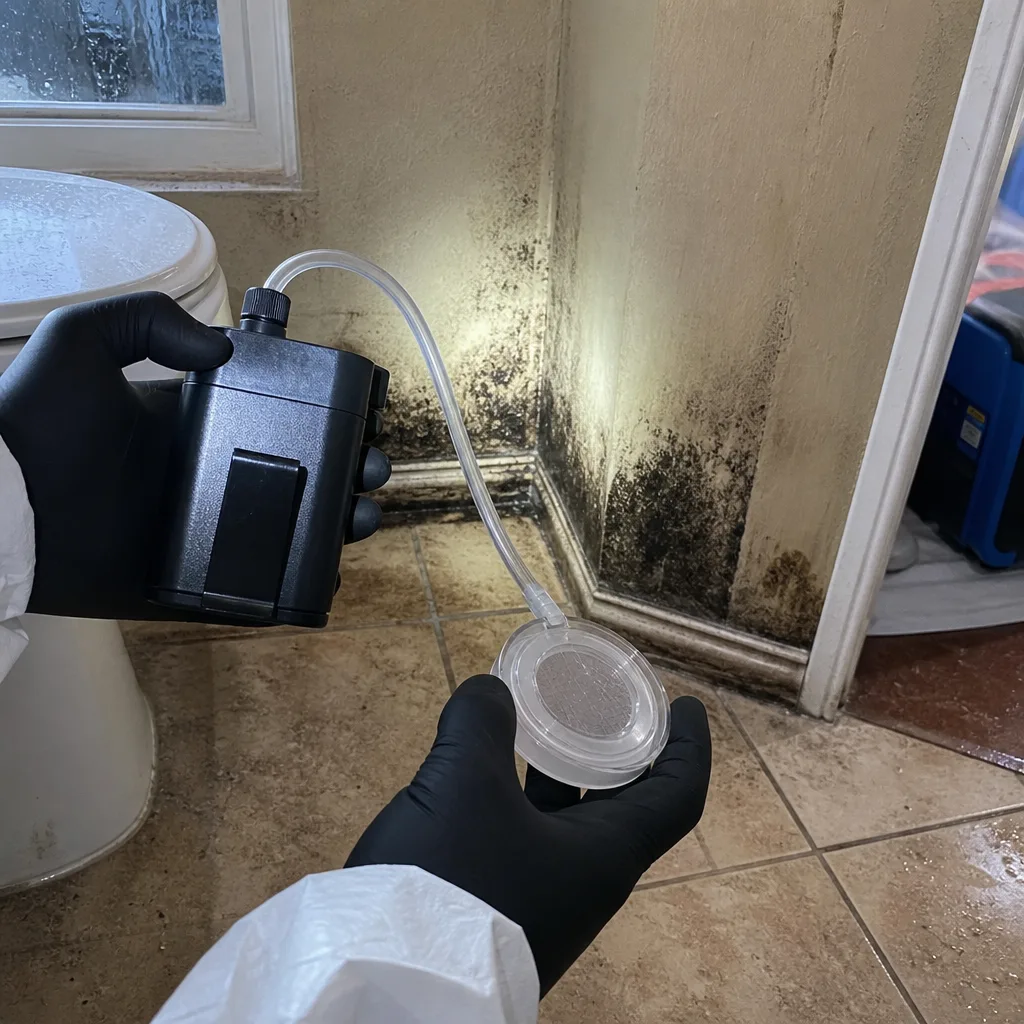
A thorough mold inspection in Firebaugh starts where the water starts. That means checking for the signs most inspectors outside this area miss: hairline slab cracks from subsidence, rim joist gaps where the ground has settled unevenly, and vapor-barrier tears in manufactured home crawlspaces. We take moisture readings in walls, under flooring, and across ceiling cavities, then provide a written scope with photographs. If mold is present in the air but not visible, we’ll recommend air sampling to identify spore types and concentrations before any remediation begins.
Mold Removal
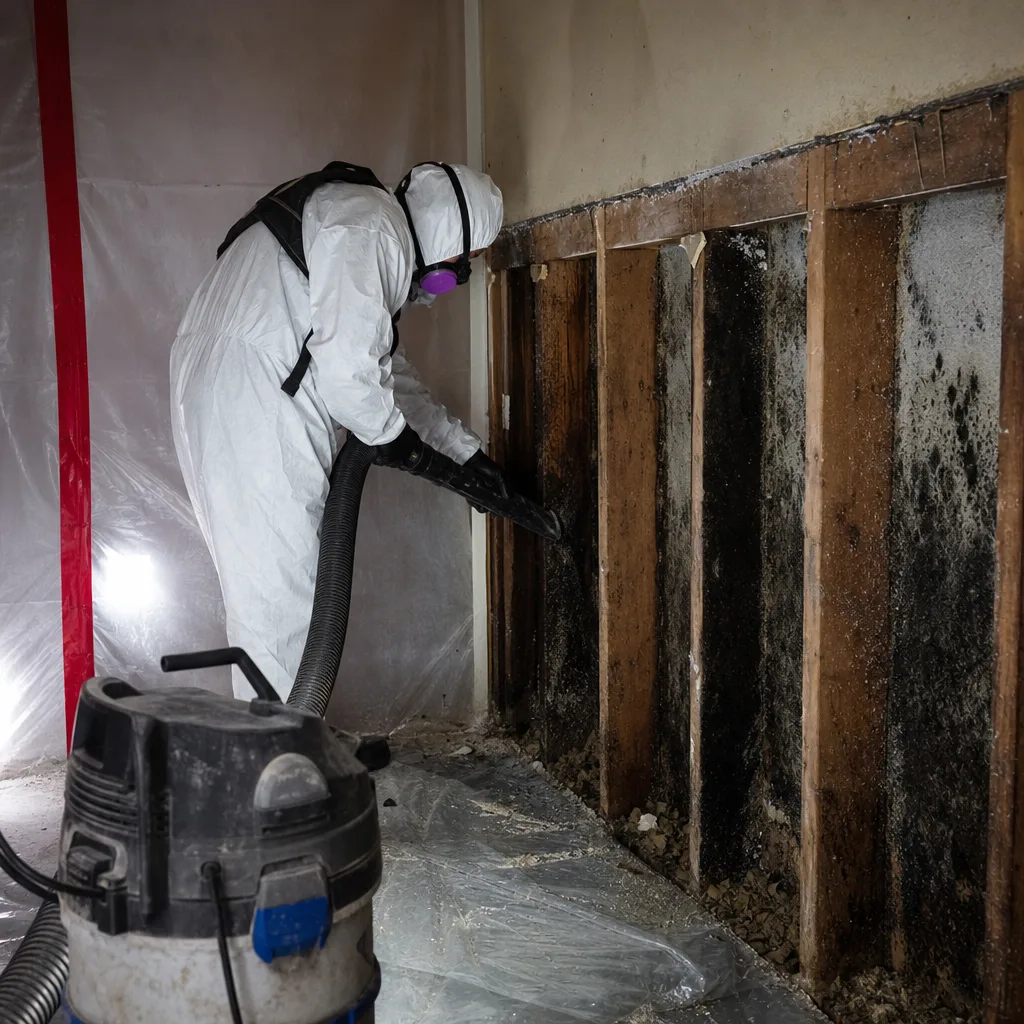
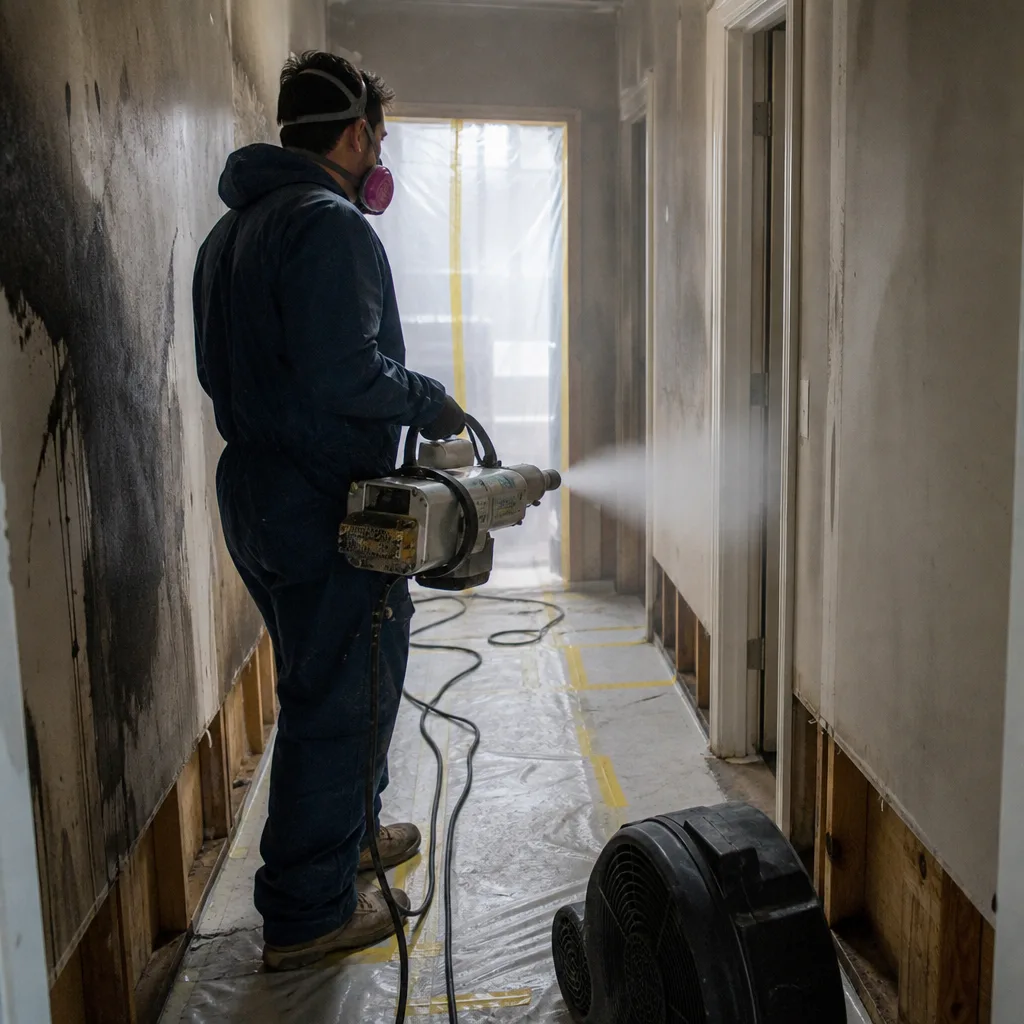
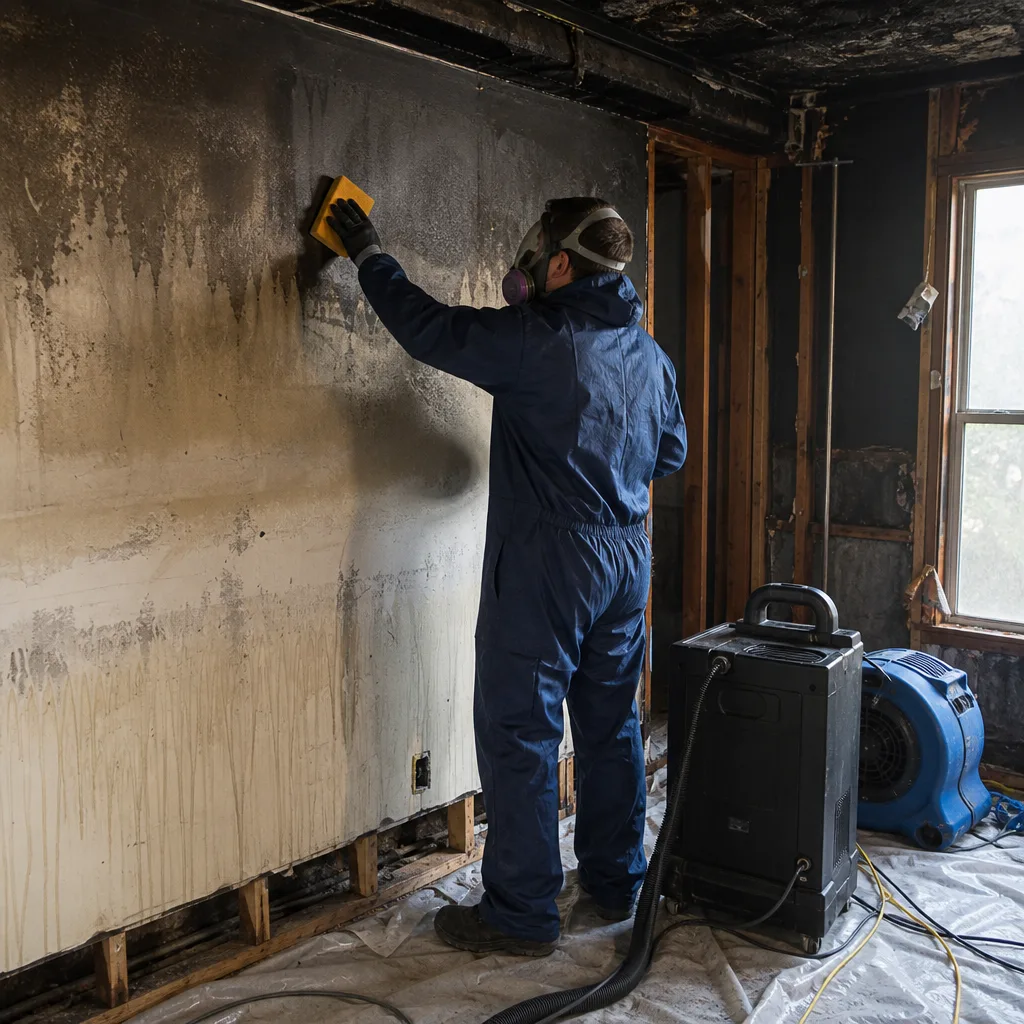
Mold removal in Firebaugh’s older housing stock often means opening walls that haven’t been opened in forty years. Frame homes built in the 1960s and 1970s frequently have no vapor barrier under the floor joists and rely on crumbling crawlspace vents for ventilation. We remove affected drywall, insulation, and flooring under containment, using HEPA-filtered negative air machines so spores don’t spread to clean rooms. Then we treat the framing and any adjacent materials before rebuilding. The same crew that reads the moisture map on day one handles the daily readings until the structure hits the dry standard.
Black Mold Remediation
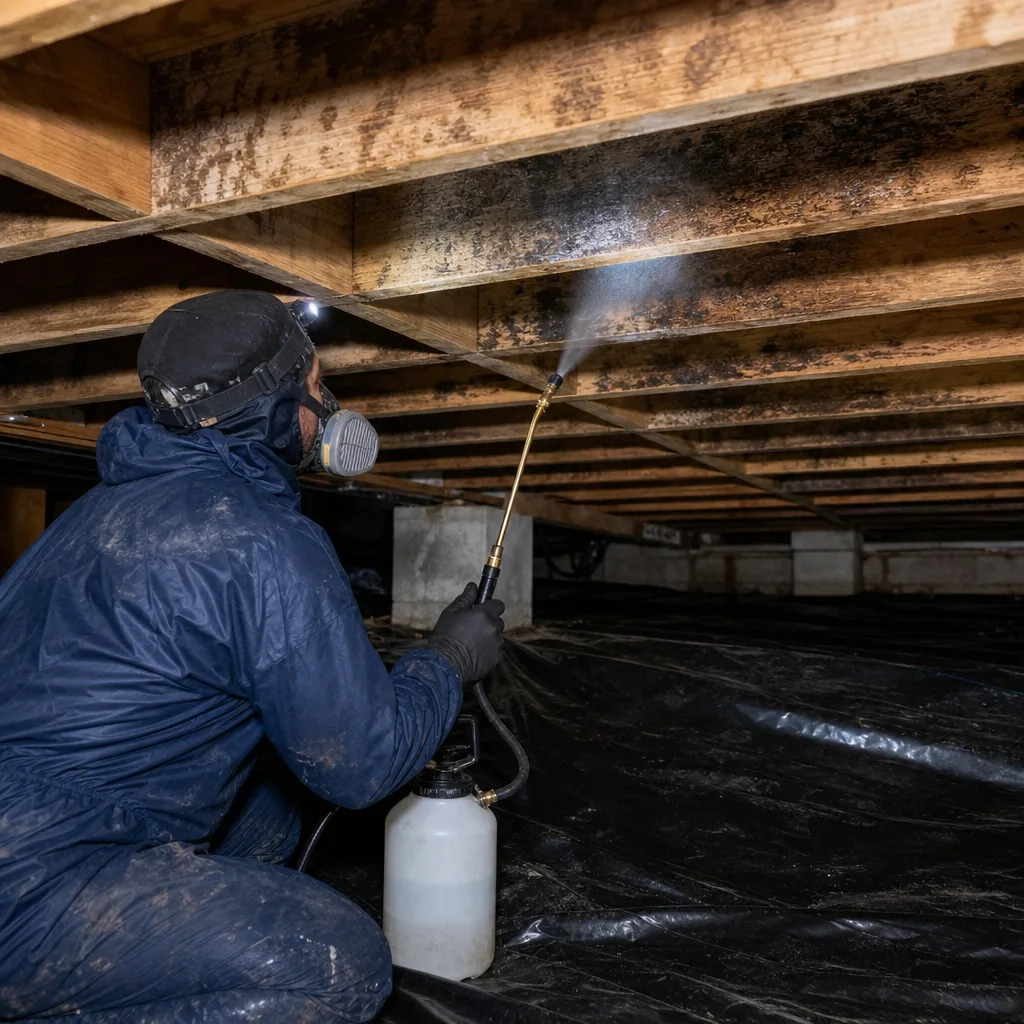
Black mold, most commonly Stachybotrys chartarum, grows where cellulose meets chronic moisture. In Firebaugh, that’s often the underside of subflooring in low-clearance crawlspaces where canal seepage or broken lateral irrigation lines have saturated the soil for months. We’ve seen it more times than we’d care to count. Black mold remediation in Firebaugh requires full containment, proper personal protective equipment, and careful handling to avoid aerosolizing spores. We don’t just spray and walk away. We find the water source, fix or document it, and verify the area is dry before any reconstruction happens.
Air Quality Restoration
When mold spores get into a home’s ductwork, every time the blower runs it redistributes contamination. In Firebaugh’s manufactured homes, duct runs often sit directly on the ground, which means cracks in the ductwork pull moisture and soil gases straight into the conditioned air. Air quality restoration starts with a look at the whole path: return registers, plenums, trunk lines, and flex runs. We run HEPA air scrubbers during and after remediation, then post-remediation verification sampling to confirm spore counts have returned to normal outdoor levels.
Crawl Space Treatment
This is the service we emphasize most for Firebaugh homeowners. A large share of the mold we remediate here starts in a crawlspace. Subsidence cracks let ground moisture rise. Foggy winters keep the humidity high. Canals and irrigation infrastructure raise the local water table seasonally. We remove contaminated insulation and vapor barrier, treat affected framing with antimicrobial products, install or repair the vapor barrier properly, and in many cases recommend encapsulation. But encapsulation without addressing the water source is a bandage. We trace the moisture first.
Moisture & Humidity Control
Mold doesn’t need a leak. It needs around 60% relative humidity and an organic food source. Firebaugh’s summer heat pushes moisture deeper into wall cavities, and the winter fog keeps outdoor humidity near saturation for weeks. Moisture control here means more than setting a dehumidifier on the floor. We evaluate crawlspace ventilation, check that bathroom and kitchen exhaust fans actually vent outside, confirm dryer ducts are intact, and read humidity levels in wall cavities, not just living spaces. If the structure can’t dry, mold will come back. The 90-Day Done Right Promise covers that, in writing.
What happens when you call
- 1
A real person answersNo phone trees - you reach a local pro.
- 2
You get an upfront price rangeHonest numbers before anyone is dispatched.
- 3
A background-checked tech heads outLicensed & insured, dispatched right away.
- 4
You approve before work beginsNothing starts until you say go.
Common Mold Remediation Problems We See in Firebaugh Homes
- Canal seepage and broken lateral irrigation lines. The Delta-Mendota Canal and the irrigation laterals that run under or beside many residential lots in Firebaugh create a moisture source standard leak detection isn’t designed to find. We trace moisture back to the source before we treat the mold, otherwise you’re paying for remediation that won’t last.
- Subsidence cracks that keep reopening. Ground movement under Firebaugh is continuous, not a one-time event. A crack sealed this spring can reopen by fall. We use flexible, moisture-tolerant materials at crack locations and schedule follow-up inspections where movement is active.
- False ‘dry’ readings from extreme summer heat. A Firebaugh August at 110°F can dry the surface of drywall to normal levels while the stud cavity behind it holds 25% moisture. We take readings deep in the cavity and use penetrating meters, not just surface pins, before we declare a structure dry.
- Manufactured home subfloor saturation. HUD-code homes built from the 1960s to the 1990s often have particleboard subflooring over unventilated crawlspaces. Once particleboard wicks moisture, it expands, delaminates, and becomes a mold factory. We see this pattern regularly on P Street, 13th Street, and throughout the older residential grid near downtown Firebaugh.
Pricing for Mold Remediation in Firebaugh, CA
Here’s what we actually charge in the 93622 area. A mold inspection with moisture mapping and a written scope runs $250-$450. Contained mold removal in a single room typically costs $1,800-$3,200. Crawl space mold treatment with vapor barrier replacement runs $3,500-$6,500 depending on square footage and accessibility. Black mold remediation in occupied spaces with full containment and air scrubbing ranges from $4,000-$9,000 for a typical Firebaugh home. Whole-house duct cleaning and air quality restoration adds $600-$1,400. Every quote is fixed-price and written before any work starts. We bill your insurance carrier directly when coverage applies, and we provide photo documentation and moisture logs your adjuster can review without a fight. Call (888) 737-2439 for a free estimate. We also honor three standing offers, always: $50 off any repair over $250, an $89 seasonal tune-up, and a 5% discount for seniors and veterans.
We Also Serve Cities Near Firebaugh
Our crews work throughout the west side and into the eastern valley. Beyond Firebaugh, we provide mold remediation in Mendota, Chowchilla, Kerman, and Madera. Same dispatch, same written guarantee, same live person on the phone at 2 a.m. Call (888) 737-2439 and we’ll route the nearest available crew.
Serving Firebaugh, CA - Our Local Coverage Area
We’re based in the Firebaugh area and know this community well. Use the map below to see our service coverage - if you’re nearby, we can almost certainly help.
FAQs - Mold Remediation in Firebaugh
Mold returns in Firebaugh because the underlying moisture source was never fully eliminated. In this area, that source is often subsidence-related: a ground shift reopens a slab crack, breaks a supply line again, or lets canal seepage back into the crawlspace. If the prior contractor treated the mold but not the moisture path, the mold grew back the first foggy winter. We identify and address the water source as part of every job, and our 90-Day Done Right Promise covers the result in writing. Call (888) 737-2439 for a re-inspection if you’re seeing recurrence.
Yes. The Delta-Mendota Canal and the irrigation laterals that run under or beside many Firebaugh residential lots can raise the soil moisture around and beneath a home even when no pipe inside the house has failed. That moisture migrates up through crawlspace soil, into floor joists, and into wall plates. We use soil moisture probes in crawlspaces and yard-level inspections to trace seepage that never shows up on a pressure-gauge test. Call (888) 737-2439 if you suspect it.
No. Firebaugh’s 110°F summer days can dry the surface of materials, which creates a false reading that the job is complete, but heat alone doesn’t kill mold spores. It sends them dormant. The real problem is that the heat drives moisture deeper into wall cavities, joist ends, and subfloor layers. When the Tule fog returns in November, that trapped moisture reactivates the mold. We take penetrating moisture readings at depth, not just surface scans, and we never declare a structure dry on a hot day without verifying the full profile.
Yes. A large portion of Firebaugh’s housing stock is HUD-code manufactured or mobile homes built between the 1960s and 1990s, and their subfloor systems are nothing like a stick-built frame house. Particleboard decking, non-standard joist spacing, under-floor duct runs sitting on dirt, and missing or torn vapor barriers are all common. We’ve remediated mold in manufactured homes throughout Firebaugh’s residential streets, including a job on P Street where a shifting slab cracked a polybutylene line and saturated the particleboard. We dried the cavity with a Dri-Eaz LGR 7000, removed the contaminated insulation, and installed a remote humidity monitor for early detection if the ground moved again. Call (888) 737-2439 to schedule an inspection.
We start by understanding that river flooding in Firebaugh is different from a pipe leak. Floodwater carries silt, bacteria, and agricultural runoff, and it saturates the soil around the foundation, not just the materials inside the house. After extraction and structural drying, we treat affected materials with antimicrobial agents, remove and replace any insulation that wicked floodwater, and run extended drying on crawlspace soils before installing new vapor barrier. We also schedule a six-month follow-up inspection on every river-flood job in Firebaugh because the soil keeps releasing moisture long after the water recedes. That follow-up is part of the Keystone Standard. Call (888) 737-2439 for immediate response if the river is rising.
Written by Curt Bowman, Owner at Floodline Restoration Co. of California, serving Firebaugh and the Central Valley since 2010.