
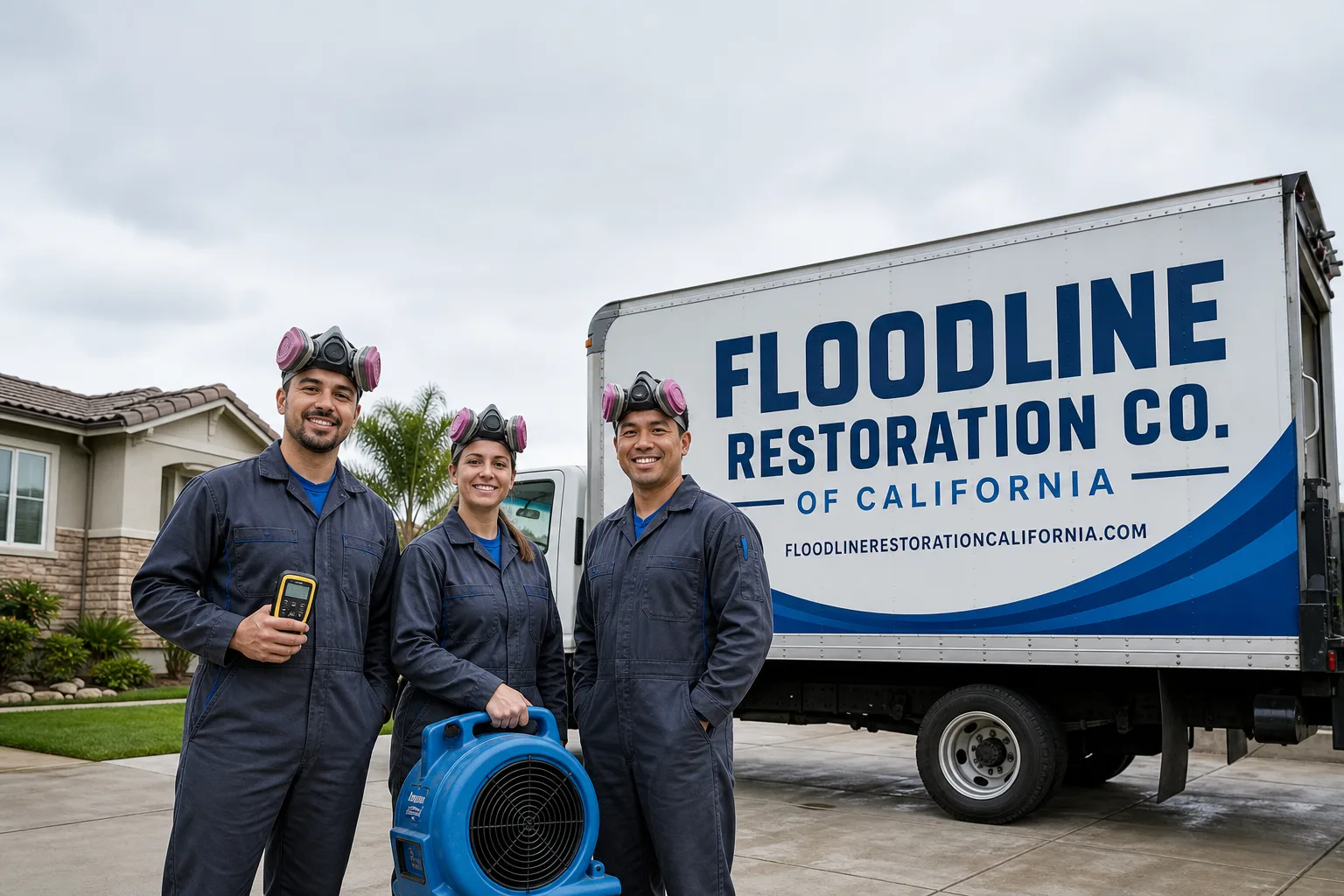
Fast, Reliable Mold Remediation Across East Foothills
Mold remediation in East Foothills typically runs $1,800 to $6,500 depending on how far the growth has spread and whether asbestos abatement gets triggered by the home’s original building materials. Most jobs in the 95127 ZIP are finished in two to four days once containment is set. If you smell must in a hallway or see dark staining along a baseboard, call (888) 737-2439 and a live dispatcher answers, not a recording.
We know these hillside streets. We know the 1960s ranches with crawl spaces cut into the slope, the drainage swales behind uphill lots, and the way summer downslope winds push wildfire smoke through window frames and attic vents. Mold here doesn’t follow the same pattern it does on the valley floor in San Jose. We treat it accordingly.
Why Floodline Restoration Co. of California Is East Foothills’s Preferred Mold Remediation Company
East Foothills homeowners don’t want a sales pitch. They want someone who understands why a house on a hillside with no history of flooding can still grow black mold behind the bathroom wall. That’s the kind of problem Curt Bowman built this company to solve, and it’s the reason we train every technician to read the house before reading the moisture meter.
Our crews have worked homes on every uphill street from Alum Rock Avenue to the base of the Diablo Range. East Foothills customers value the same things: background-checked, uniformed technicians who show up when promised, IICRC and RIA certification, and a written 90-Day Done Right Promise attached to every job. We call it the Keystone Standard. If the mold comes back or the drying wasn’t done to spec, we make it right. No arguing, no paperwork battles.
Response time to East Foothills matters because mold doesn’t pause while you schedule estimates. We dispatch from our San Francisco Bay Area office with crews staged locally, so a certified team reaches most East Foothills homes the same day you call. That speed matters most when you’ve just discovered mold behind a dishwasher after a pinhole leak in the original galvanized supply line.
Our Mold Remediation Services in East Foothills
Mold Inspection & Testing
A proper mold inspection in East Foothills starts with understanding the house’s drainage and exposure. We walk the swale behind the property, check stem walls for sediment staining, and sample air in both the crawl space and living areas. Testing identifies whether you’re dealing with common allergenic molds or the black mold species that demands full containment. Inspection-only visits in East Foothills typically run $350 to $700 with lab results included.
Mold Removal
Removal here often means working inside wall cavities on homes built before drywall sealing practices changed. Original galvanized supply lines in 1950s and 1960s East Foothills ranches develop pinhole leaks behind walls, feeding mold for months before you see a stain. We contain the affected area with negative air pressure, remove contaminated drywall and insulation, and dry the framing to the IICRC standard using Dri-Eaz dehumidifiers and Phoenix air movers. Most removal jobs in East Foothills run $1,800 to $4,200.
Black Mold Remediation
Black mold, usually Stachybotrys, thrives in the slow, damp darkness of East Foothills crawl spaces where hillside runoff keeps humidity high. This is the job no one wants to tackle alone. We build hard containment barriers, run HEPA air scrubbers, and remove every impacted porous material. Black mold remediation in East Foothills typically ranges from $2,500 to $6,500 depending on how many rooms share the air space with the contamination.
Air Quality Restoration
After physical removal, the air itself needs work. East Foothills homes with hillside exposure trap smoke residue in ductwork during summer fire season, and that soot holds moisture that breeds airborne mold spores for months. We clean ducts, run HEPA filtration, and log daily air quality readings until the home reaches the dry standard. Air quality restoration in East Foothills runs $900 to $2,800 as a standalone service.
What happens when you call
- 1
A real person answersNo phone trees - you reach a local pro.
- 2
You get an upfront price rangeHonest numbers before anyone is dispatched.
- 3
A background-checked tech heads outLicensed & insured, dispatched right away.
- 4
You approve before work beginsNothing starts until you say go.
Crawl Space Treatment and Moisture Control in East Foothills
The crawl space is where most East Foothills mold problems begin. Hillside homes concentrate groundwater against uphill foundation walls, and the natural drainage swales cut behind 1960s lots become debris chutes during heavy rain. Sediment and organic material pile against stem walls and hold water against the wood framing for weeks.
Our crawl space treatment includes removing contaminated insulation, treating framing with antimicrobial agents, installing or repairing vapor barriers, and setting up drying equipment sized to the space. For homes with persistent hillside runoff, we recommend moisture control systems like sump pumps with battery backup or interior drainage channels. A full crawl space mold remediation with vapor barrier replacement in East Foothills typically runs $3,000 to $7,500 depending on square footage and access.
We use Injectidry systems for wall cavities and Dri-Eaz for whole-space drying. The equipment matters because these older homes have framing that has already endured decades of hillside humidity. You can’t shortcut the drying phase.
Common Mold Remediation Problems We See in East Foothills Homes
- Pinhole leaks in original galvanized piping. Homes built between the early 1950s and mid-1970s often still have their original galvanized steel supply lines. The interior of these pipes corrodes over decades until a pinhole leak opens behind a wall or under a floor. By the time you see a stain, mold has usually been feeding on the damp framing for months.
- Asbestos in popcorn ceilings and duct wrap. A significant share of East Foothills ranch homes were built when asbestos was still common in building materials. When mold remediation requires cutting into a ceiling or removing ductwork, the material tests positive and triggers abatement requirements. That adds cost and timeline to the job, but it’s non-negotiable for safety.
- Wildfire smoke residue holding moisture. Summer downslope winds drive smoke and ash from Diablo Range grass fires deep into homes with hillside exposures. That soot residue is hygroscopic, meaning it pulls moisture from the air. Soot in wall cavities and ducts creates exactly the microclimate mold needs to establish itself months after the fire season ends.
- Crawl space saturation from hillside runoff. Homeowners convinced their house is “too far uphill to flood” ignore damp crawl spaces until mold spreads up into the subfloor. The drainage swales behind many 1960s hillside homes fill with debris during atmospheric river events and send sediment-laden water against stem walls. This is a foothill-specific failure mode that never shows up on standard flood-zone maps.
How East Foothills’s Fire-and-Water Cycle Creates Mold Problems Flat Neighborhoods Don’t Have
East Foothills sits at the true wildland-urban interface where the Diablo Range rises directly behind residential streets. That geography creates a damage cycle no flat San Jose neighborhood experiences. Summer brings downslope winds that dry the grasslands above the neighborhood and push fire smoke into homes on hillside lots. Winter brings atmospheric river storms that hit fire-denuded slopes and send debris-laden water racing down drainage channels and natural swales.
The combined effect is twofold. First, smoke and ash from summer fires infiltrate walls, attics, and ducts, leaving soot residue that holds moisture. Second, winter runoff saturates crawl spaces on slopes where the fire removed stabilizing vegetation. The result is a house that alternates between dry smoke intrusion and wet runoff saturation, and both conditions feed mold growth in different parts of the structure. A mold remediation company working East Foothills has to understand both halves of this cycle. We do.
The Calaveras Fault system threading through these same hills adds another layer. Seismic movement opens hairline cracks in foundations and stem walls, creating pathways for moisture intrusion that homeowners often attribute to simple humidity. Restoration contractors here routinely assess structural compromise alongside mold remediation in a way that would be uncommon just a few miles west in the valley.
Trusted Brands We Service in East Foothills
Our East Foothills jobs use professional-grade equipment from Dri-Eaz, Phoenix, and Injectidry, and we carry the parts and supplies needed to run those systems without delays. When an IICRC-certified technician arrives at your 95127 home, the equipment on the truck is appropriate for the job, not whatever was left over from the last call. We maintain a local parts inventory so a failed dehumidifier impeller or a torn containment panel doesn’t add days to your remediation schedule.
Pricing for Mold Remediation in East Foothills, CA
What moves the price in East Foothills more than anything is asbestos. If your 1950s or 1960s home has popcorn ceilings or original duct wrap, abatement adds $1,500 to $4,000 to the total. We identify this risk during the inspection so you’re not surprised mid-job. Every estimate is free, delivered in writing, and backed by our direct insurance billing, so the carrier pays us and you never have to play messenger. Call (888) 737-2439 for an exact quote.
We Also Serve Cities Near East Foothills
Our crews handle Mold Remediation across the entire east side of the Santa Clara Valley. We serve East Foothills and the neighboring communities of Alum Rock, San Jose, Milpitas, and Communications Hill with the same crews, the same written guarantee, and the same live dispatch.
Serving East Foothills, CA - Our Local Coverage Area
We’re based in the East Foothills area and know this community well. Use the map below to see our service coverage - if you’re nearby, we can almost certainly help.
FAQs - Mold Remediation in East Foothills
Why does my East Foothills crawl space stay damp even when there’s no flooding?
Your crawl space stays damp because the natural drainage swale behind your hillside lot directs groundwater toward your foundation, not away from it. During rain events, that swale becomes a debris chute that piles organic material against your stem walls, holding moisture against the wood for weeks. Even without a flood, the damp air in that space migrates up into your subfloor and wall cavities. A vapor barrier, drainage channel, or sump system usually solves it. Call (888) 737-2439 and we’ll inspect it and give you a written plan.
Do I need asbestos testing before mold remediation in my 1950s East Foothills home?
If your home was built between the early 1950s and mid-1970s and still has its original popcorn ceilings, floor tiles, or duct wrap, the answer is almost certainly yes. Mold remediation often requires cutting into those materials, and if they contain asbestos, abatement is legally required before demolition can proceed. We test during the inspection phase so the remediation plan accounts for abatement from day one. Skipping it means the job stops mid-demolition, containment comes down, and you’re exposed to fibers.
How does wildfire smoke from the Diablo Range affect indoor mold growth?
Wildfire smoke from the Diablo Range carries fine soot particles that infiltrate homes through attic vents, window frames, and wall penetrations during summer downslope wind events. That soot is hygroscopic, meaning it absorbs moisture from the air. When soot accumulates in wall cavities, ducts, or insulation, it holds damp conditions that support mold spores even when the rest of the house feels dry. If your East Foothills home took heavy smoke during fire season, air quality restoration and duct cleaning should happen before mold has a chance to establish.
What’s the difference between mold smells from a pinhole leak and from debris-flow saturation in East Foothills?
A pinhole leak in a galvanized supply line produces a steady, localized musty smell that’s strongest near the affected wall or floor, and it gets worse during summer when the house is closed up. Debris-flow saturation produces a broad, earthy smell that rises from the crawl space and spreads through the entire house, often stronger after rain events when the ground around the foundation is saturated. The distinction matters because a pinhole leak requires wall cavity remediation, while debris-flow saturation usually requires a full crawl space treatment plus drainage correction. Both need a professional assessment. We provide one free.
Why is mold remediation on my East Foothills hillside home more complex than in flat San Jose?
Hillside homes in East Foothills deal with combined smoke infiltration, runoff saturation, and often seismic foundation cracks that flat San Jose homes don’t face. The slope directs groundwater against the uphill foundation wall, and the natural swales that cut between homes become drainage channels during storms. Add original galvanized piping and asbestos-bearing materials from the 1950s and 1960s housing stock, and you have a remediation job that touches structural, abatement, and drainage issues at once. That’s why we send senior crews to hillside jobs and why we write a scope before any work starts.
Call Floodline Restoration Co. of California for Mold Remediation in East Foothills
If you’ve got mold in your East Foothills home, don’t wait for the smell to move into the next room. Call (888) 737-2439 right now. A live person answers, we schedule a certified technician, and we show up with equipment sized for your house and a written scope you approve before work begins. Every job is backed by our 90-Day Done Right Promise, and we bill your insurance carrier directly. Senior and veteran homeowners always get 5% off. Current offers include $50 off any repair over $250 and the $89 seasonal tune-up.
Written by Curt Bowman, Owner at Floodline Restoration Co. of California, serving East Foothills homeowners with mold remediation since the company’s founding in 2010.