

Fast, Reliable Mold Remediation Across Dublin
Mold remediation in Dublin typically costs $1,800-$6,500 depending on how far the colony has spread and whether the envelope failure that fed it needs repair. Most Dublin jobs are finished in 3-7 days, and we’re usually on site within 90 minutes of your call. If you’ve spotted staining, caught that musty smell, or had a water loss in the past year, call (888) 737-2439 now. A live dispatcher answers, and we’ll have a certified crew at your Dublin door fast.
We know Dublin’s housing stock. Most of it went up in the 1990s and 2000s, and a lot of it hides water where you’d never think to look. That’s the mold problem this city faces more than any other in the Tri-Valley. We’ll get into the why below.
Why Floodline Restoration Co. of California Is Dublin’s Preferred Mold Remediation Company
Floodline Restoration Co. has worked in Dublin long enough to know which subdivisions give us repeat mold calls and which ones rarely do. Fallon Village, Jordan Ranch, Dublin Ranch, the original downtown core around 94568. Our technicians are background-checked, uniformed, and certified to IICRC, RIA, and IFA standards. They show up with professional-grade equipment, not a pickup full of bleach and hope.
Every job we do in Dublin is backed by the 90-Day Done Right Promise. It’s in writing. If it’s not done right, we make it right. No paperwork battles, no arguing. That’s the Keystone Standard, and it applies to every mold job, from a single closet to a full crawl space.
We also answer the phone like a local business should. A live person picks up at 2 a.m. if that’s when you call. Not a recording. A dispatcher who knows the Tri-Valley and can get a crew rolling to your street. And when the job is done, you get a moisture log showing the dry standard was met, with daily readings from day one to the final day.
Our Mold Remediation Services in Dublin
Mold Inspection & Testing
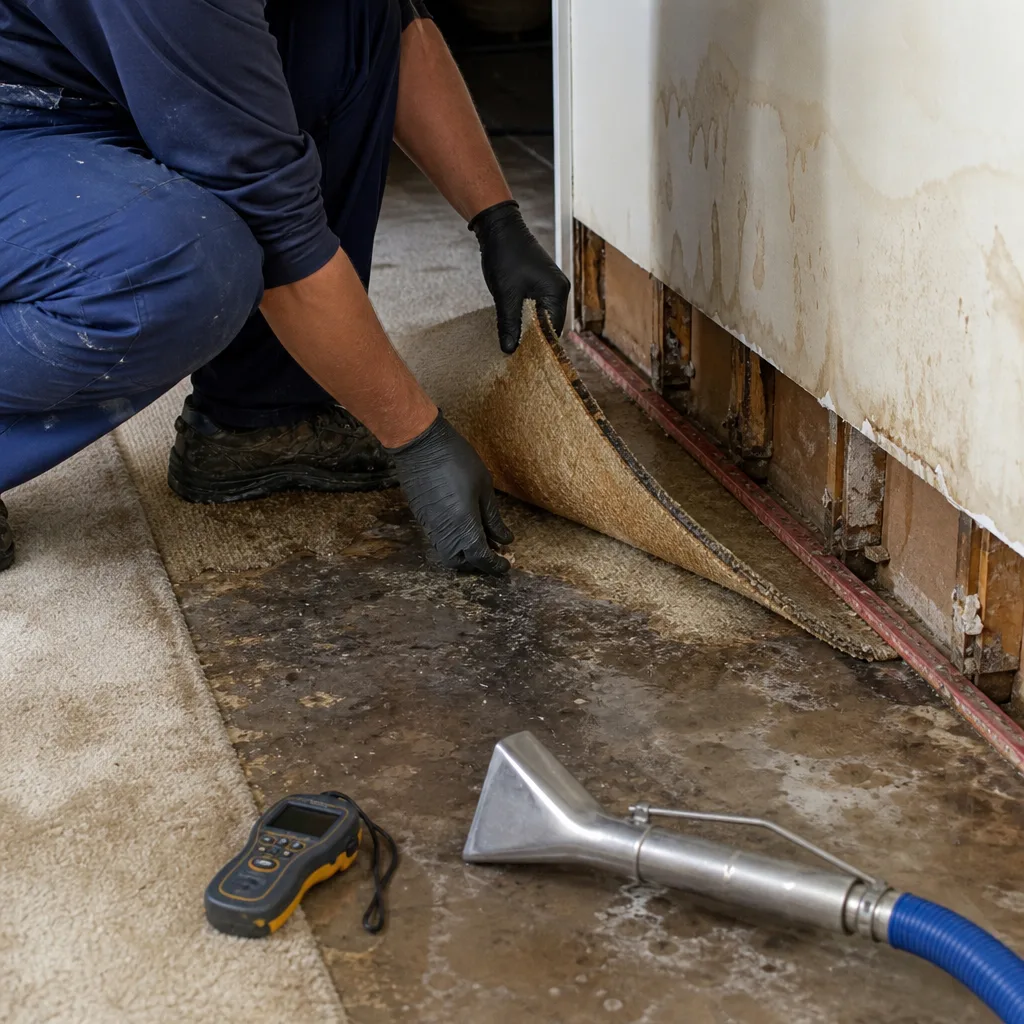
We start every Dublin mold job with a real inspection, not a sales pitch. That means moisture mapping with professional meters, not just a visual walkthrough. In Dublin’s 1990s stucco homes, the mold you can see is often the tip of the problem. A stain under a window in Fallon Village might mean water has been running behind the stucco for months, feeding a colony inside the wall cavity. Our inspection finds the source, not just the symptom.
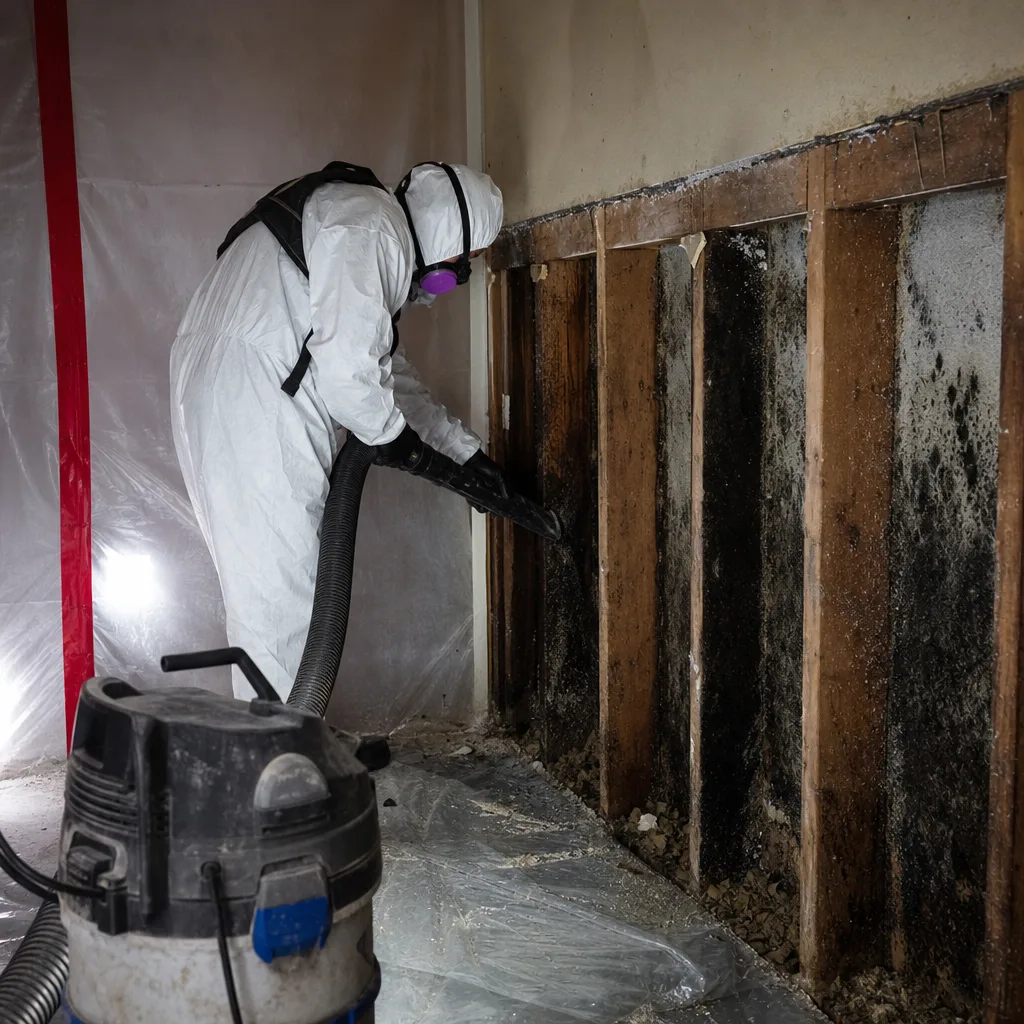
Mold Removal
Once we’ve mapped the moisture, we remove the mold. That means containing the affected area, filtering the air, and removing contaminated material, not painting over it. In Dublin tract homes, that often means opening drywall to reach framing. We cut out the bad, dry the good, and leave you with a clean, dry cavity ready for rebuild. The same crew that reads the moisture map on day one handles the removal and the daily readings.
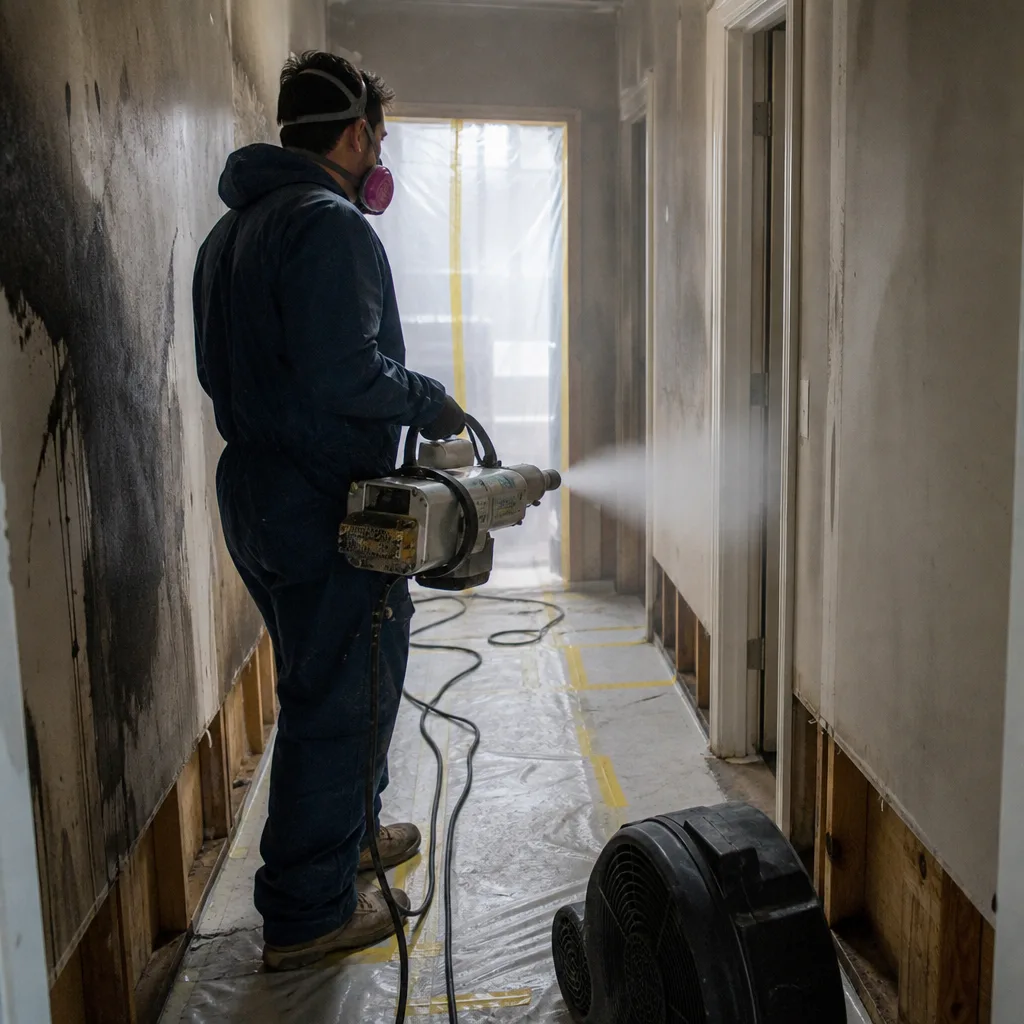
Black Mold Remediation
Stachybotrys, what most people call black mold, shows up in Dublin homes that stay wet for weeks at a time. A slow leak under a slab in an older 1960s ranch home downtown, a roof flashing failure in a 2005 stucco house in Jordan Ranch. Black mold needs constant moisture. We find the moisture source, cut it off, and remove the contaminated material under containment. The 90-Day Done Right Promise covers black mold jobs the same as any other.
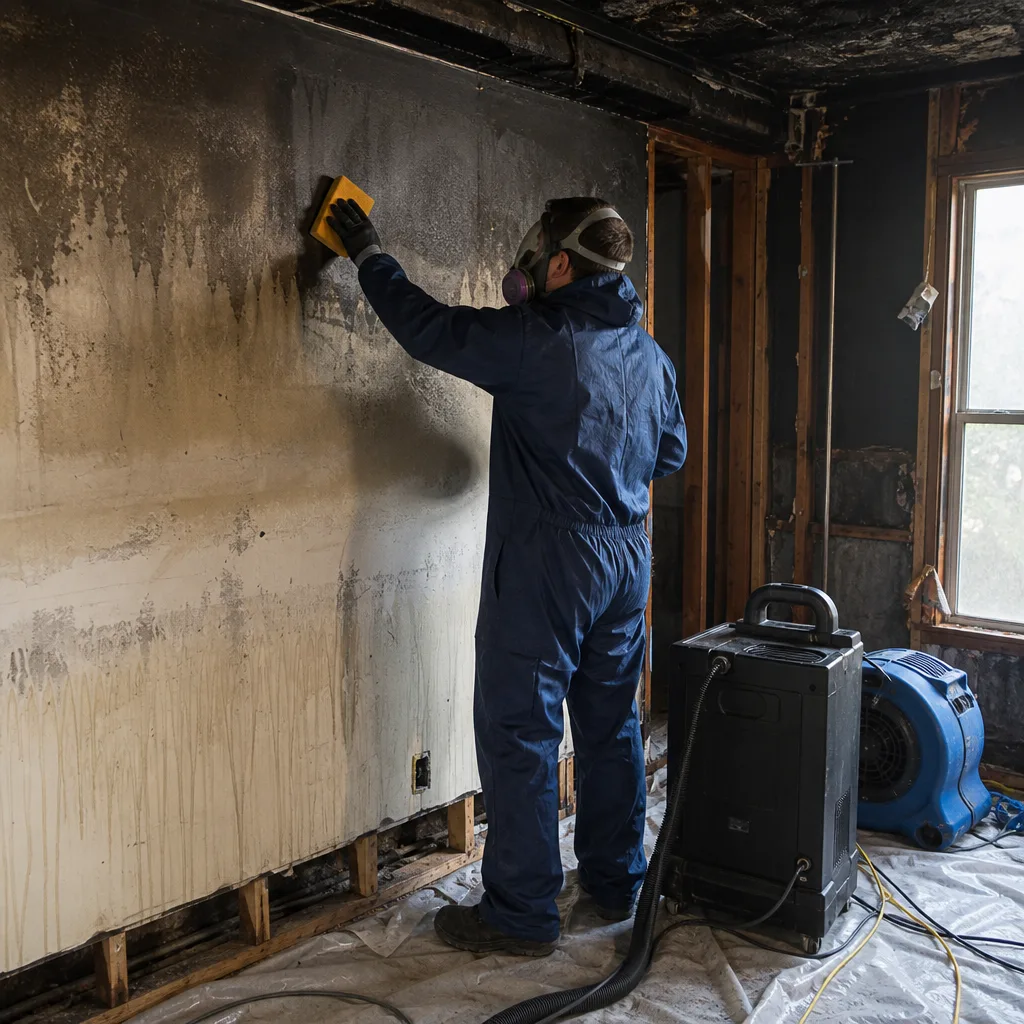
Air Quality Restoration
Mold doesn’t just live on walls. It releases spores into the air, and in Dublin’s tight modern construction, those spores hang around. After we remove the mold and dry the structure, we run professional-grade air scrubbers to pull spores and mycotoxins out of the breathing space. We check the results with air sampling. For Dublin homeowners with allergies or respiratory conditions, this step matters as much as the wall work.
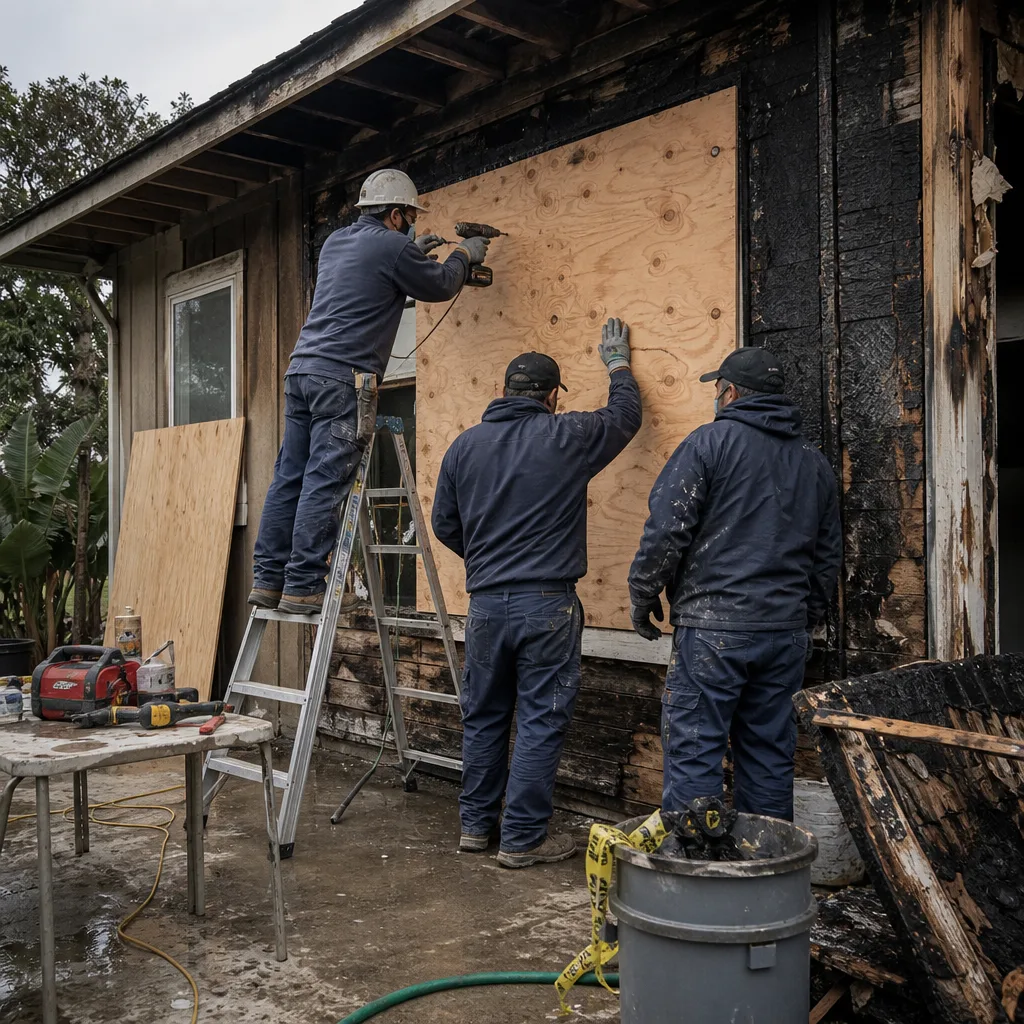
Moisture & Humidity Control
Here’s what a lot of mold companies in Dublin won’t tell you: if you don’t fix the moisture, the mold comes back. Dublin’s climate does the rest. Summer days over 100°F, winter rains that come in hard bursts, and stucco expansion joints that take a beating year after year. We install dehumidification, improve ventilation in crawl spaces, and seal envelope penetrations so the next winter doesn’t bring the same problem back.
What happens when you call
- 1
A real person answersNo phone trees - you reach a local pro.
- 2
You get an upfront price rangeHonest numbers before anyone is dispatched.
- 3
A background-checked tech heads outLicensed & insured, dispatched right away.
- 4
You approve before work beginsNothing starts until you say go.
Common Mold Problems We See in Dublin Homes
- Concealed stucco envelope failures. One-coat stucco systems from the 1990s and 2000s often lack proper weep screeds at window sills and deck-to-wall transitions. Water gets in, never gets out, and feeds mold inside the wall for months before you see a stain.
- Diablo wind smoke infiltration. Homes on Dublin’s eastern edge, especially in Fallon Village and Jordan Ranch, take in smoke and ember particles during fall wind events. That contaminates HVAC ducts and causes musty, acrid odors that mimic mold, even when no structural fire occurred.
- Crawl space humidity in the original downtown core. Dublin’s small pocket of 1960s and 1970s ranch homes often have vented crawl spaces that pull in damp winter air. That humidity condenses on cool framing and feeds surface mold on floor joists.
- Window flashing failures in tract homes. The window flashing details on many 1990s-2010s production homes in Dublin fail at the corners first. Water follows the gap, streaks down the framing, and mold grows behind the window trim. You see a small stain; the cavity behind it is where the real problem lives.
Pricing for Mold Remediation in Dublin, CA
Here are real numbers for Dublin. A mold inspection with moisture mapping and air sampling runs $350-$650. Small containment and removal jobs, like a single bathroom wall or closet, land at $1,200-$2,800. A full room remediation with drywall removal, framing drying, and air scrubbing typically costs $3,000-$6,500 in Dublin. Crawl space mold treatment runs $1,800-$4,500. If envelope repair is part of the job, like re-flashing a window or adding a missing weep screed, add $800-$2,500 depending on access.
What drives cost in Dublin specifically? Stucco work is labor-heavy. Homes built before 2010 may have drywall with asbestos texture, requiring specialized handling. And if the mold is in a finished room, containment and air scrubbers add time and equipment. We give you a written scope before we start, and we bill your insurance carrier directly when the claim applies. Call (888) 737-2439 for a free estimate. We’ll tell you what the job actually needs, not what our quarter demands.
Trusted Brands We Use on Dublin Jobs
Our crews run Dri-Eaz and Phoenix drying equipment on every Dublin mold job, with XPOWER air movers and Injectidry systems for tight cavities. That’s the same professional-grade equipment used in commercial restoration, not homeowner rental shop gear. We train our technicians to IICRC, RIA, and IFA standards, and we stock the consumables we need to start work the day we arrive. No waiting on a parts run from another county.
We Also Serve Cities Near Dublin
Floodline Restoration Co. runs crews across the Tri-Valley and nearby East Bay. If you’re in Dublin or across the city line in San Ramon, Pleasanton, Hayward, or Danville, same standards apply. Same live dispatch, same 90-Day Done Right Promise, same certified techs. One number to call: (888) 737-2439. See our full Mold Remediation service page for details on how we handle jobs of every size.
The Dublin Mold Problem Other Guides Won’t Tell You About
Dublin’s explosive growth since the 1990s means the vast majority of its housing stock is stucco-clad wood-frame tract homes from a specific construction era. That era has a reputation among restoration professionals for two things: improperly installed moisture barriers and one-coat stucco applications that trap water against framing. The stucco looks solid from the street. Inside, water can run behind the skin for months before anyone notices. That’s why we treat nearly every Dublin water loss as a potential envelope failure inspection. The mold you see is often just the exhaust vent for a problem that started at a window sill, a deck ledger, or a transition to a stem wall.
Here’s what that means in practice. In Jordan Ranch, our crews responded to repeated musty odors and chronic allergy symptoms in a 2005 stucco home after the owners reported moisture staining under a rear window. We cut into the wall and discovered one-coat stucco over a missing weep screed at a deck-to-wall transition had trapped water against the framing for months. Using a Dri-Eaz drying system, we opened the cavity, removed the mold-stained insulation and sheeting, and installed a proper moisture-management detail before re-sealing the envelope. That job wasn’t about scrubbing mold. It was about fixing a construction defect that had been quietly soaking the wall since the house was built.
Now add the wind. Dublin sits in the Tri-Valley inland heat corridor. Summer afternoons push past 100°F while the coast sits in the 60s. Winter rains come in concentrated bursts. That extreme wet-dry cycling stresses stucco expansion joints and caulked penetrations far more than in coastal Bay Area cities. Then the Altamont Pass to the east funnels strong, desiccating winds through the hills. During October Diablo wind events, homes on Dublin’s eastern perimeter, especially in Fallon Village and Jordan Ranch, are among the first in the Tri-Valley to receive airborne ember and smoke infiltration. After a big regional fire event, we get a wave of calls from Dublin homeowners reporting musty odors and black dust at the registers. The smell reads like mold. Sometimes it is mold, taking advantage of a damp crawl space or a failing window flashing. Sometimes it’s smoke residue packed into the ductwork. Both need professional assessment, and generic mold guides never mention the Diablo wind angle. That’s the local knowledge you’re paying for.
Key Takeaways for Mold Remediation in Dublin
- Dublin’s 1990s-2010s stucco tract homes hide moisture behind walls, making concealed mold more common here than in older East Bay cities.
- Diablo wind events push smoke and ember particles into eastern Dublin neighborhoods, contaminating HVAC systems and causing odor problems that mimic mold.
- Every job starts with a real moisture map, not a visual guess, and ends with a written moisture log and the 90-Day Done Right Promise.
- We bill your insurance carrier directly and give you a written scope before any work starts.
- Call (888) 737-2439 for a free estimate. A live person answers, 24/7.
Serving Dublin, CA - Our Local Coverage Area
We’re based in the Dublin area and know this community well. Use the map below to see our service coverage - if you’re nearby, we can almost certainly help.
FAQs - Mold Remediation in Dublin
Diablo winds force smoke, ash, and ember particles into homes through attic vents, ridge vents, and HVAC fresh-air intakes. The particles settle in ducts and on cool surfaces, then release musty odors when humidity rises. In damp wall cavities or crawl spaces, the added organic matter can feed existing mold colonies. After regional fire events, we see a recurring pattern in eastern Dublin neighborhoods, from Fallon Village to Jordan Ranch, of odor complaints that turn out to be duct contamination or mold feeding on wind-blown debris. Call (888) 737-2439 to schedule an inspection.
Many 1990s and 2000s stucco homes in Dublin were built with one-coat stucco over a single layer of building paper, often with missing or improperly installed weep screeds at window sills and deck transitions. Water that gets behind the stucco has no drainage path, so it sits against the framing and feeds mold inside the wall cavity. You might see a small stain or smell something musty for months before the damage is visible. We open the wall, remove the contaminated material, dry the cavity with Dri-Eaz equipment, and correct the flashing detail so it doesn’t happen again.
Dublin’s summer days over 100°F can temporarily dry out surface mold and lower indoor humidity, which can suppress air sample results even when hidden mold is present. Winter readings tell a different story. We account for seasonal conditions when interpreting results, and we typically combine air sampling with moisture mapping and physical inspection. That gives us a reliable picture year-round, regardless of what the thermometer says.
The 1960s and 1970s ranch homes near Dublin’s original downtown area have vented crawl spaces and different failure modes than the newer stucco tracts. Moisture typically enters through foundation vents or plumbing leaks, then condenses on cool floor joists. The remediation work is similar: contain, remove, dry, and treat. But the moisture solution is different. Those homes usually need better crawl space ventilation or a vapor barrier, not stucco repairs. We adjust the drying and moisture-control plan to the house, not the other way around.
Call for an inspection. The smell means mold is growing somewhere, and in Dublin’s stucco homes it’s probably behind a wall or in a crawl space where you can’t see it. We’ll moisture-map the house, check the HVAC system, and find the source. The inspection is straightforward, and the estimate is free. Call (888) 737-2439 and we’ll get a certified technician to your Dublin home fast.
Get a Free Mold Remediation Estimate in Dublin Today
If you’re in Dublin and you suspect mold, don’t wait. The longer it sits, the deeper it goes, and the more it costs to fix. Call Floodline Restoration Co. at (888) 737-2439. A live person answers at any hour, and we’ll schedule a free estimate for your Dublin home. You’ll get a written scope, honest pricing, and the 90-Day Done Right Promise in your hand before we start. Done right, and backed in writing.
Written by Curt Bowman, Owner at Floodline Restoration Co., serving Dublin and the Tri-Valley since 2010.