

Fast, Reliable Mold Remediation Across Clovis
Mold remediation in Clovis typically costs $1,800 to $6,500 depending on how far the colony has spread, and most jobs here complete in 2 to 5 days. That’s the honest range we quote over the phone before anyone schedules a visit, because Clovis homeowners deserve a number, not a vague promise. Our crews know the tract homes along Shaw and Herndon, the older plaster walls off Clovis Avenue, and the newer subdivisions climbing toward the foothills in 93619. When you call (888) 737-2439, a live dispatcher answers. Not a recording. Not a call center in another state.
Why Floodline Restoration Co. of California Is Clovis’s Preferred Mold Remediation Company
We’ve been answering calls from Clovis homeowners long enough to know that mold here doesn’t announce itself. It hides behind stucco, inside wall cavities, under slab edges. The homes in Clovis were built fast during the 1990s and 2000s growth boom, and the builder-grade flashing and drainage details we find inside those walls are rarely flattering. Our technicians arrive in uniform, background-checked, and trained to IICRC, RIA, and IFA standards. They carry Dri-Eaz dehumidifiers, Phoenix air movers, and Injectidry drying mats, and they log moisture readings daily, the same way we’ve done for over 42 years as a company built around a dispatch board, not a sales desk.
Every job we run in Clovis is backed by the 90-Day Done Right Promise. That’s the Keystone Standard, in writing, and it means if the mold returns or the drying didn’t hold, we come back and make it right. No arguing. No paperwork battles. Curt Bowman, our owner, put that promise in place because he knew what it felt like to be burned by a contractor who vanished after the check cleared. Floodline doesn’t do that. We stand behind it.
Our Mold Remediation Services in Clovis
Mold Inspection & Testing
Most Clovis mold problems start as a mystery: a musty smell in the bedroom, a water stain on the ceiling, a family member with sudden allergy symptoms. Our inspection crews use moisture meters and thermal imaging to find what surface inspection misses, especially in the stucco-wrapped homes that dominate 93611, 93612, and 93619. Stucco hides slow leaks at window headers and roof-to-wall transitions. By the time you see the stain on the drywall, the cavity behind it has usually been wet for months. We test, we document, and we give you a written scope before any remediation work begins.
Mold Removal
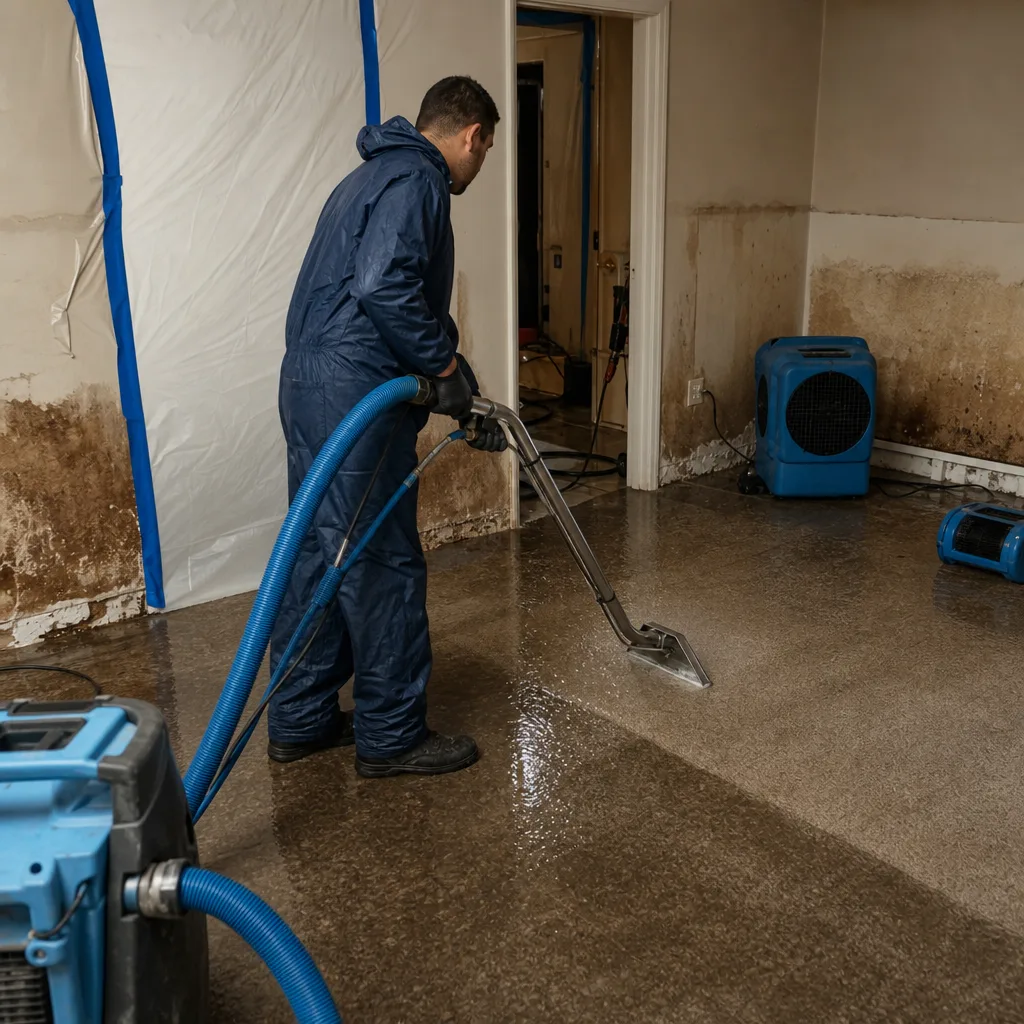
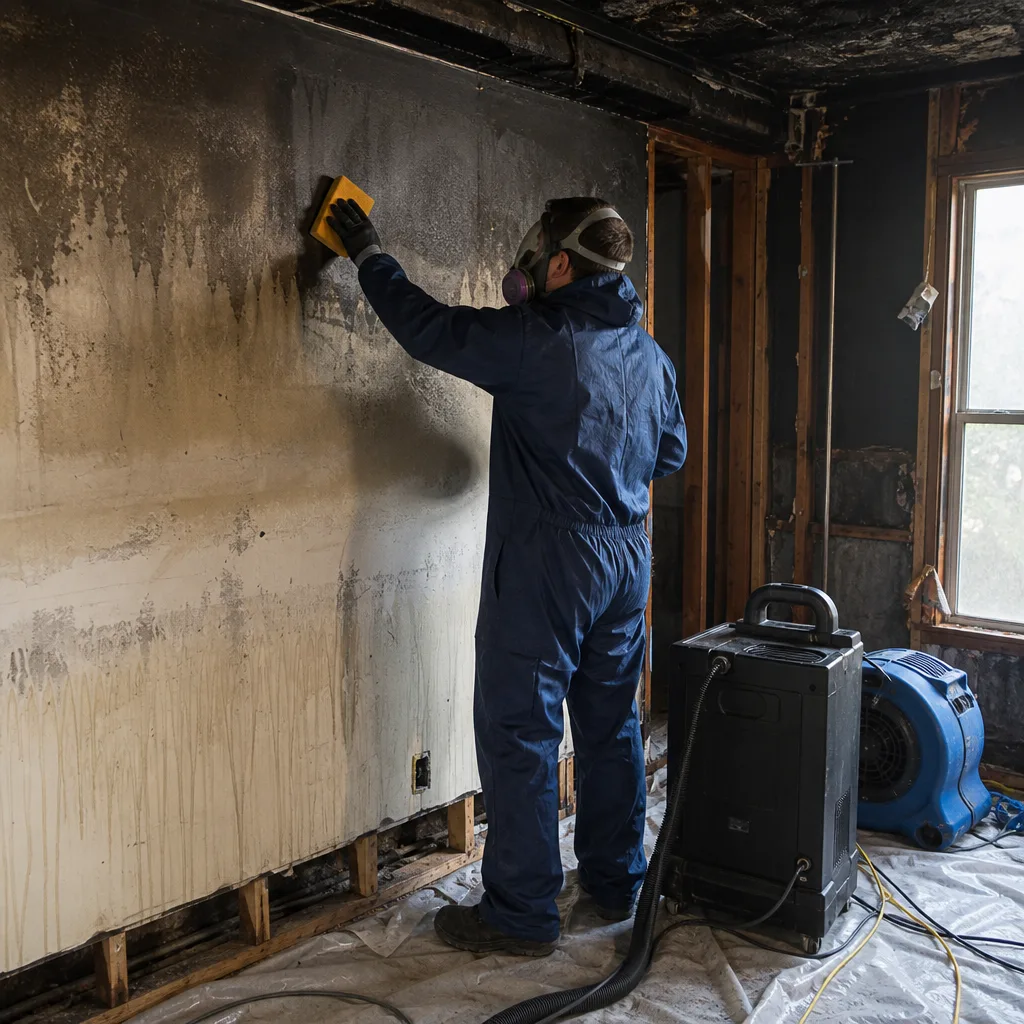
Mold removal in Clovis is more than wiping surfaces. Once mold colonizes drywall, insulation, or framing, the affected material has to go. We contain the affected area, run negative air pressure, bag and remove contaminated material, and clean the remaining framing with antimicrobial agents. The process is methodical. Our crews follow the same containment protocols whether we’re working in a 1980s ranch house near Buchanan High or a brand-new two-story off De Wolf Avenue in 93619.
Black Mold Remediation
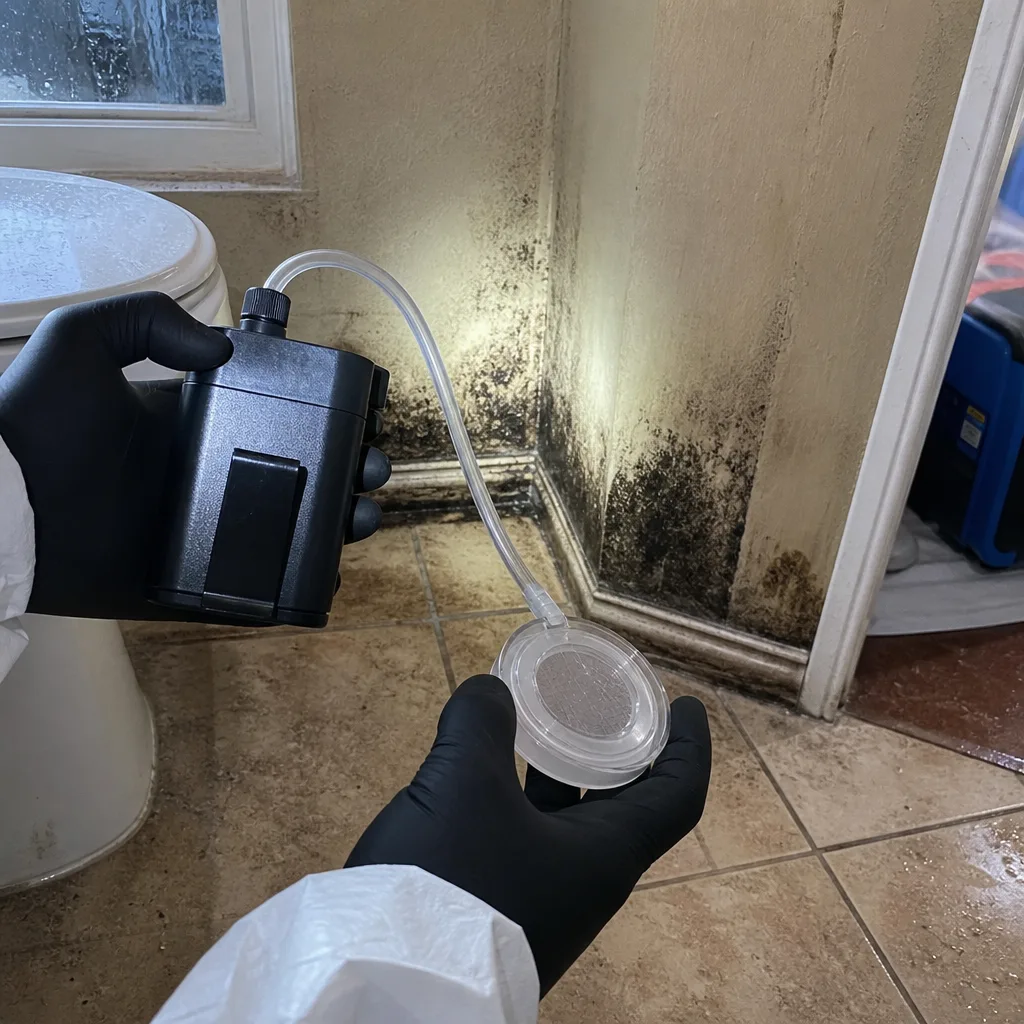
Black mold, or Stachybotrys chartarum, needs constant moisture and organic material to grow, conditions we find regularly in Clovis crawl spaces and behind slab-on-grade walls that collected water during the first storm of the season. Black mold remediation here follows stricter containment rules: full plastic barriers, HEPA-filtered air scrubbers, personal protective equipment, and clearance testing after the job. We don’t cut corners on this. The homes off Shepherd and Teague, built on former agricultural land, are prone to crawl space condensation during tule fog season, and that’s exactly where black mold takes hold.
Air Quality Restoration
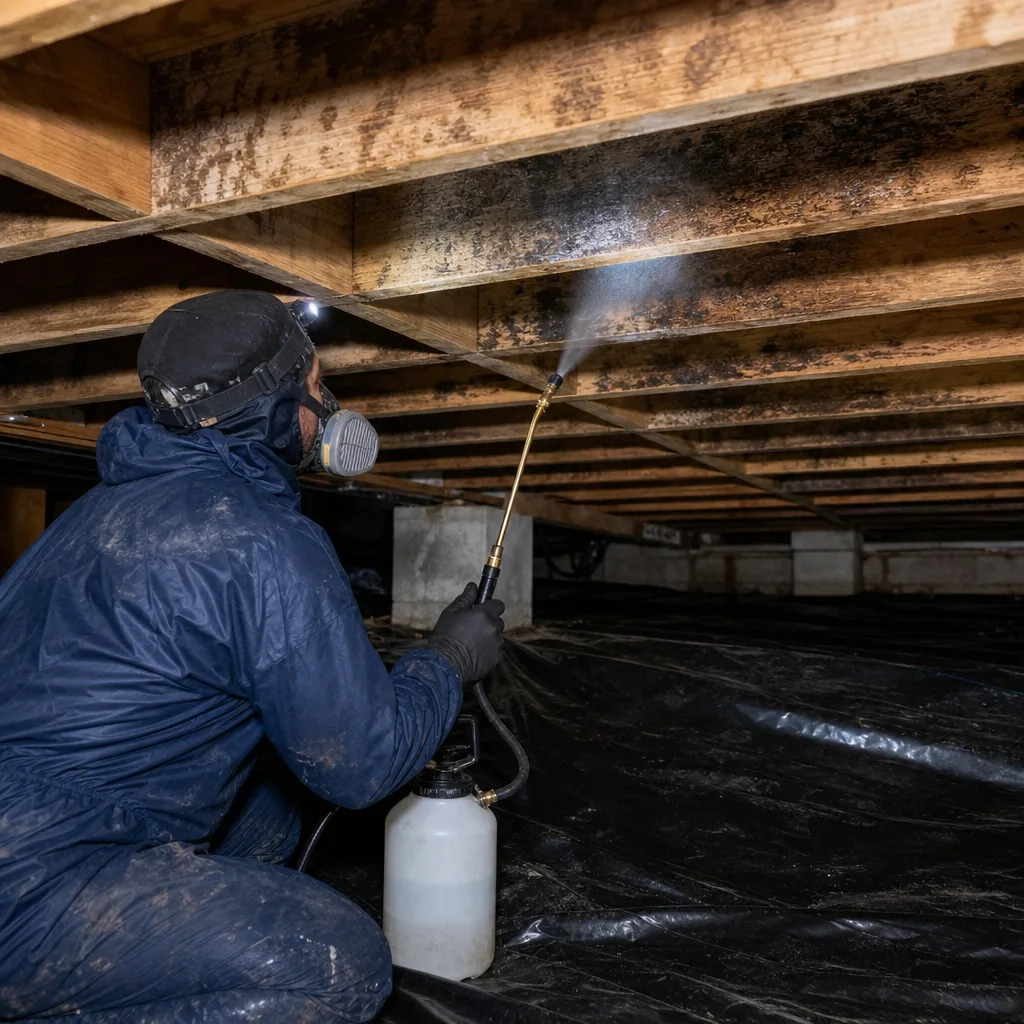
After any mold removal in Clovis, the air needs to be cleaned, not just the surfaces. Mold spores become airborne during demolition and settle into HVAC ducts, carpet fibers, and furniture. We run HEPA air scrubbers throughout remediation and perform post-remediation clearance testing to confirm spore counts have returned to a safe level. In Clovis’s newer homes, where the HVAC system is often the only air circulation point during fog season, this step is what keeps the smell from coming back.
Moisture & Humidity Control
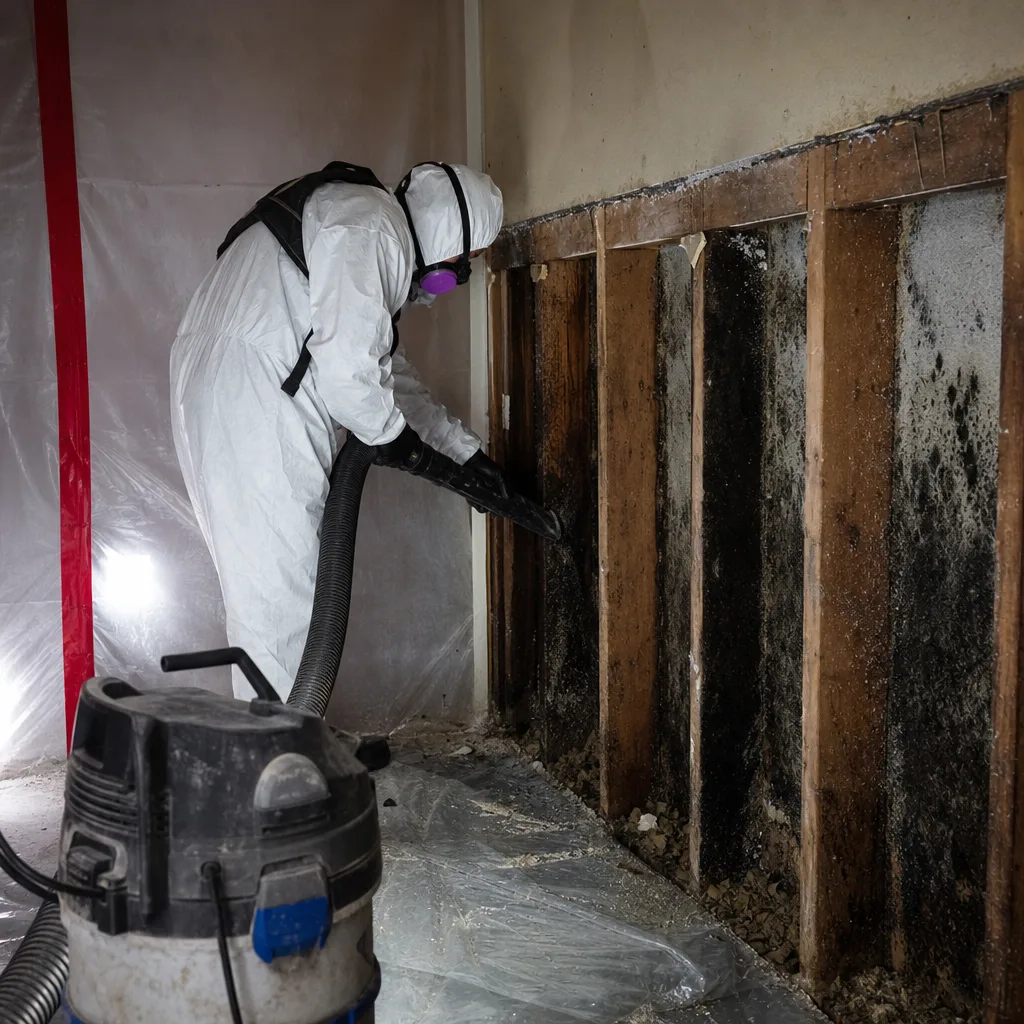
Mold doesn’t grow without water. That’s why the most important part of any Clovis mold job is controlling moisture so it never returns. We install and calibrate dehumidifiers during remediation, but we also advise Clovis homeowners on long-term solutions: gutters that actually drain, downspouts that move water away from slab edges, HVAC systems sized for our wet winters. The tule fog that blankets the San Joaquin Valley from November through February keeps ambient humidity near saturation for weeks. Without controlled indoor humidity, even a small leak becomes a mold claim.
Crawl Space Treatment
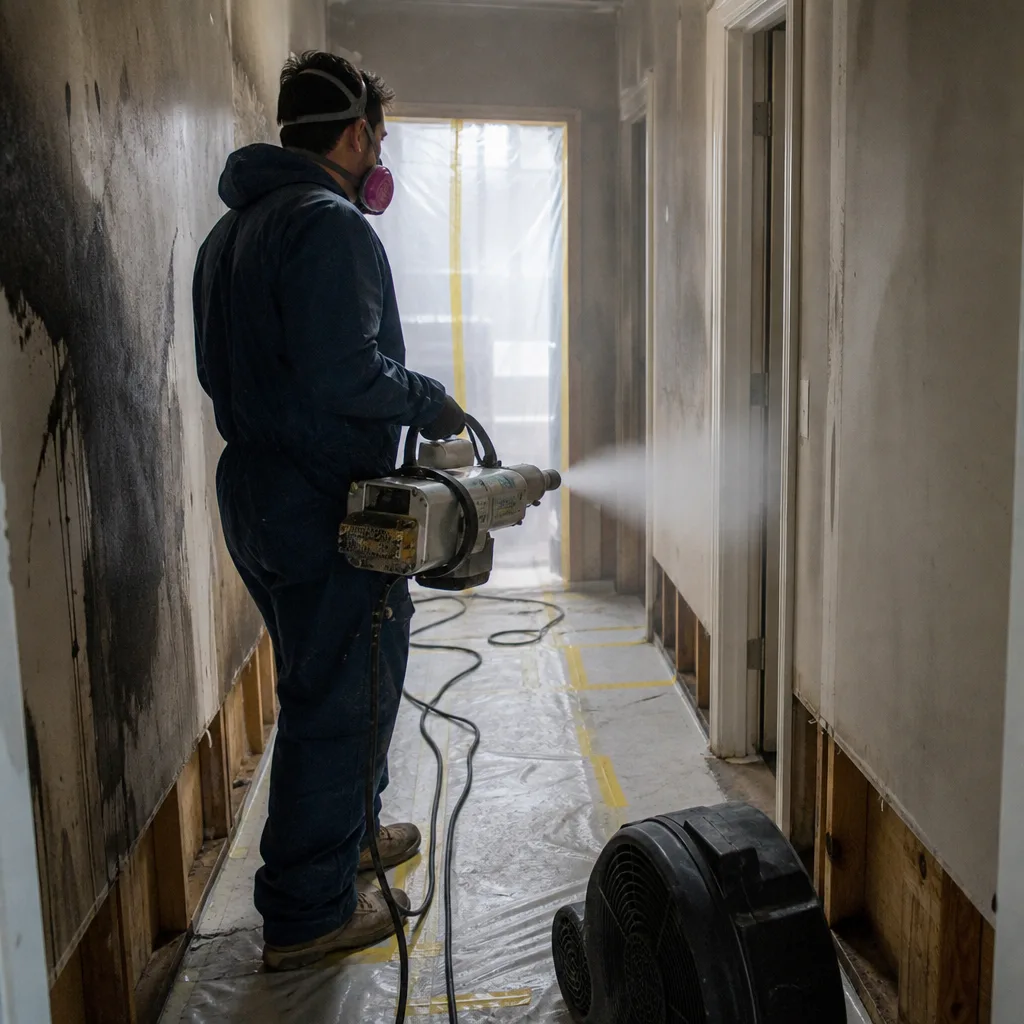
Crawl spaces in Clovis are rarely visited and almost never ventilated correctly. The combination of valley clay soil, fog-driven humidity, and ductwork running through the crawl space means moisture collects at the lowest point of the house and stays there. Our crews treat crawl spaces for mold, install vapor barriers, and set up drying equipment that pulls moisture from the soil before sealing the space. For homes in 93619, where the clay soil holds water longer after a storm, crawl space treatment is the difference between a one-time fix and a recurring problem.
What happens when you call
- 1
A real person answersNo phone trees - you reach a local pro.
- 2
You get an upfront price rangeHonest numbers before anyone is dispatched.
- 3
A background-checked tech heads outLicensed & insured, dispatched right away.
- 4
You approve before work beginsNothing starts until you say go.
Common Mold Remediation Problems We See in Clovis Homes
- Stucco hiding water damage: Clovis’s post-1985 stucco-over-wood-frame homes are notorious for hiding moisture at window headers and poorly flashed penetrations. The outside looks fine. The inside of the wall cavity is a different story, and by the time we open it up, the damage is usually two or three times what the homeowner expected.
- Tule fog compressing the drying window: From November through February, Clovis sits under fog with near-100% relative humidity for days or weeks. Structural drying that would take 48 hours in a dry climate takes five days or more, and if the homeowner waits a week to call, mold has already started colonizing.
- First-storm slab-edge flooding: East Clovis subdivisions in 93619 sit on expansive valley clay that bakes and cracks through our 100°F+ summers. When the first atmospheric river of the season arrives, that desiccated soil absorbs water slowly and funnels it toward slab perimeters instead of away. Crews that don’t anticipate this surge get overwhelmed. We plan for it.
- Old Town plumbing leaks: The pre-1960 homes along Clovis Avenue and the surrounding streets of Old Town still have original plumbing and plaster-and-lath walls. Those pipes are at the end of their life, and the plaster absorbs water differently than drywall. Remediation in those homes requires lead-paint protocols and slower, more careful drying.
Pricing for Mold Remediation in Clovis, CA
Here’s what Clovis homeowners should expect to pay:
- Mold Inspection & Testing: $350-$650, including a written moisture map and lab analysis if needed.
- Small containment (bathroom, closet, single wall section): $1,800-$3,200.
- Medium containment (multiple rooms, crawl space, HVAC contamination): $3,500-$6,500.
- Full-home remediation: $8,000-$18,000, depending on square footage and how many cavities need to be opened.
- Air quality restoration: $500-$1,200 as a standalone service, typically included in larger remediation jobs.
These are Clovis market prices, not national averages. What moves the number is the size of the containment, whether drywall and insulation need removal, and whether the HVAC system needs cleaning. Every job starts with a free inspection. We give you a written scope before any work starts. No surprises on the bill. Call (888) 737-2439 and we’ll walk you through it.
How Clovis’s Climate Creates Mold Problems Other Cities Don’t Have
Clovis sits in a strange spot on the mold map. We only get about 11 inches of rain in a normal year, which sounds dry. But when San Joaquin Valley atmospheric river events hit, they can drop several inches in 48 hours on flat-lot drainage systems that were never designed for that kind of volume. Then comes the tule fog. For months, the ambient relative humidity hovers near 100%, and any moisture trapped inside a stucco wall or under a slab edge has almost no chance to dry on its own. The safe drying window, the one the insurance industry measures in days, compresses dramatically. That’s why a small leak in Clovis becomes a mold emergency faster than the same leak would in a drier climate.
And there’s the soil. The 93619 subdivisions on Clovis’s eastern edge were platted on former agricultural fields underlain by expansive valley clay. That clay bakes through our 100°F-plus summers, contracting and cracking. When the first atmospheric river of the season arrives, the desiccated clay absorbs water slowly and pushes it toward slab perimeters rather than away, because the ground around the foundation has already contracted and settled. The result is a predictable seasonal surge of slab-edge and garage flooding calls that every restoration crew in east Clovis knows to expect. It doesn’t happen the same way in Fresno’s flatland core, where the soils are different and the drainage patterns are better established.
Then there’s the smoke factor. Clovis’s fastest-growing eastern neighborhoods in 93619 press directly against the Sierra Nevada foothills wildland-urban interface. When Sierra wildfires send smoke and ash across the valley, as the 2020 Creek Fire did when evacuations came within miles of city limits, that particulate matter gets drawn into HVAC systems and settles inside homes. When the fog season that follows keeps everything damp, the combination of ash residue and moisture creates a perfect surface for mold spores to colonize. This is a Clovis-specific problem. A mold remediation company that doesn’t understand that interaction will keep treating symptoms while the underlying contamination stays.
What We Found in Buchanan Estates Last November
Our crew responded to a home in the Buchanan Estates neighborhood of 93619 after the first atmospheric river of the season pushed water under the slab edge and into the garage. The homeowner had noticed a musty smell and called us. The builder-grade stucco had masked moisture at the roof-to-wall transition, and with tule fog keeping humidity near 100%, mold had already begun colonizing inside the wall cavity. We used Dri-Eaz dehumidifiers and Injectidry drying mats to pull moisture from the slab and framed walls, then performed air quality restoration to clear the musty smell before the family returned. That job was a textbook example of what happens in Clovis when a hidden moisture problem meets fog season. The family got their house back in four days. The moisture log went to their adjuster, and we billed the carrier directly.
Floodline Restoration Co. Handles Everything From First Extraction to Finished Rebuild
Our Mold Remediation work doesn’t end when the mold is removed. Floodline is a full-cycle restoration company. We don’t hand off the rebuild to another contractor and leave you playing messenger between crews. The same certified technicians who read the moisture map on day one handle the daily readings, hand the log to you and your carrier, and rebuild what needs rebuilding. Whether that means new drywall, new insulation, new flooring, or a full reconstruction of a damaged room, the job stays whole. That’s the difference between calling Floodline and calling a mold company that only does half the work.
We Also Serve Cities Near Clovis
Our crews cover Clovis and the surrounding communities, including Clovis, Fresno, Old Fig Garden, Sanger, and Fowler. If you’re calling from just outside city limits, the same live dispatch line connects you to a certified crew ready to respond. Call (888) 737-2439.
Serving Clovis, CA - Our Local Coverage Area
We’re based in the Clovis area and know this community well. Use the map below to see our service coverage - if you’re nearby, we can almost certainly help.
FAQs - Mold Remediation in Clovis
Mold grows fast in Clovis during the winter because the tule fog keeps ambient relative humidity near 100% for days or weeks at a time, compressing the safe drying window far below industry averages. In a normal dry climate, wet drywall has a 48 to 72 hour grace period before mold starts colonizing. In Clovis fog season, that window can shrink to under 24 hours. The moisture has nowhere to go, and the mold spores that are always present in valley air find a perfect environment. If you’ve had a leak, call (888) 737-2439 the same day. Waiting is what turns a $1,800 containment into a $6,000 remediation.
Yes. The 93619 subdivisions on Clovis’s eastern edge sit on expansive valley clay that bakes and cracks through our 100°F-plus summers. When the first atmospheric river of the season hits, that desiccated clay absorbs water slowly and funnels it toward slab perimeters rather than away, because the ground around the foundation has already contracted. This makes first-storm-of-the-year slab-edge and garage flooding a predictable seasonal surge in east Clovis that doesn’t occur the same way in Fresno’s flatland core. If your garage floor is wet after the first big storm, that’s not bad luck. That’s your soil.
Clovis’s post-1985 stucco-over-wood-frame tract homes mask slow moisture infiltration at window headers, roof-to-wall transitions, and poorly flashed penetrations. The stucco looks intact from the outside, but water has been seeping into the wall cavity behind it for months, sometimes years. By the time a homeowner sees a stain on the interior drywall or smells something musty, the damage inside the cavity is consistently more extensive than surface inspection suggests. That’s why we don’t do surface-only inspections in Clovis. We use moisture meters and thermal imaging because visual inspection of stucco exteriors tells you almost nothing about what’s happening behind them.
They do. The pre-1960 homes along Clovis Avenue and the surrounding Old Town streets have plaster-and-lath walls, original plumbing, and materials that react differently to moisture than the drywall and modern framing in newer subdivisions. Plaster absorbs water slowly but holds it longer, and original plumbing in these homes is often at the end of its service life. Remediation in Old Town requires lead-paint protocols if paint is disturbed, and the drying process has to be slower to avoid cracking the plaster. Our crews know which homes need that treatment before they open a single wall.
The first big storm of the season in Clovis arrives right after the valley’s hot, dry summer, when the expansive clay soil under east Clovis subdivisions has baked and contracted for months. That desiccated soil absorbs water slowly and pushes it toward slab perimeters, flooding garages and low-lying rooms. Then the tule fog arrives and keeps ambient humidity near saturation, so the water that got in can’t dry out. Mold begins colonizing within days. It’s a predictable cycle. We’re ready for it every year, and if you’re one of the first-storm calls, we’ll get a crew to your house the same day. Call (888) 737-2439 for a free estimate.
Written by Curt Bowman, Owner at Floodline Restoration Co. of California, serving Clovis and the surrounding Central Valley communities.