
Fast, Reliable Fire & Smoke Damage Restoration Across Koreatown
Fire and smoke damage in Koreatown moves through buildings differently than anywhere else in Los Angeles. The pre-war courtyard apartments and dense 1960s stucco blocks that line streets from Wilshire down to Olympic share walls, chases, and ceiling cavities, which means smoke from one kitchen fire rarely stays in one unit. Our crews know which wall assemblies in the 90005 ZIP carry smoke horizontally into neighboring units, and we respond to Koreatown calls the same day, usually within 60 to 90 minutes. If you’re standing in a smoke-damaged unit right now, call (888) 737-2439. A live dispatcher answers, and we’ll tell you exactly when a certified crew will reach your building.
Why Floodline Restoration Co. of California Is Koreatown’s Preferred Fire & Smoke Damage Restoration Company
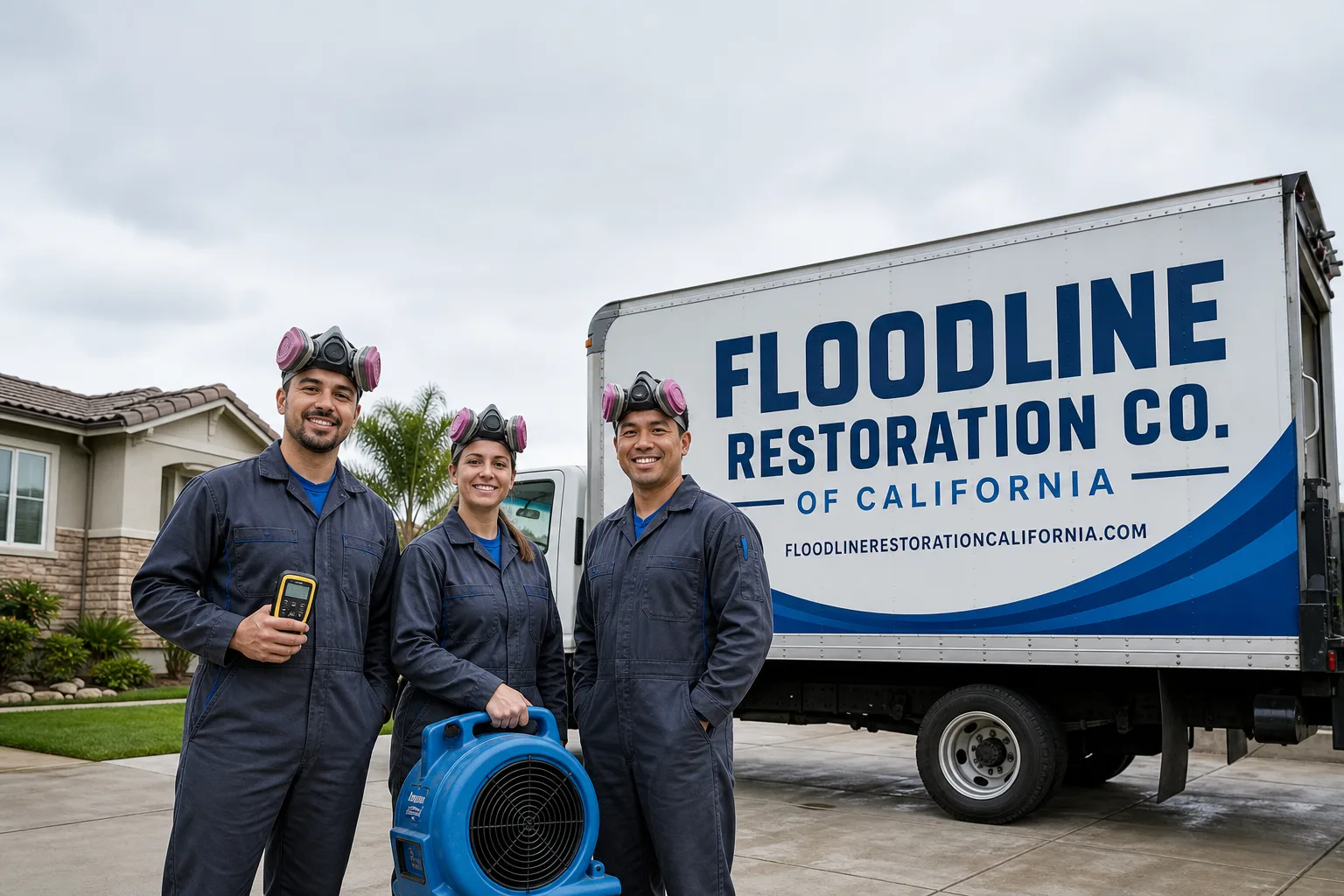
Koreatown’s building stock demands a restoration company that understands how fire and smoke behave in stacked, shared-wall construction. We’ve worked courtyard buildings off 6th Street, Wilshire, and Western where a single stovetop fire deposited soot across three vertically stacked units through a shared utility chase. The crews who do this work in Koreatown are the same background-checked, uniformed technicians we dispatch across Los Angeles, trained to IICRC, RIA, and IFA standards and equipped with Dri-Eaz and Phoenix air scrubbers that fit through the narrow service corridors common to this neighborhood’s older buildings.
Homeowners and property managers in Koreatown call us because we don’t treat a fire in a soft-story retrofit building like a standard single-family job. We check for post-fire structural movement that can shift door frames and breach containment before we ever set up negative-pressure zones. Our 90-Day Done Right Promise applies to every Koreatown job, in writing. If the smoke odor returns or the soot wasn’t fully removed, we come back and make it right. No arguing, no paperwork battles.
Calls are answered by a live person 24/7, which matters when a fire happens at 2 a.m. in a 1960s flat-roof block off Beverly and a dozen tenants are standing in the parking court. We’ll be there when we say. That’s the standard Curt Bowman built this company around in 2010, and it’s the standard we hold on every Koreatown call.
Our Fire & Smoke Damage Restoration Services in Koreatown
Every fire job in Koreatown starts with containment and access. These older courtyard buildings and mid-century apartment blocks have tight parking courts, alley-load service entries, and zero-setback street fronts. We plan for that before the truck rolls. Here’s how the core services work in this neighborhood.
Emergency Board-Up & Tarping
After a fire in Koreatown, the first job is securing the building so weather stays out and people stay safe. We board up broken windows and tarp compromised roof sections within hours of the call, working around the narrow alley access that garbage trucks and delivery vans share on streets like Hobart and Harvard. Our board-up crews cut plywood to fit the arched window openings common to 1920s Spanish Colonial Revival courtyard units, and we never block a fire lane or a tenant entrance while doing it.
Smoke & Soot Removal
Soot in Koreatown doesn’t just sit on surfaces. It enters wall cavities, travels through shared chases, and settles inside electrical boxes serving multiple units. We use HEPA-vacuuming and dry-chem sponge techniques to pull soot off plaster walls, lath, and the textured ceilings common to pre-war courtyard apartments. Before we start, we map the smoke path unit by unit so we’re cleaning every affected space, not just the one where the fire started.
Odor Removal & Deodorization
Smoke odor in a 90005 apartment block is a shared problem. One burned kitchen can leave a smell in three or four neighboring units because the same air path that carried the smoke now holds its odor. We run Dri-Eaz HEPA air scrubbers with carbon filtration and use thermal fogging or hydroxyl generation where the building’s limited cross-ventilation works against natural airing out. In Koreatown’s dense urban heat island, we know that odor molecules bond harder to warm walls, so we treat wall cavities, not just room air.
Contents Cleaning & Pack-Out
When a courtyard apartment fire damages one unit but spreads smoke through others, tenants often need their belongings cleaned and stored while restoration proceeds. We pack out salvageable contents, inventory them with photo documentation, and clean them off-site before returning everything. For property managers working remotely, often communicating in Korean, we coordinate the entire pack-out and approval process by phone and email so tenants aren’t left guessing.
What happens when you call
- 1
A real person answersNo phone trees - you reach a local pro.
- 2
You get an upfront price rangeHonest numbers before anyone is dispatched.
- 3
A background-checked tech heads outLicensed & insured, dispatched right away.
- 4
You approve before work beginsNothing starts until you say go.
Trusted Brands We Service in Koreatown
Our Koreatown crews work with professional-grade equipment from Dri-Eaz and Phoenix, the same brands we run on commercial and multi-family jobs across Los Angeles. We carry HEPA-filtered air scrubbers, negative-air machines, and XPOWER axial fans sized for the compact mechanical rooms and narrow service corridors found in 1920s courtyard buildings and 1960s flat-roof blocks. Having the right equipment is only half the answer here. Knowing how to run negative-pressure containment around a unit door in a 30-inch alley-load corridor without blocking the neighbor’s garbage pickup is what makes a Koreatown fire job go smoothly. We service all makes and models of residential HVAC and venting systems in the neighborhood, and we stock the filters, carbon media, and sealing materials our crews need for same-day response to 90005 addresses.
Common Fire & Smoke Damage Restoration Problems We See in Koreatown Homes
- Horizontal smoke travel through shared wall cavities. In 1920s courtyard apartments, walls don’t stop at the property line. A kitchen fire in one unit sends smoke through wall cavities into the neighboring units on the same floor. If we don’t treat those cavities, the odor comes back in a week.
- Post-fire structural movement in soft-story buildings. Many of Koreatown’s wood-frame apartment buildings are flagged under the city’s Mandatory Seismic Retrofit Ordinance. Fire weakens already-compromised framing, and that can shift door frames, crack ceilings, and break the containment seals we rely on during odor treatment. We check for movement before we start, not after.
- Zero parking and zero staging space. Streets like Kenmore and Normandie have no room for a truck-mounted extractor or a debris dumpster. Our crews are used to humping equipment through alley-load entries and setting up staging inside the unit or on the roof. We bring what fits and leave the truck safely parked, not double-parked.
- Treating smoke odor in units with almost no cross-ventilation. Many 1960s stucco blocks off Western have windows on one side only. Natural airing-out doesn’t work, so we rely on mechanical air exchange with carbon filtration and hydroxyl generators. It takes longer, but it’s the only way the smell actually leaves.
Pricing for Fire & Smoke Damage Restoration in Koreatown, CA
Emergency board-up and tarping in Koreatown typically runs $650 to $1,400, including materials cut to fit the building’s window and door openings. Contents cleaning and pack-out for a single unit averages $1,800 to $3,500. The final number depends on square footage, how many rooms the smoke reached, and whether structural assessment on a soft-story building is required. We write the scope before work starts, bill your insurance carrier directly, and keep you out of the middle. Call (888) 737-2439 for a free estimate. We’ll give you a number you can plan around.
We Also Serve Cities Near Koreatown
Floodline Restoration Co. of California provides fire and smoke restoration across the central Los Angeles basin. From Los Angeles neighborhoods like Echo Park and Silver Lake to Hollywood’s older courtyard stock, our crews know how fire behaves in dense urban housing. Learn more about our Fire & Smoke Damage Restoration services, or if you’re outside the 90005 ZIP, see how we serve Koreatown and the surrounding area from our Los Angeles dispatch office.
Serving Koreatown, CA - Our Local Coverage Area
We’re based in the Koreatown area and know this community well. Use the map below to see our service coverage - if you’re nearby, we can almost certainly help.
FAQs - Fire & Smoke Damage Restoration in Koreatown
How does Koreatown’s soft-story retrofit status change the fire restoration scope after a kitchen fire in a 1920s courtyard apartment?
A building flagged under the Mandatory Seismic Retrofit Ordinance has open ground-floor spaces, often parking carports, that allow more lateral movement during a fire. After a kitchen fire in one of these buildings, we check for shifted door frames, cracked ceiling lines, and separated wall intersections before setting up containment. If the framing moved, standard negative-pressure sealing won’t hold, and we have to stabilize or shim openings first. That adds time and scope, but skipping it means smoke odor leaks into untreated spaces and the job fails. Call (888) 737-2439 and we’ll walk the building with you before quoting.
Why does smoke from one unit in a 90005 courtyard building often appear in three or more neighboring units?
Because the wall and ceiling cavities in pre-war courtyard apartments are typically continuous. The same utility chase that carries plumbing from a top-floor unit down to the meter room also carries smoke horizontally into the units on either side. Open floor-plan stacking means heat and smoke rise through the framing and deposit soot in the ceiling cavities of the units above. We map the smoke path unit by unit and treat every affected cavity, not just the room where the fire started.
Can you do emergency board-up without blocking the narrow alley access that garbage and delivery trucks share in Koreatown?
Yes. Our board-up crews cut and secure plywood inside the window or door opening, not over the exterior walkway. On alley-load buildings, we stage materials inside the unit or on the roof, never in the truck path. We’ve worked alleys off 6th Street and Wilshire where the clearance is 30 inches and a garbage truck comes through at 6 a.m. We know to keep the access open and the fire lane clear.
How do you remove smoke odor from a 1960s flat-roof apartment block where cross-ventilation is almost nothing?
Mechanical air exchange. Units in these blocks typically have windows on one elevation only, so natural ventilation won’t clear the smoke. We set up Dri-Eaz HEPA air scrubbers with carbon filtration and run hydroxyl generators inside sealed containment. The equipment exchanges the air volume multiple times per hour and pulls the odor out of wall cavities and soft goods. It’s slower than opening windows, but it actually works. Call (888) 737-2439 and we’ll tell you what a building like yours typically needs.
What if the property manager is off-site and only speaks Korean - how do you coordinate pack-out and restoration approvals?
We handle it. Our team coordinates with off-site property managers by phone and email, with photo documentation sent before, during, and after the job. We don’t ask a tenant to translate what we should be explaining ourselves. The scope gets written, the photos go out, approval comes back, and work proceeds. We bill the carrier directly and send the property manager our daily moisture and containment logs so everyone knows exactly what’s been done and what’s next.
Written by Curt Bowman, Owner at Floodline Restoration Co. of California, serving Koreatown from our Los Angeles dispatch office.