
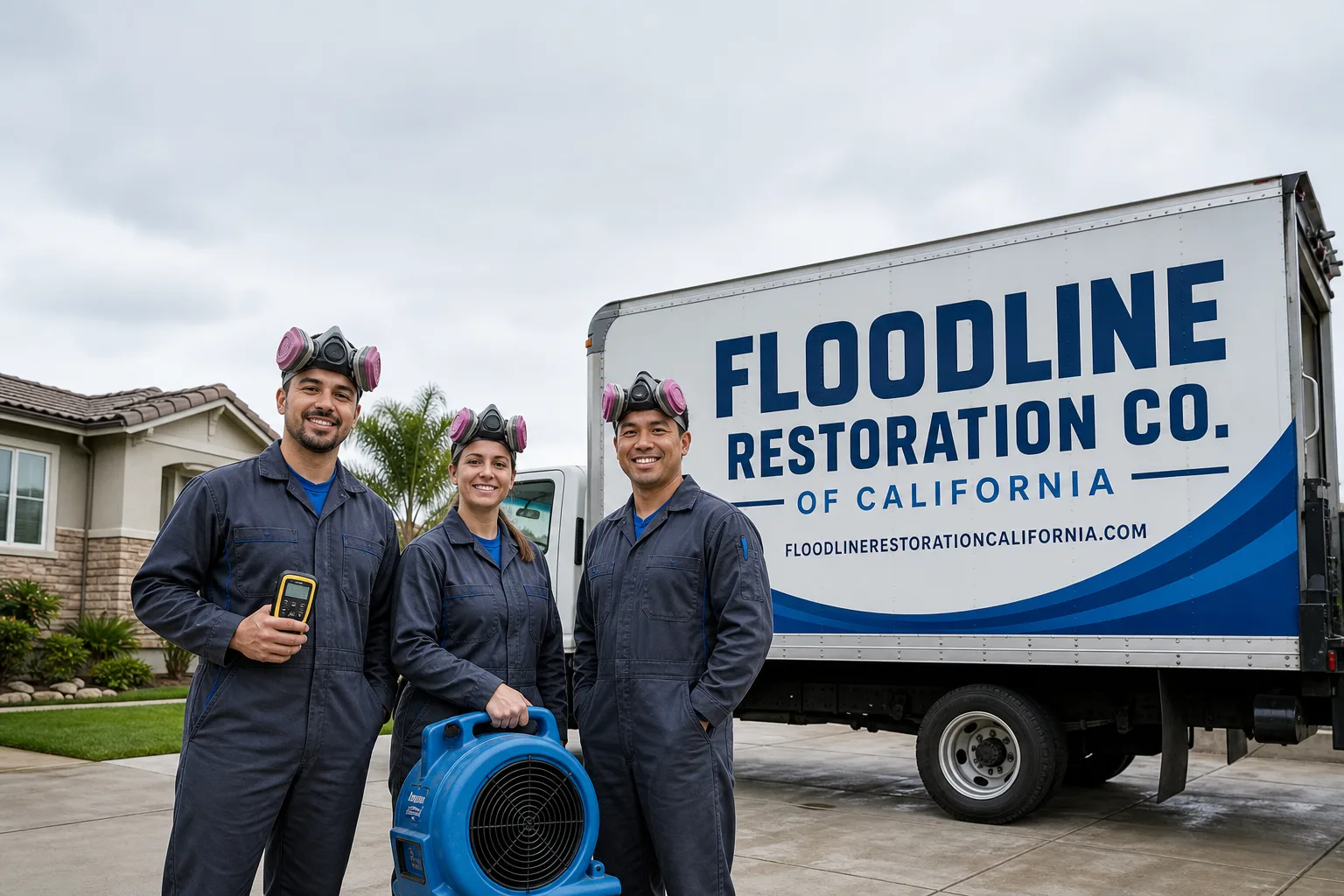
Fast, Reliable Biohazard & Crime Scene Cleanup Across Temple City
Biohazard and crime scene cleanup in Temple City typically costs between $1,500 and $5,000 for a standard trauma or unattended death scene, with hoarding remediation running $2,500 to $12,000 depending on square footage and debris volume. We dispatch crews to Temple City from our Los Angeles coordination office, and a live person answers at (888) 737-2439 day or night. When a scene involves blood, bodily fluids, or decomposition, the work requires state-level protocols for containment, removal, disinfection, and documentation. Our Biohazard & Crime Scene Cleanup team has worked in the 91780 ZIP code long enough to know exactly what older Temple City homes hide behind their stucco and drywall.
What we see in Temple City that newer neighborhoods rarely present: unpermitted garage conversions where contaminated fluids seep through slab seams, original galvanized pipes that fail behind bathroom walls, and stucco cracked by the 1987 Whittier Narrows earthquake that lets airborne contaminants migrate into wall cavities. None of that appears on a generic cleanup checklist. It appears on ours.
Why Floodline Restoration Co. of California Is Temple City’s Preferred Biohazard & Crime Scene Cleanup Company
Floodline Restoration Co. has held a steady local reputation across the San Gabriel Valley for over 42 years because we treat every job like the homeowner will call us back in a decade. That matters in Temple City, where families tend to stay for generations and word travels fast through neighborhood associations and church networks. Our technicians arrive in uniform, background-checked and certified to IICRC, RIA, and IFA standards, and they do not rush a scene or hand it off to an unfamiliar crew mid-job. We answer the phone with a person at two in the morning, not a voicemail tree.
Homeowners in Temple City call us because we show up when we say we will. On a 1960s stucco-over-wood-frame home near Live Oak Avenue, our techs responded to an unattended death where fluids had seeped through original oak flooring into a slab-on-grade cavity. The homeowner, a second-generation family member, had relied on a converted garage as a caregiver suite, and we found sheetrock and flooring materials from three different remodel eras. After removing contaminated materials, we disinfected the exposed framing and worked with the adjuster to document subfloor saturation beneath the unpermitted addition, enabling the final clearance test to pass on the first attempt. That is the job done right, backed by our 90-Day Done Right Promise in writing.
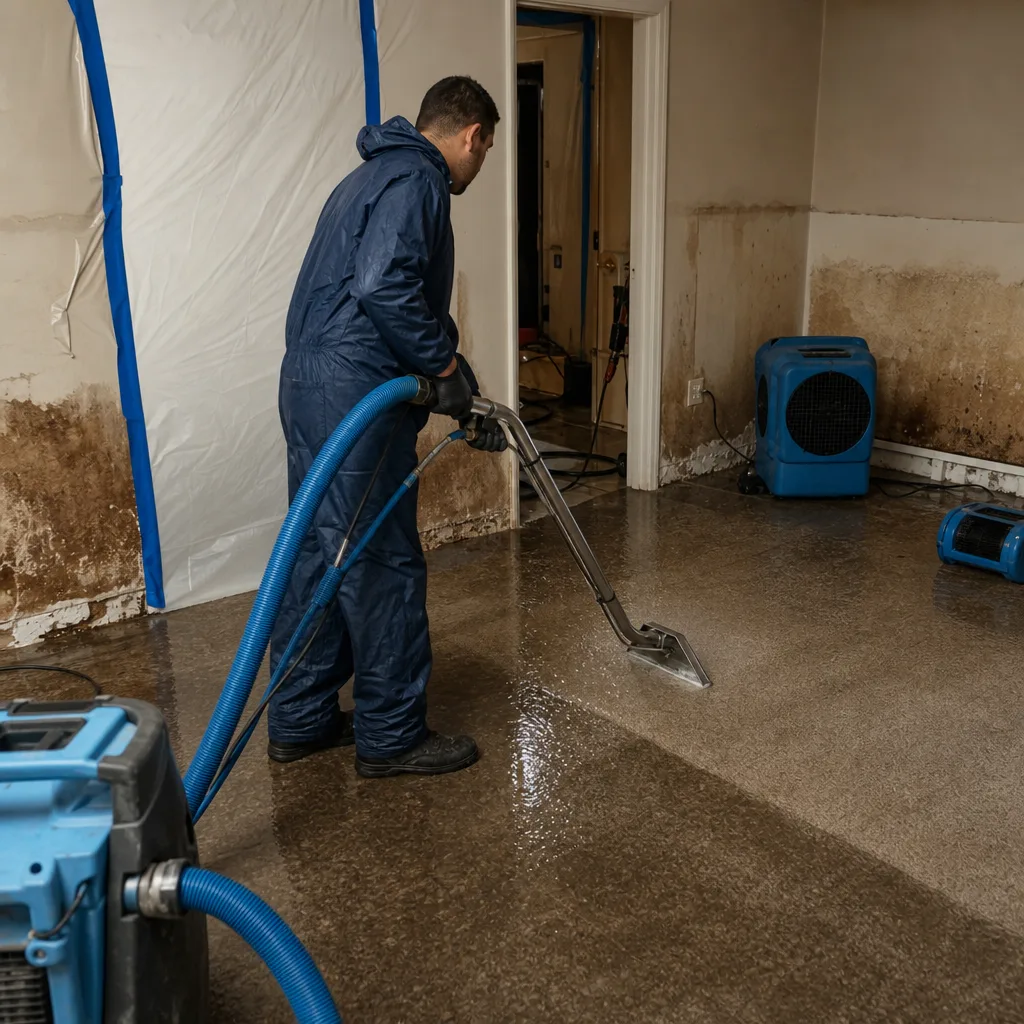
We stock professional-grade equipment from Dri-Eaz, Phoenix, XPOWER, B-Air, and Injectidry, and we bring moisture mapping and daily readings to every biohazard job where hidden saturation is a concern, not just water losses. For Temple City’s older housing stock, that documentation is often the difference between a claim that pays out fully and one that stalls in adjuster review.
Our Biohazard & Crime Scene Cleanup Services in Temple City
Temple City is almost entirely single-family residential, built out mainly in the 1950s through 1970s. That means the scenes we handle here unfold in stucco-over-wood-frame homes on small lots, many with additions, enclosed patios, or garage conversions added across multiple generations, often without permits. Our approach accounts for that reality from the first walkthrough.
Crime Scene Cleanup
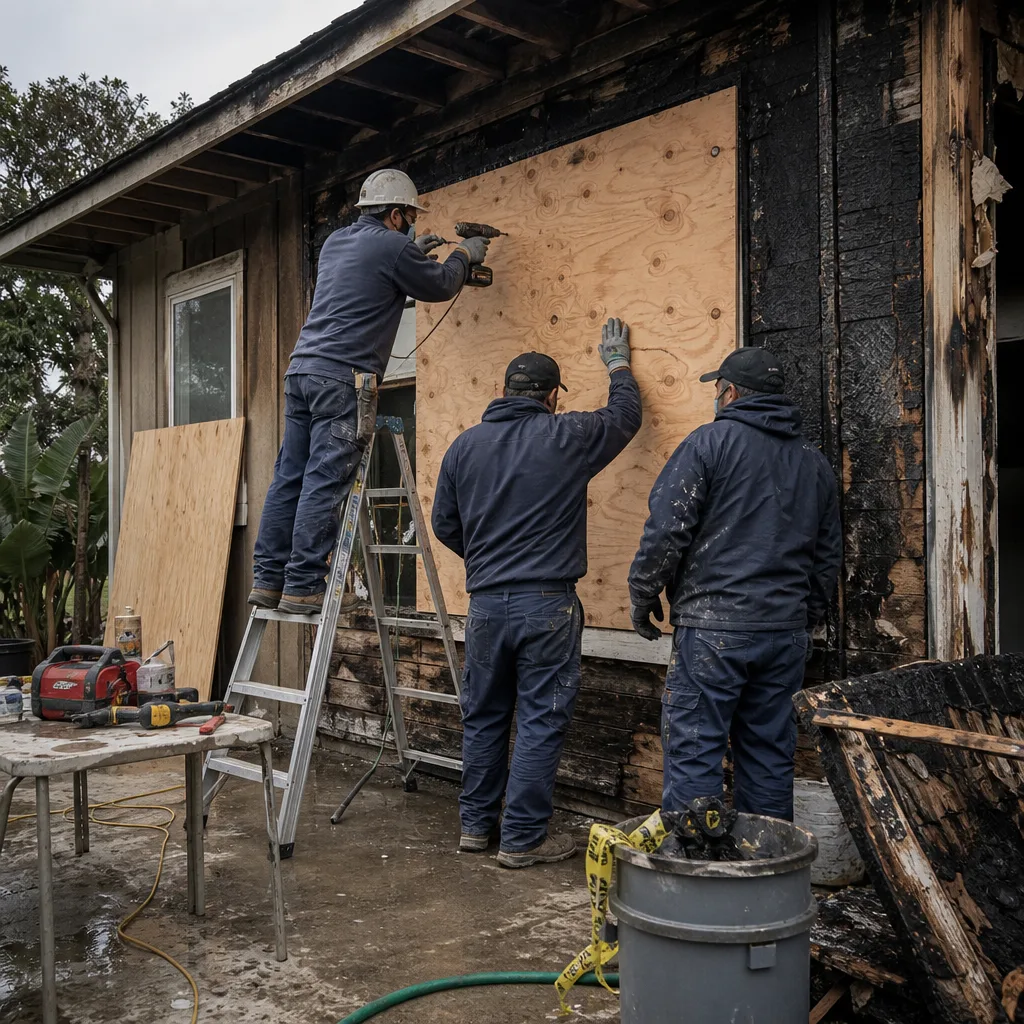
Crime scene cleanup in Temple City requires rapid containment, methodical removal of affected materials, and disinfection down to the framing when fluids have penetrated flooring or drywall. Because many of these homes carry the 1987 earthquake’s legacy of cracked stucco and shifted foundations, we inspect adjacent wall cavities for migration before declaring a room clear. We coordinate directly with the San Gabriel Valley’s law enforcement release process and handle all biohazardous waste disposal under California state requirements.
Trauma & Unattended Death Cleanup
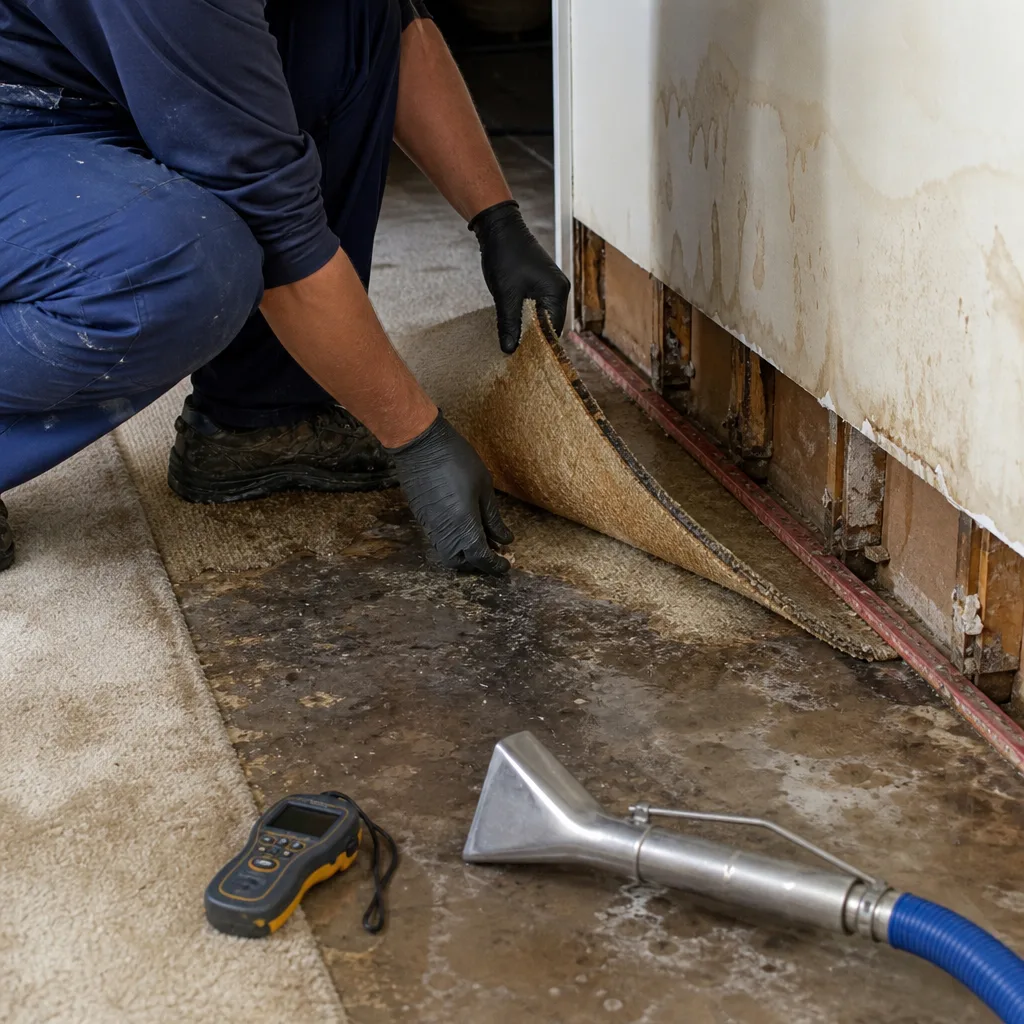
Unattended death cleanup in Temple City homes built on slab foundations presents a specific problem: decomposition fluids follow gravity and settle into the slab, not a crawlspace. In homes with unpermitted garage conversions, the seams between original slab and addition slab are common wicking channels. We remove finished flooring where saturation has occurred, disinfect the exposed concrete, and verify clearance with ATP testing before any rebuild begins. The older the house, the more we anticipate hidden paths.
Hoarding Cleanup
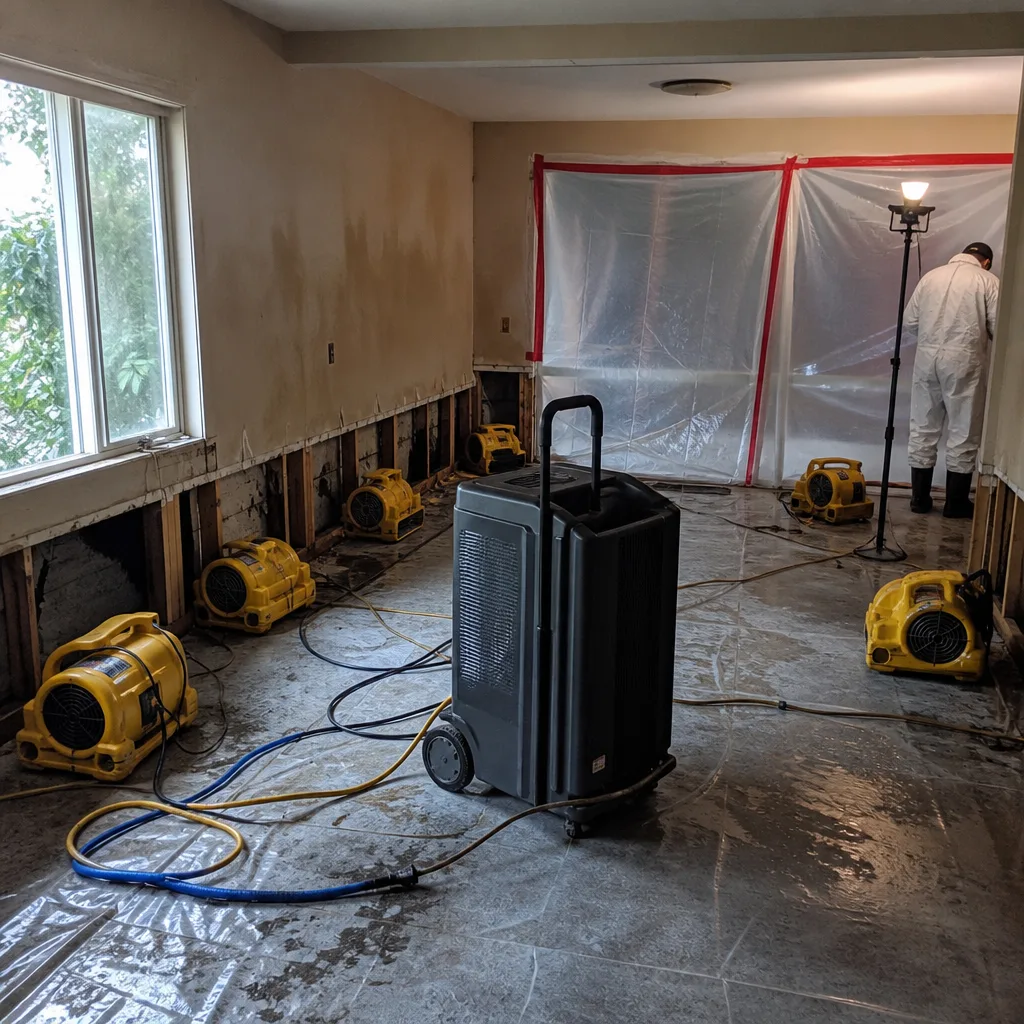
Hoarding cleanup in Temple City frequently involves structures that have not been opened up in decades. Stacked materials hold moisture against baseboards and drywall, and in many local homes, that moisture has been feeding slow galvanized pipe corrosion behind the bathroom wall for years. When we clear debris, we often find pinhole leaks that reintroduce biohazard-laden water into the cleanup area. We address those leaks as part of the scope, document everything photographically for the carrier, and work with a written scope agreed before any demolition starts.
Blood & Bodily Fluid Cleanup
Blood and bodily fluid cleanup in Temple City homes goes beyond surface wiping. Porous materials like hardwood, carpet underlayment, and unsealed grout require removal or professional-grade disinfection, and in stucco homes with unsealed wall penetrations, fluids can travel into stud bays. Our containment protocol includes the entire affected room plus any adjoining enclosed patio or converted garage space where airborne contaminants may have settled. We never price this work without seeing the actual conditions, and that assessment is free.
What happens when you call
- 1
A real person answersNo phone trees - you reach a local pro.
- 2
You get an upfront price rangeHonest numbers before anyone is dispatched.
- 3
A background-checked tech heads outLicensed & insured, dispatched right away.
- 4
You approve before work beginsNothing starts until you say go.
Trusted Brands We Service in Temple City
Our Temple City work relies on the same professional-grade equipment and standards we use across every biohazard job: IICRC and RIA protocols for structural disinfection, IFA-certified techniques for trauma and unattended death scenes, and Injectidry systems where hidden moisture in tight slab or wall cavities needs targeted treatment. We maintain local stock for these systems so crews working in the 91780 ZIP code are not waiting on parts when a scene requires same-visit extraction or drying. A square deal means the right tool arrives with the technician, not three days later.
Common Biohazard & Crime Scene Cleanup Problems We See in Temple City Homes
- Contaminated fluids wicking through unpermitted garage-conversion slab seams. Older Temple City homes often have slab additions poured at different elevations, creating seams that carry decomposition fluids under finished flooring. Thorough decontamination requires removing flooring and treating the slab directly, not just the visible surface.
- Original galvanized supply lines corroding behind bathroom walls after hoarding-related moisture exposure. Temple City’s hard, mineral-rich municipal water accelerates corrosion in galvanized pipes. When those pipes sit behind walls that have absorbed years of hoarding moisture, pinhole leaks reintroduce biohazard-laden water during cleanup, and the pipe must be repaired before the space can be cleared.
- Cracked stucco from the 1987 Whittier Narrows earthquake allowing airborne contaminants into wall cavities. Many Temple City homes carry stucco cracks that were cosmetically patched decades ago and never properly remediated. Those cracks create pathways for odor and airborne particulates from trauma scenes to migrate into enclosed patios and neighboring rooms, requiring containment beyond the primary space.
- Multi-generational remodel layers hiding contamination paths. Homes held by the same family for forty or fifty years rarely have consistent construction. Three eras of sheetrock, flooring, and framing create voids and channels where biological fluids hide, complicating both sanitization and documentation for the insurance claim.
Pricing for Biohazard & Crime Scene Cleanup in Temple City, CA
Here are the price ranges we typically quote for Temple City jobs, based on the specifics of the home and the extent of contamination:
- Crime scene cleanup: $1,800 - $5,000
- Trauma or unattended death cleanup: $1,500 - $4,500
- Blood and bodily fluid cleanup (single room): $1,200 - $3,000
- Hoarding cleanup: $2,500 - $12,000+ (depends on square footage, debris volume, and hidden structural or pipe issues)
- Infectious disease disinfection: $800 - $2,500 (per treatment area)
- Tear gas or chemical cleanup: $1,500 - $4,000 (depends on ventilation, surface materials, and containment requirements)
What moves a Temple City job to the upper end of a range is usually what is behind the surfaces: unpermitted additions with slab seams, old galvanized pipes that need replacement, or stucco cracks that extend containment beyond the primary room. We write a scope and price in plain language before work begins, bill your carrier directly when insurance covers the loss, and never leave you holding surprises on the final bill. Call (888) 737-2439 for a free on-site estimate.
We Also Serve Cities Near Temple City
Floodline Restoration Co. serves the full 91780 area and every surrounding community. Our Temple City crews regularly respond to Rosemead, San Gabriel, Arcadia, and East San Gabriel, often arriving within the hour because our dispatch keeps equipment stocked locally. If you are in any of these cities and facing a biohazard situation, call the same number: (888) 737-2439.
Serving Temple City, CA - Our Local Coverage Area
We’re based in the Temple City area and know this community well. Use the map below to see our service coverage - if you’re nearby, we can almost certainly help.
FAQs - Biohazard & Crime Scene Cleanup in Temple City
Unpermitted garage conversions change the scope because they introduce slab seams, non-standard framing, and hidden voids that contaminated fluids can enter. In a permitted structure, containment and remediation typically follow standard room boundaries. In an unpermitted conversion, we must treat the entire space as a potential contamination path, including seams where the original slab meets the addition, and document every layer for the adjuster. This often adds one to two days to the job but prevents recontamination and failed clearance tests.
In most cases, no. Original oak flooring in Temple City’s 1950s homes sits directly over tongue-and-groove subflooring with gaps that let decomposition fluids penetrate to the slab. Sanding and refinishing only address the visible surface, not the saturated material beneath. In slab-on-grade homes, we typically remove the hardwood, treat the exposed concrete, and document remediation with photos and clearance testing before any rebuild. If a section of flooring is untouched and tests clean, we leave it rather than replace the whole room.
Yes. Temple City’s hard water carries high mineral content that leaves scale and residue on porous surfaces like grout, unsealed concrete, and rough wood. That mineral layer can shield pathogens from surface-level disinfectants. Our infectious disease disinfection process accounts for this by first removing or penetrating the mineral film, then applying professional-grade disinfectants with adequate dwell time. On concrete slabs, we sometimes use a mild acidic pre-treatment before disinfection to ensure full coverage.
The first step is sealing any connecting doorway, duct vent, or wall penetration between the garage and the living space. In Temple City’s older homes, stucco cracks from the 1987 earthquake and gaps around converted garage door openings provide hidden airflow paths into the main house. We establish negative air pressure in the garage, neutralize chemical residues on all surfaces, and run air scrubbers until clearance testing confirms the indoor air quality is safe. The main home is checked after the garage treatment to verify nothing migrated.
The main hidden issue we find in Temple City is the combination of hoarding-related moisture with this city’s hard-water-accelerated galvanized pipe corrosion. Many hoarded homes have not had their bathroom or kitchen walls opened in decades, and by the time we clear debris, the original galvanized supply lines behind those walls have pinhole leaks that are actively reintroducing biohazard-laden water. That cascading failure is specific to this housing stock and water supply, and it means hoarding cleanup here is more likely to include plumbing repair than in cities with newer copper or PEX systems.
If you are facing a biohazard situation in Temple City, call (888) 737-2439. A live person answers, a certified crew comes out, and you get a written scope before any work starts. We stand behind every job with the 90-Day Done Right Promise, and we are not done until the clearance test passes.
Written by Curt Bowman, Owner at Floodline Restoration Co. of California, serving Temple City and the San Gabriel Valley.